REVIEW · AREQUIPA
Walking tour in the Historic Center of Arequipa
Book on GetYourGuide →Operated by AREQUIPA EXPLORER Y ACTIVIDADES TURISTICAS · Bookable on GetYourGuide
Arequipa’s White City has great shortcuts. In two hours on foot, you get a guided walk that hits the Plaza de Armas core first, then strings together cloisters, old courtyards, and volcano views from El Puente Grau. I like that the guide keeps it story-driven and practical, with real places like the Cloisters of the Company and the camelid farm at Mundo Alpaca. One thing to consider: the tour is tightly timed, so if you want lots of lingering and photos in every spot, you may feel slightly rushed.
This is also one of those rare city walks that mixes architecture with living animals. You’ll visit an alpaca-and-llama setting (including Suri and vicuñas) and even get time around the small zoo of camelids, not just a look from the sidewalk. You’ll finish back near the main square so you can keep exploring on your own with your bearings sorted.
In This Review
- Key highlights I’d plan around
- Where the tour starts on Santa Catalina Street
- Plaza de Armas: arches, portals, and the city’s “why”
- Cloisters of the Company: quiet architecture with strong details
- Old mansions, gardens, and the walk between highlights
- El Puente Grau: volcano views that make Arequipa feel real
- Mundo Alpaca: camelids, a small zoo, and fiber shopping
- San Lazaro neighborhood: the White City’s earlier roots
- Optional entries: Santa Catalina Convent and the Juanita mummy
- Price, reservations, and the real value with tipping
- Logistics that affect your experience (the small stuff that counts)
- Who should book this Arequipa historic center walk
- Should you book this tour
- FAQ
- Where is the meeting point?
- How long is the walking tour?
- What does the tour cost?
- Are entrances included?
- Which languages are offered?
- What optional add-ons are available near the end?
- Can I cancel for a full refund?
Key highlights I’d plan around
- Plaza de Armas orientation: arches, portals, and the square’s role in the city’s layout
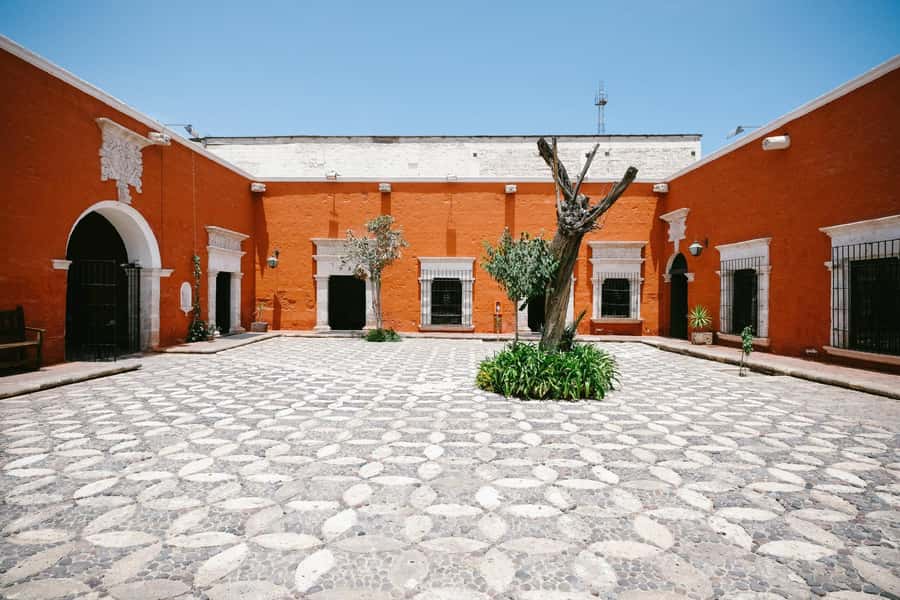
- Cloisters of the Company: architectural details you can’t appreciate at speed
- El Puente Grau viewpoints: chances to spot Misti, Chachani, and Pichu Pichu on a clear day
- Mundo Alpaca and its camelids: llamas, alpacas, Suri, and vicuñas plus a small zoo setup
- San Lazaro neighborhood: a neighborhood tied to the story of Arequipa as the White City
- Optional museum add-ons: Santa Catalina Convent or the Juanita mummy with separate internal guides
Where the tour starts on Santa Catalina Street
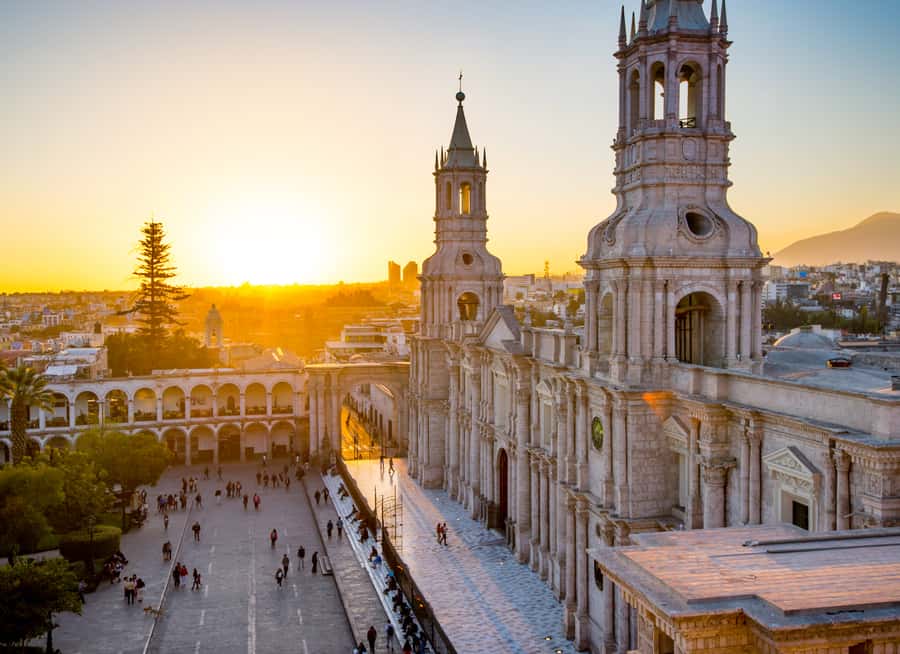
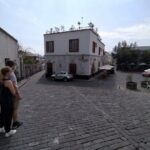
You’ll meet at Santa Catalina Street #204, just one block from the Plaza de Armas. The guide is easy to spot because they’ll have an umbrella in hand. If you like having a backup, the coordinates listed are -16.3967191, -71.53667879999999.
This meeting point matters. Plaza de Armas is the natural hub in Arequipa, so starting nearby means you spend less time crossing town and more time inside the historical core. Also, it’s a simple plan if you’re arriving mid-day and want to get your bearings quickly.
The tour runs in English and Spanish with a live guide. From the range of guide names people shared—Edgar, Johan, Jorge Echeandia, Beatriz, and Francisco—it’s clear the guiding style can be very personal. I’d choose this tour if you like asking questions; the format is built for explanations as you walk.
You can also read our reviews of more walking tours in Arequipa
Plaza de Armas: arches, portals, and the city’s “why”
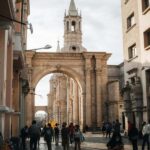
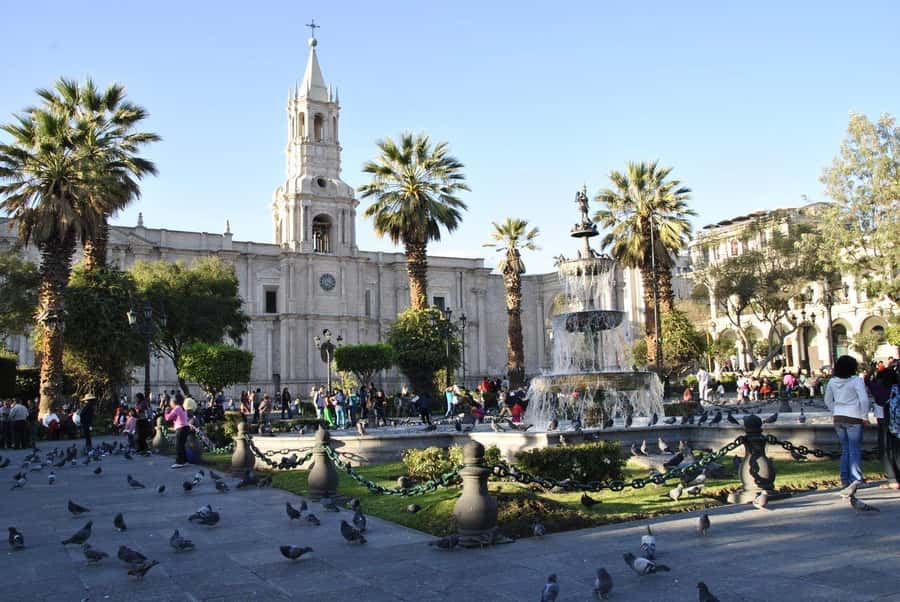
You start by walking straight into the heart of Arequipa at Plaza de Armas, where the guide sets the scene: what the square is, how the surrounding design works, and why those traditional arches and portals show up there.
What I like about starting here is simple. Once you understand the square’s layout, everything you see afterward makes more sense. You’re not just collecting landmarks; you’re learning the logic of the old center—where power and daily life met, and how the streets feed into the central space.
Expect time to look closely at the façades and the edges of the square rather than a rapid drive-by. If you’re the type who enjoys noticing patterns—symmetry, repetition, and how buildings face the open space—this stop rewards your attention.
Practical note: because the tour is about 2 hours total, you don’t get an all-afternoon square picnic. It’s enough time to understand the place and grab a few pictures, but you’ll likely be moving again before your phone finishes buffering every shot.
Cloisters of the Company: quiet architecture with strong details
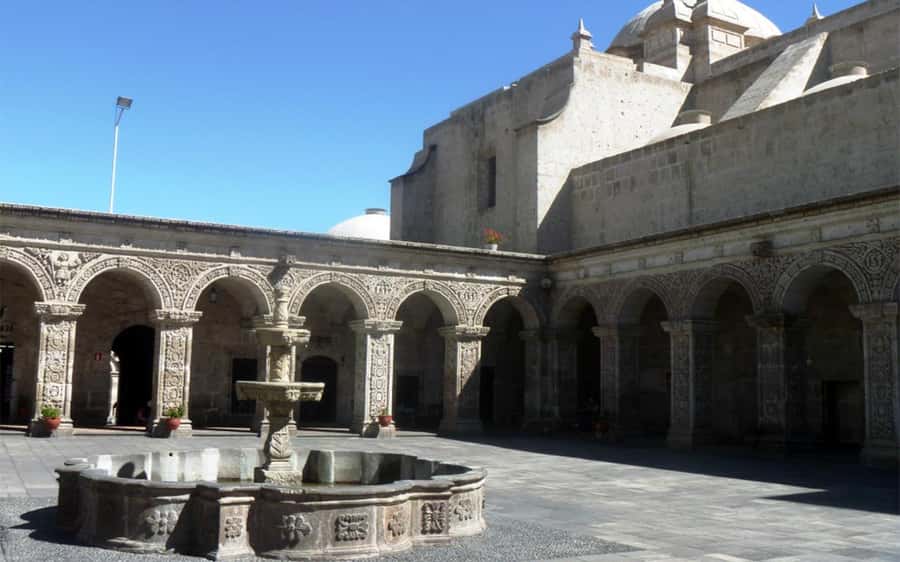
After the square, the tour moves to the Cloisters of the Company—one of those Arequipa stops where the wow factor comes from shape and stone, not from crowds. Cloisters tend to feel like a pause button. You’ll see architectural beauty up close, and the guide helps connect what you’re looking at with the city’s cultural and religious side.
This is a good mid-tour anchor. Arequipa’s historic center can be a lot of walking, and cloisters give you a “hold still” moment. You can watch how light hits the spaces, and you can better spot the craftsmanship the guide points out.
If you’re concerned about time for photos, this is a smart place to prioritize. It’s easier to enjoy pictures here because the architectural lines give your camera something clean and structured to work with.
Old mansions, gardens, and the walk between highlights
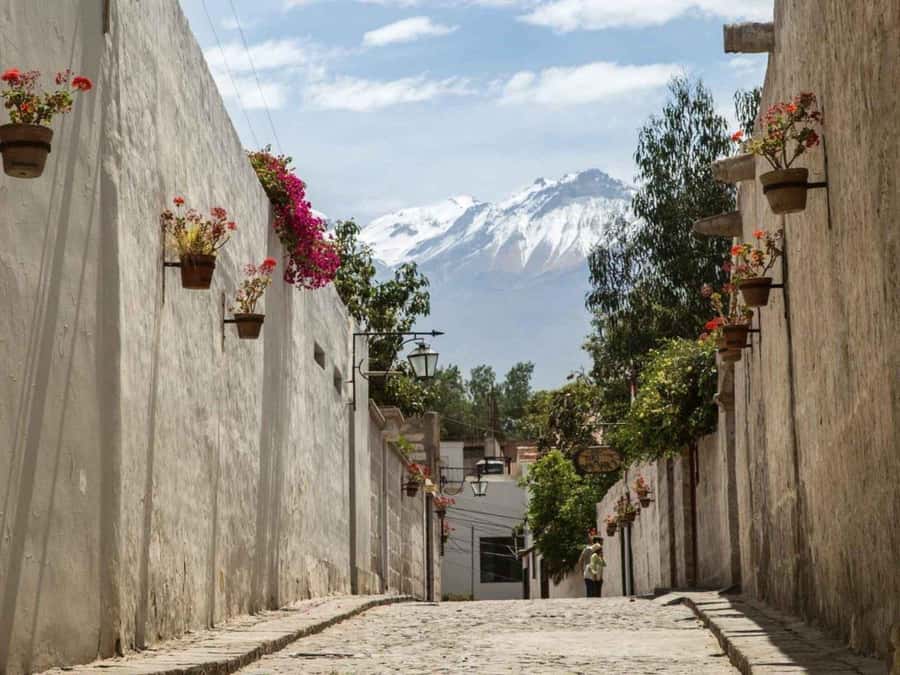
Between major stops, you’ll pass through charming nearby areas near the city center: old mansions and old city gardens. This part of the tour is where you start to feel the historic center as a lived-in place rather than a museum hallway.
I like this segment because it slows the pace just enough to help you transition from “square and monuments” into “everyday old city.” You get a sense of how people moved, where they built, and what the city kept around when modern life grew.
The trade-off is that not every moment will feel equally dramatic. That’s normal on a walking tour with a fixed time window. If you keep your eyes open, you’ll still find small details worth your attention—especially courtyards and doorways that hint at private spaces behind the main street.
El Puente Grau: volcano views that make Arequipa feel real
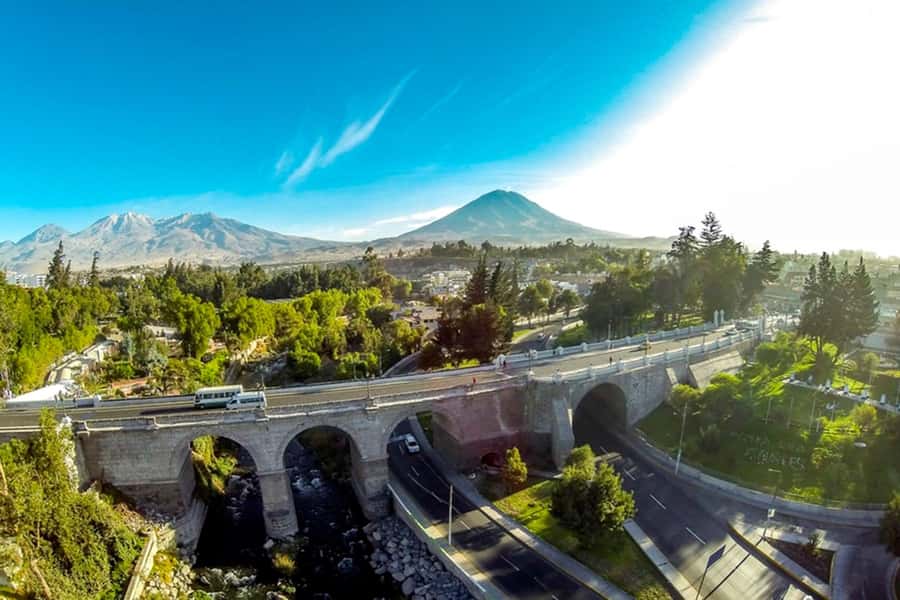
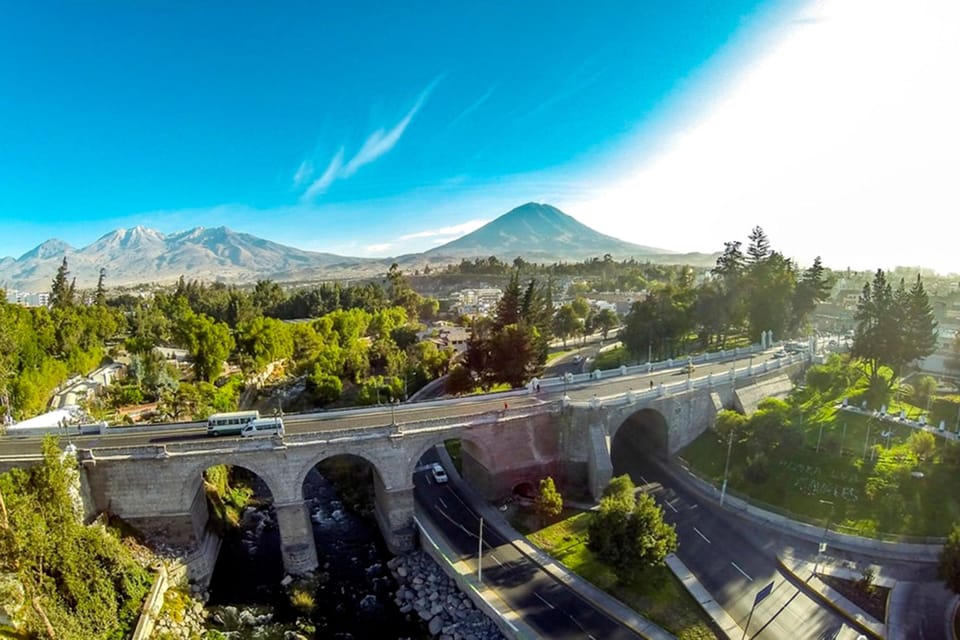
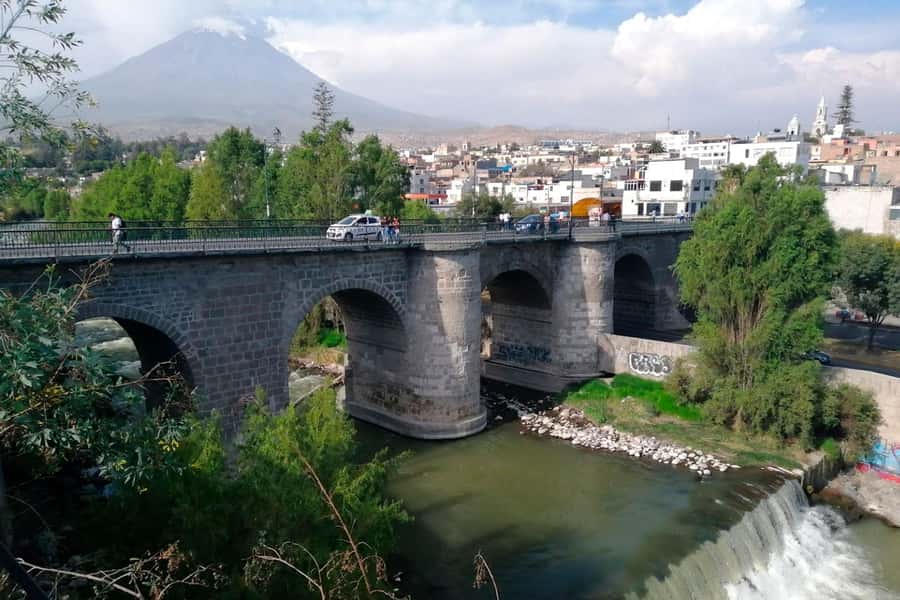
One of the most memorable segments is the walk by a strategic point for views of the volcanoes—Misti, Chachani, and Pichu Pichu—from El Puente Grau.
Even if you’ve seen volcanoes in photos before, this stop is different because you’re looking at them from inside the city’s daily geography. Arequipa doesn’t feel like it sits next to mountains as a background. It feels like the city was built in conversation with them.
What makes this worth it is the guide’s framing. You’re not just pointed outward; you’re given context for what you’re seeing and why those peaks matter to the local imagination. And if the day is clear, you’ll get the kind of view that turns your city photos from flat to dramatic.
One consideration: because the tour timing is fixed, you won’t have unlimited time at the viewpoint. Treat it as a chance to look, learn, and take a few good photos rather than a long observation session.
You can also read our reviews of more historical tours in Arequipa

Mundo Alpaca: camelids, a small zoo, and fiber shopping
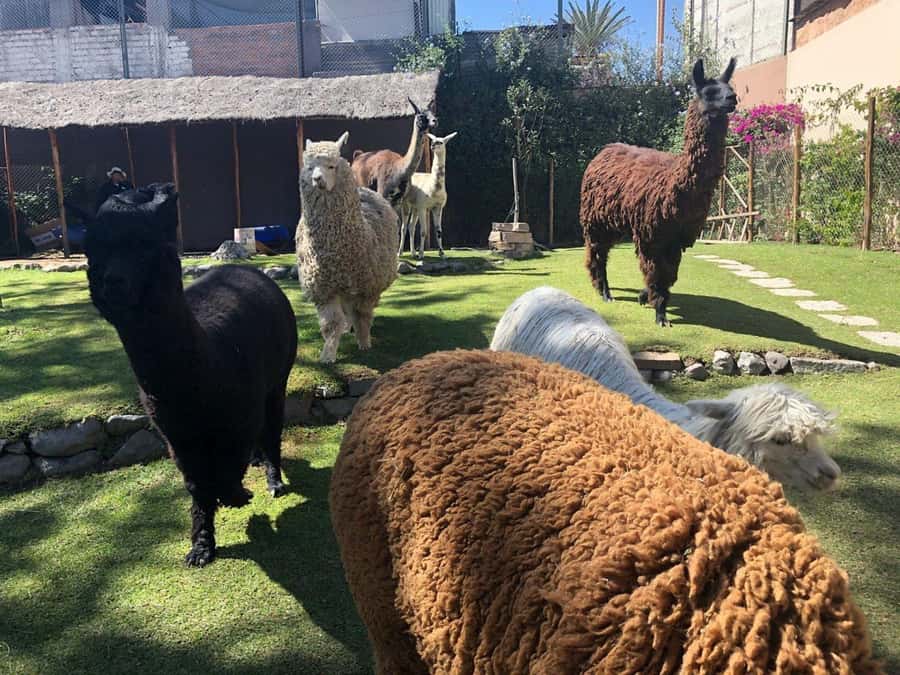
Then comes the stop that turns the tour from “historic” to genuinely fun: Mundo Alpaca. You’re visiting an old breeding farm for camelids, and the tour includes time around a small zoo of animals such as llama, alpacas, Suri, and vicuñas.
This is the kind of experience that works even if you’re not chasing animals for their own sake. The guide’s explanations make the camelid world feel connected to the local economy and daily life—especially through fiber, herding, and the different types you’ll see.
One practical perk: you’re not just looking. People share that feeding Llamas and Alpacas can happen here, and the animals make it easy to ask questions. If your goal is an Arequipa tour with a memorable moment that isn’t only architecture, this part does it.
If you like shopping that doesn’t feel like random souvenir stops, you can also buy fabrics made from the camelid fiber right in the area. That’s useful because you can ask what you’re looking at and decide without rushing between multiple shops.
Timing note: since this is still part of a 2-hour walk, you get a taste of Mundo Alpaca rather than a full farm immersion. Plan to enjoy the experience and keep moving.
San Lazaro neighborhood: the White City’s earlier roots
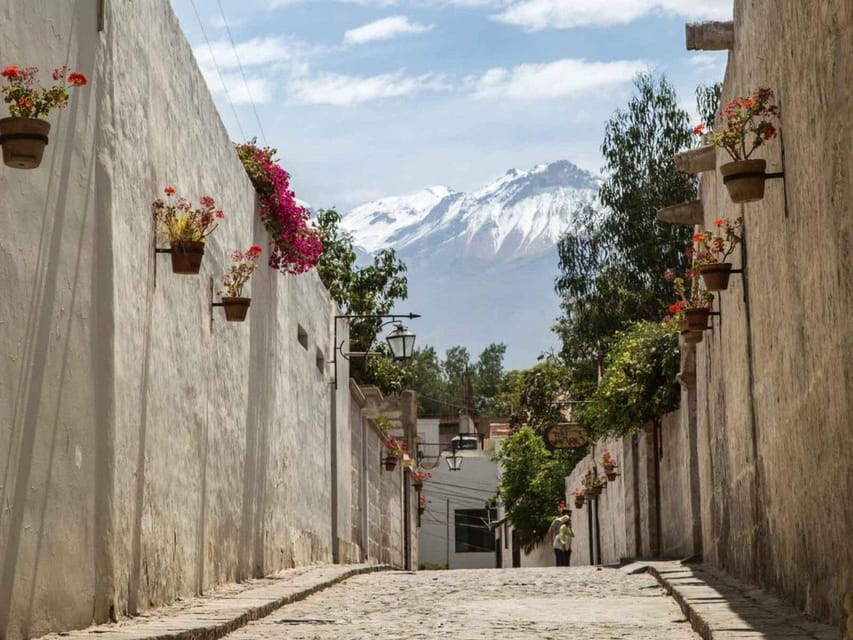
Next you’ll walk into the San Lazaro neighborhood, described as the first town where the White City was founded.
This stop is valuable because it gives you a different angle on Arequipa. Instead of only focusing on the main square and big monument spaces, you get a neighborhood tied to the city’s origin story. The guide’s job here is interpretation—turning streets and buildings into a timeline you can hold in your head.
I also find neighborhood stops like this helpful when you’re traveling solo or with mixed interests. If everyone else is monument-focused, San Lazaro becomes the “story walk” that keeps things engaging without feeling like you’re missing the important sites.
Optional entries: Santa Catalina Convent and the Juanita mummy
You finish back near Plaza de Armas, and along the way the guide can coordinate optional entries with extra cost. Two mentioned options are:
- Santa Catalina Convent
- the Juanita mummy (and other representative museum options in the city)
If you choose these add-ons, you’ll pay separately and hire internal guides for those sites. That’s a good setup because it means your historic-center walk stays focused, and the big museum content comes from people who specialize in that specific place.
I’d treat these options as a choose-your-own-adventure decision. If you’re short on time, stay with the core walk. If you love convent history or museum storytelling, tack on one additional site and use the rest of the day to roam at a slower pace.
Price, reservations, and the real value with tipping
The listed price is $10 per person, for a 2-hour walking tour. The key detail is how the money is handled: you pay a reservation amount, and then at the end there’s a voluntary tip to the guide.
That matters for value. A low reservation price is one thing, but the tour’s true cost is the combination of reservation plus tip. In practice, some people note a typical tipping range such as 30–50 soles per person, so plan for that in your budget rather than assuming the $10 alone covers everything.
Still, even when you add a reasonable tip, you’re paying for a guided walk that includes entrances to the places of visit. The guide isn’t just pointing at buildings; you’re getting explanations plus access where relevant.
For me, the best value signals are:
- you start near the main square and cover multiple major stops
- the walking time is short enough for most schedules
- the tour includes an animal-farm segment plus viewpoint time
If your main goal is a quick orientation to Arequipa’s center, this price structure can work very well. If you’re strictly cost-minimizing, you may decide this is not for you. But if you want guided context and multiple key stops in two hours, it’s a fair deal.
Logistics that affect your experience (the small stuff that counts)
Because this is a walking tour, comfortable shoes are your best friend. You’ll do everything on foot, so no matter how much you like the sights, your feet will decide how much you enjoy the day.
Also keep this in mind: since the tour is built around a set schedule, you’ll have moments that feel more photo-friendly than others. Prioritize photos at stops like the cloisters and El Puente Grau, where there’s something solid and structured to shoot.
Guide recognition is another practical win. Umbrella in hand, meeting point at Santa Catalina Street #204, and you’re close enough to Plaza de Armas that you can orient yourself even if you’re arriving a little early.
Languages are English and Spanish, and guides like Edgar, Johan, Jorge Echeandia, Beatriz, and Francisco have been mentioned in past tours. If you care about humor and storytelling style, this tour is often remembered for that mix.
If plans change, cancellation is available up to 24 hours in advance for a full refund, and you may be able to reserve and pay later. That flexibility is useful because Arequipa weather can change your viewpoint photos.
Who should book this Arequipa historic center walk
I’d point you toward this tour if you:
- want a fast introduction to Arequipa’s historic center
- like your walking tours with both architecture and people-friendly stories
- enjoy animals and want camelid time without needing a full-day detour
- appreciate a finish near Plaza de Armas so you can keep exploring afterward
It’s also a good fit if you’re arriving your first day and want your second day to be easier. The main square orientation and the viewpoint knowledge can make the rest of your self-guided wandering feel calmer.
On the other hand, if you’re the type who hates feeling rushed, you might find the fixed 2-hour structure limiting. You may need to treat the tour as the briefing, then plan longer independent time at your favorite stops after.
Should you book this tour
Yes, I think you should book it if your goal is a structured, guided sampler of Arequipa’s center in 2 hours. You get a clear route: Plaza de Armas, Cloisters of the Company, the walking-only stretch with old mansions and gardens, a volcano viewpoint at El Puente Grau, a memorable stop at Mundo Alpaca with camelids like llama, alpaca, Suri, and vicuñas, then San Lazaro.
Just go in with the right expectations: it’s not a slow, linger-at-every-corner kind of walk. It’s a smart, efficient route meant to get you oriented, informed, and smiling before you move on with your own plans.
If you’re budget-minded, remember the reservation price plus a voluntary tip is part of the deal. If you’re cool with that and you want one of the best short walks to understand Arequipa quickly, this one fits.
FAQ
Where is the meeting point?
You meet at Santa Catalina Street #204, about one block from the Plaza de Armas. The guide will be recognizable with an umbrella.
How long is the walking tour?
The total duration is about 2 hours.
What does the tour cost?
The price is $10 per person for the reservation. At the end of the tour, there is a voluntary tip for the guide.
Are entrances included?
Yes. Entrance to the places of visit is included in the tour.
Which languages are offered?
The live guide offers the tour in English and Spanish.
What optional add-ons are available near the end?
Depending on prior coordination, you can enter with an extra cost to the Santa Catalina Convent or the Juanita mummy, using internal guides for those sites.
Can I cancel for a full refund?
Yes. You can cancel up to 24 hours in advance for a full refund.