REVIEW · AREQUIPA
Arequipa: Walking Tour and Santa Catalina Monastery
Book on GetYourGuide →Operated by Tangol · Bookable on GetYourGuide
Santa Catalina feels like time travel in stone. This tour pairs San Lázaro’s sillar streets with a guided walk through Santa Catalina Monastery, and I love how the guide connects the dots from Inca-era occupation to Spanish-era city life. One possible drawback: the timing is structured, so if you prefer lots of unplanned roaming, you’ll feel a bit guided.
You start near the historic core, with pickup options that make it easy to meet up. Expect a mix of short van rides and walking, plus frequent photo breaks, and the guide can work in English and Spanish. On past tours, guides like Gisela (cordial and precise) and Milei (empathetic and very knowledgeable) were highlighted for clear explanations and good answers.
In This Review
- Key highlights worth your time
- San Lázaro: the walk starts where Arequipa feels old
- Barrio del Solar by the Río Chili: where colonial lodging centers lived
- Tambo El Matadero: colonial life with a darker edge
- Tambo La Cabezona: an older communal setup and an early milling connection
- Plaza de Armas: your 30-minute anchor in Arequipa
- Santa Catalina Monastery: 20,000 square meters of cloister life
- Photo time, then the patios that explain the routine
- Price and value: what $35 covers and what to watch
- Optional entrance fee: plan your budget
- Timing, transport, and how the 3-hour pace feels
- What to bring: small gear that makes the day easier
- Which kind of traveler should book this
- Who might prefer something else
- Guides and communication: English, Spanish, and clear answers
- A few practical notes before you go
- Should you book the Arequipa Walking Tour and Santa Catalina Monastery?
- FAQ
- How long is the walking tour to Santa Catalina Monastery?
- Is hotel pickup included?
- What’s included in the price?
- Do I need to pay the Santa Catalina Monastery entrance fee?
- What should I bring for the tour?
- Is the tour wheelchair accessible?
Key highlights worth your time
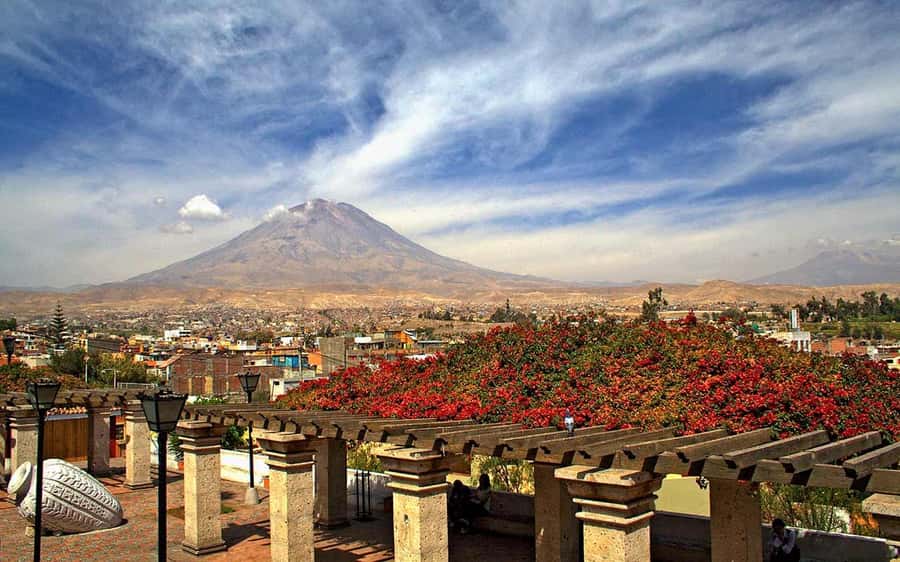
- San Lázaro’s sillar architecture: volcanic-stone streets and white walls that look postcard-clean.
- Barrio del Solar near the Río Chili: colonial buildings and the feel of older Arequipa districts.
- Tambos with real purpose: Tambo El Matadero and Tambo La Cabezona bring you into colonial everyday life.
- Plaza de Armas as a baseline: the city’s main meeting point, plus portals and the bronze fountain.
- Santa Catalina Monastery’s scale: 20,000 square meters of cloisters, patios, squares, and church spaces.
- Patio del Silencio: a moment that makes the cloister life feel tangible.
San Lázaro: the walk starts where Arequipa feels old
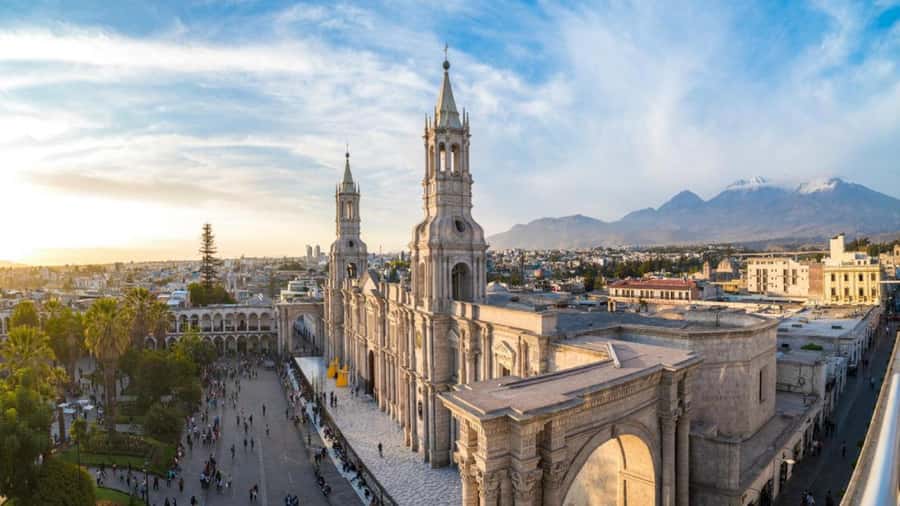
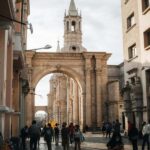
I like tours that begin with a neighborhood, not a checklist. Here, you’re picked up at a historic-center location and taken to San Lázaro, just a few blocks from Plaza de Armas. The ride is short, then you’re on foot in a district known for small streets and houses built with sillar, the volcanic stone Arequipa is famous for.
The atmosphere changes quickly once you enter those narrow lanes. Instead of broad avenues, you get small squares, white walls, and corners that seem made for slow walking. It’s also a neighborhood with layers: pre-Inca and Inca cultures were here, and during the Spanish conquest and city foundation, early houses were built in this same area. That makes San Lázaro a great first stop because it frames Arequipa as more than a pretty center—it’s a place with continuity and change.
I also appreciate how the tour treats this area as more than a photo stop. You’re not just passing buildings; you’re learning what you’re looking at, and that makes the architecture feel less like decoration and more like evidence.
You can also read our reviews of more walking tours in Arequipa
Barrio del Solar by the Río Chili: where colonial lodging centers lived
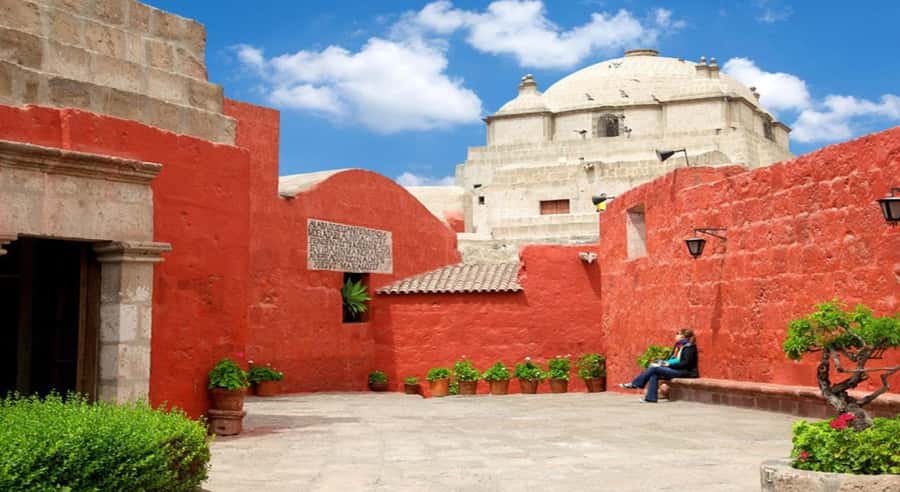
After San Lázaro, the tour continues toward Barrio del Solar, near the Río Chili. You’ll walk along streets with traditional and colonial buildings, and the guide points out districts tied to the way merchants moved through the city.
This is where Arequipa starts to feel practical. Those merchant lodging places you’ll hear about are called tambos. Think of them like an early system for rest stops and local services tied to commerce. You’re seeing how movement and trade shaped the city’s layout, not just where the fancy churches ended up.
Photo breaks matter here, because the streets are full of angles. If you carry a phone or small camera, you’ll have plenty of chances to frame clean shots without constantly stopping traffic or blocking sidewalks. Just remember: the ground can be uneven in historic areas, so wear shoes you trust.
Tambo El Matadero: colonial life with a darker edge
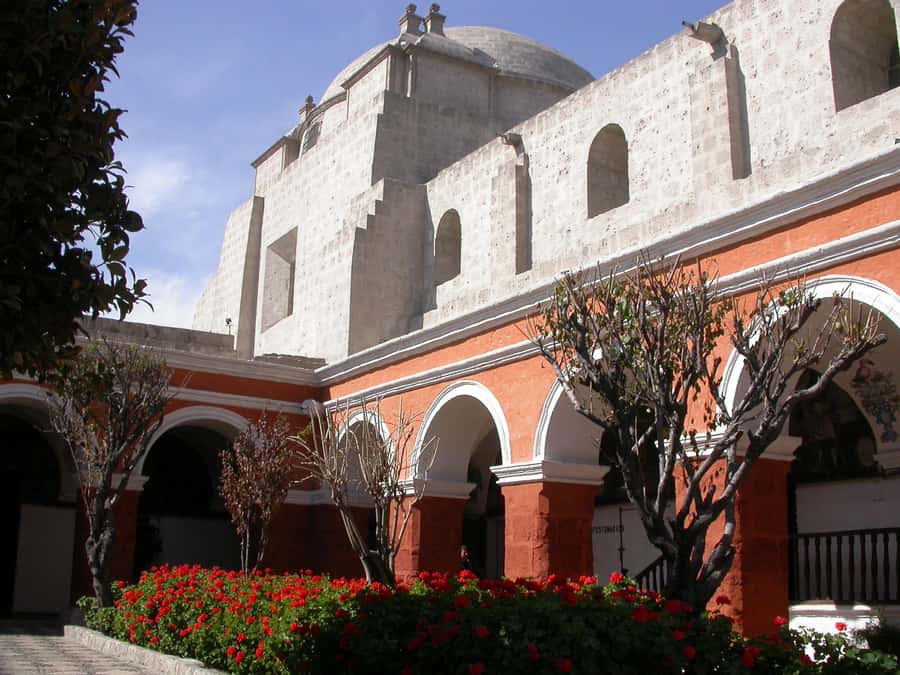
The tour brings you to Tambo El Matadero, a seventeenth-century building used for animal sacrifice. That sounds heavy for a walking tour, and it is. But what I like about this stop is that it doesn’t sanitize the past. You get context for what these tambos were for in the colonial system, including how food supply and ritual practices were connected to local infrastructure.
One detail I find especially human is that around 30 families live in the area today. That means you’re not touring a sealed museum block. You’re walking through a living neighborhood with ongoing daily life.
That can be a double-edged sword. On one hand, it adds realism. On the other, the vibe is not purely scenic. If you’re hoping for a solely uplifting stroll, this is a reminder that historic cities include the complicated parts, too.
Tambo La Cabezona: an older communal setup and an early milling connection
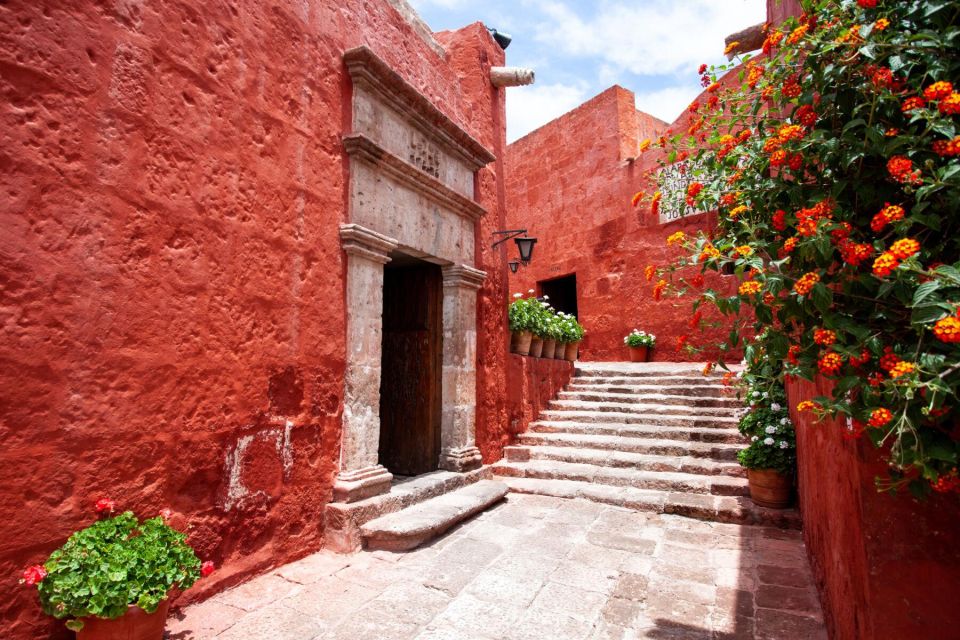
Next comes Tambo La Cabezona, a colonial grouping of houses with a communal entrance dating from the sixteenth century. This is where the tour shifts tone again—still serious, but more about how community space worked.
The communal entrance is the kind of detail that makes you see architecture as social design. This wasn’t just a private residence model. It was built for shared access and shared function.
You’ll also hear about one of the first mills in the city that worked here. Milling may sound mundane compared to churches and palaces, but it’s a key part of how a city actually survives. Food has to be processed somewhere, and jobs have to happen somewhere. This stop helps you understand Arequipa as a working city, not only a sightseeing city.
Plaza de Armas: your 30-minute anchor in Arequipa
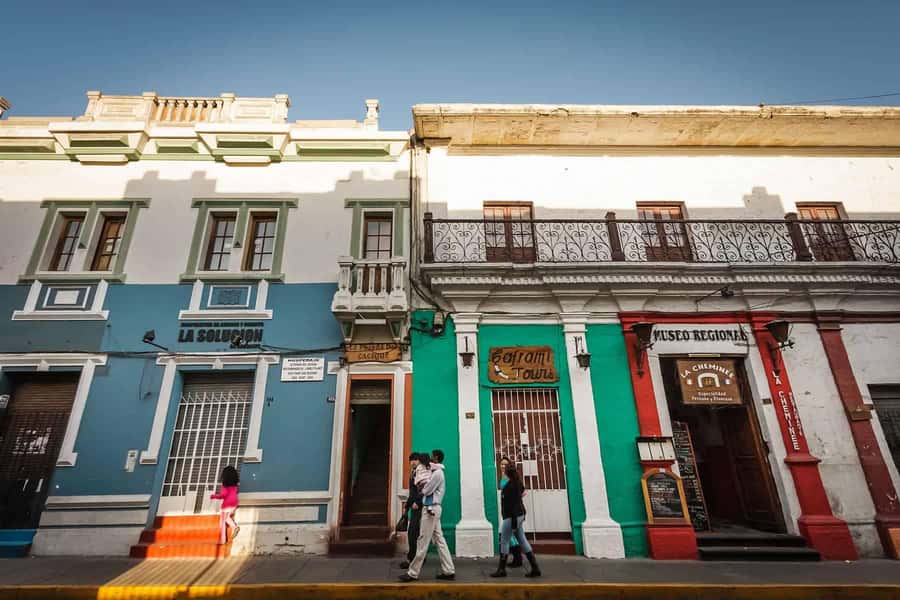
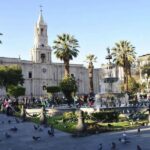
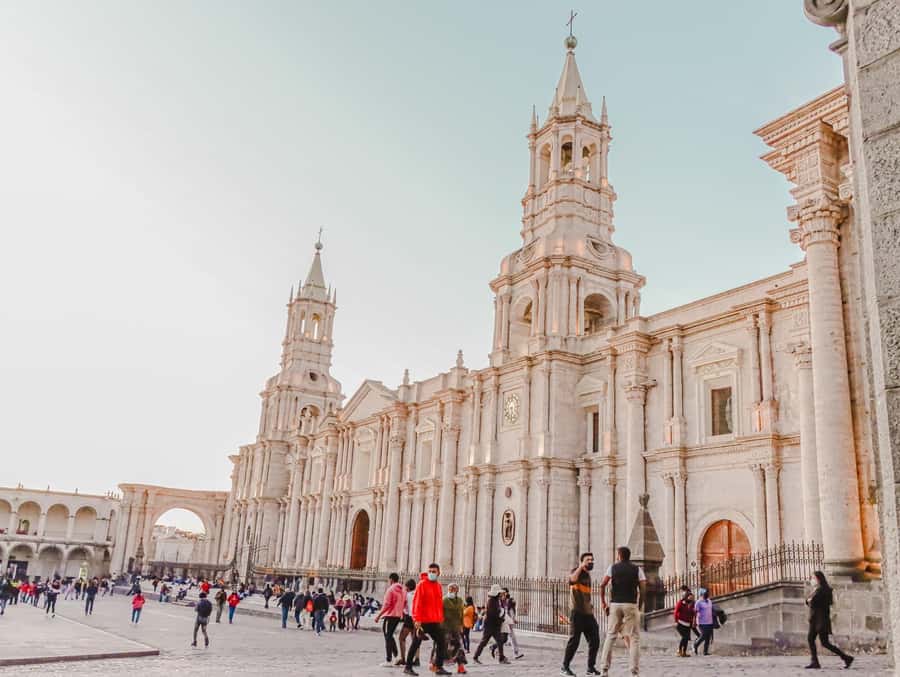
Then you reach Plaza de Armas, the main meeting point of locals and the area where the Arequipa Cathedral is located. Even if you’ve seen squares in other Peruvian cities, you’ll notice the difference in how Arequipa is built and lit. This square is surrounded by portals, and there’s a bronze fountain in the middle.
The way the tour uses this stop works well. You get time for a photo and a guided orientation, but you’re also given a short walk to Santa Catalina afterward. That spacing helps you avoid the common problem of arriving at a major attraction too exhausted or too rushed.
A practical tip: Plaza de Armas is a natural place to slow down and check your bearings. If you plan to explore on your own afterward, this is where you’ll get your mental map back quickly.


Santa Catalina Monastery: 20,000 square meters of cloister life
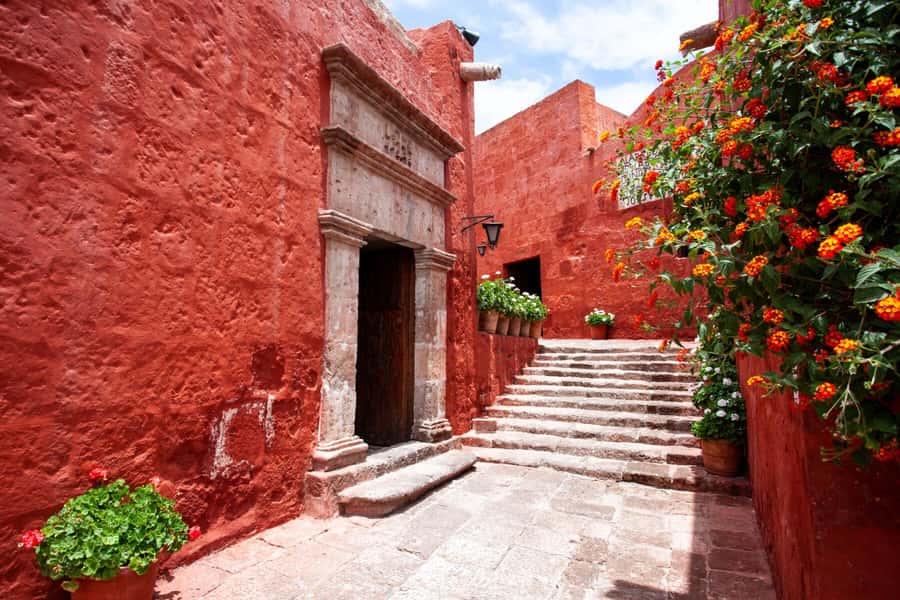
This is the big finish. You’ll walk to the Santa Catalina Monastery, founded in 1579. The site covers about 20,000 square meters, spread across cloisters, patios, squares, streets, a bell tower, and the church. When you step inside, it can feel less like one building and more like a small walled city.
The monastery’s backstory helps everything click. During the viceroyalty, Doña Maria de Guzmán, a wealthy woman, donated her properties and chose a cloistered life as a nun. Many of the women who entered came from wealthy families, and today there are still cloister nuns living at Santa Catalina.
For me, that continuity is what makes the place more than scenery. You’re seeing spaces that were designed for a purpose, and the purpose still exists.
Photo time, then the patios that explain the routine
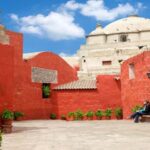
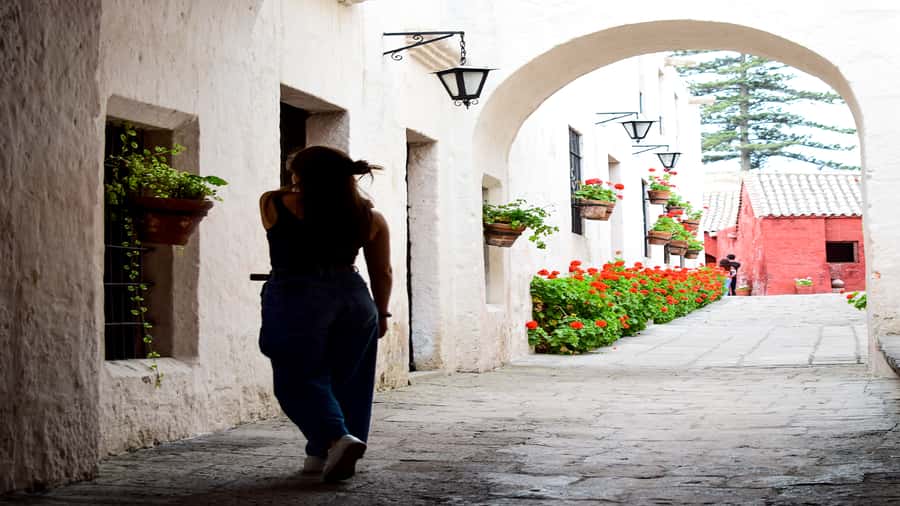
You’ll have time to take photos, and the architecture gives you plenty to work with: walkways made of ashlar stone, and sections with natural red-colored walls. The colors and textures look great in daylight, especially if you position yourself in a courtyard and let the stone lines lead your eye.
You’ll also visit key areas, including the Patio del Silencio. That’s a standout because it’s directly tied to the cloister rhythm—nuns met there to pray and read the Bible in silence. Even without a dramatic soundtrack, the design tells you what the space expects from you: quieter steps, slower attention, and fewer distractions.
The tour includes a guided walkthrough and time to explore on foot, plus time to return for final photos before you’re dropped off.
Price and value: what $35 covers and what to watch
The headline price is $35 per person for about 3 hours. In a city like Arequipa, where you want both the guided context and the logistics handled, that price is usually fair—especially because you’re not only seeing Santa Catalina.
You’re getting a guided walk through multiple historic districts (San Lázaro and Barrio del Solar), plus guided visits to two tambos and time at Plaza de Armas. Santa Catalina is the centerpiece, but it isn’t the only value. The guide’s job is to connect the why behind each location, and that’s what turns a pass-by sightseeing route into a real understanding.
Optional entrance fee: plan your budget
Entrance to Santa Catalina may be optional depending on the package you pick. If you select the option without the monastery entrance fee included, you pay locally:
- 25.00 PEN for people ages 7 to 21
- 45.00 PEN for adults
Also, children 4 and younger are complimentary.
One practical way to choose: if you already know you’ll do Santa Catalina with time to spare for photos, it’s worth making sure the package you select matches your budget comfort. Either way, you’ll still get the guided visit.
Timing, transport, and how the 3-hour pace feels
This tour runs about 3 hours. You’ll start with a short van segment (roughly 10 minutes), then spend most of the time walking between stops.
A good thing about the pacing is that it keeps you from wearing out before the monastery. The walking portions aren’t overly long, and the van transfers help you reset. You’ll also get photo stops that are built into the route rather than added stress.
One consideration: the order of visits may vary, depending on what’s practical that day. So don’t plan a tight second activity right after the tour unless you’re ready to be flexible.
What to bring: small gear that makes the day easier
Arequipa weather can shift and the sun can be intense, especially in open plazas and courtyards. Bring:
- Sunglasses
- Sunscreen
- Insect repellent
- Comfortable clothes
- A hat
You’ll also be walking on older streets and within historic settings, so comfortable shoes matter more than you might think. If you hate squinting photos because you forgot sunglasses, you’ll hate that regret later.
Which kind of traveler should book this
This tour is a great fit if you want:
- A guided explanation rather than just walking from stop to stop
- The combination of city streets and one major cultural site
- A route that mixes architecture with practical context about how the city worked
It’s also a smart choice for first-timers. The sequence takes you through key “layers” of Arequipa: neighborhood streets, merchant lodging centers, the main square, and then the monastery.
Who might prefer something else
If you’re using a wheelchair, this tour is not suitable. Also, if you want long, independent wandering time at each attraction, the structured 3-hour format might feel limiting.
Guides and communication: English, Spanish, and clear answers
The tour guide works in English and Spanish, which is a big deal if you’re not traveling with a fluent partner. Clear explanations matter a lot at Santa Catalina because the site is large and full of pathways, patios, and buildings. A good guide helps you avoid feeling lost in your own photos.
Based on past experiences with guides such as Gisela and Milei, there’s a strong emphasis on being attentive and answering questions. That’s exactly what you want in a place where you’ll naturally wonder about daily life, convent spaces, and what each courtyard was for.
A few practical notes before you go
- Santa Catalina closes on December 25 and Good Friday. If you’re traveling around those dates, check timing early.
- The monastery includes areas that require walking, and you’ll be moving between multiple parts of the site.
- Food and drinks aren’t included, so plan to eat before or after.
Should you book the Arequipa Walking Tour and Santa Catalina Monastery?
Yes, if you want a high-value Arequipa day that mixes street-level neighborhoods with a major UNESCO site, this is an easy booking. For many people, Santa Catalina alone is the reason to come, but the real win is how the route sets you up to understand what you’re seeing: sillar neighborhoods, merchant tambos, the civic center, and then the cloister world.
Book it if you enjoy guided context and like taking photos at a steady pace. Pass or look for another option if you need long free time at each location, or if mobility needs make walking difficult.
If you’re only choosing one guided activity in Arequipa, this one does the job: you leave with the sense that Arequipa is built in layers, and Santa Catalina is the place where those layers become visible in stone.
FAQ
How long is the walking tour to Santa Catalina Monastery?
The experience lasts about 3 hours.
Is hotel pickup included?
Hotel pickup is optional. If your hotel is in the Historic Center, you can be picked up and dropped off. If not, you’ll meet at Calle Zela 301 near the Convent of Santa Catalina (Hotel Mirador del Monasterio).
What’s included in the price?
You get a professional guide in Spanish and English. Hotel pickup and drop-off are optional, and monastery entrance fee with a local guide may be included depending on the option you choose.
Do I need to pay the Santa Catalina Monastery entrance fee?
It depends on your selected option. If you choose the option without entrance fees included, you pay locally (25.00 PEN for ages 7 to 21, and 45.00 PEN for adults).
What should I bring for the tour?
Bring sunglasses, sunscreen, insect repellent, comfortable clothes, and a hat.
Is the tour wheelchair accessible?
No. The tour is not suitable for wheelchair users.