REVIEW · AREQUIPA
Arequipa, Historic and Colonial City and Santa Catalina Monastery
Book on Viator →Operated by VIPAC Travel · Bookable on Viator
Arequipa feels like a photo set. This afternoon tour threads the White City through key viewpoints and historic streets, with a guide who helps you make sense of what you’re seeing. You’ll start with the area where the city’s story began and then ride to spots like Carmen Alto for volcano framing.
I especially like the easy pace: an air-conditioned vehicle gets you out of the center’s taxi chaos and back to your hotel in about 3.5 hours. The big win is the Santa Catalina Monastery, which was closed for centuries and still feels like a separate world. One possible drawback: this tour is heavily centered on religious sites, so if you’re not into churches and convents, it may feel like more “faith stops” than you want.
In This Review
- Key highlights to know before you go
- Why this 2:00 pm tour works so well in Arequipa
- Carmen Alto and the volcano lineup over Arequipa
- Yanahuara’s sillar architecture and Andalusian-style church
- Entering Santa Catalina: why this monastery feels like a city
- Plaza de Armas and the Jesuit Church near San Ignacio Dome
- Price and timing: why $61 makes sense for 3.5 hours
- What I’d pack and wear for a smooth, respectful visit
- Who should book this Arequipa + Santa Catalina tour
- Should you book this tour with VIPAC Travel?
- FAQ
- How long is the Arequipa Historic and Colonial City and Santa Catalina Monastery tour?
- What time does the tour start?
- Is hotel pickup and drop-off included?
- Do I need to pay admission tickets for the sites?
- Is food included in the tour price?
- What should I wear for churches and the monastery?
- What vehicle is used during the tour?
- How large is the group?
- What is the cancellation window?
Key highlights to know before you go
- White City sillar stone: you’ll learn why so much of Arequipa looks chalky-white and how volcanic rock shaped the buildings
- Carmen Alto + Mirador de Yanahuara: photo stops designed around the city’s farmland and the volcano trio
- Monastery access time-saver: the Santa Catalina visit is the signature stop, and it’s timed to avoid wandering on your own
- Small group size (max 15): better questions, less waiting, and more breathing room in tight streets
- Hotel pickup and drop-off: fewer logistics headaches for an afternoon tour
- Guide-led context: you’ll get explanations that connect the viewpoints, architecture, and neighborhoods
Why this 2:00 pm tour works so well in Arequipa
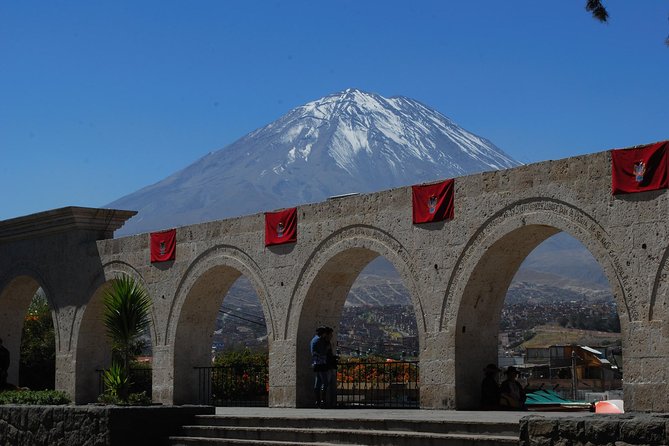
Starting at 2:00 pm is smart for three reasons. First, you dodge the early-morning scramble while you still have daylight for photos. Second, Arequipa’s light and shadow can make the sillar buildings look even brighter, especially in plazas and at viewpoints.
Third, you’re on a tight loop. In roughly 3 hours 30 minutes, you’re covering the main historic area and a couple of neighborhood stops that you’d normally need more time (and more taxis) to string together. If you only have one afternoon in town, this is a practical use of time.
The tour is also built for comfort. You travel by air-conditioned coach, which matters in Peru’s south when the sun swings hot and cold.
You can also read our reviews of more city tours in Arequipa

Carmen Alto and the volcano lineup over Arequipa
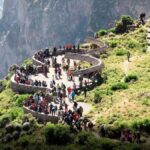
The tour begins with the historical center side of Arequipa and a viewpoint stop at Carmen Alto. This is where you get oriented. You can admire the farming terraces stretching around the city, and you’ll see the three “guardian” volcanoes that define Arequipa’s skyline: Misti, Chachani, and Pichu Pichu.
This is one of those moments that sounds simple, but it pays off later. Once you’ve seen where the volcanoes sit and how the countryside wraps in, the rest of the city reads like a map, not just random streets. Your guide’s job here is to connect the geography to what you’ll walk through next.
One timing note: if you’re traveling in February, expect more cloudy days. There’s mention that February coincides with the rainy season, which can blur volcano views. If you can choose dates, a clearer day makes a difference.
Also, while the tour starts at a lookout, it still feels like part of the city story. You’re not just looking outward—you’re learning why this spot matters for understanding Arequipa.
Yanahuara’s sillar architecture and Andalusian-style church

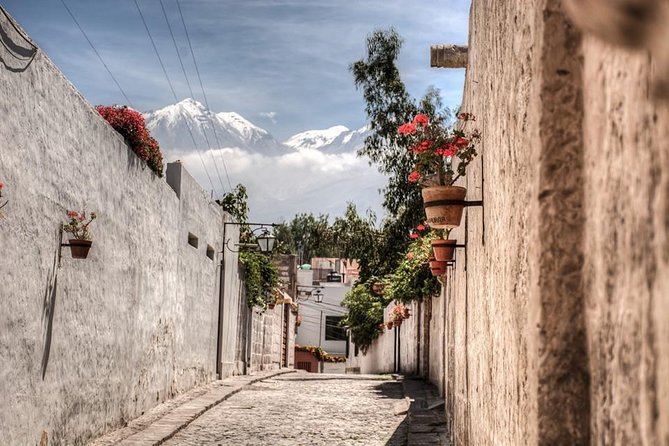
After the first viewpoint orientation, you head toward the colonial district of Yanahuara. This neighborhood is famous for two things you’ll actually see right away: a church built in an Andalusian style, and a viewpoint area with striking architecture framed by sillar stone arches.
Yanahuara is a perfect “in-between” stop. It’s close enough to the historic center that you feel like you’re still in the same world, but different enough that you don’t end up repeating the same postcard angles. And the architecture gives you something to notice beyond scenery: how the stone is shaped, how arches create structure, and how the district’s design guides your walking.
Then you get another viewpoint moment at El Mirador de Yanahuara. Think of it as your second chance to photograph Arequipa from the side that shows the city’s spread and the volcano silhouettes. If the first viewpoint is washed out by cloud, this one can still work—assuming the weather cooperates.
One more plus here: this portion is walkable. The streets are not described as a marathon, but you are moving through a historic area, so wear shoes you’ll be comfortable in for a few hours of gentle strolling.
Entering Santa Catalina: why this monastery feels like a city
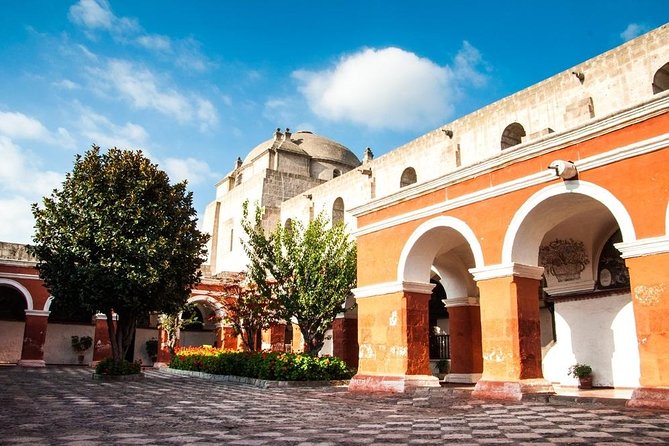
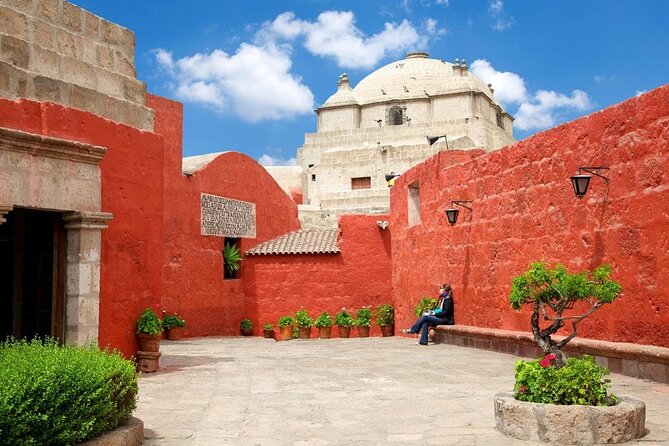
The Monasterio de Santa Catalina is the tour’s centerpiece. You’ll visit the Dominican religious site that was closed to the public for nearly 400 years, and the result is that you don’t just tour rooms—you move through a place that still feels lived-in.
What makes Santa Catalina special on a guided visit is the pacing and interpretation. You walk through peaceful plazas, narrow alleyways, and lush gardens. The monastery functions like a self-contained town, and with a guide explaining the layout, it becomes easier to understand the logic behind the spaces you’re seeing.
This stop is also one of the biggest value items on the tour. Admission is listed as included here, while other stops have free admission. That means you’re not scrambling to pay on top of the base price once you get to the door.
Dress matters a lot for this one. Religious sites in Arequipa have strict clothing rules, and this tour notes that shorts aren’t allowed. Plan for long pants or a long skirt. It’s the kind of rule that’s easy to ignore until you’re standing at the entrance.
How long does it take? The schedule gives it about an hour. That’s usually enough to appreciate the main highlights without feeling rushed through every corner. If you love architecture and want more time, you can still get a lot out of the guided flow because the tour focuses on the monastery’s character rather than checkbox moments.
Plaza de Armas and the Jesuit Church near San Ignacio Dome
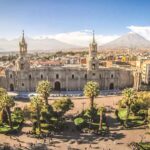
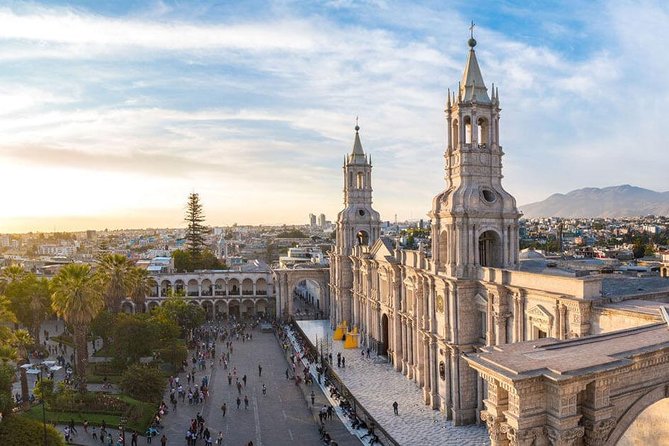
After Santa Catalina, the tour returns you to the core of Arequipa’s historic center. You’ll stop by the Plaza de Armas and see the Basilica Cathedral of Arequipa, dating from the 16th century. This is where your guide’s context is especially useful. A building like this can look like “old stone” at first glance, but commentary helps you spot what to care about: design choices, the structure’s place in the city’s growth, and why this plaza stayed central over time.
You’ll also see the arches around the main square area. Those views are classic for a reason—they make it easy to understand how the city organizes movement around public space.
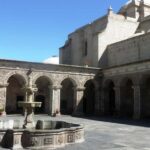
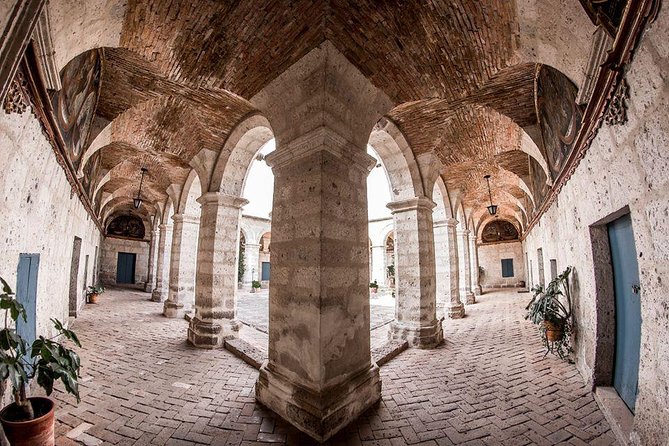
From there, you visit the Church of the Society of Jesus (Iglesia de los Jesuita), founded in the 17th century by the Jesuits. The big draw here is the cloisters and the San Ignacio Dome, which you’ll have a chance to view during the guided time in this portion of the tour.
If you’re someone who likes quieter moments, this stop can feel calmer than the busiest plazas. Cloisters tend to slow your pace. It’s a break from full-on street sightseeing.
There’s also one schedule caution to keep in mind. One person reported that the cathedral stop landed later than they expected and that a tower view window had already closed. You shouldn’t plan your day around optional tower access, but if that’s a priority for you, bring flexible expectations to the timing of the finish.
You can also read our reviews of more historical tours in Arequipa
Price and timing: why $61 makes sense for 3.5 hours
The price is $61 per person, and for Arequipa that’s a fair deal for what you pack into an afternoon. You’re paying for a guide, hotel pickup and drop-off, and an air-conditioned vehicle—plus admission to the Santa Catalina Monastery.
A good way to think about value here: this tour saves you the time of figuring out routes between viewpoints, neighborhoods, and multiple major religious sites. Without a vehicle plan, you’re likely to rely on taxis more often, and that can be slower and more frustrating than it sounds.
Also, the group size caps at 15 travelers. Smaller groups make a difference when you’re moving through tighter historic spaces and waiting at viewpoints. You spend less time watching the clock and more time seeing what’s in front of you.
Start time is 2:00 pm, and the total duration is about 3 hours 30 minutes. That’s long enough to feel like a real city orientation, but not so long that you’ll be worn out before dinner.
Food and drinks are not included, so plan to snack beforehand or grab something after the drop-off. Arequipa is very walkable in the center, so you can turn the end of the tour into an easy meal hunt.
What I’d pack and wear for a smooth, respectful visit
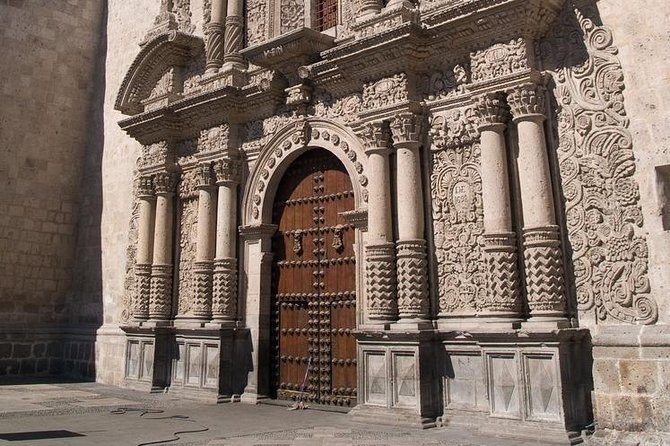
This tour mixes viewpoints, neighborhood walking, churches, and a major monastery. That means you should prepare for both comfort and rules.
Wear
- Long pants or a long skirt for religious sites (shorts aren’t allowed)
- Comfortable walking shoes with grip for uneven stone streets
Bring
- A light layer even if it’s warm; evenings in the Andes can feel cooler
- Sunglasses and sunscreen for the viewpoints
- A camera or phone with enough battery; you’re getting multiple photo angles, including the volcano-framed views
Photo tip that matters
Volcano views depend on cloud cover. If you’re visiting during months with more rain, don’t assume you’ll get clear sightlines for every angle. Having more than one viewpoint stop is a smart hedge, and the schedule includes that.
Guide quality is real here
In the feedback, guides named Jeymi, Charo, Sline, Kaitlin, and Victor are praised for explaining the sights clearly and in strong English. That’s a big deal for this kind of tour, because the value is not just seeing famous buildings—it’s understanding why they look the way they do and how the city’s story fits together.
Who should book this Arequipa + Santa Catalina tour
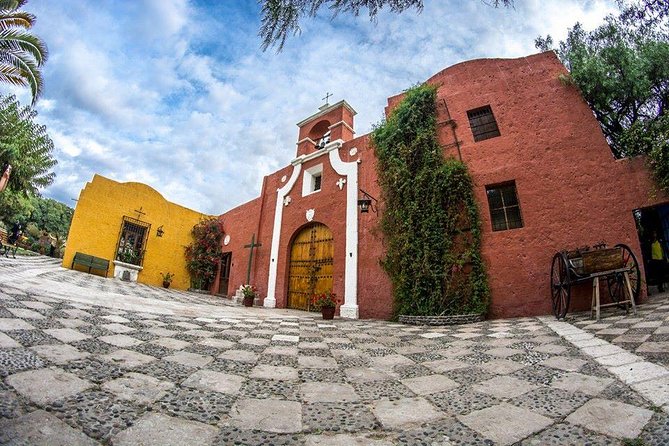
This tour fits best if you want a guided, structured afternoon that hits the biggest historic targets without wasting time.
You’ll likely enjoy it if you:
- Want quick orientation to Arequipa’s setting with Misti, Chachani, and Pichu Pichu in view
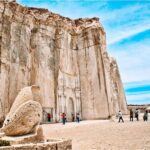
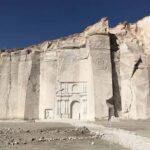
- Appreciate architecture made from sillar volcanic stone
- Like walking in historic quarters and getting context instead of reading plaques alone
- Want a guided Santa Catalina visit without spending hours planning logistics
It may not be your best match if you:
- Don’t want a lot of religious content; the itinerary is heavily church and monastery focused
- Prefer a less structured experience with more self-guided free time
- Are very sensitive to group language differences. One account noted an English booking where the group shifted to Spanish speakers, so if language control matters most to you, confirm your preferences during booking
Should you book this tour with VIPAC Travel?
If you’re short on time, I think this is a strong pick. You get a smart mix of viewpoints, historic neighborhoods, and the Santa Catalina Monastery, with the convenience of hotel pickup, an air-conditioned coach, and included admission for the big ticket stop.
My call: book it if you want Arequipa’s highlight circuit done efficiently and you’re comfortable with a religious-heavy itinerary. Skip or reconsider if you’re only interested in secular attractions, need guaranteed language control, or plan to squeeze in tower views as a must-do.
Either way, go in prepared: wear long pants or a long skirt, bring comfy shoes, and don’t bet your photos on perfect volcano weather. You’ll still get a good feel for why Arequipa earns that nickname: it’s not just white stone, it’s a whole city built around volcanic geology, public plazas, and layered neighborhoods.
FAQ
How long is the Arequipa Historic and Colonial City and Santa Catalina Monastery tour?
It runs about 3 hours 30 minutes.
What time does the tour start?
The start time is 2:00 pm.
Is hotel pickup and drop-off included?
Yes. The tour includes hotel pickup and return drop-off.
Do I need to pay admission tickets for the sites?
Admission for the main historic centre stop is listed as free, and the Monastery of Santa Catalina admission is included. Other stops are listed as having free admission where specified.
Is food included in the tour price?
No. Food and drinks are not included.
What should I wear for churches and the monastery?
Religious places do not allow shorts. Wear long pants or a long skirt.
What vehicle is used during the tour?
You travel by air-conditioned coach.
How large is the group?
The tour has a maximum of 15 travelers.
What is the cancellation window?
You can cancel up to 24 hours in advance for a full refund.