REVIEW · AREQUIPA
Arequipa Tasting Tour
Book on Viator →Operated by Evaristravel Agencia de turismo · Bookable on Viator
Arequipa has a way of teaching you its story when you slow down and look closely. This tour strings together the city’s main squares and standout churches, then rewards you with a real taste of local gastronomy along the way. I like that it’s not just photo stops; you get context for why each building and neighborhood matters.
Two things I’d pick it for right away: the way the downtown plazas connect Arequipa’s founding and rebuilding after earthquakes, and the food-first payoff at Mercado San Camilo plus the tasting at the end. One consideration: it is a longer walking tour, and the pisco and dessert come later, so come with decent stamina and a hunger for history before the sweet stuff.
In This Review
- Key highlights you should care about
- A 3.5-hour walk that teaches Arequipa fast
- Price and logistics: $13 goes further than it looks
- Plaza Campo Redondo: the first landing point feeling
- San Francisco Plaza: big church energy and an artisan side trip
- Plaza de Armas: where the earthquake story gets personal
- Iglesia de la Compañía de Jesús: gold leaf without the museum ticket
- Mercado San Camilo: the food stop that powers everything
- Cloisters of the Company of Jesus: viceroyal architecture with a quiet feel
- The pisco finish at Fundo el Fierro: dessert, fruits, and the lesson behind it
- What kind of guide you’ll want (Jose, Daniel, Jorge)
- Who should book this tour (and who should slow down)
- Should you book the Arequipa Tasting Tour?
- FAQ
- How long is the Arequipa Tasting Tour?
- How much does the tour cost?
- What’s included in the tasting?
- What isn’t included?
- Where does the tour start and end?
- How big is the group?
- Is the tour suitable for someone with limited mobility?
- What happens if the weather is bad?
- Can I cancel for free?
Key highlights you should care about
- Small group (max 8) keeps questions easy and the pace manageable.
- Mercado San Camilo is the center of the food part, with lots of samples.
- Plaza de Armas + Jesuit sites give you the architecture story behind the city.
- Free entry for the listed sights means you spend your money on tastes, not tickets.
- Pisco tasting at Fundo el Fierro closes the loop with a local finish.
- Dessert and local fruits included, so you’re not just window-shopping.
A 3.5-hour walk that teaches Arequipa fast
This is the kind of tour I recommend when you want to understand a city without getting lost in a pile of random stops. You cover Arequipa’s core on foot, moving plaza to plaza, church to church, and market to market. Then you end with a tasting that feels connected to what you just learned.
The timing is realistic: about three and a half hours. The group size is capped at 8, so you don’t feel like you’re herded from one place to the next. And because you’re working downtown, you’ll still have the rest of the day (or afternoon) to wander on your own after the tour.
You can also read our reviews of more food & drink experiences in Arequipa

Price and logistics: $13 goes further than it looks
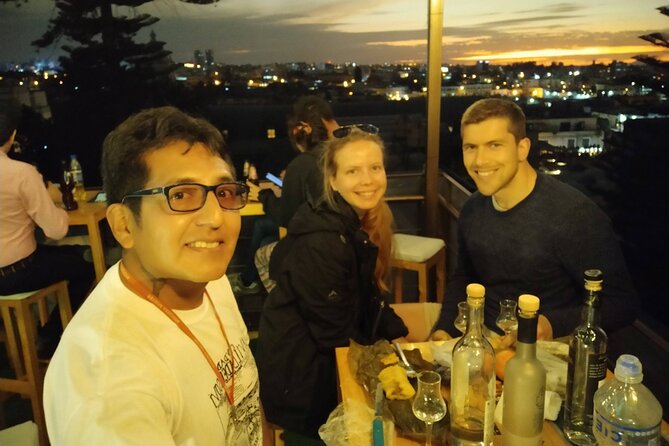
At $13 per person for a 3.5-hour guided walk with pisco tasting, traditional dessert, and local fruits, the value is strong. You’re paying for a guide plus food tastings, not for separate museum tickets.
A few practical notes so you plan smoothly:
- Bottled water isn’t included, so bring some or plan to buy it near the market areas.
- Soda/pop isn’t included either.
- Lunch isn’t included, and if you’re doing it in the afternoon, it’s recommended you eat beforehand.
- The tour runs as long as it takes to cover the downtown route and reach the tasting finish, so comfortable walking shoes matter.
Also, this experience runs in good weather. If conditions are poor, you’ll be offered a different date or a full refund. Service animals are allowed, and the tour asks for moderate physical fitness.
Plaza Campo Redondo: the first landing point feeling
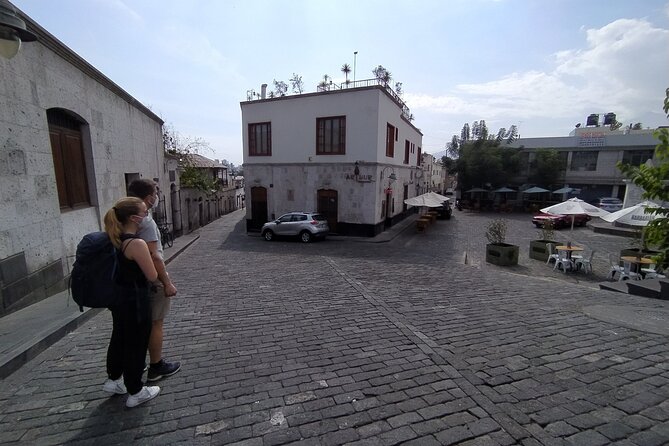
Your first stop is Plaza Campo Redondo, a traditional neighborhood tied to the earliest arrival of the conquerors in the Arequipa area. Even if you’ve never studied Peruvian colonial history, this is a useful starting point because it frames the whole tour: Arequipa’s downtown wasn’t built all at once. It grew, shifted, and redefined itself over time.
You’ll spend a short window here (about 10 minutes). That brevity is actually a good thing. It gives you a geographic and historical anchor without dragging the pacing early on.
San Francisco Plaza: big church energy and an artisan side trip
Next comes San Francisco Plaza, Church and Monastery. The route approaches Santa Catalina Convent and the street that shares its name, so you get an immediate sense of how Arequipa’s historic layers overlap.
At the plaza itself, you’ll take in the imposing church structure and you’ll also hear about the Fundo el Fierro artisan center in the area. This is one of those stops where the architecture matters, but so does the human side: crafts and local production are part of how this city keeps moving.
Expect around 20 minutes here, with the added benefit that the stop is visually strong even if you’re not a deep architecture fan. You’ll likely find yourself pointing out details to your group without even trying.
Plaza de Armas: where the earthquake story gets personal
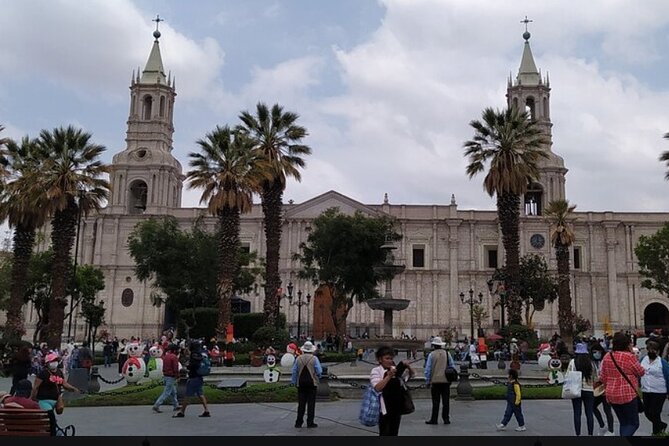
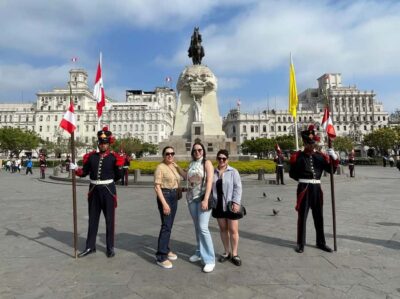
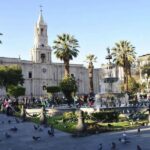
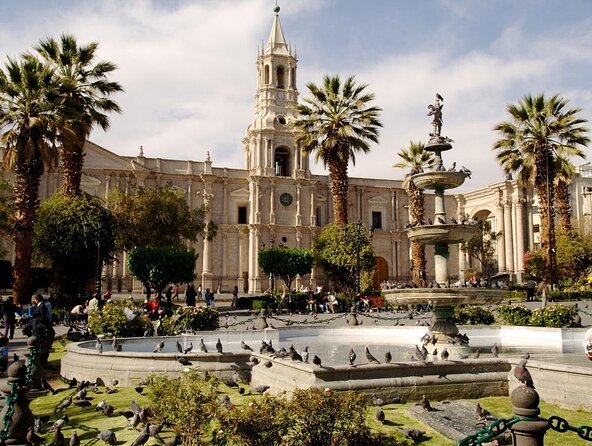
Then you hit Plaza de Armas, and this is where the tour starts connecting timelines. You’ll discuss the founding of the city and how it changed through earthquakes, not just as a disaster story but as a shaping force.
From here you also get context for the Cathedral and other details that people remember when they talk about Arequipa’s center. The guide’s job is to translate the stones and facades into something you can picture: what the city was like, what it lost, and what it rebuilt.
You’ll spend about 25 minutes at this stop. It’s long enough to understand the overall arc, but short enough that you don’t feel stuck waiting while everyone else catches up.


Iglesia de la Compañía de Jesús: gold leaf without the museum ticket
On one side of Plaza de Armas sits Iglesia de la Compañía de Jesús, part of the old Jesuit complex. This is one of the stops that can win you over fast because the outside and inside each tell a different story.
You’ll notice the baroque façade first. Then, when you step inside, the contrast is the lesson: a sober interior paired with altars covered in gold leaf. It’s the kind of detail that makes you stop walking for a second, even if you’ve seen plenty of churches before.
This stop is only around 10 minutes, and that’s the main drawback if you’re the type who loves to linger. But the tour uses that short time well: you get the key impressions and move on before the group starts feeling like it’s standing still.
Mercado San Camilo: the food stop that powers everything
If you want the tour’s best payoff, it’s Mercado San Camilo. This is where the experience turns from architecture and plazas into actual daily life.
You’ll spend about 30 minutes walking through stalls and seeing what the region sells: tubers, meats, fruits, and all the in-between. It’s a great reminder that local food isn’t just something you eat once as a tourist. It’s what people cook with, trade with, and live around every day.
This is also where sampling becomes practical. You’ll get a chance to try multiple items, and the market section is often described as the highlight because it feels like the most honest, hands-on part of the route. It’s not just one bite at one stall. You’ll be guided to different stands so you get a real sense of variety.
If you care about food, this stop is the reason to choose this tour over a pure sightseeing walk.
Cloisters of the Company of Jesus: viceroyal architecture with a quiet feel
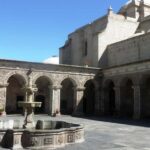
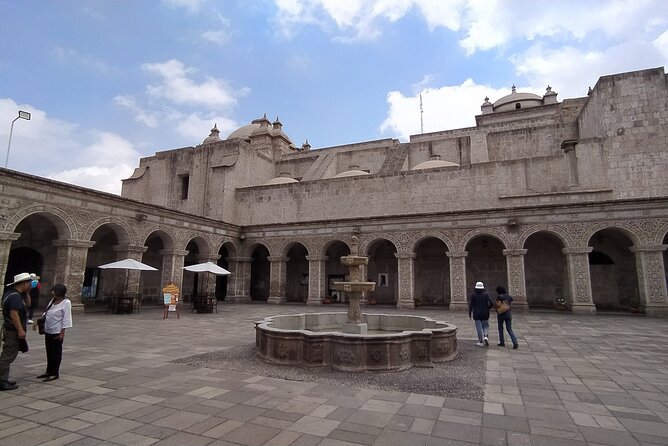
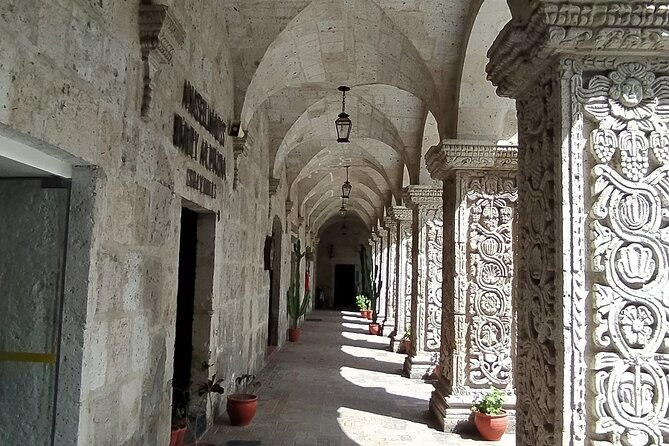
After the market, the tour moves to the Cloisters of the Company of Jesus, tied to the Jesuit school and convent legacy. Here you get one of the stronger visual threads of Arequipa’s religious viceroyal architecture.
This section takes about 40 minutes. That’s the longest single chunk after the market, and it makes sense. Cloisters reward slower attention. Even if you’re not hunting for artistic details, you’ll feel the difference in pace from the open plaza and the busy market.
This is a good time to let everything you learned earlier click into place. The earlier stops explain the city’s story. The cloisters show how that story was organized around institutions, education, and faith.
The pisco finish at Fundo el Fierro: dessert, fruits, and the lesson behind it
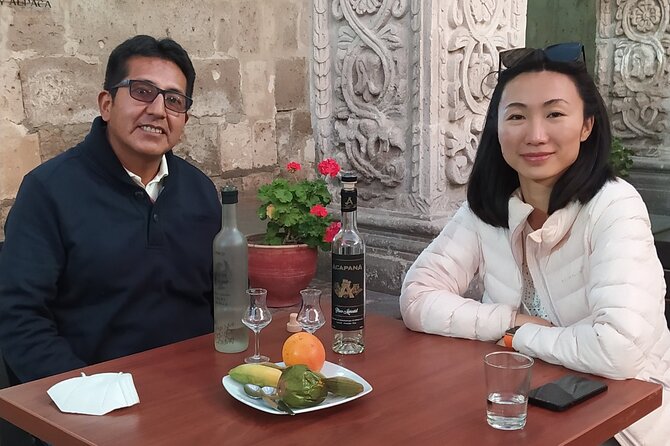
The tour’s ending is at Centro Artesanal Fundo el Fierro, where the pisco tasting happens. The tasting is included, and it pairs well with the tour’s food focus because pisco is tied to local culture in a way that doesn’t feel random.
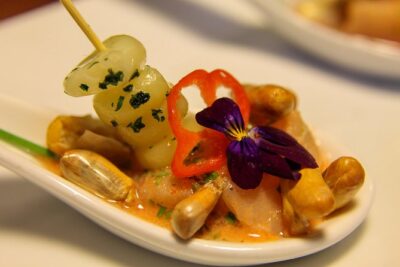
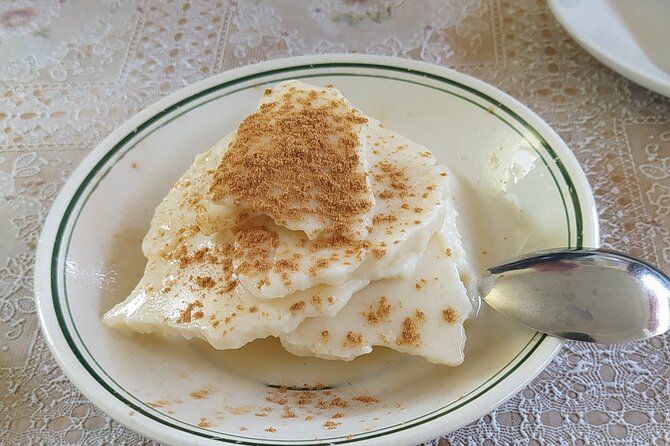
You’re also included for a traditional dessert and local fruits. In practice, the dessert is often described as something like queso helado, the local cheese ice cream, which fits perfectly after the market walk. If you’re the kind of person who always tries one sweet thing on every trip, this is exactly that moment.
One extra note from real-world experience: sometimes the exact tasting setup can change due to closures, and guides have been able to organize a tasting lesson through a colleague on a nearby day. It’s worth paying attention to what’s happening on the day you book, especially if you’re tight on time.
What kind of guide you’ll want (Jose, Daniel, Jorge)
The tour experiences are strongly shaped by the guide’s style, and several local guides get mentioned often for making the route feel alive rather than scripted.
- Jose is praised for answering lots of questions and going out of his way to keep the experience enjoyable while staying focused on the key sites.
- Daniel gets credit for connecting dots: architecture, religion, the people, and the industries that formed over time. If you like conversation, this kind of guide tends to turn the tour into a friendly history talk.
- Jorge also appears as a strong option for guiding you through the city’s key points while making sure you sample local products.
If your travel style is talk-and-walk, this tour generally matches it well.
Who should book this tour (and who should slow down)
This works best if you:
- Want a first look at Arequipa’s historic core in a single outing
- Like food that’s guided and practical, not just a single street snack
- Don’t mind a steady walking pace with short stops
Choose a slower option instead if you:
- Get tired quickly on foot
- Want the majority of your time to be food rather than architecture and plazas
- Are the type who wants a long indoor church sitting session at every stop (this tour moves)
Also, because the pisco and dessert are at the end, plan the day so you can enjoy that finish rather than rushing off immediately afterward.
Should you book the Arequipa Tasting Tour?
Yes, I’d book it if you’re aiming for value and a real sense of how Arequipa blends history with eating. The $13 price is hard to beat for a guided downtown route plus tastings. And the market stop is the kind of experience you remember because you’re actively tasting and comparing, not just watching.
Skip it only if your main goal is a food tour where you spend most of the time eating. This one spends time building context first, then delivers the pisco and sweets as the closer. If that trade-off sounds fine, you’ll likely come away feeling like you learned Arequipa’s logic, not just its postcard locations.
FAQ
How long is the Arequipa Tasting Tour?
It runs about 3 hours 30 minutes (approx.).
How much does the tour cost?
The price is $13.00 per person.
What’s included in the tasting?
You’ll get a pisco tasting, a traditional dessert, and local fruits.
What isn’t included?
Bottled water, soda/pop, entrance tickets, and lunch are not included.
Where does the tour start and end?
It starts at Plaza de Armas Arequipa, and it ends at Plaza San Francisco (C. Zela 202, Arequipa), with the pisco tasting taking place at Centro Artesanal Fundo el Fierro.
How big is the group?
The tour has a maximum of 8 travelers.
Is the tour suitable for someone with limited mobility?
It’s listed for travelers with moderate physical fitness. It’s a walking tour, so you should be comfortable on foot.
What happens if the weather is bad?
This experience requires good weather. If it’s canceled due to poor weather, you’ll be offered a different date or a full refund.
Can I cancel for free?
Yes. You can cancel up to 24 hours in advance for a full refund. If you cancel less than 24 hours before the start time, the amount you paid won’t be refunded.