REVIEW · CUSCO
Salkantay Trek: 5 Days to Machu Picchu
Book on Viator →Operated by Tierras Vivas · Bookable on Viator
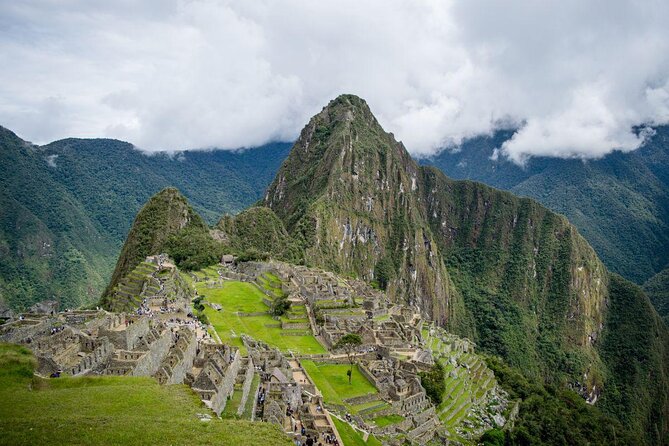
Your sunrise starts before the city wakes. This 5-day Salkantay Trek trades Inca Trail crowds for lakes, high passes near 4,650 m, and a guided arrival at Machu Picchu. I like the way the route stays scenic and varied, from Humantay Lagoon to jungle plants, instead of feeling like one long grind.
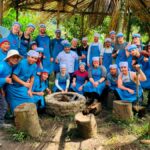
Two things stand out for me: the small group size (max 12) and the way the team keeps the logistics under control. Guides like Carlos, Nico, and Juan de Dios come up in feedback for clear English and real passion for what you’re walking past, and cooks such as Leoncio and Jesus get praised for meals that actually feel like a highlight.
One possible drawback: this trek is altitude-heavy early on. Day 1 and Day 2 put you on steep descents and a major climb over the Abra Salkantay pass, and mosquitoes can be an issue on Day 3 in warmer months—so you’ll want to plan for both altitude and bugs.
In This Review
- Key things I’d bet money on
- Why Salkantay to Machu Picchu feels different than the Inca Trail
- Before you go: the Cusco wake-up, briefing, and what to pack
- Day 1 to Humantay Lagoon: bus rides, altitude, and that first big lake view
- Day 2 over the Abra Salkantay pass: 4,650 m and the steepest payoff
- Day 3 jungle country and the Santa Teresa thermal bath choice
- Day 4 toward Hydroelectric and the final approach to Aguas Calientes
- Day 5: guided Machu Picchu, then train back to Cusco
- Guides, food, and camp comfort that make tough days feel doable
- Price and value: is $909 worth it?
- Who this trek fits best (and who should prepare more)
- Should you book this Salkantay trek with Tierras Vivas?
- FAQ
- What time does the trek start in Cusco?
- How many nights do you camp, and how many nights are in a hotel?
- Are meals included, and is vegetarian food available?
- What is the highest altitude on the trek?
- Is the Machu Picchu visit guided, and how do you return to Cusco?
- What costs extra besides the tour price?
Key things I’d bet money on
- Fewer crowds than the Inca Trail while still delivering Machu Picchu
- Small-group pacing (up to 12) with a bilingual guide team
- Comfort upgrades for camping like inflatable mattresses, sleeping bags rated to -5°C, and provided trekking poles
- A guided Machu Picchu morning with time for photos and your own exploring
- Flexible Day 3 add-on choice: thermal baths or an archaeological-site alternative
- Real camp support with muleteers, horses for gear, and even an emergency horse option
Why Salkantay to Machu Picchu feels different than the Inca Trail
If your goal is Machu Picchu without feeling like you’re hiking in a line of people, Salkantay is the honest alternative. You’ll still get that big “how is this real?” moment at the end, but the journey gets more about variety and recovery, not crowd management.
This route also gives you multiple types of Andean scenery in just five days. You move from high glacial-water views at Humantay, to a dramatic summit day over the Abra Salkantay pass, and then into lower, warmer country with coffee and jungle plants.
And the timing matters. You start very early, you get on trains and buses that connect cleanly, and you’re set up for an early Machu Picchu visit—when the site is at its most manageable.
You can also read our reviews of more hiking tours in Cusco

Before you go: the Cusco wake-up, briefing, and what to pack
The meet-up point is Plaza de Armas in Cusco, with a start time of 4:30 am. You’ll also get a pre-trek briefing the day before, with your guide visiting your hotel.
Your packing setup is part of the design. On the first morning, you can leave up to 5 kilos of personal belongings with the muleteers, and the crew carries camping and cooking gear for you. You’ll still want a day bag for water, layers, and personal basics, but your legs won’t be lugging the whole campsite.
What you do get included is helpful for planning. You receive a pair of hiking poles, plus camping comfort items like an inflatable mattress (Term-a-Rest style), a sleeping bag rated for down to -5°C, a blanket, and a pillow. You also get a duffel bag for personal belongings, which keeps things organized in camp.
Practical advice: bring a plan for altitude and early mornings. If you’ve had altitude trouble before, talk to a doctor first and bring any medicine you need. Even if you’re fit, the early high pass day can surprise people.
Day 1 to Humantay Lagoon: bus rides, altitude, and that first big lake view
Day 1 starts with pickup around 4:30 am, followed by a tourist bus through the towns of Izcuchaca and Limatambo. You roll onward to Mollepata (around 2,900 m), where breakfast is waiting around 7:30 am.
After breakfast, you leave your extra personal items (up to 5 kilos) to be carried by muleteers. Then you take a transport up to Challacancha (about 3,380 m) and begin walking toward Soraypampa (around 3,900 m).
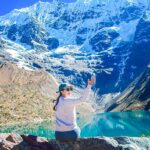
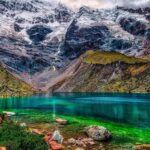
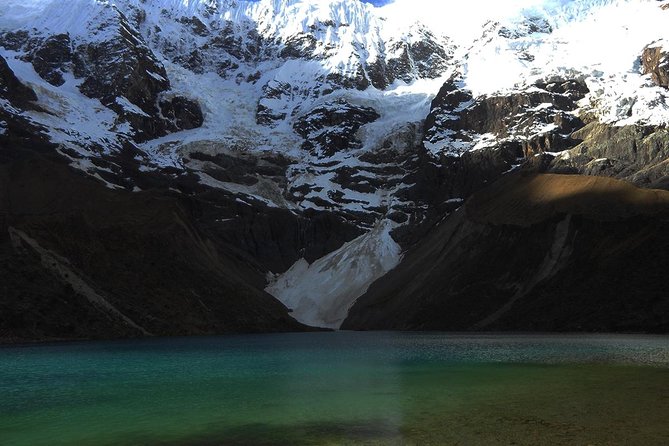
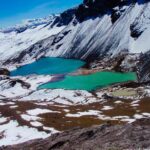
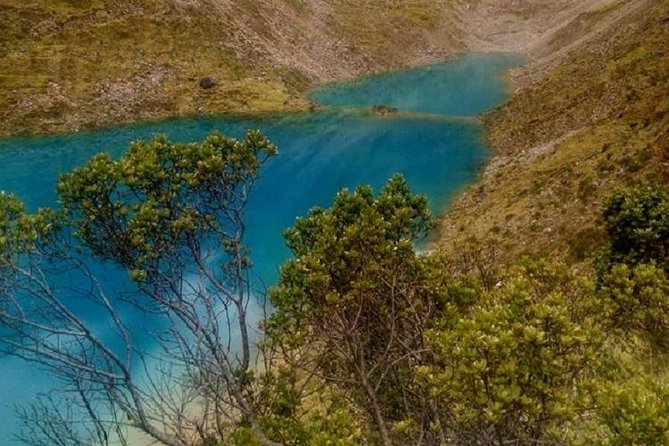
You’ll spend roughly three hours hiking to Soraypampa and reach it around 1:30 pm, where lunch is served. From there, you go to Humantay Lagoon, one of the most photogenic stops on the whole trek, before heading back to camp to rest.
What makes Day 1 valuable is the rhythm. It’s long, yes, but it’s paced with transport breaks, a first lunch, and a real chance to adjust after you arrive at higher altitude. The lagoon visit is also a morale boost when you’re still feeling the cold.
Day 2 over the Abra Salkantay pass: 4,650 m and the steepest payoff
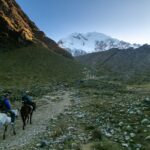
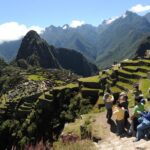
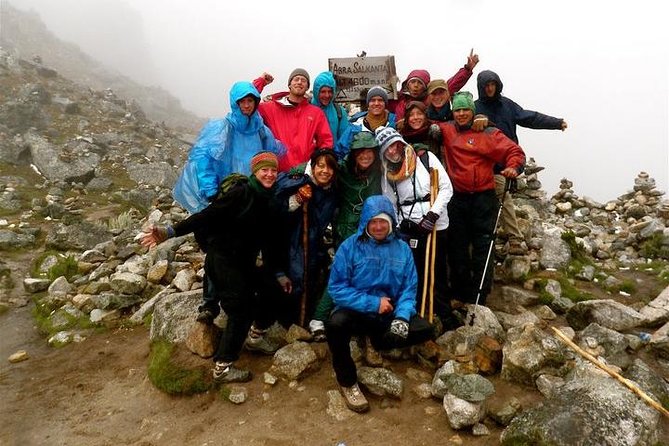
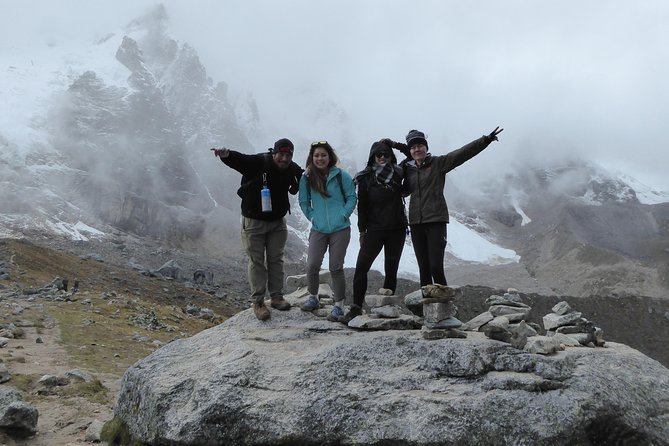
Day 2 is the centerpiece. Breakfast starts very early (around 5:00 am), then you hike from Soraypampa up toward Abra Salkantay, the highest point on this route, reaching roughly 4,650 m.
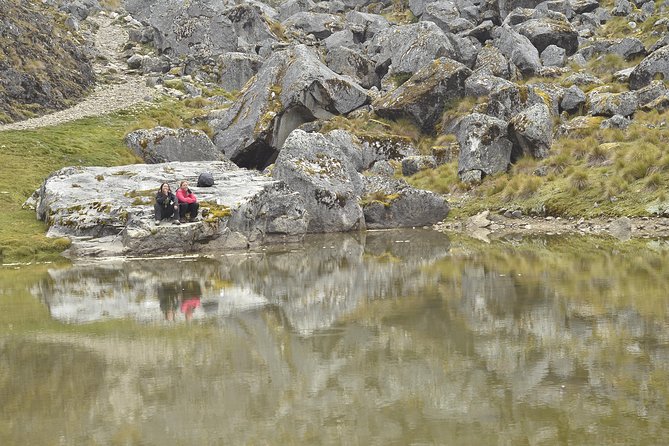
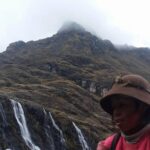
This is where the views go from pretty to intense. You get sweeping sight lines toward the Salkantay range and surrounding peaks, and the route passes through places like Salkantaypampa and Soyrococha, including a small lagoon scene along the way.
After reaching the pass, the day turns into descent work. You’ll work your way down to Huayracmachay (around 3,800 m) for lunch, then continue further down to the campsite at Chaullay (around 2,900 m). It’s a long day—about ten hours walking time in total.
The drawback to take seriously: steep descents can hammer knees. One feedback point I’d underline is that guides can adjust the pace and help with solutions if you’re struggling, including horse support in the moment. Still, it’s wise to pack knee-friendly gear and plan for slower steps on the downhill.
Day 3 jungle country and the Santa Teresa thermal bath choice
Day 3 is where the trek changes character. Breakfast is around 6:00 am, then you hike for about five and a half hours through a lower, warmer zone described as jungle-edge walking, with level ascents and descents.
This is also where you’ll notice plant life in a way the higher days don’t show. You pass coffee plantations and see orchids, bromeliads, and other natural plants used for traditional medicine. It’s the kind of day where a good guide can make you look twice at what you’d otherwise walk past.
Lunch happens at Playa Sahuayaco, then you board included transport from the lunch point to camp in Santa Teresa. You arrive in the afternoon, and the big optional choice kicks in: you can visit thermal baths in Cocalmayo, though the entrance ticket isn’t included.
If you’re heat-loving, this is a brilliant recovery plan. If you’d rather stay dry and explore, the trek is set up with a customizable alternative on this day (an archaeological-site option is mentioned as a choice, rather than forcing the baths).
One realistic consideration: insects. In wetter months, mosquitoes can show up around Day 3, and you’ll be happiest if you bring bug repellent and wear clothing that covers well after lunch.
You can also read our reviews of more tours and experiences in Cusco
Day 4 toward Hydroelectric and the final approach to Aguas Calientes
Day 4 starts with breakfast at sunrise, then you walk toward Hydroelectric. You’ll have lunch at a restaurant near Hydroelectric, and after that you keep moving through the tropical zone toward Aguas Calientes, where you settle into your hostel.
This is a transition day, which matters. Your body is coming off a high pass day and jungle walking, so think of Day 4 as a steady approach to the big final morning rather than another “push to the summit.”
By around 6:30 pm, dinner is scheduled with your guide. That’s when you’ll likely get your last-day plan explained clearly, including timing for Machu Picchu and how train and transfers back to Cusco will work.
Day 5: guided Machu Picchu, then train back to Cusco
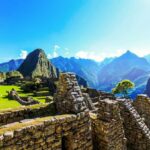
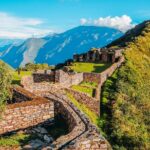
Day 5 is the payoff. You wake up very early, then head to Machu Picchu for a guided visit of the citadel, including major areas such as temples, terraces, palaces, and platforms.
You’ll get time both for the guided route and for your own photos and exploring. Then you descend back to Aguas Calientes in time to catch the included train to Ollantaytambo.
From Ollantaytambo, a representative meets you for the transfer back to Cusco, where you’ll be dropped at your hotel.
Practical tip: when a trip schedules the Machu Picchu visit early, it usually means fewer crowds to fight through. Even without guessing exact crowd levels, you can expect the site to feel calmer in the morning than it does later in the day.
Guides, food, and camp comfort that make tough days feel doable
The trek isn’t only about the route. It’s about who’s running camp and keeping you fed and organized.
The guide experience looks consistently strong in feedback. Carlos is praised for impeccable English and for sharing Inca-related mountain context. Nico and Juan de Dios are repeatedly described as passionate and organized, with one guide (Daniel) even mixing humor with practical moments like coca leaves and a playful nickname for something campers will notice.
Food gets even more attention than you’d expect. Multiple cooks are singled out by name—Leoncio, Jesus, Clemente, Louis—with praise for meals that don’t feel like punishment. One of the best signs here is that “food” is treated as part of the trek, not just fuel.
Camp comfort is also handled well for what you’re doing. You get personal double tents made for more comfort and storage, plus inflatable mattresses, blankets, and a sleeping bag rated to -5°C. You’re camping most nights under the stars, but you’re not sleeping on bare ground with nothing but a thin blanket.
Water is another detail you’ll feel. Water is provided each day, except for the first four hours of the trek, when you’ll need to bring your own.
Price and value: is $909 worth it?
At $909, this trek isn’t cheap. The good news is that the price is mostly tied to services that cost real money on the ground in Peru: early transport, a professional bilingual guide, a professional cook, mule support, camping gear, and included logistics around Machu Picchu.
What you’re getting included:
- Three nights of campsites plus one hotel night in the Machu Picchu-area lodging (Aguas Calientes)
- Meals listed as 4 breakfasts, 4 lunches, and 4 dinners, plus afternoon hot beverages
- Horse and mule support for carrying food, camping, and cooking equipment and up to 7 kg of each passenger’s stuff
- Included tourist train from Aguas Calientes to Ollantaytambo, plus bus transfer back to Cusco
- Camping comfort items (sleeping bag, pillow, inflatable mattress, blanket), plus hiking poles
- Vegetarian option at no extra charge if you request it
What’s not included matters for your budget planning:
- Huayna Picchu entrance fee (shown as $25)
- Shuttle bus between Machu Picchu and Aguas Calientes (shown as $12 one way / $24 round trip)
- Travel insurance
- Tips and any extras not mentioned
If you’re comparing this to doing it yourself, the value is mainly in the coordination. You’re buying a team that handles schedules, carries gear, cooks meals, and coordinates your Machu Picchu entry timing and train/bus return.
Who this trek fits best (and who should prepare more)
This is best for people with moderate fitness. There’s a minimum age of 4 years listed, but in real terms the walking days—especially Day 1 and Day 2—are where you’ll judge the fit.
You’ll also want to like early starts. Pickup is 4:30 am, and the Machu Picchu day is even earlier. If you’re the type who hates cold mornings, prepare for layers and a sensible sleep schedule.
Altitude is a core part of the experience. You’ll go from around 2,900 m to a pass around 4,650 m, so don’t treat the breathing aspect as optional. Pack smart for altitude: water, layers, and slow steps on the climb.
If your knees are sensitive, take that seriously. Feedback includes people who needed pace changes and horse help due to steep descents. Bring supportive footwear, and consider trekking pole use (you’ll have them included).
If you’re traveling with food preferences, you’ll be glad there’s a vegetarian option at no added cost. Just tell the company in advance.
Lastly, watch for insects on Day 3 in warmer months, and plan repellent and clothing accordingly.
Should you book this Salkantay trek with Tierras Vivas?
I’d book this kind of trek if your priority is reaching Machu Picchu with a less crowded feel, while having a team that carries the heavy stuff and sets up camp comfort. The included meals, guide support, and the included train and return transfer take a lot of stress out of the endgame.
I’d think twice or at least prepare extra if:
- you’re very altitude-sensitive, or you know steep descents are a knee issue for you
- you’re traveling in months where mosquitoes show up (plan for Day 3)
- you want long, unstructured free time (this trek is guided and scheduled, by design)
If your goal is a full, multi-environment trek that ends with a guided Machu Picchu morning, this one looks like a strong match.
FAQ
What time does the trek start in Cusco?
Pickup is listed for 4:30 am, with the meeting point at Plaza de Armas de Cusco. Early transfers by private bus take you toward the trail start.
How many nights do you camp, and how many nights are in a hotel?
You camp for 3 nights and spend 1 night in lodging in the Machu Picchu area.
Are meals included, and is vegetarian food available?
Meals are included as 4 breakfasts, 4 lunches, and 4 dinners, plus afternoon hot beverages. A vegetarian option is available at no extra cost if you advise in advance.
What is the highest altitude on the trek?
The highest point is the Abra Salkantay pass, listed at about 4,650 m.
Is the Machu Picchu visit guided, and how do you return to Cusco?
Yes, you get a guided tour of Machu Picchu including major areas of the citadel. You then take the included tourist train from Aguas Calientes to Ollantaytambo, followed by a transfer by bus back to Cusco.
What costs extra besides the tour price?
Huayna Picchu entrance is listed as $25 if you choose it. The shuttle bus between Machu Picchu and Aguas Calientes is listed as $12 one way / $24 round trip. Travel insurance, tips, and other extras not mentioned are also not included.