REVIEW · CUSCO
Machu Picchu: 5-Day Salkantay Trek with Panoramic Train
Book on GetYourGuide →Operated by TreXperience · Bookable on GetYourGuide
Machu Picchu after Salkantay feels earned. This 5-day trek mixes big views with real Peru culture, then finishes with an early, guided visit to Machu Picchu and a scenic train ride back to Cusco. I like that the trip is built around comfort where it counts: glamping on the high mountains and camping with Machu Picchu in sight.
What I especially like is the food + support combo. You get meals daily (breakfasts, lunches, dinners) with snacks and plenty of water, plus a team that keeps logistics moving with muleteers for the heavy gear. And the guides can be the difference between surviving the altitude and understanding it; names like Cesar Augusta and Jose show up as examples of the kind of attentive leadership you’re likely to meet.
The main drawback to think about is altitude and early starts. Day 1 and especially the Salkantay Pass are high, and you’ll be up early for pickup and for sunrise at Machu Picchu.
In This Review
- Key things that make this trek worth your attention
- Why the Salkantay-to-Machu Picchu combo works (and feels different)
- What $655 covers, and why that price makes sense
- Getting moving in Cusco: the 4:30 a.m. reality check
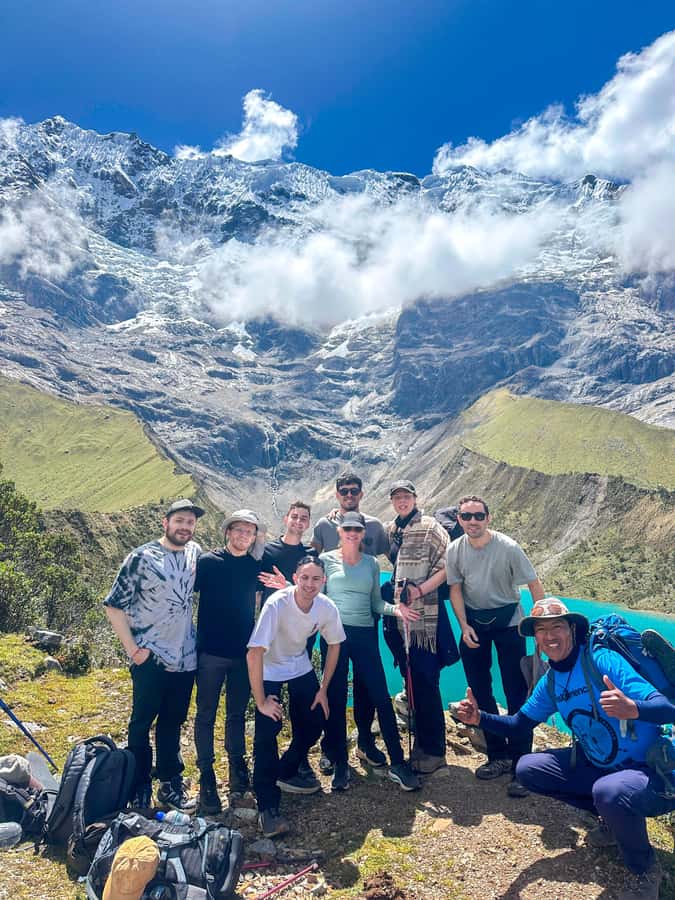
- Day 1: Humantay Lake’s turquoise water and a Salkantay glamping night
- Day 2: Salkantay Pass (4,630 m) and the shift into cloud forest
- Day 3: Pachamanca in Lucmabamba, coffee farms, then Llactapata’s Machu Picchu preview
- Day 4: Morning coffee, hydroelectric descent, river walk, and Aguas Calientes
- Day 5: Machu Picchu at sunrise, then Vistadome or 360° back to Cusco
- Food, coffee, and the kind of service that changes your day
- Safety and altitude: how to set yourself up to enjoy this
- What to pack (and what to skip) so Day 1 doesn’t annoy you
- Who should book this Salkantay trek with panoramic train
- Should you book this tour?
- FAQ
- How long is the Salkantay trek and Machu Picchu portion?
- What time do you get picked up in Cusco?
- Are meals and water included during the trek?
- Do I need to book Huayna Picchu or Machu Picchu Mountain in advance?
- What train do you take back from Machu Picchu area to Ollantaytambo?
- What kind of gear is provided, and what should I bring?
Key things that make this trek worth your attention
- Salkantay Pass at 4,630 m: the highest point, with sweeping mountain views.
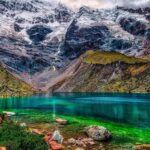
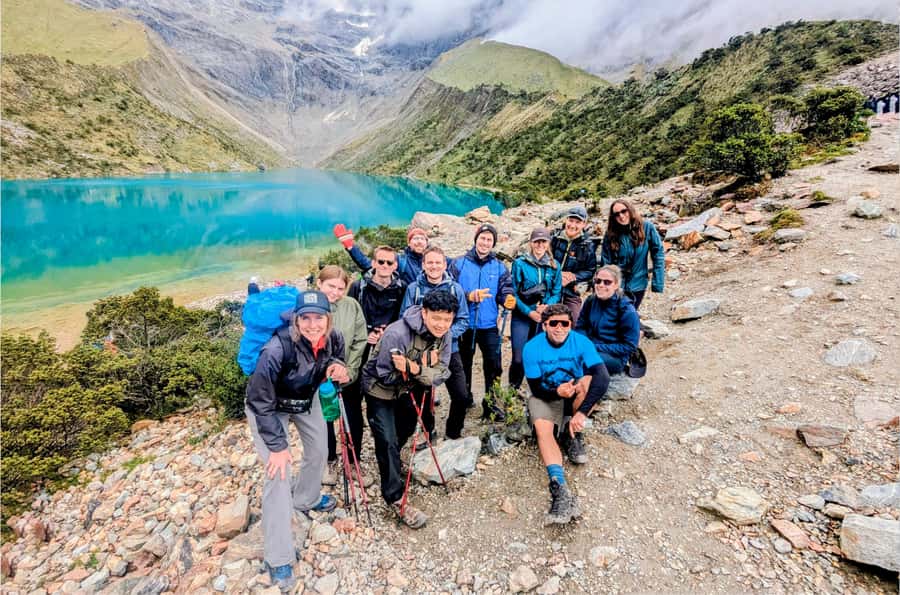
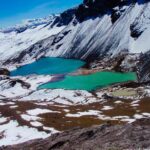
- Humantay Lake’s turquoise color: an iconic payoff early in the trek.
- Glamping + hut camping: comfort on the toughest days, not just at the end.
- Pachamanca and coffee: you don’t just walk past culture; you eat and taste it.
- Llactapata at night: one of the best ways to get that first Machu Picchu reveal.
- Panoramic return by Vistadome or 360° train: you close the loop with style, then get back to Cusco.
Why the Salkantay-to-Machu Picchu combo works (and feels different)
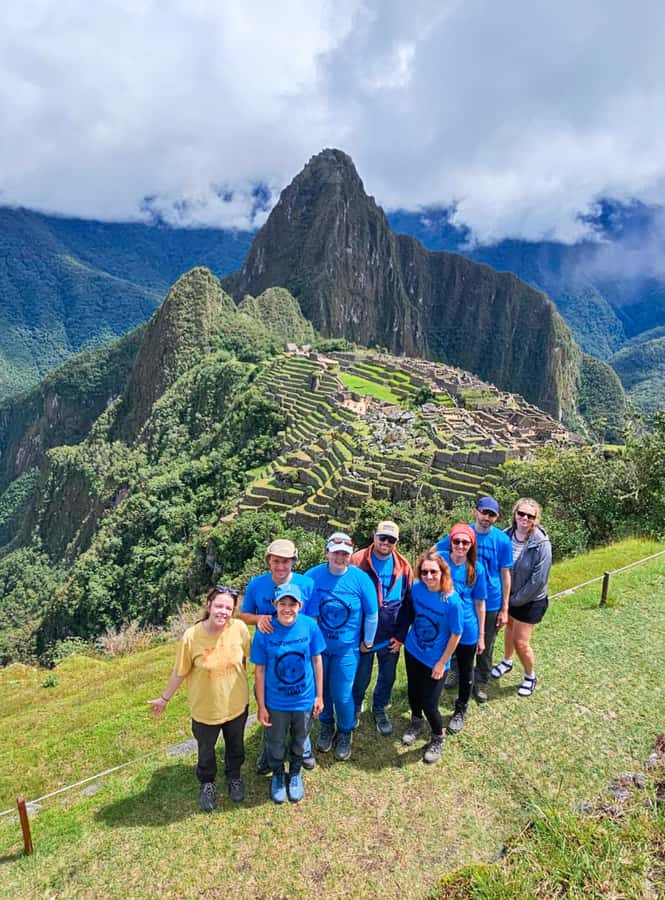
Most Machu Picchu trips treat the citadel like the main event. This one treats it like the finish line. You start high in the Andes, spend days moving through changing ecosystems, and build your way toward Machu Picchu with small “arrivals” along the route. By the time you see the citadel clearly, it feels earned instead of scheduled.
The biggest value for you is the balance between effort and care. You hike, but you’re not carrying the whole world. You get a duffle bag (up to 7 kg / 11 lb), sleeping pad, pillow, rain poncho, and hand towels, and the team handles the heavier camping gear via muleteers. It’s a practical way to keep the trek in your control without making it a punishment.
Another reason it feels different: the cultural stops aren’t random photo breaks. You’ll eat a traditional Pachamanca and visit local coffee farms for a tasting experience. It adds meaning to the miles you’re putting in, especially when your body is working hard and you want the day to feel more than just walking.
You can also read our reviews of more hiking tours in Cusco

What $655 covers, and why that price makes sense
At $655 per person for a 5-day package, the value depends on what you’re trying to avoid. If you’d otherwise piece together transport, guides, tickets, meals, and camping gear rentals, this kind of bundle can save time and stress.
Here’s what your money is paying for, in real life terms:
- Park and site access for the trek and for Machu Picchu.
- A professional guide, plus safety gear like a satellite phone, first-aid kit, and an oxygen tank.
- Meals: 4 breakfasts, 3 lunches, 3 dinners, plus daily snacks and water.
- Overnight stays: 1 night glamping during the Salkantay section, 2 nights camping (with huts on one night), and 1 night in a 3-star hotel in Aguas Calientes.
- Machu Picchu transport: round-trip bus, and a train ride back (Panoramic Vistadome or 360°) plus a private van to Cusco.
The hidden cost you avoid is mental load. You don’t have to manage food planning, gear logistics, or the complicated handoffs between the trek, Aguas Calientes, and Machu Picchu morning. A small group (max 16 participants) also means you’re less likely to feel like a number.
Getting moving in Cusco: the 4:30 a.m. reality check
Your day starts early, with hotel pickup around 4:30 a.m. from the Cusco historic center area. That timing matters because you’ll be traveling and trekking at high altitude, where every hour counts.
After pickup, you drive about 3 hours to Mollepata, then eat breakfast and meet your trekking team. This is a good moment to handle the first basics: water, snacks, and getting your layers right. If you’re sensitive to altitude, the “slow and steady” mindset matters early, not later.
Also, you’ll want to be ready for the Peruvian practicalities. Bring cash since it’s useful in Peru, and keep your passport with you because it’s required for Machu Picchu entry.
Day 1: Humantay Lake’s turquoise water and a Salkantay glamping night
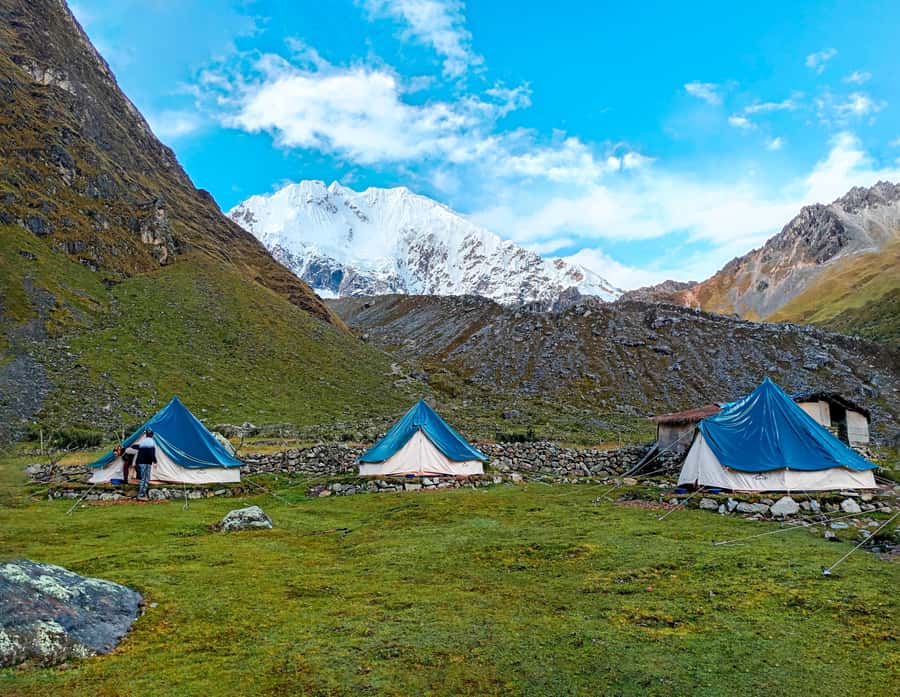
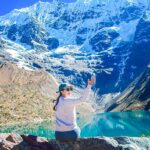
Day 1 is the emotional setup day. You hike for about 3 hours from the trailhead to Humantay Lake (around 4,200 m). The reward is the color: that shimmering turquoise look makes the climb feel worthwhile.
After you take in the lake and views, you descend to Soraypampa for lunch, then continue with a gentle uphill to the Salkantay Glamp campsite (around 4,150 m). Glamping here isn’t about luxury; it’s about practicality. You get a warm dinner, a tent setup designed for comfort, and a night sky that’s hard to forget.
Practical drawback: at these elevations, altitude can hit you fast. One review highlighted acetazolamide helping, so if you already use altitude medicine, discuss it with your doctor before you go and follow your plan. If you don’t use it, go slow, hydrate, and let your guide know quickly if you feel off.
Day 2: Salkantay Pass (4,630 m) and the shift into cloud forest
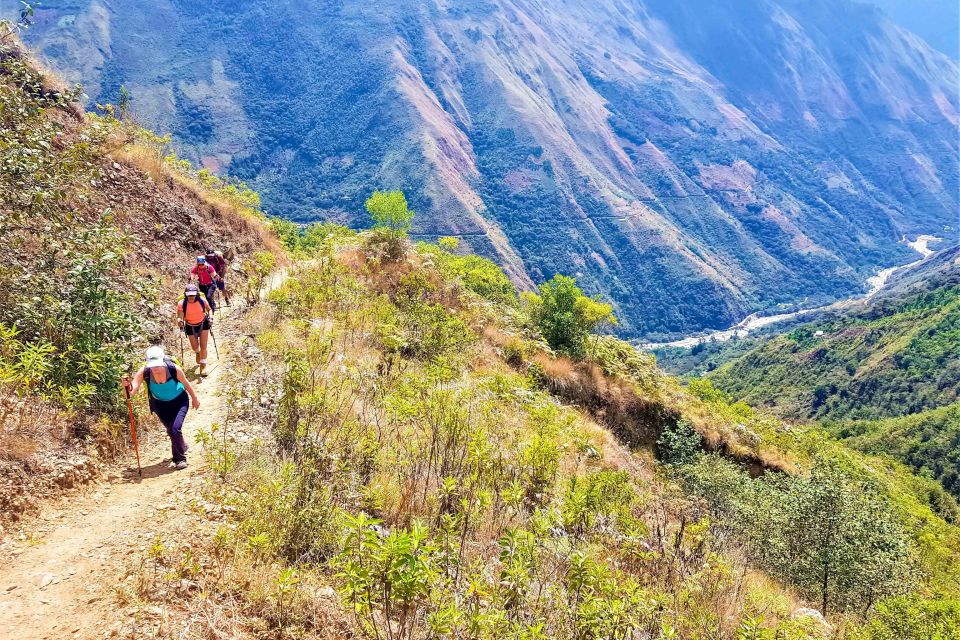
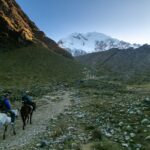
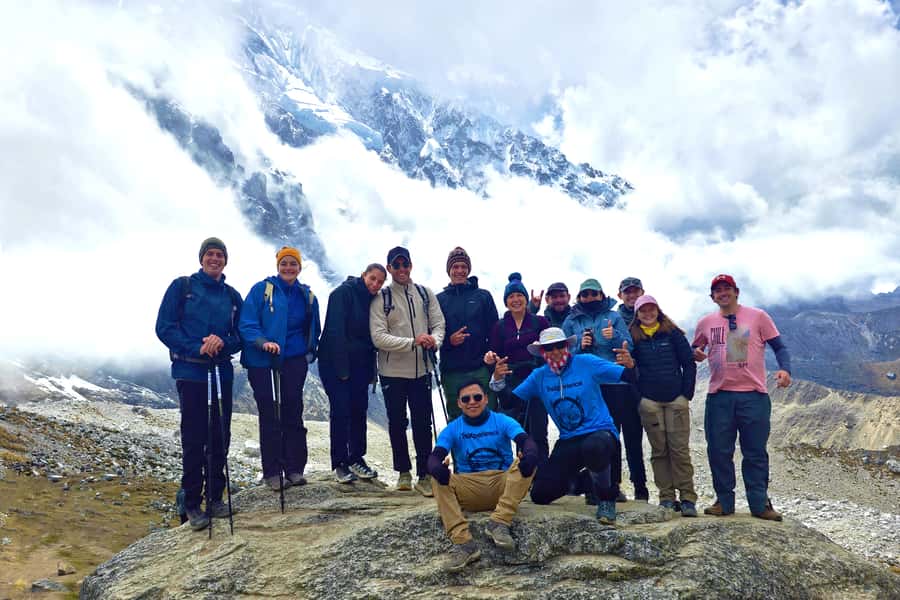
Day 2 climbs to the Salkantay Pass (about 4,630 m), the high point of the trek. You start with coffee or coca tea, then hike up and pause for mountain views and a stop at a nearby glacial lake.
The key here is the descent. After lunch in Wayracmachay, the route takes you downhill through changing terrain: the highlands give way to lush cloud forest. For you, that means your body gets some relief from the steepest parts, but your feet still work because trails can stay uneven.
By evening you reach Collpapampa (around 2,770 m) and sleep in comfortable Andean huts. This night is an important recovery step because Day 3 has both walking and cultural activities.
One thing I like about how this day is structured is that it doesn’t pretend the pass is easy. It treats the top as a moment, then focuses on the transition into something greener.
You can also read our reviews of more tours and experiences in Cusco
Day 3: Pachamanca in Lucmabamba, coffee farms, then Llactapata’s Machu Picchu preview
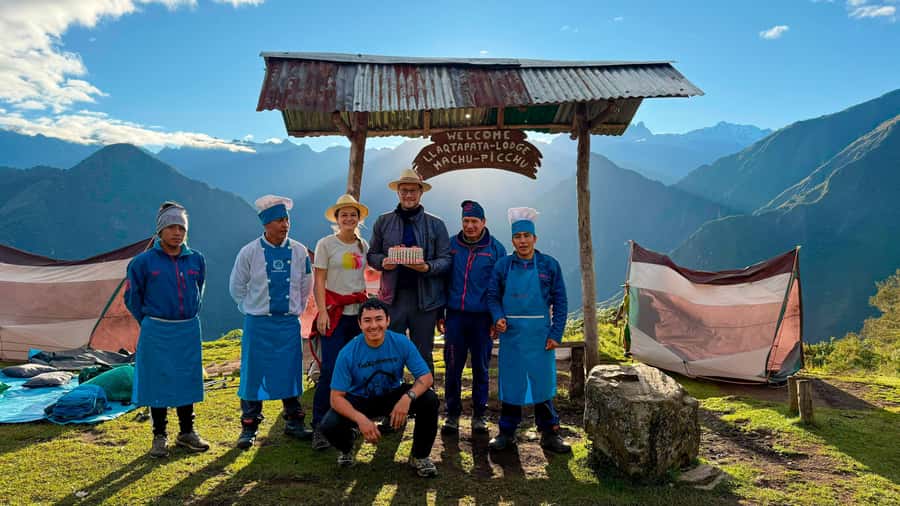
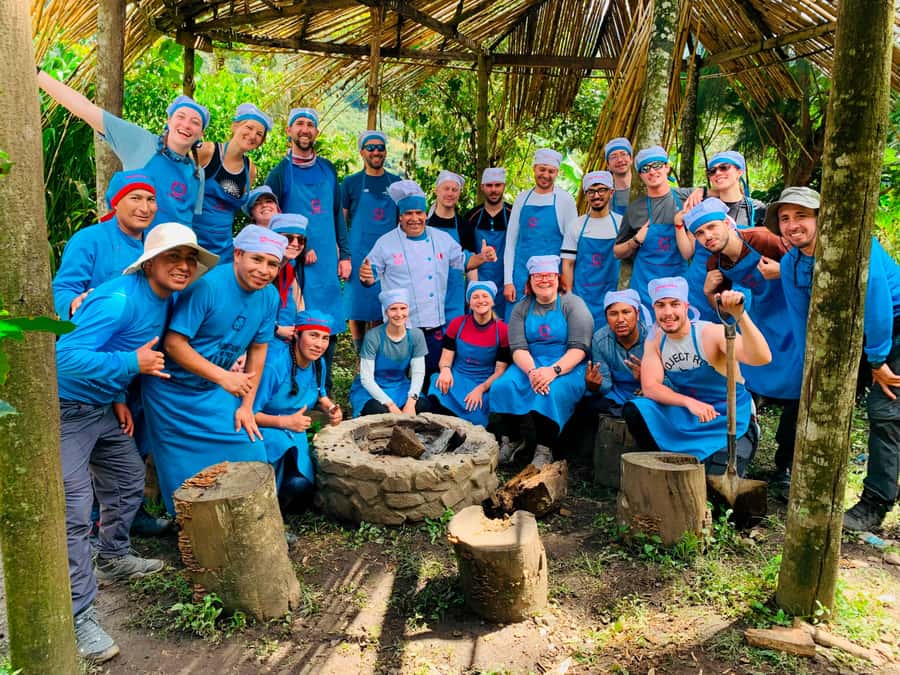
Day 3 starts with food that’s not just filling—it’s local. You hike through trails with wooden bridges, waterfalls, and plantations to reach Lucmabamba (around 2,000 m). Then you’ll experience a traditional Pachamanca Barbecue, which is a culturally rooted way to eat after a day’s work.
Next comes the coffee experience. You visit local coffee farms and taste freshly brewed coffee. It’s a smart addition because coffee tastes better when you’ve earned it with your legs.
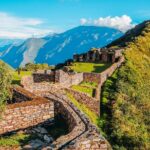
In the afternoon, you head toward Llactapata (around 2,750 m) following an Inca Trail segment for about three hours. Llactapata is an Inca site, and you get your first strong view of Machu Picchu. This is the moment where the trek stops being abstract and becomes real.
You camp overnight with the citadel close in view. Even if clouds move in sometimes, you still feel the payoff building. One review specifically called out the distant Machu Picchu view on the later nights, and Llactapata is exactly the kind of staging ground that makes those glimpses meaningful.
Day 4: Morning coffee, hydroelectric descent, river walk, and Aguas Calientes
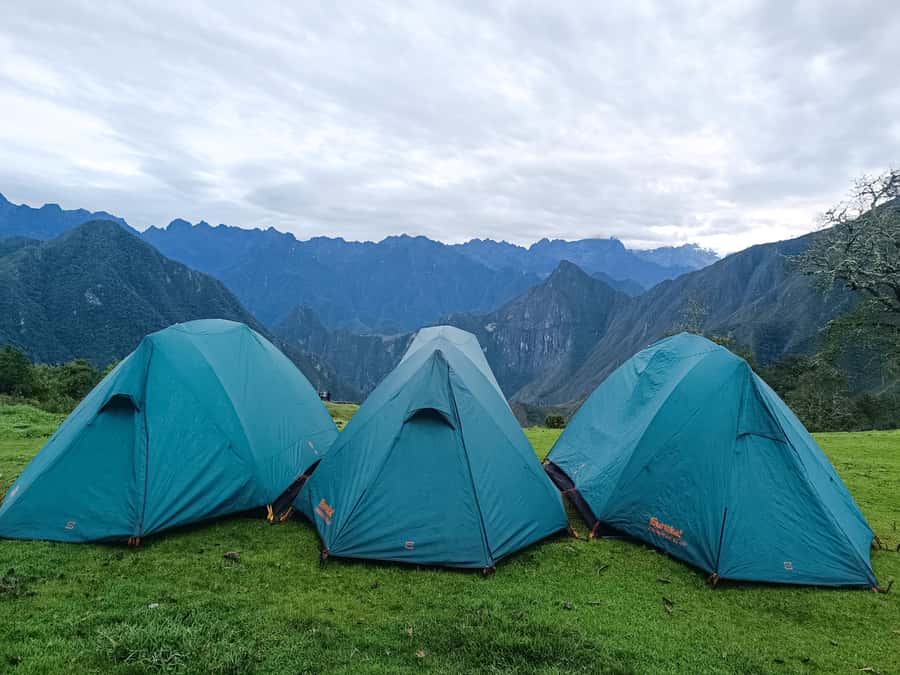
Day 4 begins with a rare advantage: you wake up with a Machu Picchu view from your camp and enjoy coffee on-site. Then you descend for about 2 hours toward the Hydroelectrica station. You’ll also get brunch with your trekking team, which helps you reset before a longer walking section.
From there, it’s roughly a 3-hour hike along the railway and the Urubamba River into Aguas Calientes. There’s also a stop at the Mandor Botanical Gardens, a birdlife and orchid-rich pause where you can cool down and slow your pace.
Once you arrive, you check into a 3-star hotel. The evening is yours: you can explore Aguas Calientes and use the hot springs, then eat dinner at a local restaurant.
This is also one of the best days to go practical about logistics. If you’re booking optional hikes, you want to know what you’re doing before Machu Picchu morning so you’re not scrambling when you’re tired.
Day 5: Machu Picchu at sunrise, then Vistadome or 360° back to Cusco
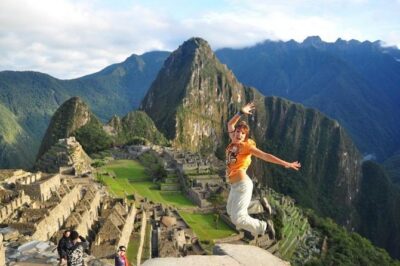
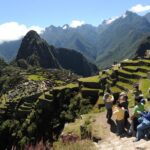
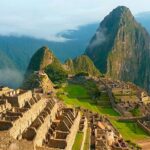
On Day 5, the trip switches from trekking to the main event. You’ll have an early breakfast and take buses up for the first sunrise arrival. Sunrise matters here because you’re more likely to enjoy Machu Picchu with fewer distractions.
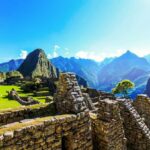
You’ll then get a guided tour of the citadel, around 2 to 3 hours, followed by time to explore on your own. If you’ve booked in advance, you can hike Huayna Picchu or Machu Picchu Mountain.
After exploring, you return to Aguas Calientes for lunch, then board the Panoramic Vistadome train (or the 360° train, depending on your departure). The train runs to Ollantaytambo, and then a private van brings you back to Cusco, around 7:30 p.m.
This ending is one of the smartest parts of the package. You don’t lose your whole day to transit. You also get a scenic rail finish that helps the whole experience feel like one continuous arc.
Food, coffee, and the kind of service that changes your day
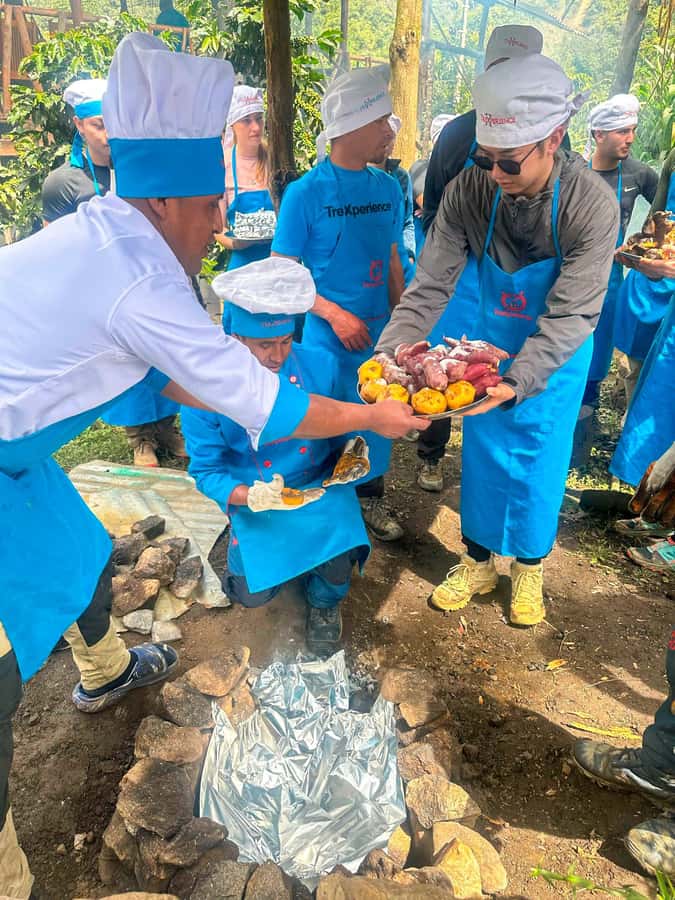
The food is consistently praised, and it matters because you’re hiking most days. The package includes experienced chefs and daily snacks, with meals planned so you’re fueled but not stuck eating plain, repetitive food.
Based on strong feedback from past guests, the meals can be creative—several people specifically noted lots of dishes prepared each time. You also get vegetarian options (advised at booking), which is a big deal when trekking cuisine can otherwise default to one safe choice.
Beyond taste, I like that you get small support details: hot drinks along the way and clean water refills were mentioned as well. That may sound minor, but at altitude and on long walking days, it’s the difference between “I can do this” and “I’m running low.”
Safety and altitude: how to set yourself up to enjoy this
This trek includes safety features you should appreciate: a satellite phone, first-aid kit, and an oxygen tank. There’s also a safety briefing one day before your start.
Still, altitude is altitude. The Salkantay section climbs to over 4,600 m, and the days are physically demanding. A review flagged altitude sickness on the first day and said acetazolamide helped those who used it. I can’t tell you what medicine to take, but I can tell you the best move is to take altitude seriously early and tell your guide immediately if you feel symptoms.
Tips for you:
- Go slow and don’t race the group.
- Hydrate regularly and use the refill points.
- Wear layers you can adjust as you climb and descend.
If you have a heart problem, back problems, mobility limitations, or you’re pregnant, this route is listed as not suitable. Don’t treat that as fine print. Treat it as a warning label.
What to pack (and what to skip) so Day 1 doesn’t annoy you
You’ll be given camping comforts like a sleeping pad, pillow, rain poncho, and hand towels, so you don’t need to overpack. But you should still bring the basics that keep you comfortable.
For your pack, prioritize:
- Passport (required for Machu Picchu entry).
- Hiking shoes or strong trail footwear.
- Warm layers for mornings and nights.
- Sunscreen, sunglasses, and sun hat.
- Rain gear for wet trail days.
- Insect repellent.
- Personal toiletries and medication (plus any simple supplies like band-aids).
Keep your bag practical for Machu Picchu too: it’s recommended you bring a lightweight backpack no larger than 25L, since larger backpacks can’t be taken into Machu Picchu.
Also, the trek provides a duffle for up to 7 kg / 11 lb and you’ll have rental options for extra gear like a sleeping bag, inflatable mattress, and trekking poles. If you already own poles and know you like them, bringing them can help—just note the listing says rental poles are available.
One more realistic note: you’ll want cash in Peru, and extra batteries help for sunrise photos.
Who should book this Salkantay trek with panoramic train
This trek fits best if you want:
- A meaningful trek with culture (Pachamanca and coffee), not just scenery.
- A small group setting (max 16) where your guide can notice if someone’s struggling.
- Comfort upgrades where they matter: glamping, quality meals, and supportive logistics.
- A final Machu Picchu morning that starts early and stays organized.
It’s not a fit if you:
- Need step-by-step accessibility accommodations.
- Have significant heart issues, mobility impairments, or back problems.
- Don’t enjoy steep, high-altitude hiking days.
If your goal is to feel physically challenged but still looked after—this is the kind of trip that can deliver.
Should you book this tour?
I’d book it if you’re excited by the idea of earning Machu Picchu across multiple days, with Humantay Lake, the Salkantay Pass, Llactapata’s first big citadel view, and a guided sunrise experience. The value is strong because so much is handled for you: tickets, meals, safety systems, camping comfort, and a train finish back to Cusco.
I’d pause and do extra thinking if you’re unsure about altitude, dislike early mornings, or want a fully relaxed pace. Also note that this activity is listed as non-refundable, so book when your dates are truly solid.
If you want a trek that mixes serious Andean effort with real cultural meals and smooth logistics, this one is built for that.
FAQ
How long is the Salkantay trek and Machu Picchu portion?
The total experience runs 5 days.
What time do you get picked up in Cusco?
Pickup is around 4:30 a.m. from your hotel or Airbnb near the Cusco historic center.
Are meals and water included during the trek?
Yes. The package includes 4 breakfasts, 3 lunches, 3 dinners, plus water and daily snacks.
Do I need to book Huayna Picchu or Machu Picchu Mountain in advance?
Yes. The Huayna Picchu Mountain pass and the Machu Picchu Mountain pass both need to be booked in advance.
What train do you take back from Machu Picchu area to Ollantaytambo?
You’ll return by the Panoramic Vistadome train or the 360° train, then transfer back to Cusco by private van.
What kind of gear is provided, and what should I bring?
Provided items include a sleeping pad, pillow, rain poncho, and hand towels. You should bring your passport, comfortable hiking shoes, warm layers, sun protection, rain gear, insect repellent, and personal toiletries/medications.