REVIEW · CUSCO
Cusco: Historic Walking Tour with Pisco Sour and Music Show
Book on GetYourGuide →Operated by Real Cusco Walking tour · Bookable on GetYourGuide
Two hours, and Cusco feels twice as clear. This small-group historic walk strings together major landmarks and the kind of details locals notice, from Qoricancha to San Blas. I especially like how you’re not just ticking off sights—you’re learning what those symbols meant, including the famous 12 and 13 angled stones and the Andean Trilogy carvings. The big drawback: it’s not suitable for wheelchair users or anyone with mobility limits, and it’s not designed for hearing-impaired guests.
You’ll also get a hands-on detour to a luthier (instrument maker) and an Andean music show, which adds sound and craft to all that stone-and-stories sightseeing. The group is capped at 10, so it’s easier to ask questions (and on some departures, the English tour can run very small—close to private). One thing to be aware of: the scheduled music-show venue can occasionally be closed, and the guide may pivot to another local dance show.
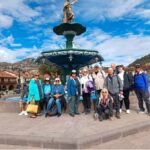
Meet next to the Inca Fountain in Plaza de Armas, and look for your guide holding a white umbrella (coordinates: -13.516772, -71.9787231). The walk is about 2 hours long, so it’s a strong option if you want an efficient first taste of Cusco without committing to a whole day.
In This Review
- Key Highlights That Make This Walk Worth Your Time
- Cusco in Two Hours: What You’re Really Getting
- Finding Your Guide at Plaza de Armas (No Guessing Needed)
- From Main Square to Qoricancha: Seeing Cusco’s Story in Stone
- The Balcony Stop, the Angled Stones, and the Andean Trilogy
- San Blas Streets: Charm, Views, and the Right Kind of Wandering
- Luthier Workshop Visit: Instruments With a Point
- Andean Music Show: What to Expect and What If It Changes
- 7 Borreguitos Street: The Most Photographed Corner (For a Reason)
- Temple of Manco Capac: Closing With the Inca Through-Line
- Pisco Sour or Chicha Morada: The Best Kind of Tour Ending
- Price and Value: What $10 Buys You in Cusco
- Who This Tour Fits Best (And Who Should Skip)
- Should You Book This Cusco Walking Tour?
- FAQ
- Where is the meeting point?
- How long is the tour, and how large is the group?
- What’s included in the price?
- What languages are offered?
- Is it suitable for wheelchair users or people with hearing loss?
- Can I cancel and get a full refund?
Key Highlights That Make This Walk Worth Your Time
- Plaza de Armas to Qoricancha: You’ll move from colonial Cusco’s main stage to the Sun Temple area.
- San Blas with the right kind of wandering: Streets, views, and local context instead of speed-walking.
- 12 and 13 angled stones + Andean Trilogy: These small stops come with meaning you’ll actually remember.
- A real luthier workshop visit: Andean instruments aren’t just props here.
- Music show plus a smart Plan B: If one venue is unavailable, your guide can steer you to another performance.
- End with included tastings: Pisco Sour or Chicha Morada to close the loop on the local experience.
Cusco in Two Hours: What You’re Really Getting
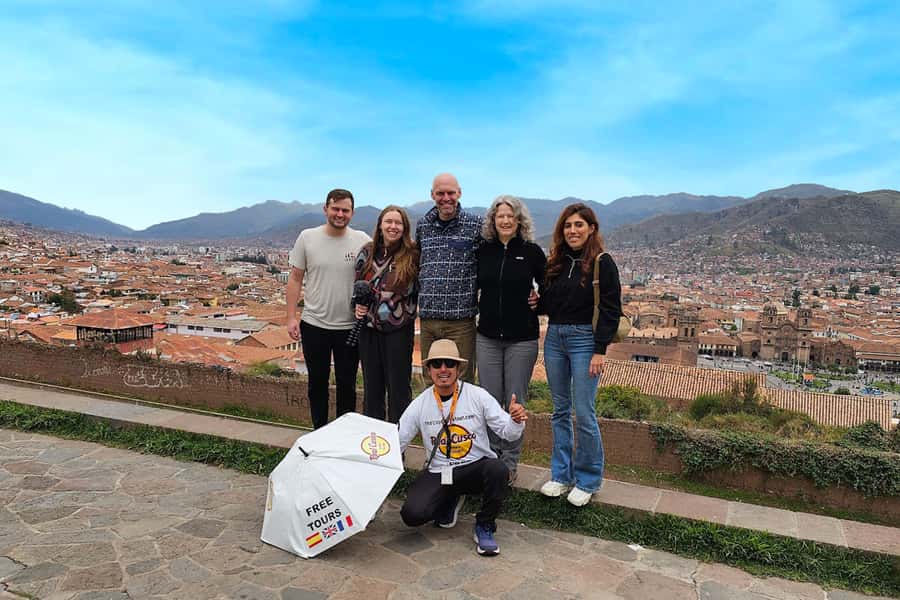
This is a walking tour built for orientation and context. In 2 hours, you’ll cover the most recognizable center of Cusco and still get enough “why this matters” explanation to make the stones feel less random.
The format is straightforward: you start in Plaza de Armas, you walk through the Inca-and-colonial overlap of central Cusco, you trend toward San Blas for charm and views, then you end with an included drink. Along the way, the luthier visit and Andean music portion are not just filler. They help you understand the culture as something lived—not only photographed.
It’s also a “small group” tour by design, capped at 10. That matters in Cusco, where narrow streets and dense sights can turn a large-group tour into a shuffle. Here, you’ll get better pacing and more chances to ask real questions.
You can also read our reviews of more walking tours in Cusco

Finding Your Guide at Plaza de Armas (No Guessing Needed)
You’ll meet next to the Inca Fountain in Plaza de Armas, and your guide will be holding a white umbrella. If you arrive a few minutes early, you can do the simple thing: locate the fountain area, then scan for the umbrella.
This starting point is practical. Plaza de Armas is where most first-time navigation begins, and it puts you close to the Cathedral area right away. That means less time figuring out where you are and more time learning how the city is layered—Inca foundations underneath Spanish-era structures, all within a short walking loop.
The tour lasts around 2 hours, so don’t expect long museum-style stops. Instead, the guide keeps it moving with frequent commentary and short stops at specific “look up/notice this” spots.
From Main Square to Qoricancha: Seeing Cusco’s Story in Stone
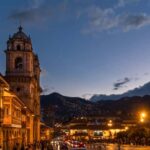
Your first big stretch is Cusco’s central core: Plaza de Armas, the Cathedral, and the nearby colonial landmarks that frame the city’s main square energy. From there, you head toward key Inca-linked sites, including the Company of Jesus and Qoricancha, the Sun Temple area.
This segment works best if you like interpretation. You’re not only hearing what the places are called—you’re hearing what they were for, what changed over time, and why that overlap still shows up on the street-level. In Cusco, that overlap is the point. You’ll see colonial religious architecture built next to or over Inca-era foundations, and the guide’s commentary helps you connect the visible pieces to the bigger cultural shift.
If you’re arriving in Cusco and wondering how to make sense of it, this is where the tour earns its value: it gives you a mental map of the city’s power centers, so later walks feel easier.
The Balcony Stop, the Angled Stones, and the Andean Trilogy
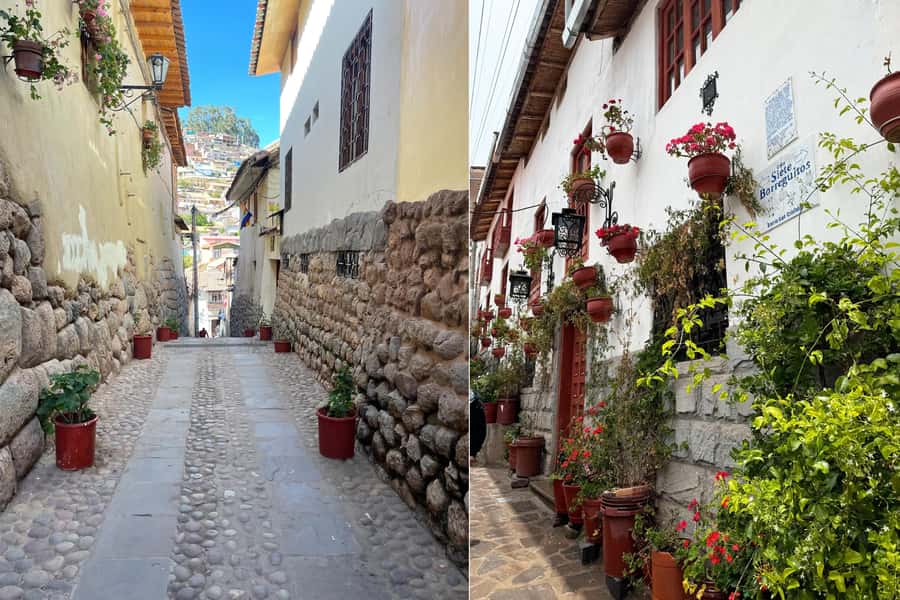
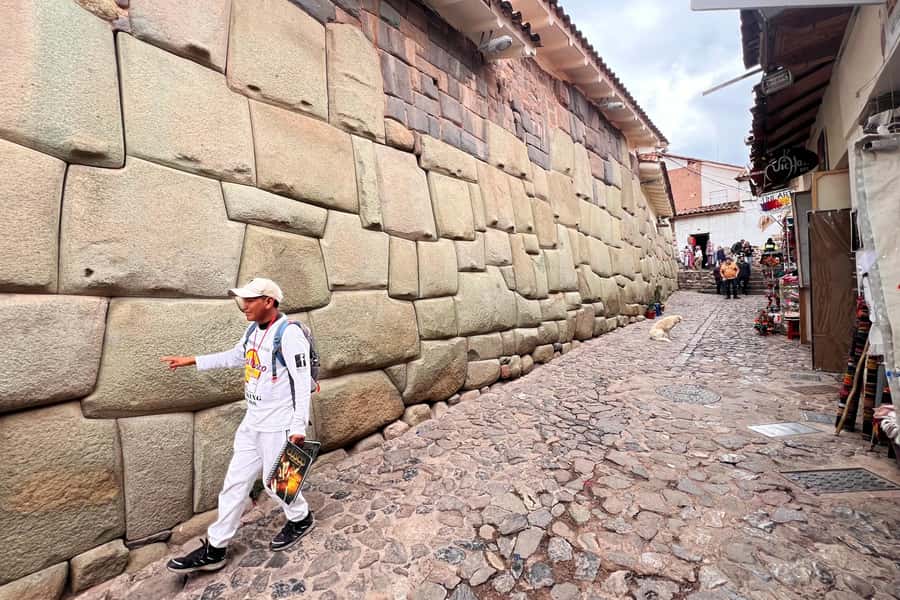
This is the “slow down and look around” portion, and it’s one of my favorite kinds of tour segments. You’ll gaze up at what’s described as the city’s most beautiful balcony, then move to the legendary 12 and 13 angled stones.
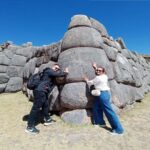
These stones are easy to miss if you’re just passing through. The tour’s payoff is the explanation—why the angles matter and what the stones represent in the Inca way of designing and measuring space. Then you get to the Andean Trilogy imagery: silhouettes of the Condor, Puma, and Snake carved into an Inca wall.
That trio matters because it’s not random decoration. The guide links it to broader Andean worldview patterns—symbols tied to nature, cosmology, and how people explained their place in the world. After this, the city doesn’t feel like a set of monuments; it starts feeling like a language.
San Blas Streets: Charm, Views, and the Right Kind of Wandering
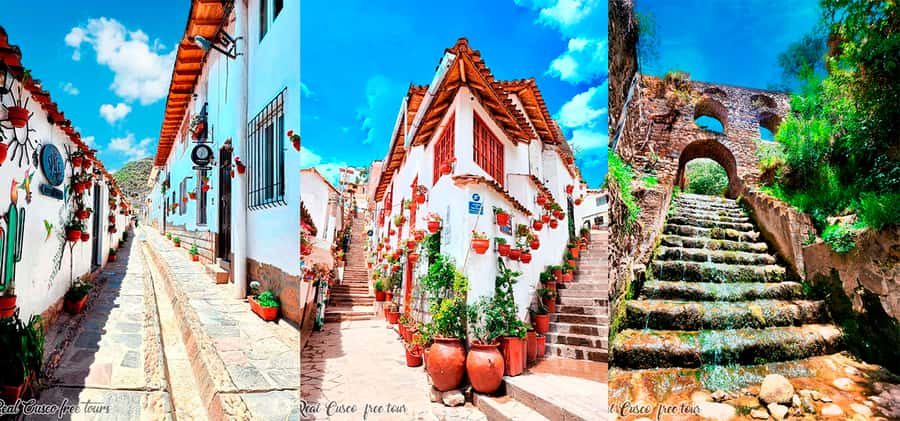
Next comes San Blas, one of Cusco’s most picturesque neighborhoods. The tour keeps it human: short walks on charming streets, more chances to pause, and a shift from “big landmark focus” toward neighborhood texture.
San Blas is where you’ll feel the city’s everyday rhythm. Even when you’re surrounded by tourists, the neighborhood has a quieter, craft-focused vibe. And the guide’s commentary helps you notice what you’d otherwise breeze past—where sightlines open up, which corners are worth a closer look, and how the neighborhood fits into the city’s broader layout.
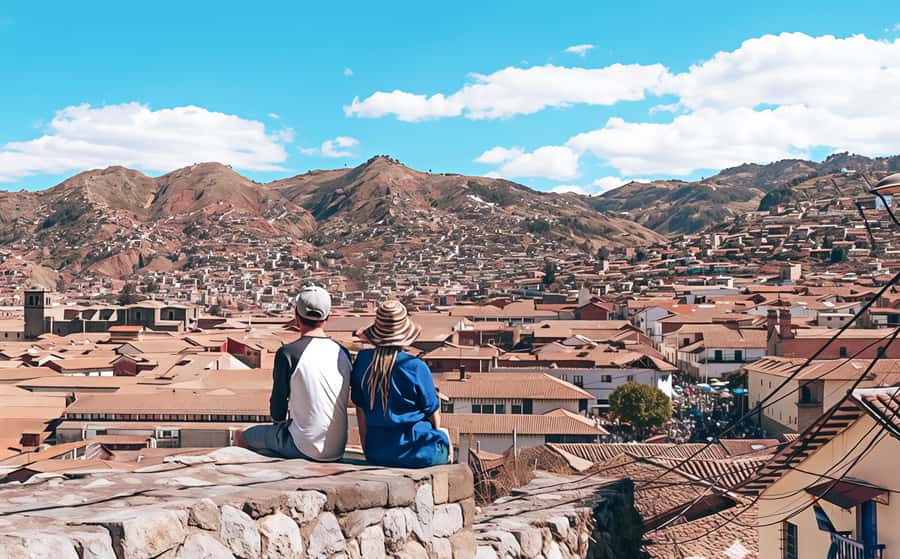
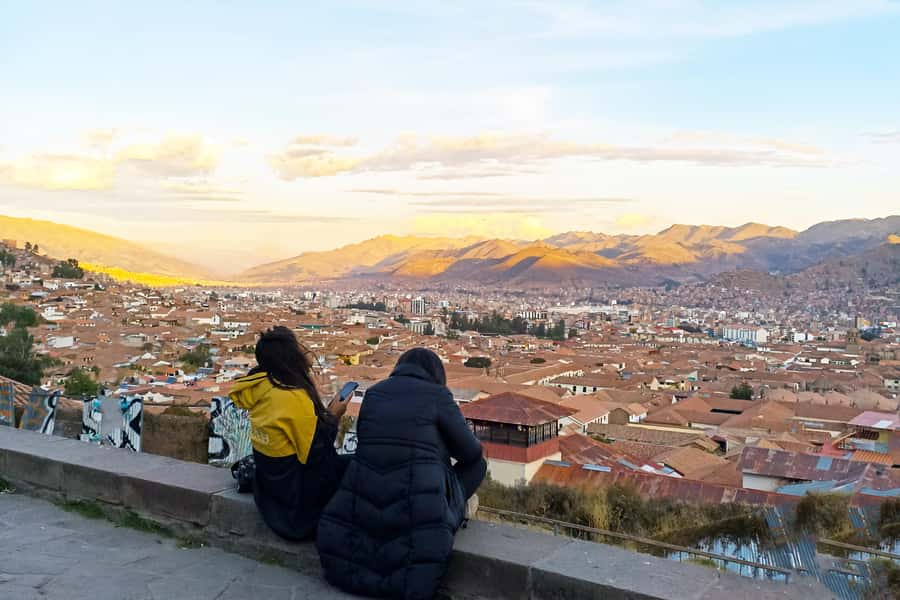
You’ll also take in breathtaking views during this stretch. In one big advantage of doing it as a guided walk: you’re more likely to hit the viewpoint at a good moment, when light softens the city’s stone colors and makes photos come out better.
You can also read our reviews of more historical tours in Cusco


Luthier Workshop Visit: Instruments With a Point
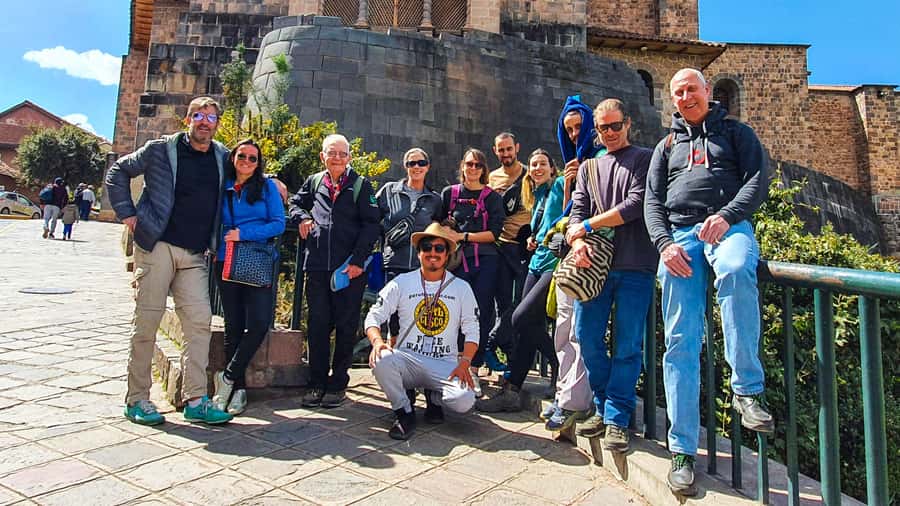
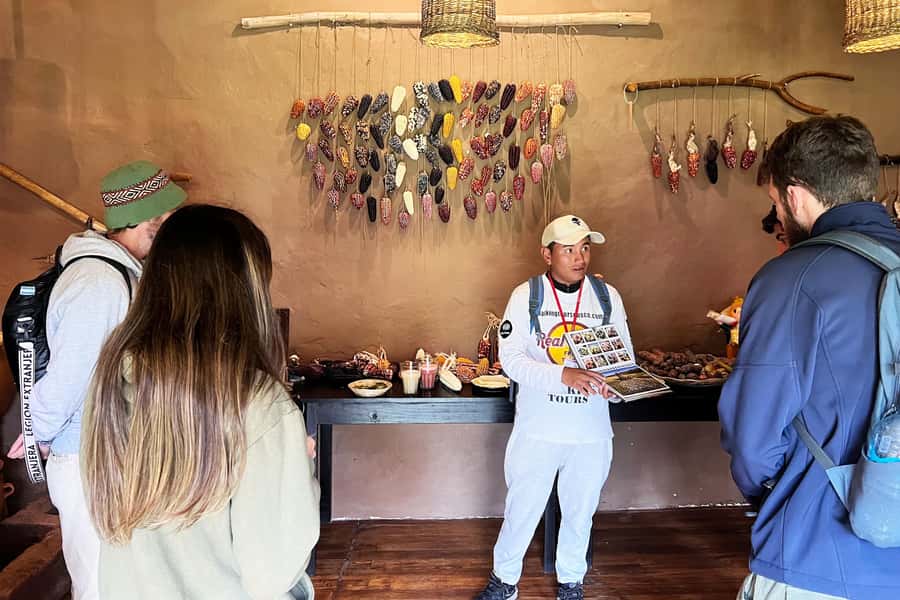
One of the strongest included stops is the luthier workshop visit. This is where the Andean music part stops being background entertainment and becomes cultural learning.
A luthier is an instrument maker, and the visit gives you a behind-the-scenes look at the craft side—how instruments are built and why that matters in a musical culture shaped by the Andean environment. Even if you don’t know much about instruments, you’ll leave understanding that music here isn’t only performance. It’s craft, tradition, and technique passed through hands-on work.
In a tour that covers architecture and symbols, this workshop adds a different kind of understanding: sound as part of the city’s identity.
Andean Music Show: What to Expect and What If It Changes
After the workshop, you’ll watch an Andean music show. This is the moment where the tour’s cultural pieces snap together: instrument craft leads into actual performance, and the guide helps you connect what you’re hearing back to the symbolism and lifestyle context you’ve learned earlier.
One practical note: the scheduled music-show vendor can be closed on some dates. If that happens, the guide can recommend a local dance show as an alternate plan, which keeps the experience intact instead of turning the last part into a disappointment. That flexibility is a quiet advantage of doing this with a live guide.
7 Borreguitos Street: The Most Photographed Corner (For a Reason)
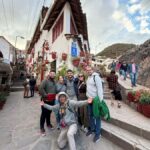
Then you’ll hit 7 Borreguitos Street, known as one of Cusco’s most picturesque streets. If you like streetscapes, this stop delivers. It’s a compact scene with a strong visual character that makes it easy to slow down, frame a photo, and appreciate why the street gets referenced so often.
This is also a useful mental break in the tour rhythm. After symbol-heavy stops and workshop learning, this is the part that lets you enjoy the city as a place you’re walking through, not a classroom you’re sitting in.
Temple of Manco Capac: Closing With the Inca Through-Line
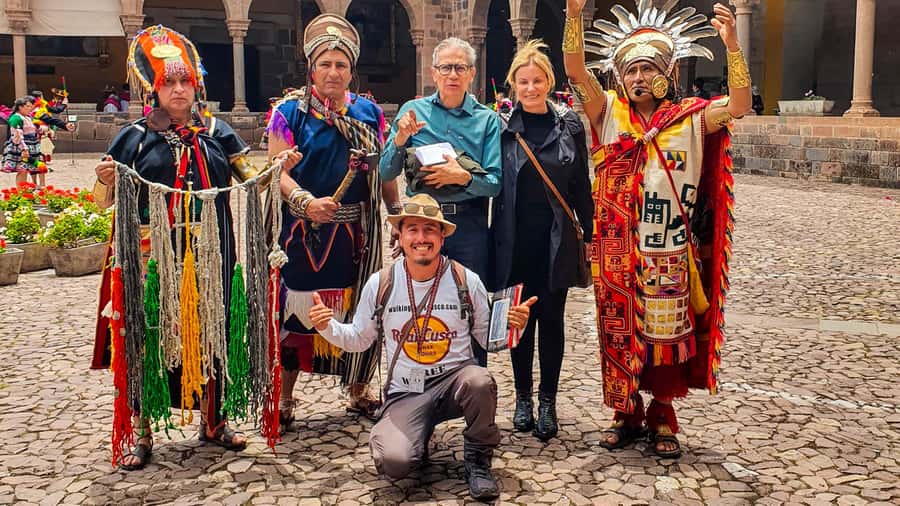
The tour finishes with a visit to the Temple of the First Inca Ruler, Manco Capac. This stop brings a clear Inca through-line to everything you’ve seen so far.
Why it works as a closing chapter: earlier you focused on major sites like Qoricancha, then you picked up symbolism around the city. Ending with Manco Capac helps tie those themes back to leadership, origin stories, and how Inca identity anchored the city’s self-understanding.
Even if you’re not a “temples-only” person, this last Inca-focused stop gives the walk a satisfying shape. It doesn’t feel random. It feels like you’re traveling from the city’s power centers toward a deeper origin thread.
Pisco Sour or Chicha Morada: The Best Kind of Tour Ending
Your final treat is included: you choose between a Pisco Sour (Peru’s national drink) or Chicha Morada (a non-alcoholic Peruvian favorite).
This is more than a freebie. It’s the right kind of cultural close: you get a taste that’s strongly tied to Peru, and you can choose based on your preference for alcohol. If you’re planning the rest of your evening, Chicha Morada is a handy way to keep the fun going without turning your afternoon into a foggy one.
You’ll likely toast at the end, which makes the whole tour feel like a complete arc—walk, learn, and then relax for a moment.
Price and Value: What $10 Buys You in Cusco
At around $10 per person for a 2-hour, small-group walk, this tour is good value—mainly because it’s not only a guide and a route. You’re also getting:
- a bilingual guide (English or Spanish),
- a luthier workshop visit,
- an Andean music show,
- and an included drink at the end.
Compare that to pay-as-you-go sightseeing. Even if you skip optional additions like museum entry (not included), the included segments reduce the “surprise costs” feeling that can pop up on city tours.
The other value angle is timing. This tour is built for short-stay visitors. It gives you context fast, so later you can spend your time where you personally care—maybe you’ll return to one landmark for longer, or you’ll explore San Blas at your own pace with better direction.
Who This Tour Fits Best (And Who Should Skip)
I think this tour is a strong fit if you:
- want an efficient first introduction to Cusco’s center,
- like cultural context, symbols, and explanation—not just names,
- enjoy music and craft, not only architecture,
- prefer a small group where you’re not swallowed by crowds.
It’s not a fit if you use a wheelchair, have mobility impairments, are hearing-impaired, are traveling with babies under 1 year, or if you’re over 95 years old. That’s not about attitude—it’s simply that the experience is designed as a moving walking tour with physical access limits.
Should You Book This Cusco Walking Tour?
Yes, I’d book it if you want a compact but meaningful Cusco orientation with a mix of landmarks, symbolism, craft, and music—and you’re excited to end with a included local drink.
Skip it if walking distances are a problem for you, if you need an access-friendly plan, or if you strongly prefer museum-heavy pacing. In that case, you’d likely feel rushed or miscast.
If you do book: show up at Plaza de Armas on time, keep an eye out for the white umbrella, and bring your curiosity for the small stops—the angled stones and the Trilogy carving are the kind of details that turn a photo into a memory.
FAQ
Where is the meeting point?
Meet next to the Inca Fountain in the Plaza de Armas. Your guide will be holding a white umbrella.
How long is the tour, and how large is the group?
The tour runs for about 2 hours and is limited to a small group of up to 10 participants.
What’s included in the price?
You’ll have a bilingual tour guide, a stop at a luthier’s workshop, and a pisco sour or a non-alcoholic drink at the end. Entry to museums is optional and not included.
What languages are offered?
The tour is offered in English and Spanish.
Is it suitable for wheelchair users or people with hearing loss?
No. The tour is not suitable for wheelchair users, people with mobility impairments, and hearing-impaired people. It’s also not listed as suitable for babies under 1 year or people over 95 years old.
Can I cancel and get a full refund?
Yes. You can cancel up to 24 hours in advance for a full refund.