REVIEW · CUSCO
From Cusco: Half-Day Zip Line Adventure
Book on GetYourGuide →Operated by PVTravel · Bookable on GetYourGuide
One question: can you handle sky-time? This half-day zip line adds adrenaline and Inca-area scenery in a tight 3-hour block. You’ll get picked up in central Cusco, ride out toward Racchi, then fly across the canyon and mountains on four different cables.
What I really like is the built-in progression: the first run is gentle, so you can get comfortable before things pick up. I also like that you don’t just get one “long zip” moment—you get four cables with different speeds and the longest run listed at about 600 meters. The views are part of the point too, including viewpoints linked to Chinchero, Pj’acchayoc canyon, and snow-capped Chicón and Pitusiray.
One drawback to plan for: this is not a relaxed walk-and-sit activity. The rules are strict on footwear (no sandals or flip-flops) and it’s not suitable for pregnancy, mobility impairments, or heart problems, so it pays to read the limits carefully before you book.
In This Review
- Key things to know before you go
- Racchi transfer: why the 50-minute ride matters
- Four cable runs over the Sacred Valley from Chinchero to the canyon
- The “soft to fast” progression: how each cable changes the ride
- Timing your day: what happens during the 1.5 hours in the air
- Included perks: guide support and what you’re actually paying for
- Price and value: is $85 a good deal in Cusco?
- Rules and safety: what you must not ignore
- Who should book this zip line and who should skip it
- Should you book this half-day zip line from Cusco?
- FAQ
- How long is the zip line experience?
- What is the price per person?
- Is pickup from Cusco included?
- Where do you go for the activity?
- How many zip line cables do you use?
- What languages are the guides available in?
- Where do you get dropped off after the tour?
- What should you wear?
- Who is this activity not suitable for?
- Are meals included in the price?
Key things to know before you go
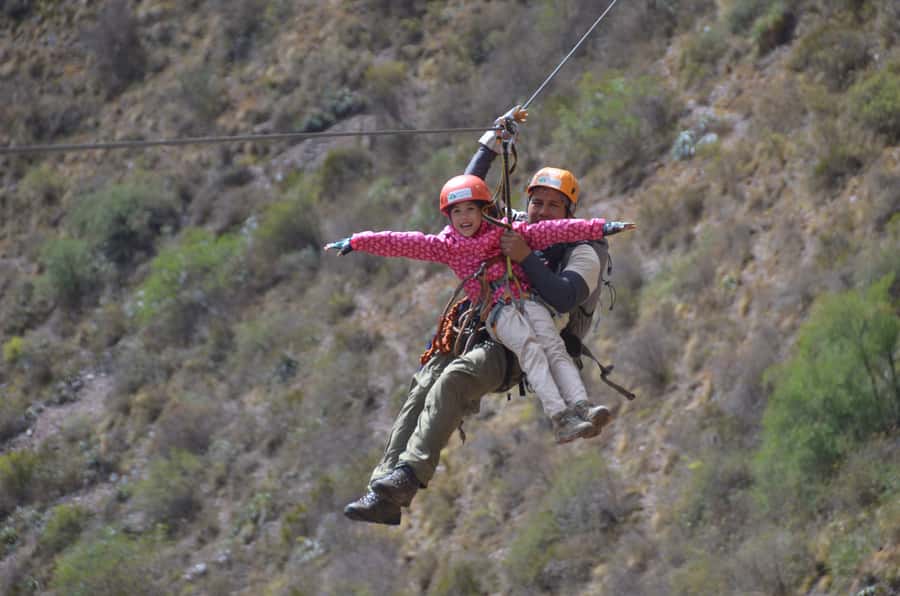
- Four cables, four stages: you start slow, then build toward faster runs and more extreme body positions.
- Longest cable is about 600 meters: you’ll spend real time airborne rather than doing quick zips.
- Deep canyon views up top: the run described as the deepest reaches about 2000 meters, where the sightlines matter most.
- Small group (up to 10): fewer people means smoother handling during gear checks and briefings.
- Pickup and drop-off included: hotel pickup in Cusco and return to Plaza Regocijo make the timing easy.
Racchi transfer: why the 50-minute ride matters
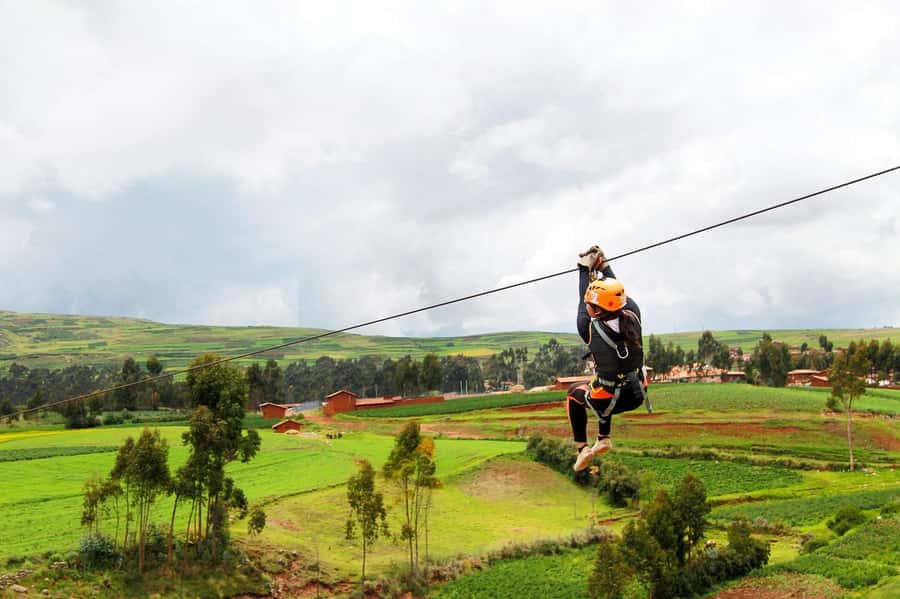
Most of your day is still in motion when the driver picks you up in central Cusco. You’ll transfer for about 50 minutes to Racchi, which sets you up for a zip line that feels like an excursion, not just a backyard thrill.
That drive is also where the geography starts to make sense. As you head toward the launch area, the scenery you’ll later fly over is already in view: the plateau linked to Chinchero, the Pj’acchayoc canyon area, and the wider Sacred Valley zone. In plain terms, you’re not just going to see a blur from the sky—you’re going to recognize landmarks once you’re up there.
The timing is tight but realistic. Since the total duration is 3 hours and the zip time is about 1 hour 30 minutes, you’re likely spending the rest on pickup, transfer, gear handling, and then the return to Cusco.
You can also read our reviews of more tours and experiences in Cusco


Four cable runs over the Sacred Valley from Chinchero to the canyon
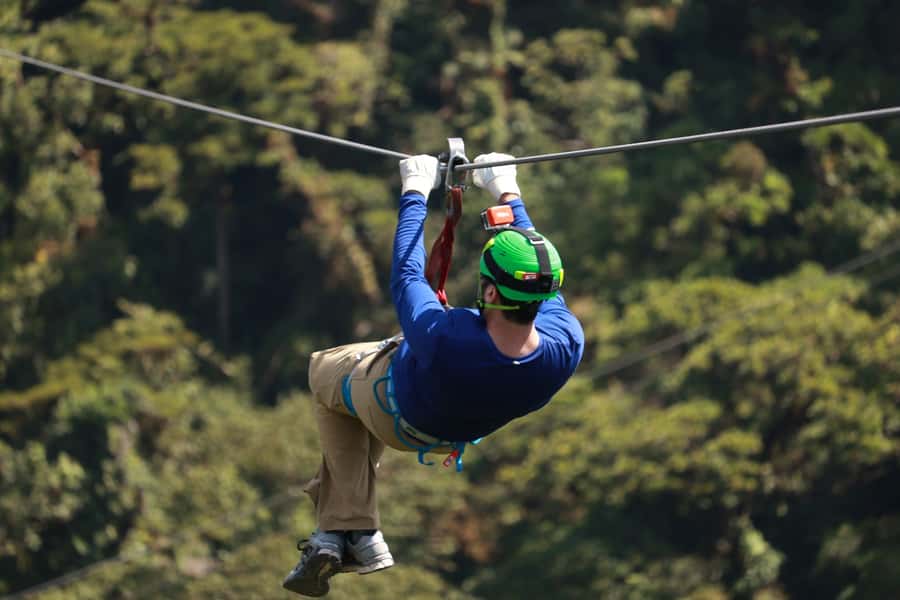
The core experience is four different cable runs, each with its own feel and purpose. You’re not repeating the same moment over and over; each stage is designed to change the sensation and the view.
From the launch/plateau area, the route is described as flying across the Sacred Valley of the Incas and over the canyon while you look toward snowy peaks such as Chicón and Pitusiray. You also get views tied to the Chinchero area and the Pj’acchayoc canyon, so it’s not only about speed.
A nice detail is the way the operator frames the run order. The longest cable is listed as about 600 meters, and the deepest section is described with a distance reference around 2000 meters. Even if you don’t measure it mid-flight, those numbers tell you where the run order is meant to peak: comfort first, then speed, then the most dramatic drop and canyon perspective.
The “soft to fast” progression: how each cable changes the ride
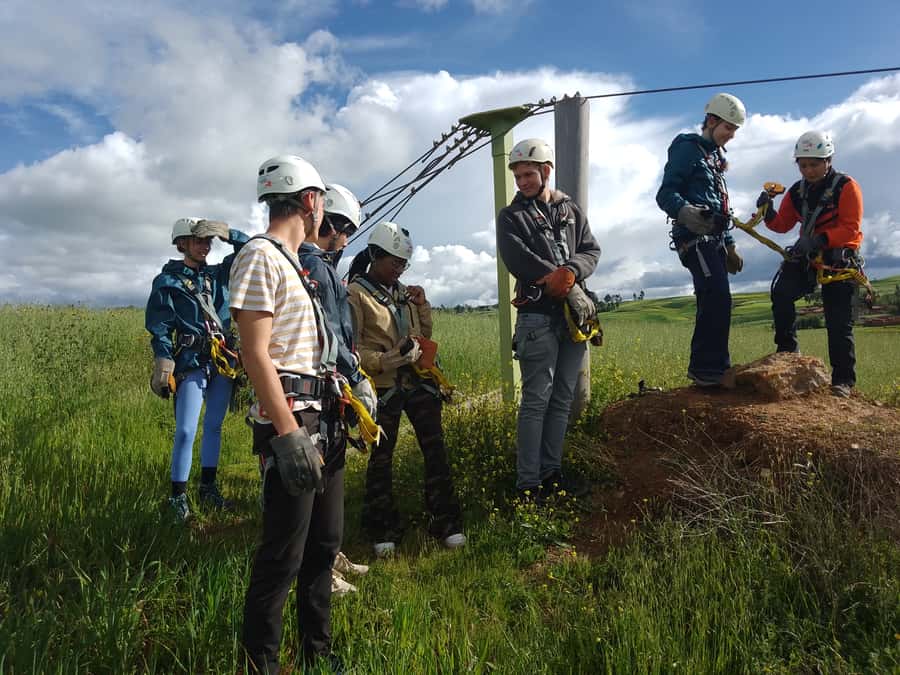
If you’re worried about the adrenaline factor, this plan helps. The first cable is described as soft, which means it’s the confidence-builder. You can get your body position right and learn what it feels like to clip in and move down the line without going straight to full speed.
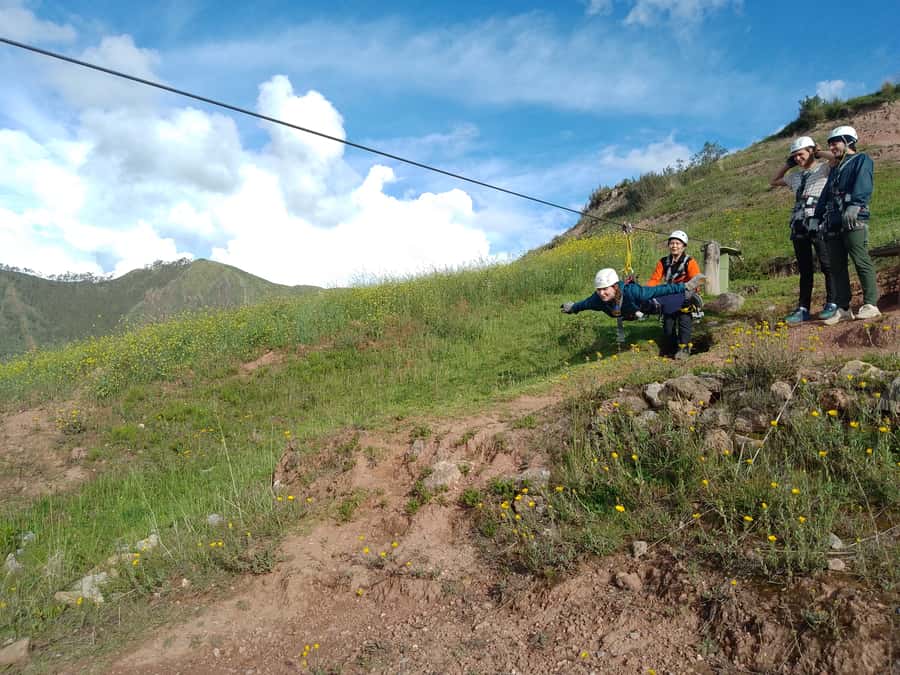
The second wire is the speed-up run. It’s described as faster so you can imagine the maximum sensation of flying. This is usually the moment where you stop thinking about mechanics and start noticing scenery, especially because it’s partway into the experience when you’re already settled.
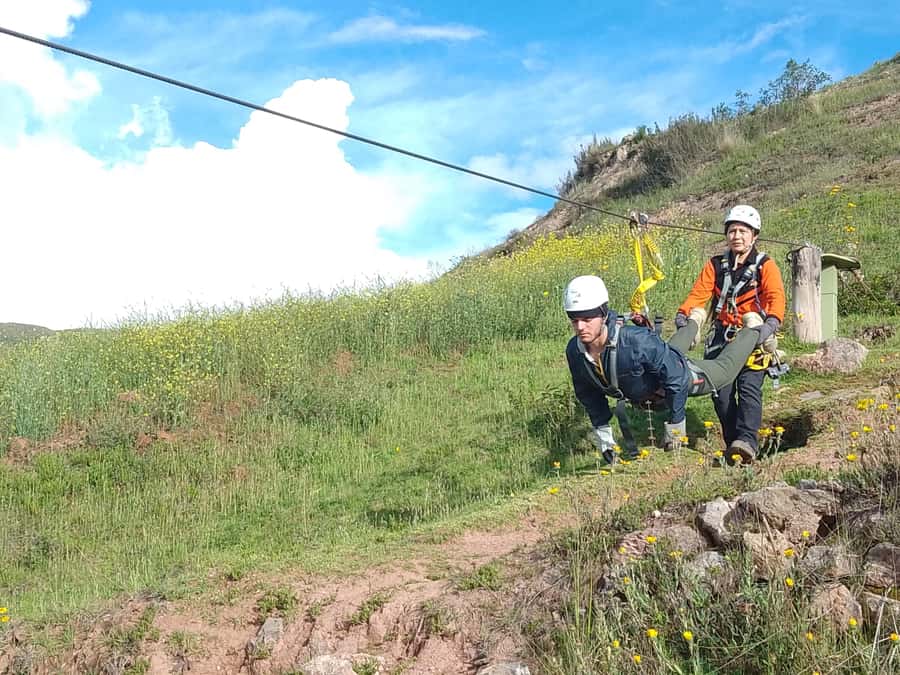
The third wire is longer and gives you time for movement or more extreme positions. That matters because a zip line can feel like a blur if the ride is too short, and here you’re getting length that allows you to experiment safely within the activity rules.
Finally, the fourth cable is described as the deepest with the best views of the canyon, Sacred Valley, and mountains. If you want the wow factor at the end, this is the finale. By that point, you’re likely more relaxed, so you’ll spend less time bracing and more time looking.
Timing your day: what happens during the 1.5 hours in the air
Your zip time is about 1 hour 30 minutes. In real life, that usually means you’ll do gear setup, brief safety instructions, then move through the four cables with minimal downtime between runs.
Because the operator limits the group to up to 10 participants, you should expect a more orderly flow. Fewer people usually means fewer stalls while guides handle equipment checks, fit harnesses, and confirm positions.
Plan for altitude logistics too. Cusco is high, and even though the activity is about adrenaline, the body still takes cues from the air and the effort of walking on uneven ground. I find that helps to keep your expectations practical: you’re there for a physical thrill with views, not a slow nature walk.
Included perks: guide support and what you’re actually paying for
At $85 per person for roughly a half-day, you’re not just paying for a ride. You’re paying for the full setup: pickup, transport, equipment, guide support, and the structured four-run sequence.
Here’s what’s included:
- Hotel pickup in Cusco city centre
- Transport to and from the zip location (about 50 minutes one way)
- 4 wires (the full progression of cable runs)
- Equipment needed to do the activity
- English or Spanish guide
- First aid kit
- Drop-off at Plaza Regocijo (about two blocks from the main square)
That list matters because it covers the “hidden work” you’d otherwise need to arrange yourself. If you’re short on time in Cusco, included pickup and a central drop-off can be the difference between enjoying your day and wasting half of it figuring out logistics.
The guide’s language support (English or Spanish) also matters in a safety-driven activity. Clear instructions mean less confusion when you’re clipped in and waiting for your turn.





Price and value: is $85 a good deal in Cusco?
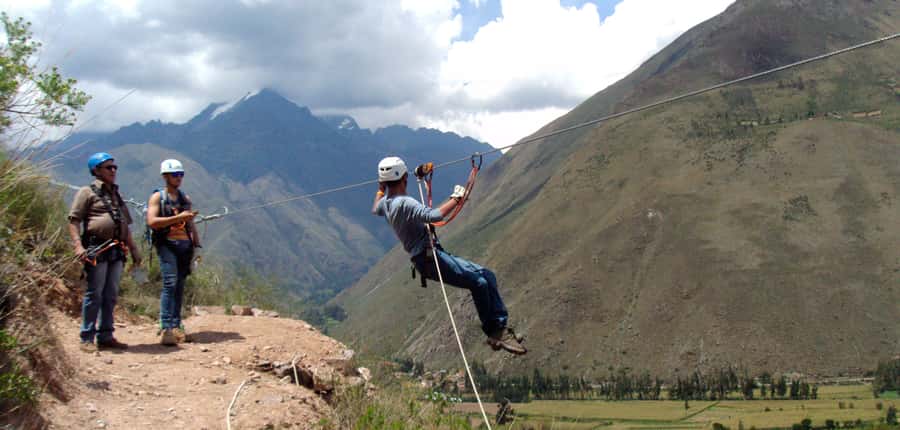
For Cusco, $85 can be a fair price when the product is clearly defined: a small-group zip experience with four separate cable runs and a total of 3 hours from pickup to drop-off.
What pushes the value up is the length and variety. A single zip line is fun, but four cables with different speeds and positions stretches the experience out. Add the longest run listed at about 600 meters and the deepest run described around 2000 meters, and you’re buying multiple “moments” rather than one.
What might lower the perceived value for some people is that meals aren’t included. That’s not a deal-breaker, but you’ll want to plan a snack or plan your timing so you’re not hungry after the ride.
Rules and safety: what you must not ignore
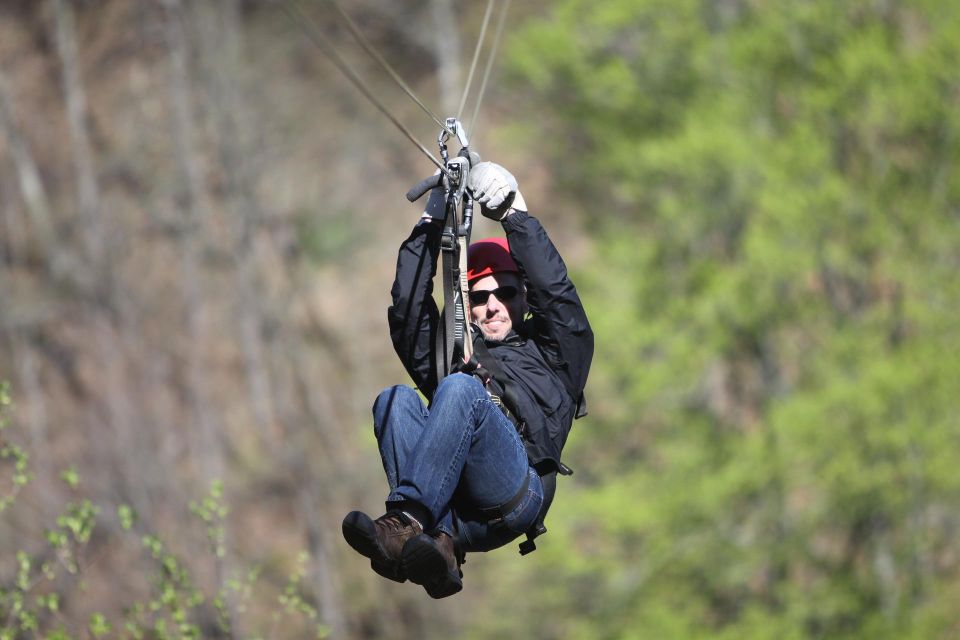
This activity comes with clear limits. It’s not suitable for pregnant women, people with mobility impairments, or people with heart problems. If any of those apply, skip this one and look for a different Cusco activity that matches your comfort level.
There’s also a footwear rule: no sandals or flip-flops. That’s a practical safety requirement because you’ll need stable footing during gear checks and movement around the platform.
And since the provider includes a first aid kit and a bilingual guide (English/Spanish), it’s set up like a managed outdoor activity rather than a casual drop-in attraction. I’d still treat it like a real adventure: follow instructions, listen to the guide, and don’t try to push your comfort level just because you see others doing it.
Who should book this zip line and who should skip it
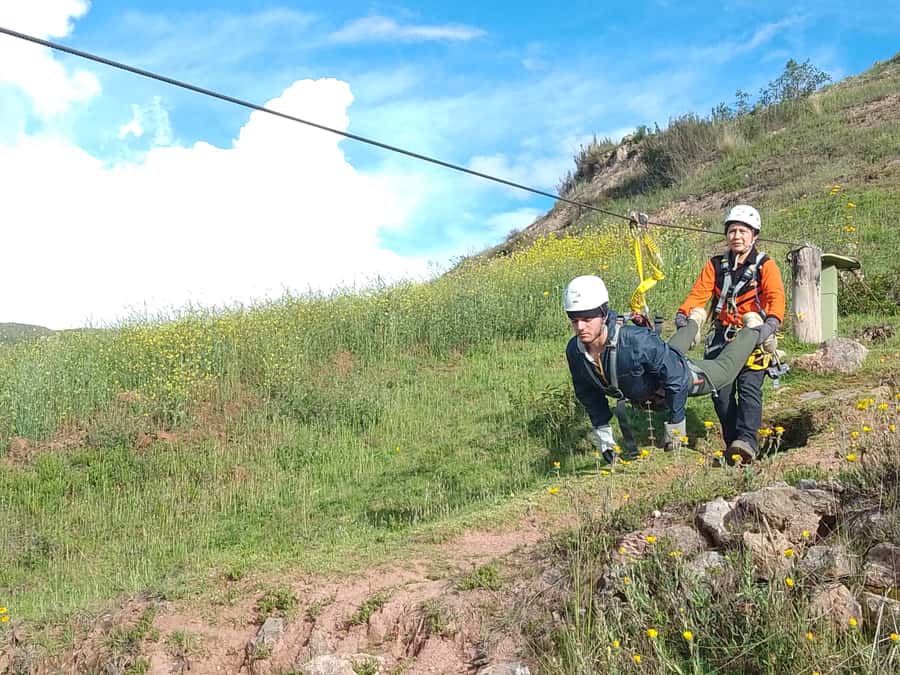
This is a great fit if you want a classic Cusco adrenaline outing without a full-day commitment. The small-group size (up to 10) and the structured four-run experience make it especially appealing if you dislike chaos or long waits.
It’s also a good choice for travelers who like knowing what to expect. The run order—soft start, then faster, then longer with movement, then the deepest viewpoint—gives the activity a clear arc. That’s comforting when you want adrenaline but not panic.
Skip it if you need step-free access, if your heart condition makes high exertion or stress unsafe, or if you’re in any situation where you’d struggle with harness activity and uneven outdoor ground. The rules are there for a reason.
Should you book this half-day zip line from Cusco?
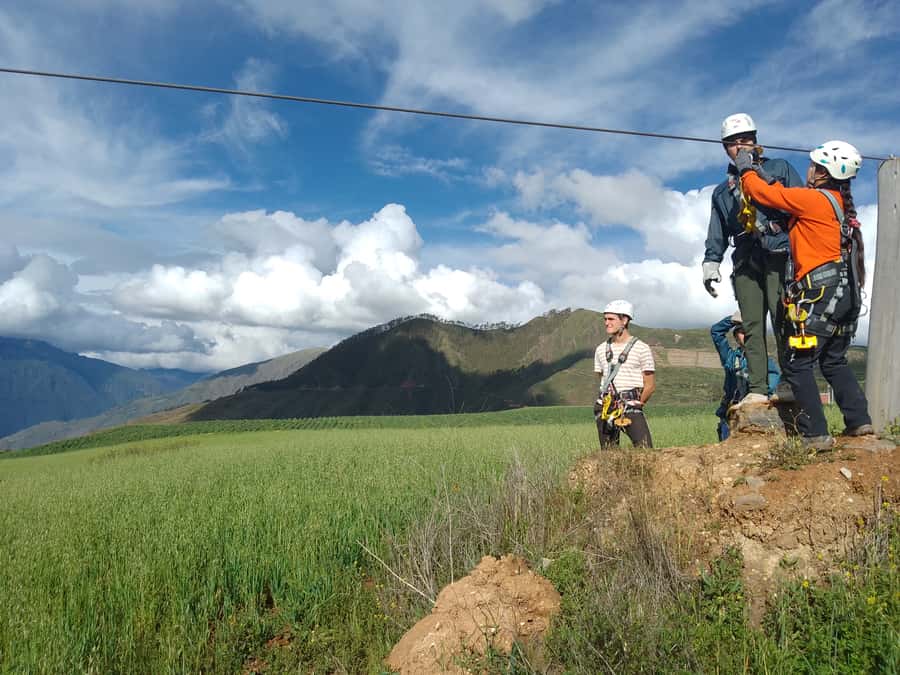
Yes, I’d book it if you’re chasing a fun, high-adrenaline experience and you want big views over the Sacred Valley area in a short window. The combination of four cables, changing speeds, and a progression from confidence-building to the deepest canyon views makes this feel like more than just a thrill ride.
I’d think twice if you’re sensitive to height, you have medical limitations listed for the activity, or you’re not willing to follow the footwear rule. Also, since meals aren’t included, plan your day so you’re fed before pickup or prepared to grab food after drop-off.
If you’re in the Cusco area for just a few days and you want one “wow” activity that’s efficient and structured, this one is a strong candidate.
FAQ
How long is the zip line experience?
The activity lasts about 3 hours total, with approximately 1 hour and 30 minutes of zip line time.
What is the price per person?
It costs $85 per person.
Is pickup from Cusco included?
Yes. Pickup is included from your accommodation in Cusco city centre.
Where do you go for the activity?
You travel about 50 minutes to the town known as Racchi.
How many zip line cables do you use?
You fly on 4 different cables.
What languages are the guides available in?
Guides are available in English or Spanish.
Where do you get dropped off after the tour?
You’re dropped off at Plaza Regocijo, about two blocks from the main square.
What should you wear?
Sandals or flip-flops are not allowed. Wear footwear that you can keep secure and stable.
Who is this activity not suitable for?
It is not suitable for pregnant women, people with mobility impairments, or people with heart problems.
Are meals included in the price?
No, meals are not included. Accommodation in Cusco is also not included.