REVIEW · AREQUIPA
From Arequipa: Sillar Route Excursion | Half Day |
Book on GetYourGuide →Operated by journey MachuPicchu · Bookable on GetYourGuide
Sillar stone has a story you can walk through. This Sillar Route excursion connects the quarry work behind Arequipa’s White City look with real places you can see in a single half day. You start with an early pickup and a viewpoint framed by volcanoes, so the trip feels like more than just a stop-and-photo circuit.
What I like most is how hands-on the route gets at the Añashuayco Quarry, where you’ll see how masons cut and carve the stone. The other big win is the canyon time at Cañón de Culebrillas—a guided walk through a water canyon with tall walls and photo-ready views. One thing to keep in mind: the tour price is only part of the budget since entrance tickets are extra and you may want to buy mosquito repellent on the day.
Key points you should know
- White City origins in the flesh: see the stone behind Arequipa’s signature look.
- Añashuayco Quarry details: watch how masons work with the carving process.
- Cañón de Culebrillas walk: about 20 minutes inside the canyon’s dramatic water walls.
- Petroglyph stop: carved figures where the meaning is unknown.
- Real guide value: English/Spanish commentary and clear explanations help a lot.
In This Review
- Why Arequipa is the White City starts on the Sillar Route
- The half-day timing: pickup at 8:50 and back by about 1:00
- First stop: the volcano viewpoint that sets the tone
- Añashuayco Quarry: seeing ashlar carving where it happens
- Quebrada de Culebrillas: a 20-minute walk inside the canyon
- Petroglyphs in the canyon: symbols you can’t fully decode
- What you truly get for $25 (and what costs extra)
- Guide quality makes or breaks the route
- What to bring: camera, cash, and the mosquito reality
- Who should book this excursion (and who might want a different plan)
- Should you book the Ruta del Sillar excursion?
- FAQ
- What is the duration of the Sillar Route excursion?
- What time do you get picked up in Arequipa?
- Where does the pickup happen?
- Is the entrance ticket to Ruta del Sillar included?
- Is the entrance ticket to Cañón de Culebrillas included?
- How long do you walk inside the canyon?
- What languages is the guide available in?
- What should I bring with me?
- What items are not allowed on the tour?
- What is the cancellation policy?
Why Arequipa is the White City starts on the Sillar Route
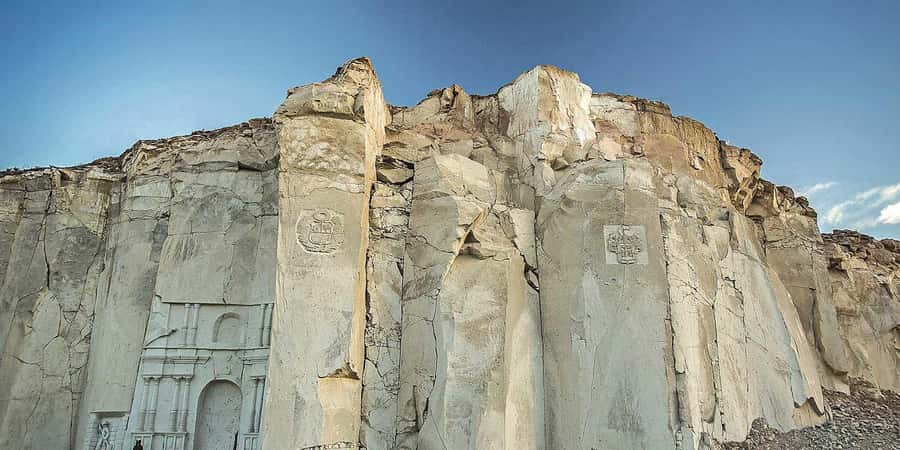
If you’ve seen photos of Arequipa’s pale buildings and wondered what makes them so distinctive, the Sillar Route gives you the answer at ground level. This region is tied to sillar, the white stone used across the city, and the craft around it was declared Intangible Cultural Heritage of the Nation.
That heritage label matters here. It’s not just about pretty rocks. It’s about how people extract and shape a specific material into ashlar stone—work that’s local, skilled, and still part of the cultural identity.
The half-day timing: pickup at 8:50 and back by about 1:00
The tour runs as a true half-day outing. You’re picked up at 8:50 a.m. from your hotel area near the main square and you return around 1:00 p.m. The official duration is listed as 390 minutes, which lines up with a full morning pace once you factor in driving time between sites.
You’ll be on tourist transport throughout, and the itinerary is structured so you get viewpoint time, quarry time, and then canyon time without feeling like you’re racing nonstop. It’s a nice option if you want a meaningful Arequipa experience without committing to a full day.
You can also read our reviews of more tours and experiences in Arequipa.
First stop: the volcano viewpoint that sets the tone
Right after pickup, you head toward the Ruta del Sillar, one of the most historic roads in Peru. Before the geology and carving take center stage, you arrive at a viewpoint so you can appreciate the volcanoes surrounding Arequipa.
This is more than a warm-up photo stop. Seeing the volcano backdrop helps you connect the white stone to the broader volcanic story of the region. It also gives you a mental map for what’s coming next: stone extraction sites that sit right in the same dramatic environment you see from above.
Añashuayco Quarry: seeing ashlar carving where it happens
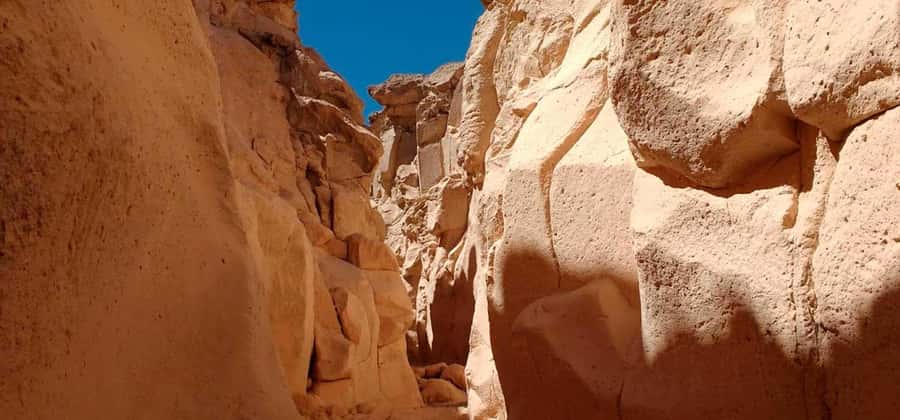
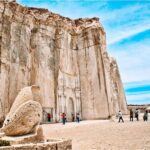
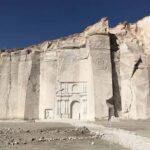
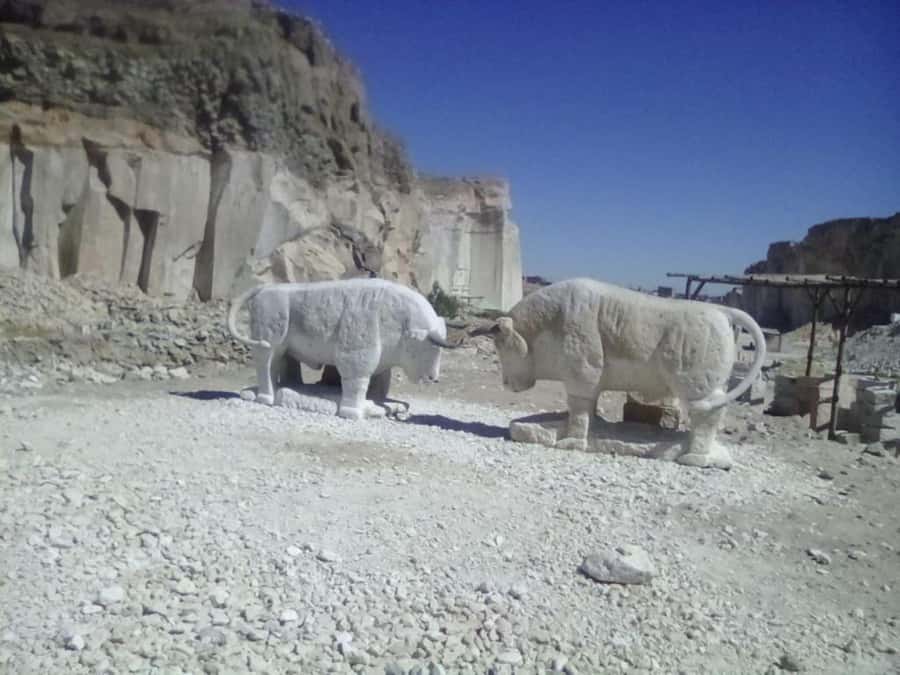
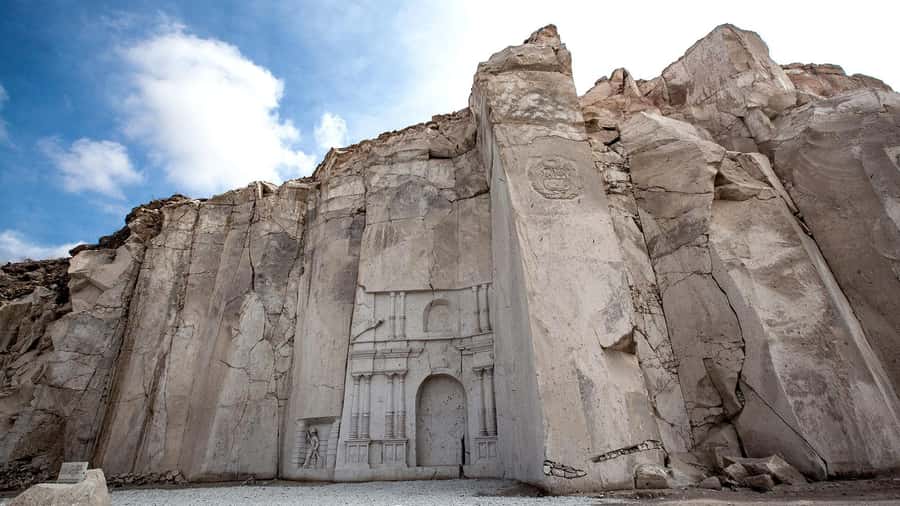
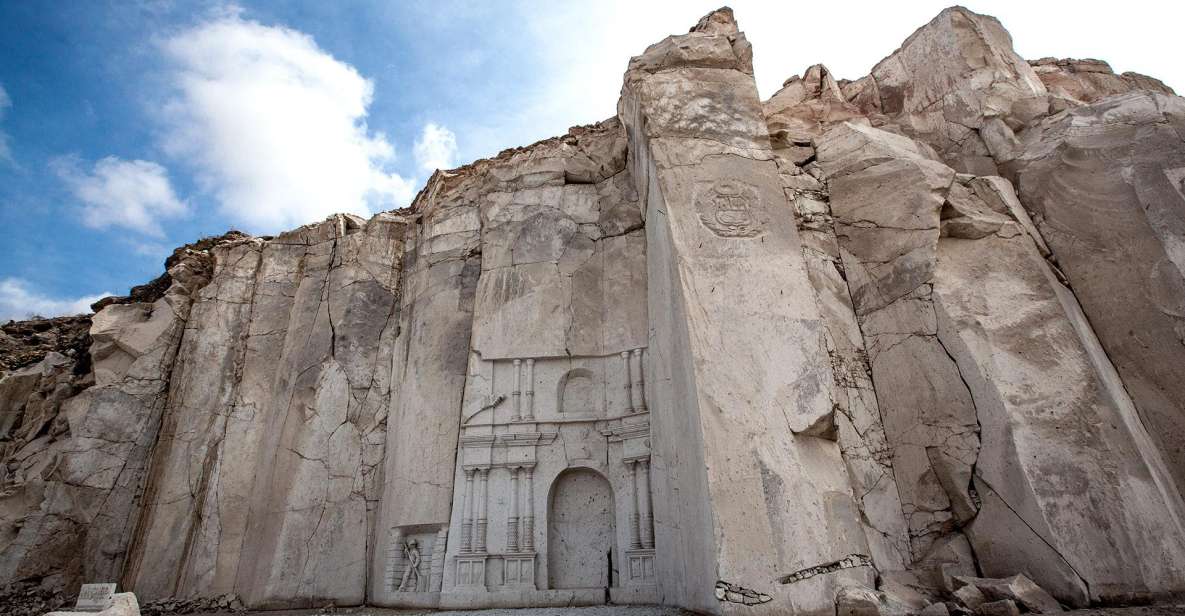
The heart of the experience is the Añashuayco Quarry. This is where you can see the origin of ashlar stone—how local masons work and how the carving process is carried out. Watching the stone work in person adds a layer you can’t get from pictures.
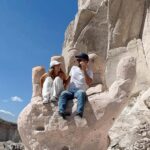
You’ll also admire the scale of the canyon cliffs formed by extraction. Even if you’re not the kind of person who reads technical explanations, the size of what’s been carved gives you immediate perspective. It’s the kind of place where the craft feels real, not abstract.
Practical note: quarry environments can feel a bit exposed depending on the weather. Wear comfortable shoes and plan on moving carefully, especially if the ground is uneven.
Quebrada de Culebrillas: a 20-minute walk inside the canyon
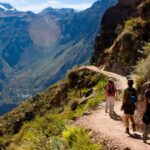
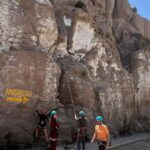
About 30 minutes after Añashuayco, you reach Quebrada de Culebrillas. This is the water canyon stop, with walls up to 20 meters high. The tour invites you to walk in for about 20 minutes, which is long enough to enjoy the setting but short enough to keep the pace comfortable.
What makes this stop special is the contrast. First you’re looking at stone extraction and shaping. Then you’re walking in a canyon where water has sculpted the walls over time. It’s a reminder that geology isn’t just behind the scenes; it’s active and visible.
This is also your main photo window. The canyon walls create strong lines and shaded areas, so bring a camera you’re comfortable using in mixed light.
Petroglyphs in the canyon: symbols you can’t fully decode
Your last stop on the route is to discover petroglyphs in the canyon—figures carved into stone where the meaning is unknown. That uncertainty is part of the power of the visit. You can stand there and appreciate the human decision to carve images into rock without needing a final answer.
This stop works best if you like questions. If you enjoy trying to interpret shapes, noticing spacing, or thinking about how artists might have chosen what to carve, you’ll probably find the petroglyphs memorable.

What you truly get for $25 (and what costs extra)
The base price is $25 per person, and it includes pickup from your hotel, tourist transport, and a professional guide. In a half-day like this, that package is often what makes the outing feel easy: you’re not figuring out routes, timing, or how to see multiple sites in one morning.
Still, there are two notable added costs for entrances:
- Ruta del Sillar entrance ticket: $5 per person
- Cañón de Culebrillas entrance ticket: $5 per person
So plan on about $10 more in entrance fees if both are required for your day. There can also be extra spending for items like personal needs, and one practical example from a recent experience is buying mosquito repellent on site when it wasn’t brought ahead of time.
The value question is simple: if you want a guided explanation of why the White City looks the way it does, plus quarry and canyon access, this route tends to be a solid use of a morning. If you’re mostly in it for driving past sights and taking photos only, you might decide to go independently.
Guide quality makes or breaks the route
A good guide is especially important on the Sillar Route. You’re moving through working landscapes—quarries, canyon trails, and carved stone—and the narration helps you turn scenes into understanding.
One guide name that comes up is Tony, described as funny and able to explain clearly in both English and Spanish. Another consistent theme is that having English guidance is a big plus if your Spanish is near zero.
In practice, you’ll get the most out of the route if you’re willing to ask small questions along the way. Even one or two follow-ups—how the stone is carved, what you’re looking at in the canyon—can make the whole morning feel more connected.
What to bring: camera, cash, and the mosquito reality
The essentials are listed clearly, and I’d treat them as your checklist. Bring your passport or ID, a camera, cash, and any personal medication you need.
Also, consider adding one extra item even if it’s not required: mosquito repellent. One experience noted that repellent wasn’t mentioned ahead of time, which led to an on-the-spot purchase at a cost that felt a bit high compared with how much was needed. If mosquitoes are present, you’ll be glad you packed it.
You’re not allowed weapons or sharp objects, and alcohol and drugs are not allowed. So keep it simple, follow the rules, and focus on the views and the walking.
Who should book this excursion (and who might want a different plan)
This is a good match if you:
- Want to understand Arequipa’s look, not just admire it
- Enjoy short guided walks with meaningful stops
- Like geology, carving craft, and human-made rock art
It’s less of a match if you:
- Want long hikes or extended time in nature (the canyon walk is about 20 minutes)
- Don’t care about explanations and just want independent sightseeing
If you’re spending limited time in Arequipa, this half-day format is a strong way to add depth without burning your whole day.
Should you book the Ruta del Sillar excursion?
Yes, I’d book it if your goal is to connect the dots between stone, craft, and the city’s identity. The route gives you a clear sequence: volcano viewpoint, quarry carving origins at Añashuayco, a canyon walk at Cañón de Culebrillas, and petroglyphs where you can’t fully “solve” the mystery.
Do book with a practical mindset. Bring cash for entrance fees, pack mosquito repellent, and wear sturdy shoes. If you do those few things, you’ll leave the morning with real context for why Arequipa is called the White City.
FAQ
What is the duration of the Sillar Route excursion?
The tour duration is listed as 390 minutes, and it runs from pickup at 8:50 a.m. until return around 1:00 p.m.
What time do you get picked up in Arequipa?
Pickup is scheduled for 8:50 a.m.
Where does the pickup happen?
Pickup is from your hotel near the main square.
Is the entrance ticket to Ruta del Sillar included?
No. The Ruta del Sillar entrance ticket is listed as $5 per person.
Is the entrance ticket to Cañón de Culebrillas included?
No. The Cañón de Culebrillas entrance ticket is listed as $5 per person.
How long do you walk inside the canyon?
You’ll enter the canyon for a walk of about 20 minutes.
What languages is the guide available in?
The guide offers live interpretation in English and Spanish.
What should I bring with me?
Bring your passport or ID card, a camera, cash, and any personal medication you need.
What items are not allowed on the tour?
Weapons or sharp objects are not allowed, and alcohol and drugs are not allowed.
What is the cancellation policy?
You can cancel up to 24 hours in advance for a full refund.