REVIEW · CUSCO
Cusco Half Day City Tour: Four Ruins
Book on Viator →Operated by Heidi Travel EIRL · Bookable on Viator
Cusco’s half-day ruins plan is surprisingly effective. You get a tight circuit through Inca stonework, ceremonial spots, and fort-like structures, with a guide who helps you read what you’re seeing. I like that the group stays small (up to 15), which makes it easier to stop, ask questions, and actually take in details at each site. I also like that it’s designed around the Cusco area, so you spend less time commuting and more time looking. One thing to consider: the sites involve uneven ground and stairs, and at altitude you can feel it—especially if you’re new to Cusco.
In This Review
- Key takeaways before you go
- Four Ruins in Half a Day: Why This Route Works
- Meeting Point, Start Time, and How the Day Usually Flows
- Sacsayhuaman: Zigzag Walls, Fortress Vibes, and Sacred Views
- Q’enqo: A Carved Monolith Temple and the Mystery of the Channels
- Puka Pukara: The Red Fort, Uneven Stones, and Inca Practical Design
- Tambomachay: The Bath of the Inca and Water-Fed Terraces
- Price and Value: What $45 Really Covers (and What It Doesn’t)
- Guides, Group Size, and the Difference a Small Cap Makes
- What to Pack and How to Survive the Altitude Comfortably
- Who This Tour Fits Best (and Who Should Rethink It)
- Should You Book Cusco Half Day City Tour: Four Ruins?
- FAQ
- How many ruins are included in this tour?
- What time does the tour start?
- How long is the tour?
- What’s the group size limit?
- Is transport included?
- Are entrance fees included?
- What languages are the guides?
- Where does the tour start and end?
- What should I know about walking and altitude?
- What’s the cancellation policy?
Key takeaways before you go
- Small group (max 15): less crowd pressure and more time at viewpoints.
- Four stops that feel varied: fortress-style walls, a carved monolith temple, a red-stone complex, then a waterfall-fed terrace.
- Guide-led interpretation in English and Spanish: helpful for making sense of Inca purpose and mystery.
- Short but real walking: plan for stairs and rocky paths, and go slow if you’re breathless.
- Entrance fees are extra: budgeting matters because key site tickets aren’t included.
Four Ruins in Half a Day: Why This Route Works
This is a Cusco “best-of” style outing without trying to cram in too much. The value isn’t just that you hit four archaeological areas—it’s that they each highlight a different side of Inca engineering and belief. You’ll go from massive defensive-looking construction at Sacsayhuaman to the strange, carved-in-rock atmosphere of Q’enqo, then to the uneven, practical feel of Puka Pukara, and finally to the calmer flow-and-terraces world of Tambomachay.
Timing matters here. The tour is listed at about 6 hours and starts at 10:00 am, so you’re not stuck out all day battling the afternoon haze and crowds. Still, one practical note from real-world experiences: the pace can vary, and I’d treat this as a route that can run a bit shorter than the headline length if timing gets tight.
What really helps is the structure of the tour day: transport between sites, a guide explaining what you’re looking at, then enough time to linger at the big visual moments. That’s the sweet spot for people who want momentum but don’t want to feel like they’re only passing through.
You can also read our reviews of more city tours in Cusco
Meeting Point, Start Time, and How the Day Usually Flows
The tour meets at HEIDI TRAVEL EIRLC, Plateros 324, Cusco 08000 and returns to the same place. Starting at 10:00 am is nice because it leaves you time to settle into Cusco the day before—important if you’re adjusting to altitude.
You’ll typically spend part of the day on foot at each stop, but the ride times between areas are short enough to keep energy up. The vans used are generally described as comfortable, and the small-group size is meant to keep things from turning into a conveyor belt.
One caution: organization can be imperfect. In one experience, pickup ran late and the itinerary felt slightly compressed. That doesn’t mean it’s always like that, but I’d go in with a flexible mindset. If you have a tight dinner reservation that night, I’d keep it casual or make it easy to reschedule.
Sacsayhuaman: Zigzag Walls, Fortress Vibes, and Sacred Views
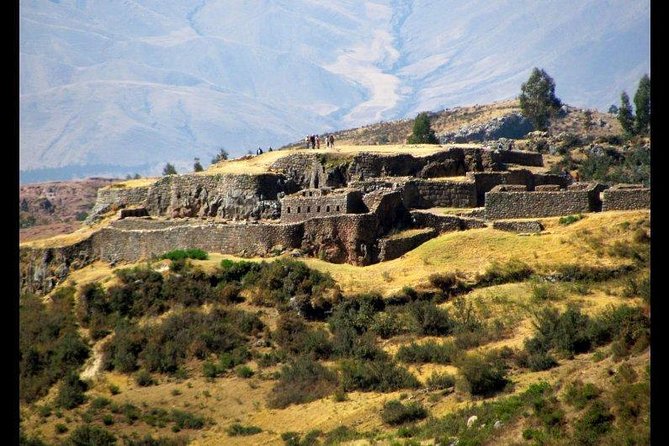
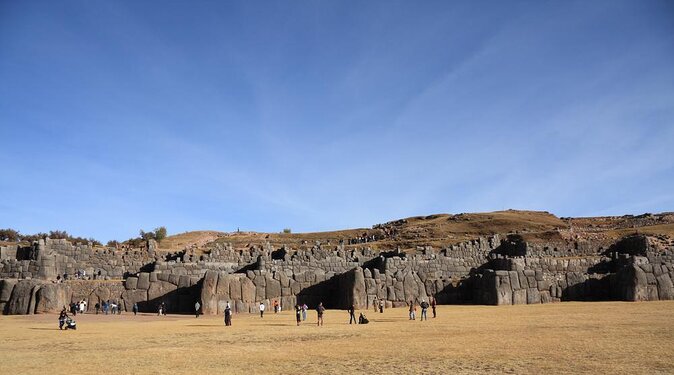
Sacsayhuaman is the opening act that sets the mood. The name comes from Quechua and is tied to a hawk-related meaning, and the site itself sits above Cusco with views that feel like they belong to a ruler’s plan rather than a random hillside project. You’ll see construction that looks military at first glance—especially the massive zigzag main wall made with giant stones up to about 5 meters high and roughly 2.5 meters wide (with each stone described as weighing on the order of tens of tons). Even without getting lost in numbers, you’ll feel the intention: this was built to last, and to intimidate.
Here’s the bigger context your guide should help you notice: the same place can be read as fortress and as ceremonial center. On Spanish arrival in the 1500s, they called it a fortress. Later, it was tied to Inca resistance, and that helps explain why so much of the layout feels defensive. At the same time, the site includes sacred buildings and features—residential-like structures, towers, shrines, warehouses, roads, and aqueducts—so it’s not just a wall and a yard.
Don’t miss the view part. From Sacsayhuaman you can see major peaks such as Ausangate, Pachatusán, and Cinca, all described as sacred in Inca thinking. That connection—stone + sky + spiritual geography—is one of the reasons Sacsayhuaman hits hard even if you’ve never studied the Inca before.
Practical consideration: you’ll be standing and walking on uneven ground. At altitude, treat this stop as your warm-up for breathing, not a cardio workout.
Q’enqo: A Carved Monolith Temple and the Mystery of the Channels
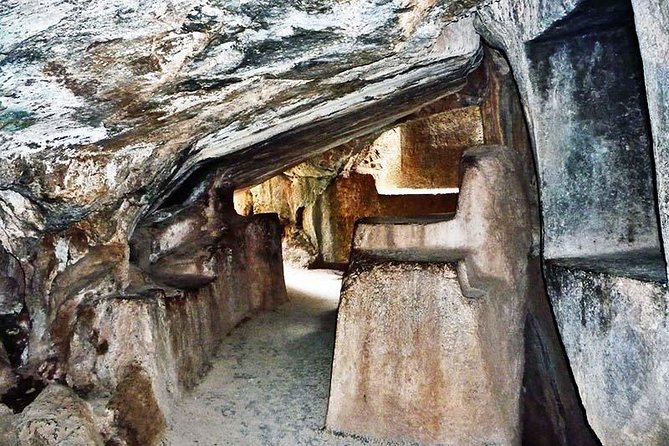
Q’enqo is the site where the story gets strange—in a good way. The name points to a labyrinth or zigzag idea, and the big visual feature is the crooked canal cut into the rock. What makes this stop worth your time is that you’re not just looking at a pretty ruin—you’re looking at a question mark that scholars have debated for a long time.
The canal’s purpose isn’t definitively known. Theories include holy water, chicha (corn beer), or blood, and each guess leads to a different idea of how the site functioned. Some interpretations connect it to death rituals: maybe related to embalmment, or maybe to judging whether a person’s life followed the right path based on how the liquid behaved.
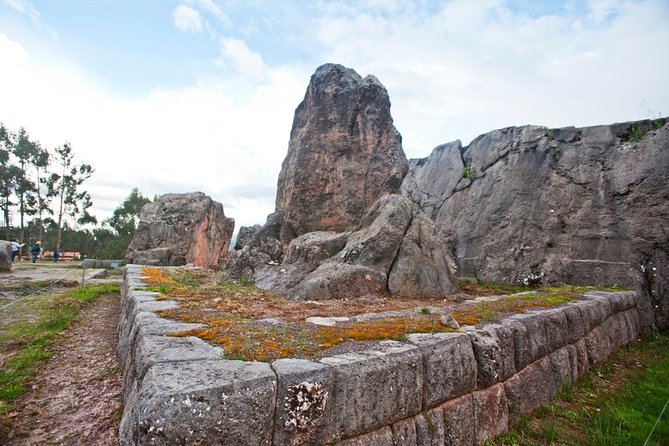
Then there’s the physical wow factor: Q’enqo is described as being carved entirely out of a gigantic monolith. You’ll see how man-made tunnels connect to natural chambers across a hillside. One chamber features 19 small niches and is laid out like an amphitheater. The seating-like feel, plus the dark, ritual-leaning theories, makes Q’enqo feel theatrical even though the exact purpose is lost.
If you like ruins that have unanswered questions, Q’enqo is a highlight. If you prefer sites with clear explanations, you’ll still enjoy it—but you’ll have to accept that some of the meaning is more guess-and-interpret than fact.
Practical note: expect some stairs and uneven rock. Wear grippy shoes. Cusco’s stones can be slippery, and you’ll want stable footing before you start reading symbols in the stone.
Puka Pukara: The Red Fort, Uneven Stones, and Inca Practical Design
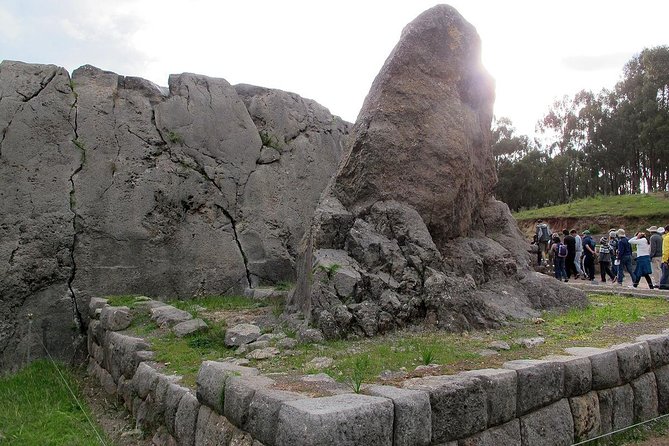
Puka Pukara (meaning red fort) gives you a different texture from the other stops. The name is tied to the earth color and the site’s location, plus a set of semi-circular enclosures you can spot as you look around.
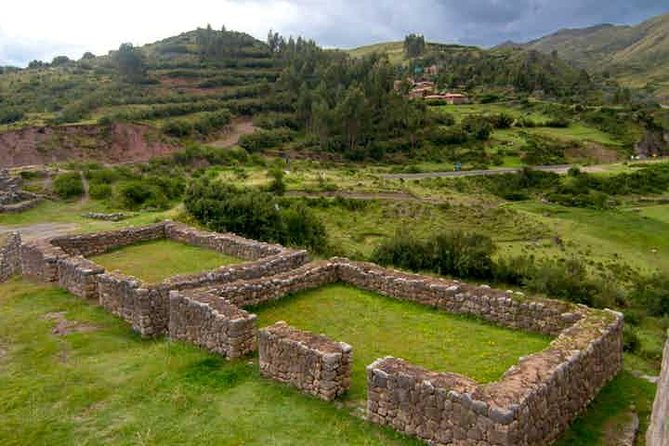
One reason Puka Pukara is memorable is how it’s built. The stones here are described as a mix of different sizes—small and medium—with a notably uneven surface compared with other Inca archaeological sites. That matters because it changes how the architecture feels. Instead of a perfectly uniform look, you get something more organic and functional, as if the builders worked with the terrain rather than smoothing it away.
The site layout is organized in three walls/levels, and the first wall includes a sinuous path that avoids cutting into protruding rocks. That kind of planning—engineering that respects what’s already there—tells you how Inca designers thought about movement and space. You’ll also notice rooms arranged in irregular patterns, seemingly placed to avoid directly touching the stones making up the wall.
The story also connects Puka Pukara to a bigger Inca world. There’s mention that it may have acted as a barracks and tambo (a place like an inn/hostel) when the Inca prepared to visit the baths at Tambomachay. You’ll also hear rumors about a tunnel that could have linked the two towns—no guarantee that it’s real, but it’s the kind of idea your guide may use to help you imagine how these places functioned as a network.
Practical consideration: the uneven ground here can take more care than you expect. Go slow, especially if you’re a little breathless from altitude. This stop is worth it, but it’s not the easiest one to rush.



Tambomachay: The Bath of the Inca and Water-Fed Terraces
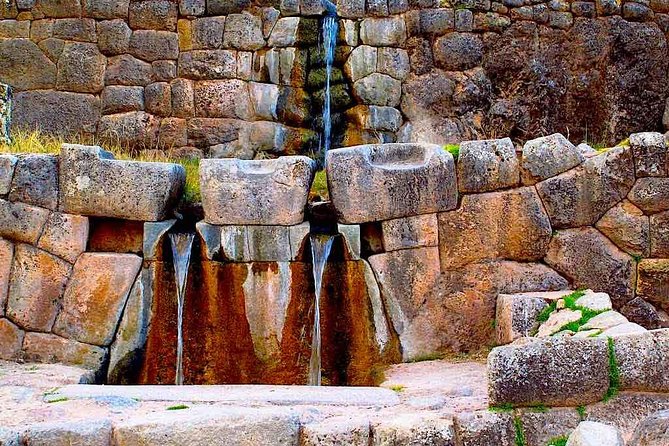
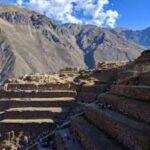
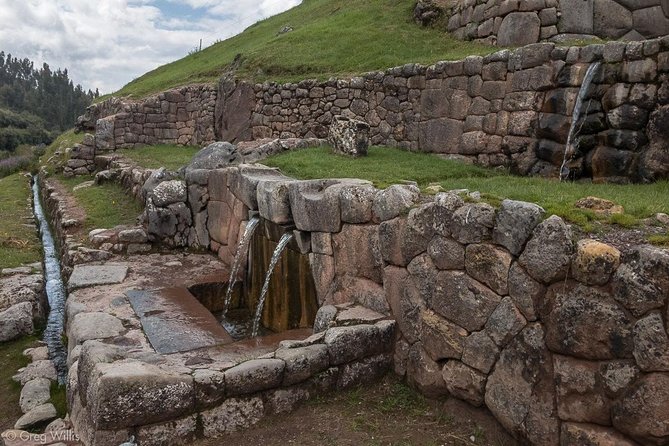
Tambomachay is where the tour calms down—visually and physically. It sits outside Cusco on a hill at about 12,150 feet (3,700 meters), and the setting is described as secluded and tranquil. The main feature is stepped terraces built with precise Inca stonework, with trapezoidal niches built into some retaining walls.
The reason people remember Tambomachay is the water. The site is built over (or into) a natural spring that continuously feeds aqueducts, canals, and waterfalls across the terraces. You’ll hear it called El Baño del Inca, which links directly to the theory that it served as a spa-like site—possibly for the Inca ruler and perhaps other members of the nobility.
That’s one theory, but Tambomachay may have served more roles than bathing. It could be ceremonial, military, or a blend. What I like about Tambomachay is that the running water makes the purpose feel intuitive even when history can’t confirm one exact use. Water management is a big deal in high-altitude architecture, and seeing it in action makes the stones feel alive.
Time-wise, Tambomachay is shorter on paper (around 45 minutes), but it’s a good final stop. If you’ve saved your energy, this is the place to slow down, find a spot where you can hear the water, and let the day’s Inca engineering sink in.
Practical note: since this is high altitude, the air can still feel thin here. Bring water and pace yourself.
Price and Value: What $45 Really Covers (and What It Doesn’t)
The tour is priced at $45 per person and includes transport and a bi-lingual guide (English & Spanish). That’s the base value: you’re paying for organized movement between sites plus interpretive time with someone who explains what you’re seeing.
What’s not included is where budgeting needs attention. The listing shows entrance to Qorikancha at PEN 20.00 per person and also indicates entrance to sites at PEN 70.00 per person. Since this tour focuses on four ruins, I’d treat entrance fees as an extra line item you should expect on travel day. If you want a stress-free day, carry cash and don’t assume you’ll be waved in without paying.
Also keep expectations aligned with duration. Even though the schedule is listed at about 6 hours, you might find the experience runs a bit shorter depending on the day’s flow. Paying for a “half-day” should mean you’ll see key highlights, not every possible nook and cranny.
Value verdict: for the combination of four major sites, a small group cap, and guide support, this is a strong option if you like structured touring and want a concentrated Cusco archaeology overview.
Guides, Group Size, and the Difference a Small Cap Makes
A maximum group of 15 people is a real advantage in Cusco. At big sites, crowds can turn your experience into a stop-and-photo routine. Here, you’re more likely to get a guide’s attention when you ask a question, and you can actually listen over the sound of the group.
The bilingual setup matters too. In one experience, a guide named Edith was praised for being very knowledgable and considerate, with clear English and Spanish delivery. Another guide, Freddy, was highlighted for taking time to communicate in English and share personal recommendations, which can make the day feel less like just logistics and more like a mini orientation to Cusco.
That human factor is often why the ratings are high. When your guide can connect stone details to real meaning—fortress vs ceremony, canals vs ritual, terracing vs water use—you get more than photos. You get context.
One practical tip: if you’re sensitive to altitude, tell your guide early. In at least one experience, the pace didn’t push people to climb stairs faster than they wanted, which is exactly what you want if you’re short of breath.
What to Pack and How to Survive the Altitude Comfortably
This tour hits multiple uphill stops. I’d pack and plan like you’re doing light hiking.
- Wear shoes with grip for rock and uneven steps.
- Bring water and plan slow breaths on the stairs.
- If you’re feeling altitude symptoms, don’t try to “push through” at Sacsayhuaman or Q’enqo.
The good news: the walking is described as manageable for most people, and the transport between sites keeps you from getting too tired too early. Still, “half-day” doesn’t mean “effort-free.” Cusco can humble even strong lungs.
If you want a simple strategy, treat each stop like this: arrive, look first, then follow the guide’s route. That way you won’t sprint to keep up and then spend the best part of the view trying to recover.
Who This Tour Fits Best (and Who Should Rethink It)
This is a great match for people who want a high-impact Cusco archaeology hit without committing to a long full-day excursion. If you’re visiting for a limited time, or you want to get familiar with Inca design logic early in your trip, this route makes sense.
It also works well if you enjoy a mix of:
- dramatic stone engineering (Sacsayhuaman),
- mysterious ritual structures and debates (Q’enqo),
- practical, terrain-aware ruins (Puka Pukara),
- water-powered terraces and a quieter finish (Tambomachay).
Rethink it if you:
- can’t handle stairs or uneven ground,
- need fully flat, minimal-walking routes,
- expect every stop to feel unhurried and extended.
Because even in the best-run tour days, you’re covering four sites. There isn’t time to linger for hours at each one.
Should You Book Cusco Half Day City Tour: Four Ruins?
Book it if you want a compact, well-timed route with small-group energy and a guide-led explanation that makes the ruins easier to read. The combination of Sacsayhuaman’s massive walls, Q’enqo’s carved mystery, Puka Pukara’s red-stone terrain logic, and Tambomachay’s water-filled terraces gives you four distinct ways to understand the Inca world.
Skip it (or at least adjust your expectations) if you need maximum exploring time at just one site, or if altitude and stairs are likely to be a problem. Also, if you’re very sensitive to schedule changes, plan your evening with some wiggle room.
If you do book: budget for entrance fees, wear grippy shoes, and keep your pace gentle. That’s how you turn this half-day into a day that feels worth the money.
FAQ
How many ruins are included in this tour?
The tour visits four archaeological sites: Sacsayhuaman, Q’enqo, Puka Pukara, and Tambomachay.
What time does the tour start?
The start time is 10:00 am.
How long is the tour?
The duration is listed as about 6 hours (with individual stops varying, such as about 45 minutes at Tambomachay).
What’s the group size limit?
The tour has a maximum group size of 15 people.
Is transport included?
Yes. Transport is included.
Are entrance fees included?
No. Entrance fees are not included. The listing also shows Qorikancha at PEN 20.00 per person and entrance to sites at PEN 70.00 per person.
What languages are the guides?
The guide is bilingual in English and Spanish.
Where does the tour start and end?
It starts at HEIDI TRAVEL EIRLC, Plateros 324, Cusco 08000, Peru, and ends back at the meeting point.
What should I know about walking and altitude?
There is some walking and stairs at the sites, and altitude can make you feel breathless. Pace yourself if needed.
What’s the cancellation policy?
You can cancel for a full refund if you cancel at least 24 hours before the experience’s start time (local time).