REVIEW · URUBAMBA
Guided tour of Cusco and its 4 ruins
Book on GetYourGuide →Operated by Exploor Trip E.R.L · Bookable on GetYourGuide
Cusco ruins, timed like a perfect loop. This is a guided sweep that connects Cusco’s most important Inca sites with the Spanish layers on top, and it does it with a live guide and minibus rides between stops. I especially liked how Qoricancha shows Inca craftsmanship beneath Spanish Catholic walls, and I also loved the scale and logic of Sacsayhuamán once someone explains what you are seeing. The main drawback to consider is timing: on at least one day (Sunday), the visit order can change, which can make it hard to fit every stop if you are on a tight schedule.
What makes this tour feel worth your time is the structure: you start at the central sights near the Plaza de Armas, then you head out to the 4 ruins in Cusco’s surroundings, finishing back near the same area. I also like that the guide is available in English and Spanish, so you’re not stuck decoding history through your own best guess. Just keep in mind that the big entrance tickets are not included, so the real cost is more than the $20 base price.
In This Review
- Key highlights to watch for
- From Plaza de Armas to Qoricancha: how the tour starts in the right place
- Entering Qoricancha: why the Inca-Spanish mix is the point
- Sacsayhuamán fortress: the stones feel heavy when explained well
- Qenqo and Puca Pucara: ritual space and the Red Fortress perspective
- Tambomachay, also called the Inca Bath: worship of water in plain sight
- Price and value: what the $20 tour really costs once entrances are added
- Timing reality check: what can go wrong with the order of visits
- Who this tour suits best (and who might prefer something else)
- Should you book this Cusco guided tour?
- FAQ
- What sites are included in this Cusco guided ruins tour?
- How long is the tour?
- What does the tour price include?
- Are entrance fees included?
- What language is the guide?
- Is free cancellation available?
Key highlights to watch for
- Qoricancha (Temple of the Sun): Inca gold and Spanish fusion in one stop
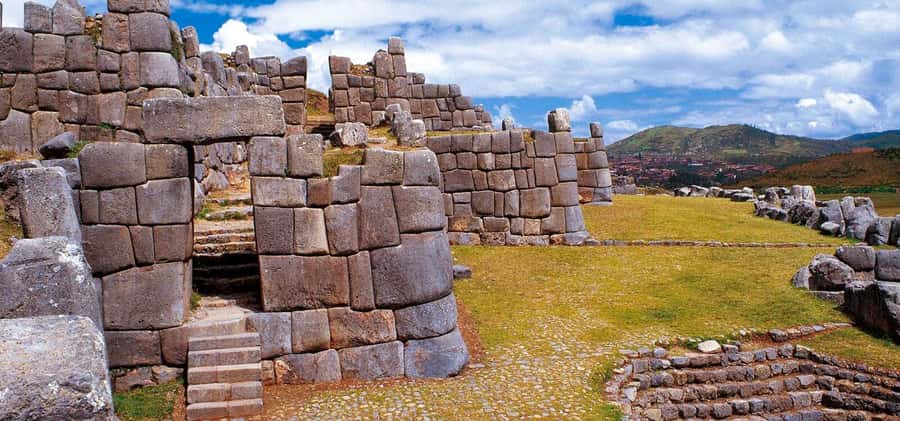
- Sacsayhuamán fortress: Inca defensive architecture explained step by step
- Qenqo shrine: a major Inca sanctuary with ritual-space design
- Puca Pucara (Red Fortress): a watchtower stop that adds a different angle
- Tambomachay: the Inca Bath concept, built around worship of water
From Plaza de Armas to Qoricancha: how the tour starts in the right place
The tour begins with pickup at a meeting point and then you roll into the center, where you’ll spend time around the Plaza de Armas and the Cusco Cathedral area. This matters because Cusco’s old core is where the modern city still touches the Inca past. You’ll enter the cathedral and focus on the architecture and artistic wealth, including the detail that many decorative elements are made with Inca gold—a reminder that the story here is not one clean cut between civilizations.
After that, you walk to Qoricancha, the Temple of the Sun. I like this flow because it avoids the common mistake of starting far out in the outskirts and then trying to rush the center at the end. Here, you get your bearings early: plaza, cathedral, then straight into one of the most meaningful Inca religious sites.
One practical thing: because entrances are part of the plan, you’ll want to arrive with a little patience in your pocket. Even with a guide, it’s still a popular area. Think of it as buying comfort: someone helps you see what the stones mean, and you don’t have to plan every step.
You can also read our reviews of more guided tours in Urubamba
Entering Qoricancha: why the Inca-Spanish mix is the point
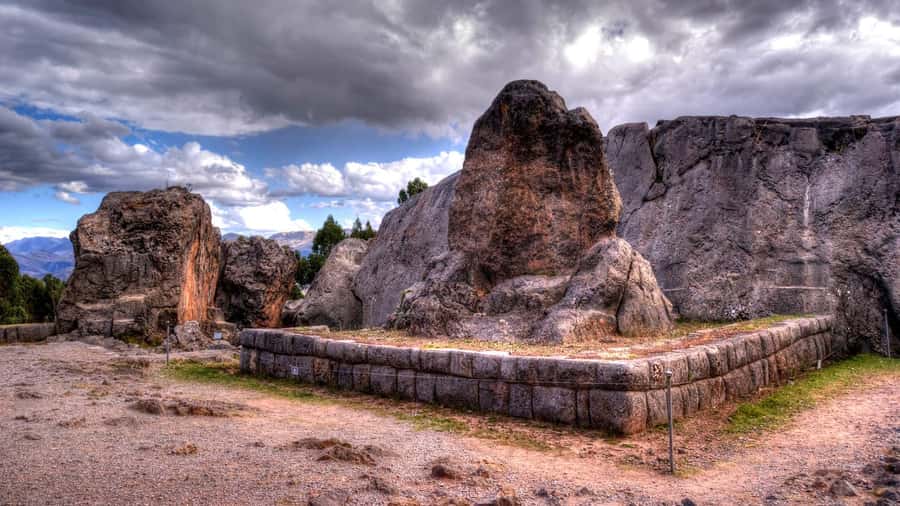
Qoricancha is one of those places where the details do the talking. The temple is also known as the Temple of the Sun, and the exact construction date is still a mystery, which adds to its aura. But the bigger reason it’s included on a short 6-hour tour is the way it shows fusion between Inca and Spanish culture.
As you enter, you’ll notice the contradiction you came for: Inca stonework and the sense of an Inca sacred center, framed by Spanish-era religious elements. The tour description flags the fusion right away, and that’s smart. If you know what to look for, you can spend less time just taking photos and more time understanding why the site mattered.
Here’s what you’ll likely appreciate most: Qoricancha wasn’t simply a single building. It acted like a major religious center in the Inca Empire, so the design choices weren’t random. This tour gives you the chance to connect those dots quickly, without turning the day into a research project.
A small planning note: Qoricancha’s entrance fee is separate. That doesn’t make the stop less valuable, but it does affect your budget. If you want to prioritize this temple, make sure you’ve got enough time and money set aside for entrances.
Sacsayhuamán fortress: the stones feel heavy when explained well
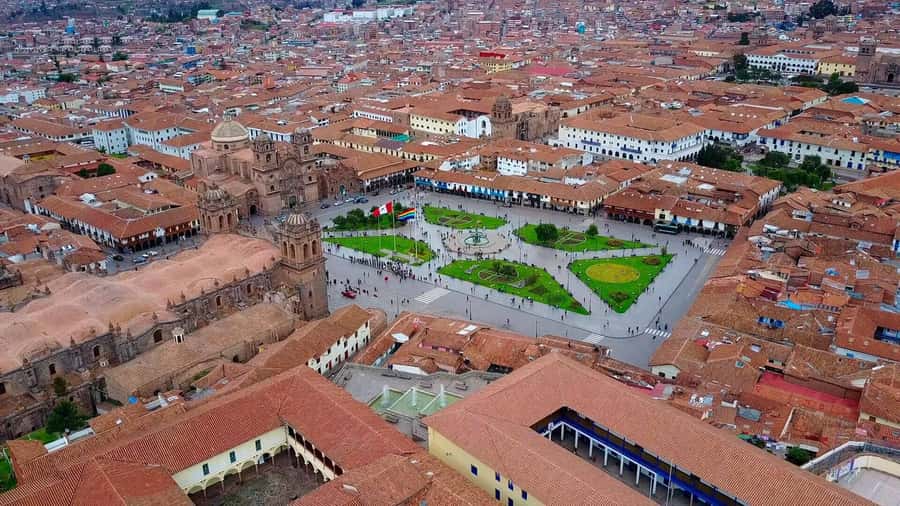
After Qoricancha, you switch back to the minibus and head toward Sacsayhuamán. The ride is short—about half an hour—so you get movement without losing the day.
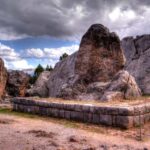
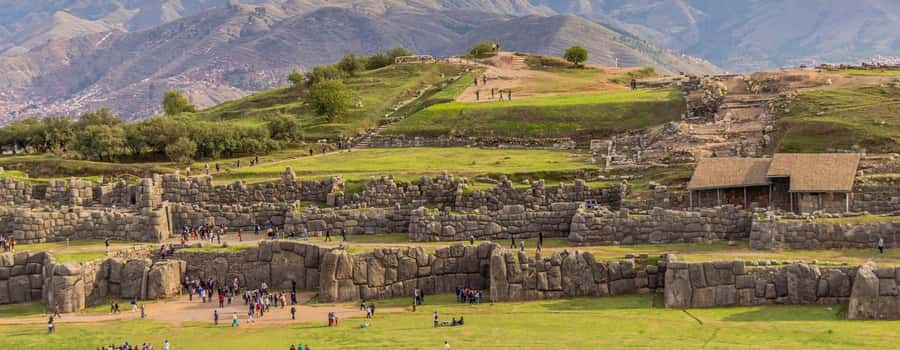
Once you arrive, you get a guided tour of the fortress and learn why it’s considered the greatest architectural work of the Incas. That’s a big claim, but it’s the kind of claim that makes sense only after someone points out the logic behind the masonry and the overall layout. Sacsayhuamán is not just a pile of impressive rocks. It’s an engineering-and-appearance statement built to control space and impress the eye.
What you’ll probably notice first is scale. What you’ll understand during the guided portion is why the scale was useful. The tour’s format works here: explanation first, then observation. It’s the difference between seeing stones and seeing a system.
If you’re the type who enjoys military architecture, sacred sites, and how power shows itself in design, this is your highlight. Even if you’re not, Sacsayhuamán is one of the best places in the Cusco area for learning how Inca architecture communicates without needing signage.
Qenqo and Puca Pucara: ritual space and the Red Fortress perspective
Next, the minibus takes you to Qenqo, described as one of the most important sanctuaries of the time. This stop is valuable because it expands the story beyond the famous fortress. Qenqo gives you a different kind of space—more about ritual use and spiritual intention than sheer defensive posture.
From there, you head to Puca Pucara, also called the Red Fortress. This is the kind of stop that can feel secondary if you expect one big climax after another. But that’s why it’s paired with Qenqo. You get variety: a sanctuary, then a watchtower-style viewpoint, which helps you understand how the Inca world used multiple site types around Cusco.
If you like when a tour teaches you to compare, this is where it happens. You’re not only moving from one impressive site to the next. You’re learning how sacred and strategic purposes could live side by side.
A practical tip for both Qenqo and Puca Pucara: wear shoes you trust. These sites are outdoors and uneven, and you’ll want stable footing for walking, looking, and lingering.
Tambomachay, also called the Inca Bath: worship of water in plain sight
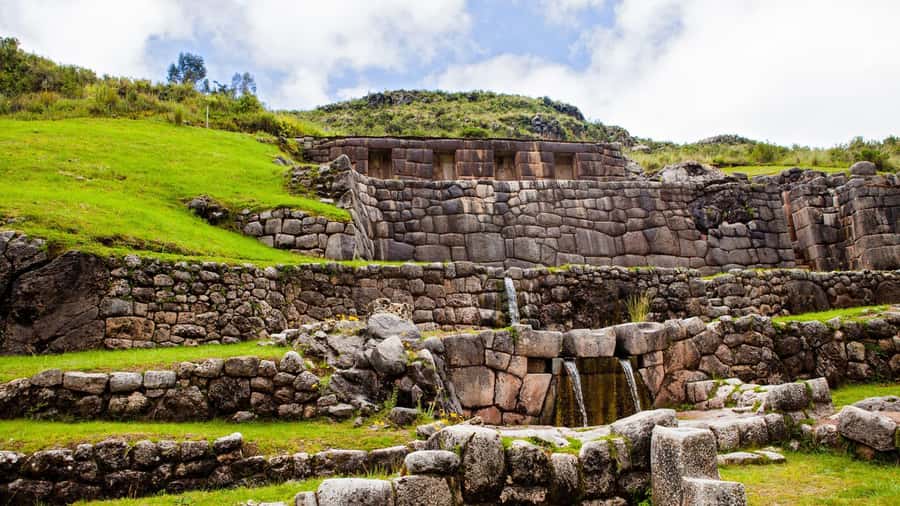
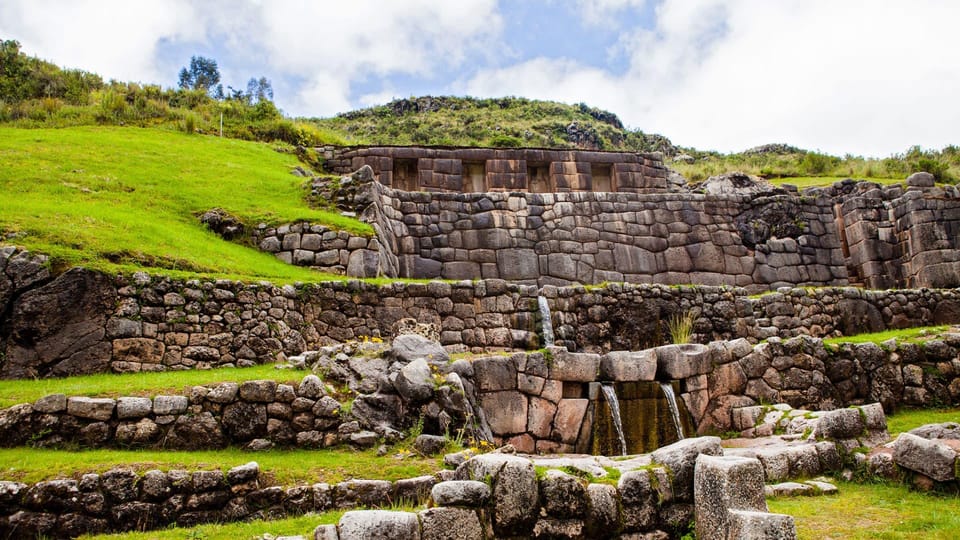
The final ruin stop in the loop is Tambomachay, known as the Inca Bath because the Incas worshiped water here. Even if you’ve heard the name before, you’ll get more value from this stop because the tour frames it around worship, not just scenery.
Water is a theme that fits Cusco’s geography and religious worldview. The design and attention given to water sources wasn’t accidental. On a short day like this, Tambomachay works as a soft landing: after fortress and ritual spaces, you end with a site that feels more grounded in daily-life elements like water—yet still tied to spiritual practice.
You’ll likely appreciate the stop most if you enjoy connecting meaning to physical features. It’s not only a photo stop. It’s a reminder that sacred spaces weren’t limited to temples with walls and doors. Sacred space could be formed by how a culture treated water.
The tour leaves you after about four and a half hours of sightseeing near the Plaza de Armas, even though the overall tour duration is listed as 6 hours. In real terms, that usually means you’ll spend some of the day in transit and setup, and you’ll want to plan your afternoon with that in mind.
Price and value: what the $20 tour really costs once entrances are added
The base price is $20 per person, and what you’re paying for is pickup and return transfer to central Cusco, minibus transportation, and a guide. That’s already a good deal compared to paying for rides and trying to coordinate multiple stops on your own—especially if you’d rather focus on learning than logistics.
But entrances are not included. For foreign visitors, the listed entrance costs are:
- Cusco Cathedral: 40 S/ (about $10.70)
- Qoricancha: 15 S/ (about $4)
- 4 ruins: 70 S/ (about $18.80)
Add those together and you’re looking at roughly $33.50 in entrance fees on top of the $20 tour price, for a rough total around $53.50 for foreign visitors. (Local prices are lower, as listed.)
Is it still good value? Usually yes—if you truly want a guided connection across several major sites. If you only care about one or two stops, then the entrance fees plus guide might feel like overkill. In that case, it could be cheaper to do fewer sites independently.
My practical advice: budget entrances first, then decide if the guide value makes sense for your style of travel. If you want someone to explain how Inca sacred design and Spanish overlays fit together, the guided format pays off.
Timing reality check: what can go wrong with the order of visits
One of the most important considerations is schedule behavior. On at least one Sunday experience, the visit order shifted so ruins came first, and then Qoricancha and the cathedral later. The consequence was that the planned timing felt too tight to complete every stop—especially if those central sights are the ones you care about most.
So here’s what you should do: if you’re traveling on a day when schedules can shift, ask what order the day will follow and how much time you’ll have at each stop. That one question can prevent disappointment.
Also, don’t treat the tour as a stopwatch. With entrances and walking time, the day can feel full. If you have a separate reservation later the same day (a train, a show, a flight), build in buffer time.
The good news is that even with time pressure, a guided tour can still be worth it—you’ll come away with clearer connections between sites. The risk is only when you absolutely must see every component and you’re working with tight constraints.
Who this tour suits best (and who might prefer something else)
This tour is a strong fit if you:
- Want a structured overview of major Cusco sites in one half-day format
- Appreciate explanations that turn stone walls and ritual spaces into understandable ideas
- Prefer having minibus transport so you’re not stuck hopping between distant points on your own
It can be less ideal if you:
- Have very strict timing for the cathedral or Plaza de Armas portion
- Need to be somewhere at a specific hour and can’t handle schedule drift
A final note from the tone of a praised experience: the guide described as a university professor (called Doctor) stood out because the history was taught with real passion. If you’ve had tours where the guide reads facts without meaning, you’ll probably enjoy this style more. The language options—Spanish and English—also help you get the explanation you paid for, not just the walking.
Should you book this Cusco guided tour?
Book it if you want a guided, efficient route that links Qoricancha, Sacsayhuamán, and the surrounding ruins into one story. With the entrance fees handled (at least financially) and your schedule flexible, the day gives you real learning value for the money.
Skip or modify the plan if you’re on a tight timetable or if the exact order of visits is make-or-break for you. In that case, confirm the day’s sequence before you commit.
If you do book, pack smart: comfortable shoes for uneven ground, and bring cash or payment ready for entrances. And when you meet your guide, ask what time you’ll be at each stop—simple questions can save the day.
FAQ
What sites are included in this Cusco guided ruins tour?
You visit Qoricancha (Temple of the Sun), Sacsayhuamán, Qenqo, Puca Pucara (Red Fortress), and Tambomachay (Inca Bath). The tour also involves the Cusco Cathedral area in the center of Cusco.
How long is the tour?
The duration is listed as 6 hours. The sightseeing portion is described as about four and a half hours, with time also used for travel and transfers.
What does the tour price include?
It includes pickup at the meeting point and return transfer to the center of Cusco, minibus transportation, and a live guide.
Are entrance fees included?
No. Entrance to the Cusco Cathedral, Qoricancha, and the 4 ruins are not included, and separate fees apply as listed in the activity details.
What language is the guide?
The live guide is available in Spanish and English.
Is free cancellation available?
Yes. You can cancel up to 24 hours in advance for a full refund.