REVIEW · CUSCO
Cusco 4-Hour Private Tour Including Sacsayhuaman and Qenqo
Book on Viator →Operated by Rainbow Mountain Cusco Agency · Bookable on Viator
Four hours, and Cusco clicks fast. This private tour strings together the Inca sites on the Cusco outskirts and the Spanish-Catholic heart of the city, so you’re not just collecting ruins, you’re building a mental map. I really like the way the route mixes big-stone drama with calmer, more mysterious places like Q’enqo. One thing to plan for: major entrances are extra, especially Saqsayhuaman.
My second favorite part is the guidance quality. You’ll go with an English- or Spanish-speaking guide, and in past bookings the commentary has been praised for being clear and connected, with helpful context that makes later stops (like other Cusco-area Inca highlights) easier to understand. If you’re picky about language, keep an eye on that—one review flagged that English fluency wasn’t what they expected.
In This Review
- Key points at a glance
- How the 4-Hour Private Pace Works in Cusco
- Saqsayhuaman: The Northern Inca Citadel on Cusco’s Edge
- Plaza de Armas: Where Cusco’s Spanish Geometry Sits on Older Ground
- Cusco Cathedral: A Catholic Landmark on the Plaza
- Qorikancha: Inti’s Temple, Rebuilt Through Spanish Centuries
- Puka Pukara: The Red Fortress-Watchtower with a Road-Checkpoint Role
- Q’enqo: The Zig-Zag Rock and the Mystery of the Crooked Canal
- Tambomachay: Aqueducts, Canals, Waterfalls, and the Inca Idea of Care
- Price and Entrance Fees: The Real Math for a Half Day
- What Makes the Guides Matter Here
- Timing Tips: Comfortable Walking, Altitude Reality, and Camera Time
- Who This Tour Suits Best (and Who Might Reconsider)
- Should You Book This Cusco 4-Hour Private Tour?
- FAQ
- How long is the Cusco 4-hour private tour?
- Is this tour private?
- What language will the guide speak?
- Does the price include hotel pickup and drop-off?
- Are entrance fees included for the sites?
- Are snacks included?
- Is there an optional add-on during the tour?
- What is the minimum age for this tour?
- What should I bring?
- What if the weather is bad?
- Are service animals allowed?
Key points at a glance
- Private guide + private vehicle: hotel pickup, drop-off, and no crowd pressure.
- Saqsayhuaman focus: built by the Killke culture, with lots to explain beyond photos.
- Inca-to-Spain contrast: Plaza de Armas plus Cusco Cathedral in the same half day.
- Qorikancha history layered on history: Inti temple remnants tied to later convent building.
- Three smaller Inca sites: Puka Pucara, Q’enqo, and Tambomachay each adds a different clue.
- Optional textile factory stop: no additional charge, and it can add variety to your afternoon.
How the 4-Hour Private Pace Works in Cusco
This is built like a smart half-day for Cusco, where the altitude can make even a short day feel long. The structure is tight: you’re in a private vehicle between sites, then you walk just enough to actually feel where you are. The result is a tour that feels full without turning into an endurance test.
I also like that it’s truly private. Only your group is on the schedule, so your guide can adapt to your pace. That matters on a day when one person is alert and another is still negotiating with the altitude.
You’ll start with hotel pickup and use private transport throughout. Snacks are included, which is underrated in Cusco. Even if you eat before you go, having something in your bag helps you stay steady during the afternoon.
You can also read our reviews of more private tours in Cusco
Saqsayhuaman: The Northern Inca Citadel on Cusco’s Edge
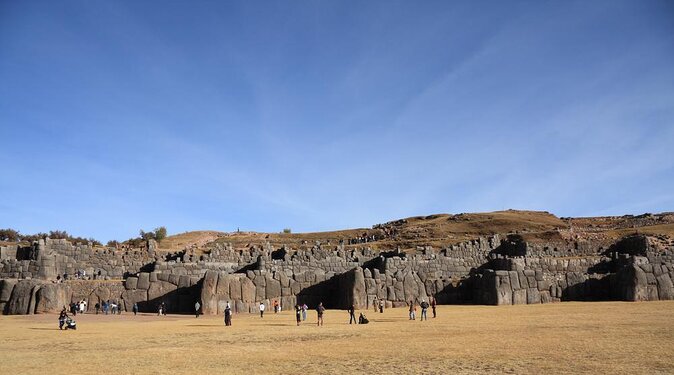
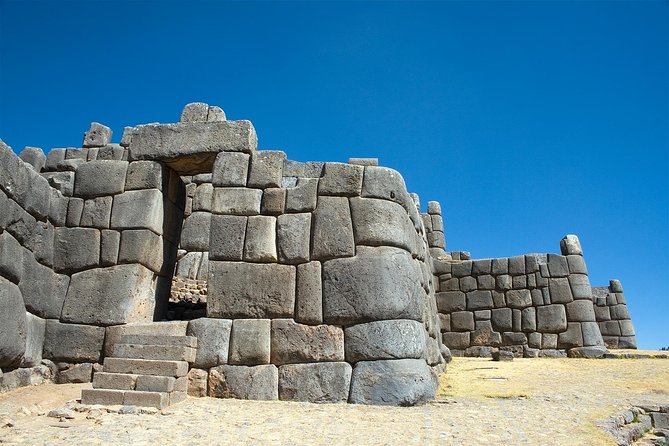
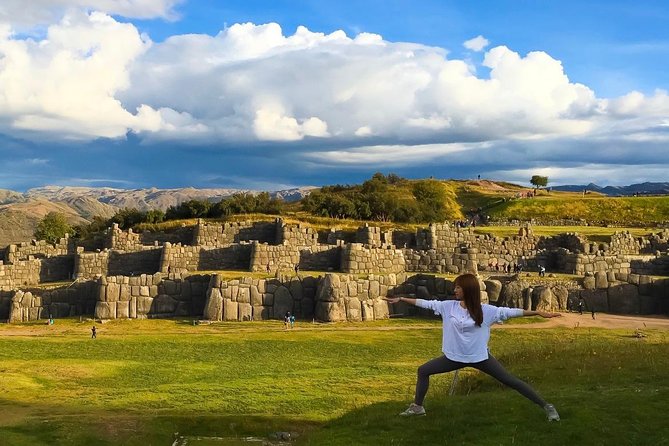
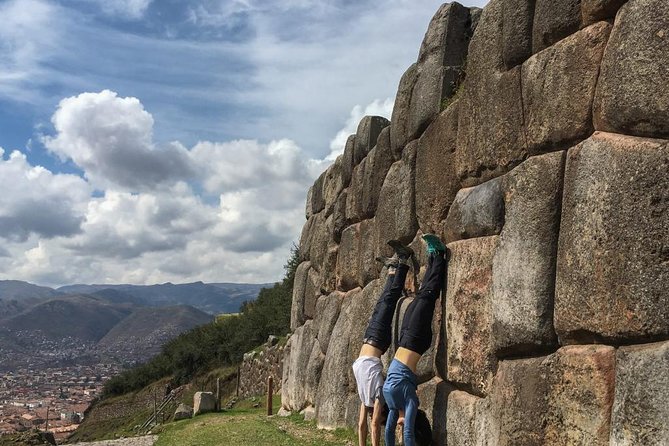
Saqsayhuaman (spelled a few ways) is the heavy hitter of the route. It sits on the northern outskirts of Cusco and is one of the clearest examples of Inca power—plus it has deeper roots than you might guess. Sections were first built about 1100 CE by the Killke culture, which had occupied the area since around 900 CE. That timeline detail helps you see it as a layered development, not a one-day construction miracle.
Plan for about 30 minutes here. You won’t see everything if you’re expecting a slow museum-style experience, but you will get the key visual parts and the story behind them. This is also the stop where the guide’s explanation can make the stonework feel purposeful, not random.
Entrance is not included for this site (PEN 70 per person), so you’ll want to budget for it early. If you’re counting money closely, this is one of the bigger add-ons.
Plaza de Armas: Where Cusco’s Spanish Geometry Sits on Older Ground
The tour then shifts into the city center with a stop at Plaza de Armas. You’ll get a short window (about 10 minutes) to orient yourself in the heart of Cusco. This is one of those places that feels easy to love, fast. The colonial-style architecture is the star, but the important detail is that the plaza’s role in city development goes back before the Conquest.
This is a nice break in the itinerary because it’s not another archaeological scramble. It’s more about atmosphere and context: you’re seeing the “new order” that the Spanish built, while your guide ties it to the Imperial City concept that came before.
The good news: the Plaza de Armas stop has admission included. So you’re not juggling another ticket right here.
Cusco Cathedral: A Catholic Landmark on the Plaza
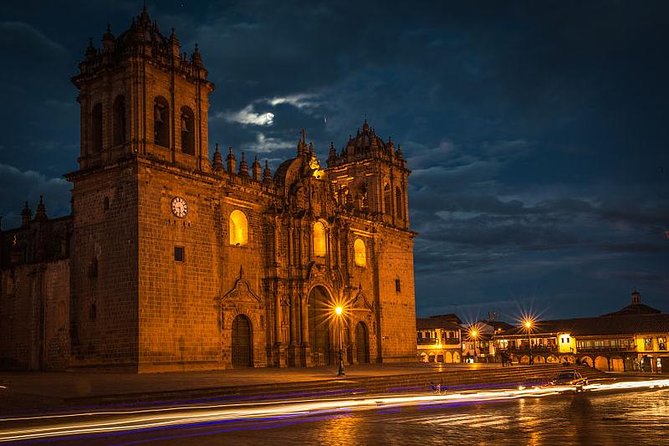
From the plaza, the tour continues to Cusco Cathedral, also called the Cathedral Basilica of the Assumption of the Virgin. It’s the mother church of the Roman Catholic Archdiocese of Cusco and it sits right on Plaza de Armas, so it’s logistically easy to add on.
Time is set at about 20 minutes. That’s enough to see the scale and understand why this is such a key landmark in modern Cusco religion and identity. It’s also a useful contrast after the Inca sites. The same space on the map can hold completely different power structures—Inca engineering and Spanish Catholic building—and that’s exactly what your guide should help you notice.
Entrance is not included here (PEN 40 per person). One practical note: if you get worn out from walking or the altitude is hitting, it’s easier to adjust at a city stop than in a far-out ruin. Your guide can usually help you handle the day’s rhythm.
Qorikancha: Inti’s Temple, Rebuilt Through Spanish Centuries
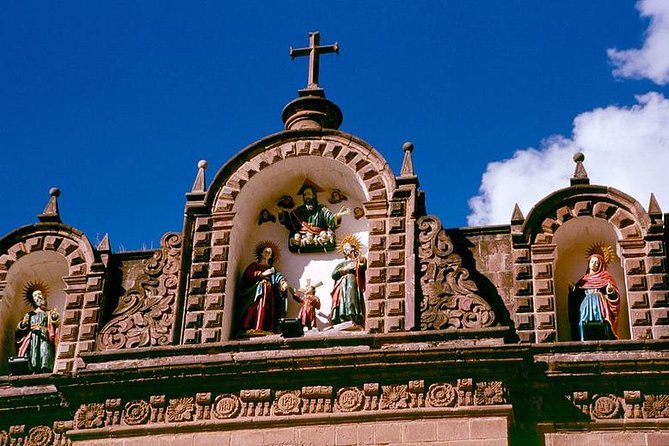
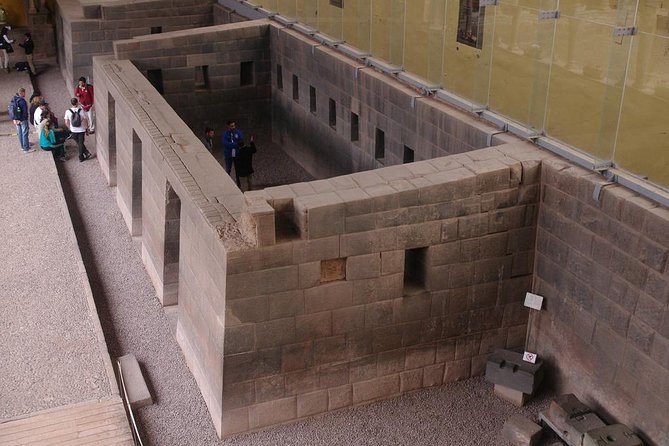
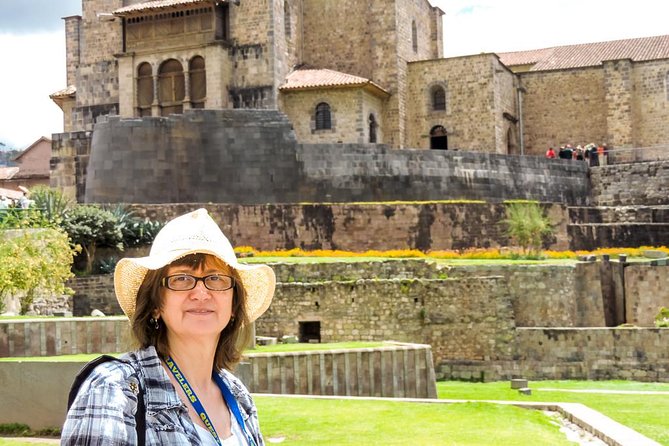
Qorikancha is the “holy place” pivot point in the tour. It was originally named Intikancha or Intiwasi and dedicated to Inti (the Sun). The structure you see today is a story told in layers: a lot of the temple was destroyed after the 16th-century war with the Spanish conquistadors. Stones were then reused by settlers for churches and residences, including the Santo Domingo Convent.
One detail I find especially compelling: much of Qorikancha’s stonework ended up serving as a foundation for the 17th-century Santo Domingo Convent, which came after the 1650 earthquake destroyed the first Dominican convent. That timeline makes the site feel less like a relic and more like a living archive of how societies changed.
You’ll get about 20 minutes here. It’s not long, but it’s enough to understand what got repurposed and why Qorikancha mattered as the Inca religious center of Cusco’s old capital.
Entrance is not included (PEN 15 per person).

Puka Pukara: The Red Fortress-Watchtower with a Road-Checkpoint Role
After the main city and big temple stops, you’ll head out again to Puka Pukara, about 6 km from Cusco. The name is poetic and practical at the same time: “puca” means red in Quechua, and “pucara” means fortress-watchtower.
This site was positioned strategically along the road toward Antisuyo, the jungle part of the Inca empire. It also functioned as a checkpoint on the Inca road network, with military and administrative uses. So while it looks like “yet another ruin,” it’s really a piece of infrastructure—Inca control and communication across long distances.
Time here is around 15 minutes. You’ll want your guide to point out the strategic logic of where it sits, because the meaning of Puka Pukara isn’t just in the stones; it’s in the route.
Entrance is not included.
Q’enqo: The Zig-Zag Rock and the Mystery of the Crooked Canal
Q’enqo is short (about 15 minutes), but it’s memorable because it’s named for what you can see: in Quechua, Qenqo is often translated as labyrinth or zig-zag, and the temple takes its name from the crooked canal cut into the rock.
You’ll hear that the canal likely carried some sort of liquid. The challenge is what it was for. Researchers have had to guess, and the hypotheses range from holy water to chicha (corn beer) to blood. Each theory points toward death rituals—possibly related to embalming or to some kind of life-or-good-life indicator based on how the liquid flowed.
That uncertainty is actually part of the intrigue. It’s not a neat “this equals that” story. Instead, you get how archaeologists work with evidence—and how a ritual landscape can keep secrets.
Entrance is not included.
Tambomachay: Aqueducts, Canals, Waterfalls, and the Inca Idea of Care
Tambomachay is the final archaeology-heavy stop, with about 25 minutes allotted. An alternate Spanish name you might hear is El Baño del Inca. The site consists of terraced rocks with aqueducts, canals, and waterfalls, giving it a water-management feel rather than a palace feel.
This is one of those stops where your guide’s explanation matters. Without context, it can look like “cool stone waterworks.” With context, it becomes part of the Inca approach to engineering and controlled access to nature.
Entrance is not included.
Price and Entrance Fees: The Real Math for a Half Day
The tour price is $87.00 per person, lasting about 4 hours. What makes it good value isn’t just that it’s private. It’s the mix of transportation, a guide in your language, pickup/drop-off, and snacks—all for a short day when time and energy matter.
But do the math before you assume everything is covered. Entrance fees are not included for:
- Saqsayhuaman: PEN 70 per person
- Cusco Cathedral: PEN 40 per person
- Qorikancha: PEN 15 per person
Add those up and you’re looking at PEN 125 total for the three charged stops. Plaza de Armas has admission included, and the other sites on the outskirts (Puka Pukara, Q’enqo, Tambomachay) are listed as no admission included, too.
So yes, there’s extra cost. Still, the value holds if you’re using this as your “Cusco orientation + Inca highlights” day—especially because the tour is private and guided. You’re paying for reduced hassle and a coherent route, not just for sitting near ruins.
What Makes the Guides Matter Here
The itinerary is solid, but the guide is the multiplier. In strong past bookings, guides like Alfredo, Ruben, Patricia, Soledad, and Victor were praised for explaining Inca history and how sites connect, rather than just rattling dates. That kind of linking is exactly what turns a fast tour into a memorable one.
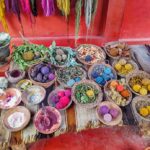
I also like that there’s an optional textile factory visit available at no additional charge. If you want one more “everyday Cusco” layer—craft, fiber traditions, and local production—this is a good slot to add without blowing the budget. One review even described animal sightings on a llama/alpaca farm tied to the day’s activities, which can make the afternoon feel more complete if you enjoy that kind of stop.
Timing Tips: Comfortable Walking, Altitude Reality, and Camera Time
Cusco altitude can change how you experience everything. I’d plan to move slower than you would at sea level and let the tour pace help you, not fight it. Reviews mention that the walk segments aren’t too far, and that this half-day format can be a smart choice while you’re still adjusting.
Dress according to the season, and bring layers. Cusco weather can shift, and ruins don’t offer much shelter.
Also, bring your camera. Your guide’s explanations can help you frame shots with purpose, not just luck.
One more practical point: the tour is near public transportation. That’s useful if you need a backup plan, but since hotel pickup is included, you likely won’t.
Who This Tour Suits Best (and Who Might Reconsider)
This is ideal if you want:
- A private, guided Cusco intro in about 4 hours
- A route that combines Inca ruins near Cusco with central Cusco sights
- A day that helps you understand what you’ll see later around the Sacred Valley
It’s also a good fit for families and first-timers. The stops are varied, and the day doesn’t require marathon hiking.
You might reconsider if:
- You expect all entrances to be included in the base price
- You need very long time at each site (this is short by design)
- You’re sensitive to guide language differences—if English matters a lot, confirm that your guide matches your preference at booking
Should You Book This Cusco 4-Hour Private Tour?
If you’re aiming to get your bearings fast in Cusco and you want a guided link between Inca sites and the city’s colonial heart, I’d book it. The private setup, pickup/drop-off, snacks, and the quality of on-the-ground explanation can make a short day feel like a meaningful one.
Just go in with eyes open about entrance fees (especially Saqsayhuaman) and dress for the weather. If you do that, this tour is a solid use of a half day in Cusco—and it sets you up to enjoy the rest of your itinerary with less confusion and more “I see what that means” moments.
FAQ
How long is the Cusco 4-hour private tour?
It lasts about 4 hours.
Is this tour private?
Yes. It’s a private tour/activity, and only your group participates.
What language will the guide speak?
The tour includes a private English- or Spanish-speaking guide.
Does the price include hotel pickup and drop-off?
Yes. Hotel pickup and drop-off are included.
Are entrance fees included for the sites?
No. Entrance fees are not included for Cusco Cathedral (PEN 40), Qorikancha (PEN 15), and Saqsayhuaman (PEN 70).
Are snacks included?
Yes. Snacks are included.
Is there an optional add-on during the tour?
Yes. An optional textile factory visit is available at no additional charge.
What is the minimum age for this tour?
The tour requires participants to be at least 2 years of age.
What should I bring?
Bring your camera (recommended). Also dress according to the season.
What if the weather is bad?
This experience requires good weather. If it’s canceled due to poor weather, you’ll be offered a different date or a full refund. Free cancellation is available up to 24 hours in advance for a full refund.
Are service animals allowed?
Yes, service animals are allowed.