REVIEW · IQUITOS
Iquitos: 6-Hour Wonderful Wildlife Guided Tour
Book on GetYourGuide →Operated by Yakumama Amazon Tours · Bookable on GetYourGuide
Six hours to meet the Amazon up close. I love the river cruise from Iquitos and the chance to spot wildlife like pink dolphins along the Itaya and Amazon channels. I also like the jungle walk to the Lupuna tree, with local stories woven into the hike. One drawback to plan for: the sailing can feel rough, and dizziness or panic can be an issue if you’re sensitive to motion.
The day blends close-up wildlife stops at Fundo Pedrito with calmer breaks to watch the Victoria amazonica lily pads and rest in hammocks with jungle-and-river views. Guides in English and Spanish often keep the tone both practical and fun, and you’ll hear local folklore as you move from pond to forest to viewpoints. If animal interaction isn’t your style, note that the experience includes the option to feed or touch animals, depending on on-site rules.
In This Review
- Key things to know before you go
- From Yakumama to the Amazon: how the boat ride sets the tone
- Fundo Pedrito: paiche breeding ponds and the reptiles you’ll actually remember
- Victoria amazonica lily pads and hammock time: when the Amazon slows down
- Amazon viewpoint: panoramic “wow” with a practical edge
- The Lupuna tree jungle walk: scale, legend, and a short commitment
- Serpentary stop: anacondas up close, with the cage reality
- Pink dolphins: what to expect when the day varies
- The bilingual guide experience: names you might hear and why it helps
- Safety and comfort: strong currents, uneven jungle ground, and who should pass
- Price and value for a 6-7 hour wildlife day
- Meeting point and day-of details that save stress
- Should you book this 6-hour wildlife tour in Iquitos?
- FAQ
- How long is the Iquitos 6-Hour Wonderful Wildlife Guided Tour?
- Where is the meeting point?
- Is this tour private or shared?
- What’s included in the price?
- Are meals and drinks included?
- What animals and sights should I expect?
- Do I need comfortable shoes?
- What do I need to bring?
- Who should not take this tour?
- Is the tour offered in English and Spanish?
Key things to know before you go

- Pink dolphins are a real possibility, but sightings vary day to day
- Fundo Pedrito centers on paiche (piracuru) breeding, plus reptiles and other Amazon animals
- Victoria amazonica lily pads are a standout visual stop with world’s-largest-leaf energy
- A short walk finds you at the Lupuna tree, tied to local beliefs about jungle protection
- A serpentary stop brings you face-to-cage with an anaconda (up close, in a controlled setting)
- Your bilingual guide matters, especially for folklore and animal explanations
From Yakumama to the Amazon: how the boat ride sets the tone
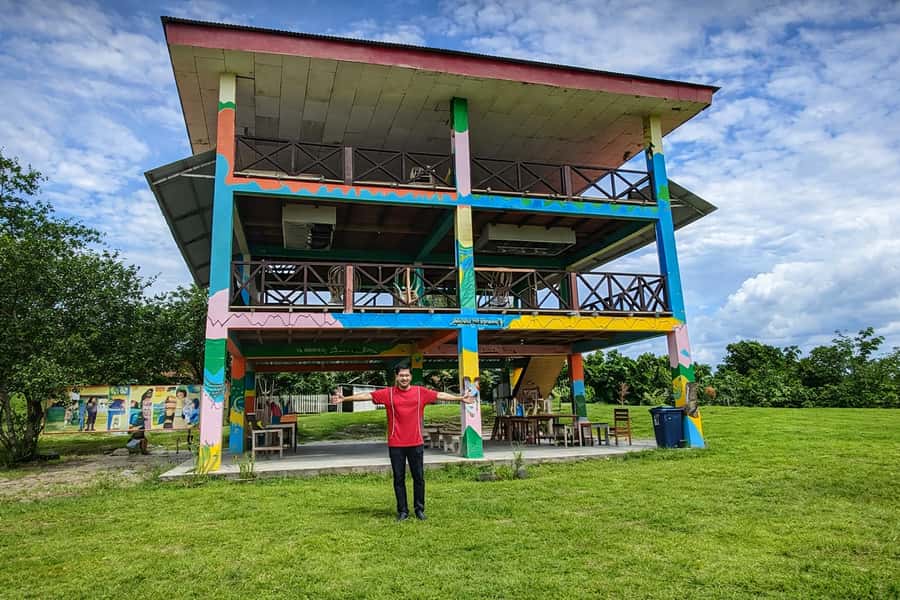
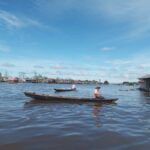
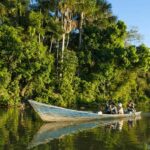
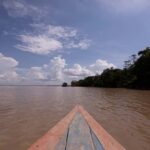
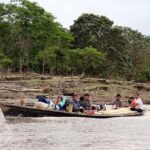
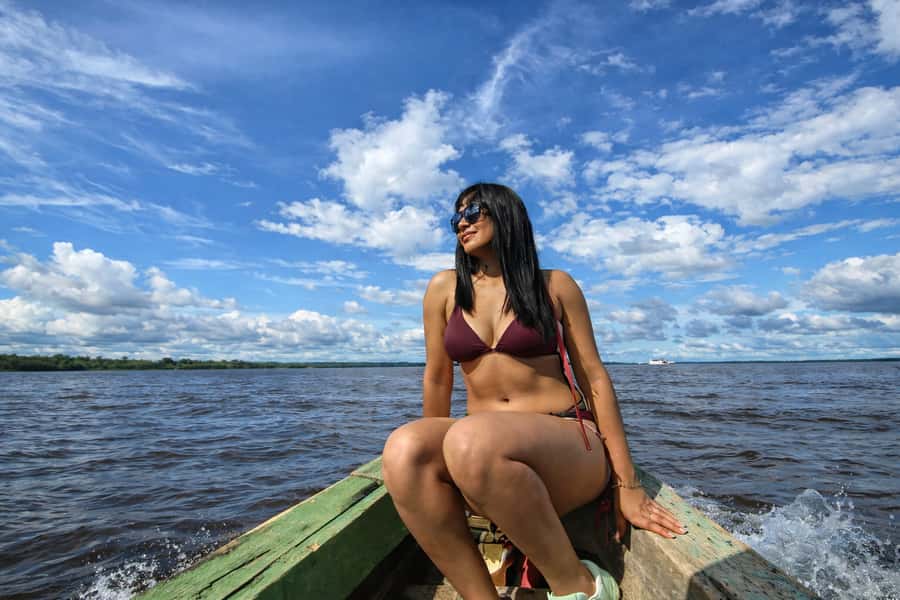
You start at Yakumama Amazon Tours in Iquitos, then head to the water and meet the Amazon through its rivers. The cruise runs from the Itaya River into the Amazon River, which is a smart way to get your bearings quickly. From a comfort standpoint, it’s also a simple rhythm: sit, look, listen, then stop.
On this kind of trip, I like the pacing because the boat time isn’t just transport. It’s where you start scanning for wildlife, including the tour’s big target: pink dolphins. Reality check: dolphins depend on conditions and timing, so you shouldn’t base your whole day on a guaranteed sighting.
The boat ride is also where you’ll feel the Amazon’s personality. The river flow is described as strong, and that’s not just a safety blurb. If you’re prone to motion sickness, take your medication in advance as the tour recommends, and plan to keep steady in your seat when the boat shifts.
You can also read our reviews of more guided tours in Iquitos

Fundo Pedrito: paiche breeding ponds and the reptiles you’ll actually remember
Fundo Pedrito is the kind of stop that makes the rest of your day click, because it explains an Amazon “main character.” Here, the focus is on breeding paiches (also known as piracuru), and the experience expands from fish into reptiles and turtles.
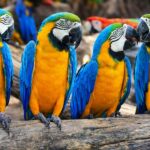
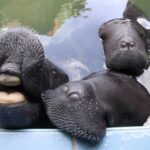
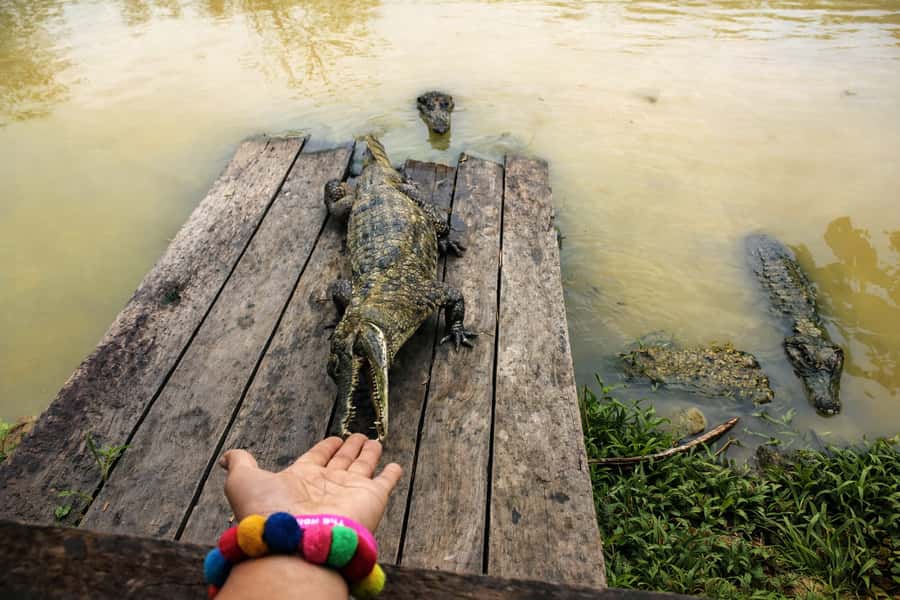
You’ll go with a guide through the center, and the highlights include seeing animals such as caimans, giant paiches, and Amazonian turtles. You may also encounter other species connected to the center’s work, like piranhas, macaws, and lizards. The variety helps, because it’s not just one exhibit you walk past. You’re learning how multiple species fit into life around the water.
One reason this stop feels valuable is that it’s not trying to sell you a postcard. It’s built around animal care and breeding, which gives you a different angle on conservation than a quick “see cages” photo stop.
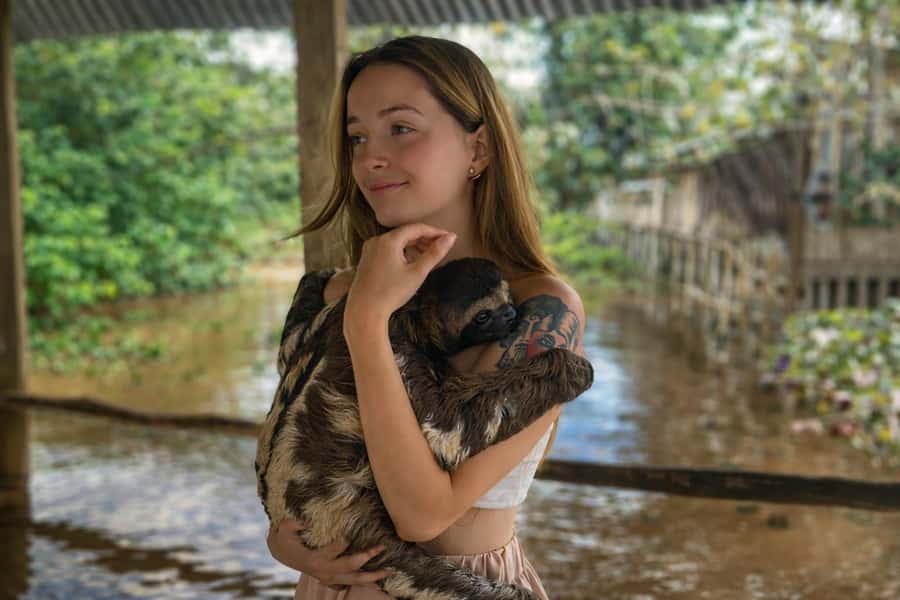
The other reason it can feel intense is the closeness. The experience includes the option to feed animals, and other parts of the day may involve hands-on contact depending on on-site rules. If you’re the type who prefers to watch rather than touch, go in knowing the tour is set up for interaction.
Practical tip: wear shoes you don’t mind getting dusty or damp, because you’ll spend time on land around the center before you’re back on the water.
Victoria amazonica lily pads and hammock time: when the Amazon slows down
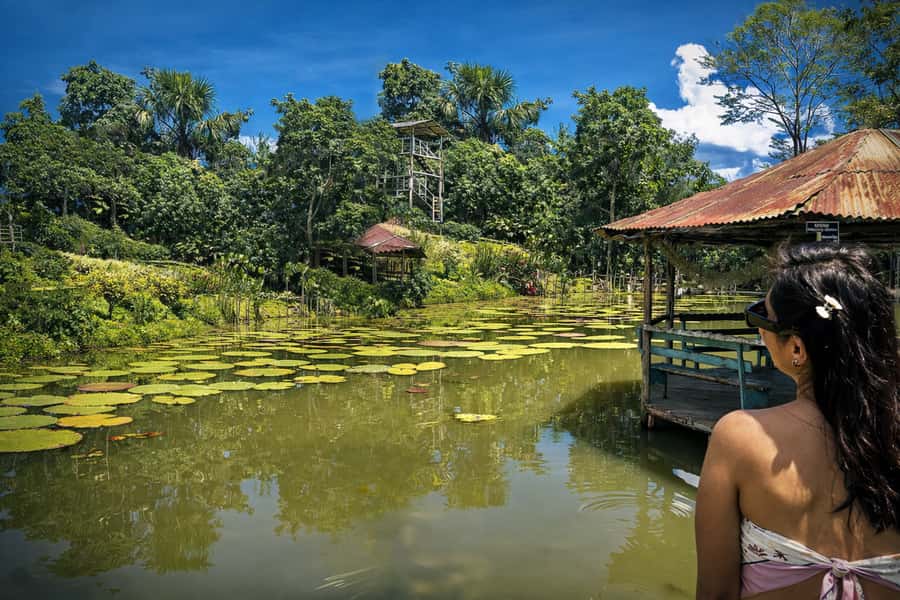
After the animal-focused center portion, you get a visual “reset” at the pond filled with Victoria amazonica lily pads. These are the famous giant-leaf lilies, and the tour emphasizes that they have some of the largest leaves in the world. Even if you’ve seen photos, the scale tends to surprise people because these plants don’t look small or ornamental. They look like real furniture for the river.
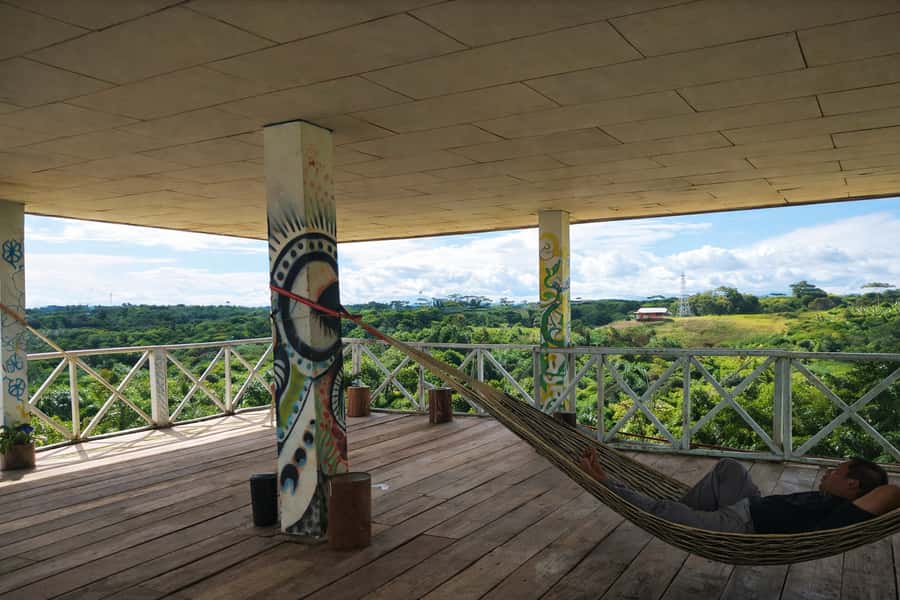
This stop also comes with downtime. The tour includes time on hammocks, which might sound like a luxury in the jungle, but it’s also useful. You’re letting the day breathe between heavier wildlife moments and the later jungle walk and viewpoint.
I think this is one of the best values of the whole experience: you’re not just moving from one checkpoint to another. You get a few minutes to take in the river soundscape, watch birds from a calmer angle, and let your eyes adjust to the Amazon’s visual clutter.
If you’re the kind of traveler who gets tired of constant walking, this pond break is a genuine payoff.
Amazon viewpoint: panoramic “wow” with a practical edge
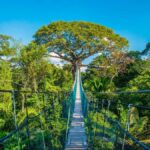
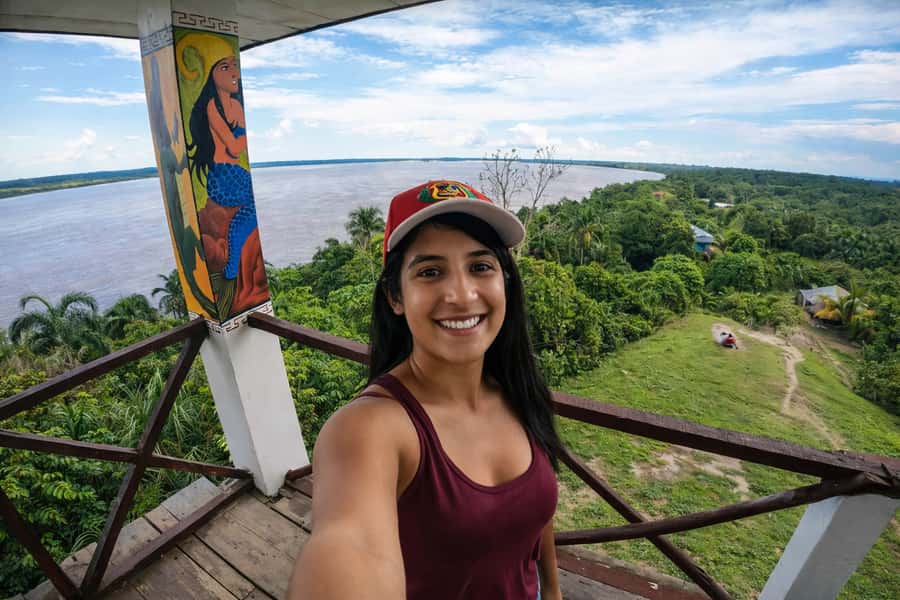
Next up is the Amazon’s highest viewpoint stop, where you get panoramic views over the surrounding jungle and landscape. Views like this are worth something beyond the photo, because they help you understand what you’ve been cruising through. From the water you get a narrow slice of the rainforest. From a high viewpoint, the rainforest turns into a living grid of tree lines, river bends, and mist.
The tour describes it as magical, but my practical take is simpler: viewpoints help you orient yourself. They make your whole day feel connected, not like separate activities stitched together.
Plan for sun and heat here. Bring your sun hat and sunscreen (you’ll want them for the walking parts too), and expect that this is where you’ll feel the day most. If you’re sensitive to wind or heights, remember the tour isn’t listed as suitable for vertigo—so it may not be the best fit.
The Lupuna tree jungle walk: scale, legend, and a short commitment
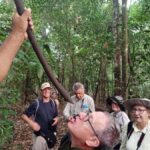
Then comes the walk into the jungle—about 15 to 20 minutes—to see the Lupuna tree. The guide shares local beliefs that connect the Lupuna to magical properties and to the idea of jungle protectors. Even if you don’t buy into the legend, the real value is that you’re walking into Amazon forest for long enough to feel it.
This is also a “best effort” moment. It’s short, but it puts you close to how the forest feels at human scale: tighter paths, different light, and the sense that you’re not just looking at a park—you’re inside it.
Because it’s a short walk, it can be a good compromise for travelers who want forest time but don’t want a long hike. Still, it’s not an easy stroll on perfect ground. Bring comfortable shoes, and take your time. If you’re unsteady on uneven surfaces, this portion is one you’ll want to judge carefully.
You can also read our reviews of more tours and experiences in Iquitos
Serpentary stop: anacondas up close, with the cage reality
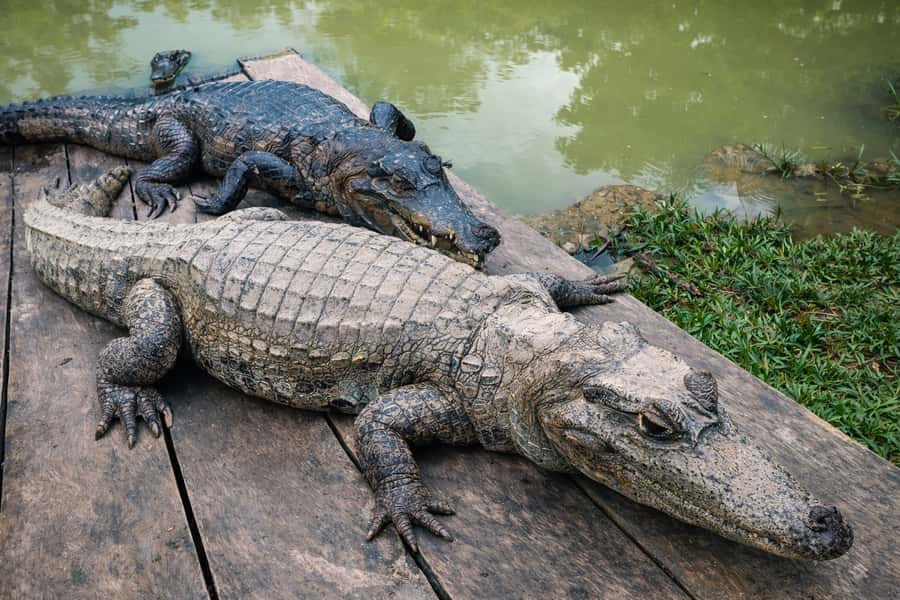
The tour ends with a stop at a serpentary, where you can see an anaconda cage. This is a classic Amazon stop type: a controlled setting for a dangerous animal, with the goal of education and safety.
I appreciate having a guide here, because it helps you look beyond the shock factor. The key is to treat it as a learning stop, not just a thrill stop. An encounter with an anaconda in captivity can be emotionally complicated. One review noted ethical concerns about some stops, which matches the reality that close animal contact and confinement are sensitive topics.
If that’s your issue, the best approach is to go in calmly and ask your guide questions about what the facility is doing. You can also decide in advance how involved you want to be if the tour offers feeding or touching elsewhere.
Either way, this is where your day’s wildlife theme crystallizes: fish and turtles at Fundo Pedrito, giant lily leaves at the pond, jungle tree legends, and then a serpentary stop that turns your attention to reptiles at the end of the loop.
Pink dolphins: what to expect when the day varies
Pink dolphins are a highlight on the tour outline, but dolphin spotting is never under full control. Even with the best route planning, you’re dealing with animal behavior, water conditions, and timing.
I’d frame it like this: the tour is still packed if the dolphins are shy. You have plenty of other wildlife targets and strong “Amazon feeling” stops—the paiche center, Victoria lily pads, and the viewpoints. So even on a day when dolphins are hard to spot, you can still come away happy.
Also, the boat ride segments matter. The dolphin chance is tied to time on the water. That’s another reason this tour’s structure works: you spend enough hours cruising to look, not just transit.
The bilingual guide experience: names you might hear and why it helps
A good guide can turn a checklist into a story. This tour is led by a bilingual guide in English and Spanish, and the guides here have a reputation for sharing wildlife explanations and local folklore along the way.
In the real world, you might end up with a guide like Jose or Cristian, who are noted for friendly, knowledgeable guidance and for tying what you see to the culture and the landscape. The language support is practical, not just a comfort perk, because animal names, habitat details, and safety notes are easier to absorb when you can follow fully.
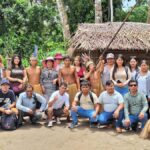
I also like that the tour is described as a private group. That usually means less waiting around and a smoother flow if you have questions, want photos without crowds pressing you, or need a slower pace for any reason.
Safety and comfort: strong currents, uneven jungle ground, and who should pass
This is an Amazon river tour, so it’s not built for every body and every comfort level. It’s not suitable for people with mobility impairments. It’s also flagged as not suitable for people with heart problems and for people with vertigo.
The sailing note is especially important: the flow is very strong, and the tour advises taking your medication in advance if you have dizziness or panic issues with sailing. That’s not alarmist wording. It’s a straight practical heads-up.
For day-of comfort, do the simple prep:
- comfortable shoes (you’ll be on ground around the center and on the jungle walk)
- sun hat and sunscreen (you’ll have exposed parts and viewpoint time)
- comfortable clothes that dry fast (water spray and humidity are part of the deal)
If you’re unsure about motion sensitivity, don’t guess. Decide based on how you handle boats and rough rides at sea or on lakes.
Price and value for a 6-7 hour wildlife day
The price is $96 per person for a 6 to 7 hour experience. For that, you’re getting a bilingual guide, a sailboat, and a private group setup. Ground transportation from and back to your hotel is included only if you select that option, so make sure you confirm what you’re actually buying before the day starts.
What makes this feel like decent value is the blend of time on the water plus several distinct wildlife stops. You’re not paying for one attraction. You’re paying for a full loop: cruise time, a breeding and wildlife center, lily-pad pond viewing, a viewpoint, a jungle walk, and a serpentary stop.
What’s not included is just as important for budgeting. Meals and drinks are not part of the price, and personal expenses and transportation are not included (unless the hotel transfer option is selected). If you come without snacks or a plan for lunch, you’ll end up paying extra on the fly.
So bring what you need, or plan to buy food during the day. Either way, don’t assume it’s all handled for you.
Meeting point and day-of details that save stress
Meet the guide at the first block of Napo Street, next to the window-shaped sculpture, in front of Fitzcarraldo restaurant. Your Yakumama guide will be waiting and wearing a green shirt with the company logo.
Arrive 10 to 15 minutes early to avoid delays. On river tours, timing is everything because the boat schedule and the daylight schedule can’t stretch for late arrivals.
Also note what’s not allowed: pets, oversize luggage, smoking, alcohol, and drugs. Keep your day bag reasonable since luggage or large bags aren’t allowed.
Should you book this 6-hour wildlife tour in Iquitos?
Book it if you want a tight day that covers the Amazon’s big themes: water travel, wildlife centers, giant lily pads, a viewpoint, and a short forest walk. It’s a strong choice if you like guided explanations and want the day structured for animal viewing, not random wandering.
Think twice if:
- you have vertigo, heart problems, or mobility limitations
- you’re very sensitive to boat motion and haven’t planned for dizziness support
- animal feeding or close animal contact crosses your comfort line, especially given the presence of hands-on interaction options and an anaconda cage stop
If you’re okay with those trade-offs, this is a solid way to get a real taste of the Amazon in one day—without turning it into a marathon.
FAQ
How long is the Iquitos 6-Hour Wonderful Wildlife Guided Tour?
The tour runs about 6 to 7 hours.
Where is the meeting point?
The meeting point is on the first block of Napo Street, next to the window-shaped sculpture, in front of Fitzcarraldo restaurant. The Yakumama guide will be wearing a green shirt with the company logo.
Is this tour private or shared?
It’s listed as a private group.
What’s included in the price?
The tour includes a bilingual guide (Spanish and English), a sailboat, and ground transportation from/to your hotel if that option is selected.
Are meals and drinks included?
No. Foods and drinks are not included.
What animals and sights should I expect?
You can expect wildlife and sights such as pink dolphins (if spotted), Victoria amazonica lily pads, the Lupuna tree, and animal stops including caimans, giant paiches, turtles, sloths, anacondas, and more.
Do I need comfortable shoes?
Yes. You should bring comfortable shoes since you’ll walk into the jungle and move around the wildlife stops.
What do I need to bring?
Bring a passport or ID card, comfortable shoes, a sun hat, sunscreen, and comfortable clothes.
Who should not take this tour?
It’s not suitable for people with mobility impairments, heart problems, or vertigo. If you have dizziness or panic with sailing, the tour recommends taking your medication in advance.
Is the tour offered in English and Spanish?
Yes. The guide is bilingual in English and Spanish.