REVIEW · CUSCO
Sacred Valley Private Tour, Moray & Salt Mines Incluided
Book on Viator →Operated by Oldstone Adventures · Bookable on Viator
You can feel the Sacred Valley move faster when it’s private. This 10-hour Cusco day trip strings together the valley’s key Inca stops, plus Moray and the Salt Mines of Maras, with hotel pickup and a driver who keeps your schedule realistic.
You’ll likely love the built-in flexibility: your guide can adjust pacing and stops to match your group. You’ll also like the “less waiting, more seeing” rhythm that private touring makes possible. One thing to consider: most entrance fees and your lunch are extra, so your $125 base price turns into a higher day-of spend.
Early start, then a full Inca day in one loop. The day is structured to hit five major places with short travel legs, and you’re not stuck shuffling with strangers. The trade-off is simple: it’s a long day, so you’ll want comfortable shoes and a plan for slower moments.
In This Review
- Key highlights you’ll actually notice
- Why this Sacred Valley private day works so well
- The 7:00 AM start and your private transport edge
- Chinchero: natural dyeing, alpaca textiles, and an Inca citadel
- Salinas de Maras: the salt pans where people still harvest the same way
- Moray’s microclimates: how the Incas tested crops on stacked terraces
- Ollantaytambo: giant Inca stonework and the Sun God’s temple
- Pisac and Urubamba lunch: terraces, temples, and a calmer finish
- Price and real value: what the $125 actually covers
- Who this tour suits best (and who should rethink it)
- Should you book Sacred Valley Private Tour, Moray & Salt Mines?
- FAQ
- What time is pickup in Cusco?
- How long is the tour?
- Is this a private tour or shared group?
- What’s included in the $125 price?
- What entrance fees are not included?
- How much do the tickets cost?
- Is lunch provided?
- What if the weather is bad?
Key highlights you’ll actually notice
- Private hotel pickup and drop-off so you don’t waste your morning guessing transport
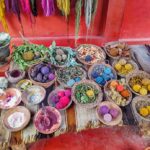
- Chinchero textile demo using natural dyes on alpaca wool
- Salinas de Maras salt pools where salt harvesting still follows old patterns
- Moray’s agricultural “lab” with stacked platforms and microclimates
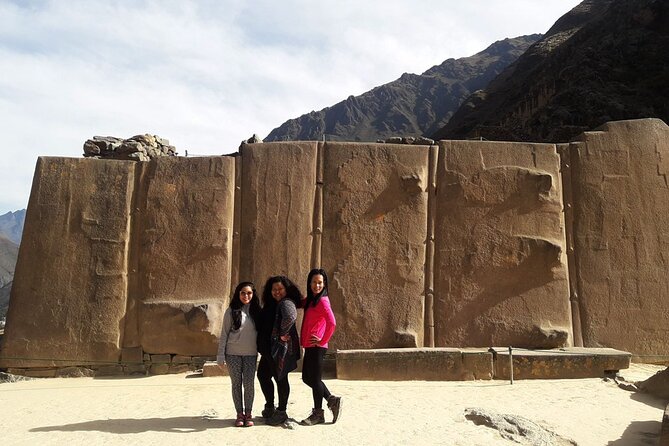
- Ollantaytambo megaliths including blocks reported between 80 and 100 tons
- Guide flexibility that helps you beat crowd pressure at each stop
Why this Sacred Valley private day works so well
Sacred Valley highlights are spread out, so the way you get from stop to stop matters. This tour is set up with private transportation and a dedicated guide-driver pair, which means your timing stays under your control more than your schedule gets swallowed by waiting.
I like that the itinerary is built around variety. You get archaeological sights (citadels and temples), plus living culture moments (textiles), plus a working landscape (the salt pans). That mix keeps the day from feeling like a checklist.
One other big win: this is the kind of route where a good guide makes the difference. Guides such as Alfredo are known for clear English, smart pacing, and answering questions on the spot, which turns “seeing ruins” into “understanding what you’re looking at.”
You can also read our reviews of more private tours in Cusco
The 7:00 AM start and your private transport edge
Pickup starts at 7:00 am from your hotel in Cusco. Since you’re leaving early, you’re more likely to catch a quieter feel at the first sites rather than walking in when tour buses are at peak load.
Private transport also gives you three practical advantages:
- You can keep the day moving without the stop-and-go of group logistics.
- You can ask for adjustments if someone needs more time at a viewpoint or needs a slower pace.
- Your guide can manage the flow so you spend less time parked and more time walking.
In real reviews, guides like Alfredo have been praised for being flexible about pickup points and for keeping the day comfortable even when groups include older travelers dealing with altitude. That matters, because Cusco’s elevation can make “quick stops” feel harder than you’d expect.
Chinchero: natural dyeing, alpaca textiles, and an Inca citadel
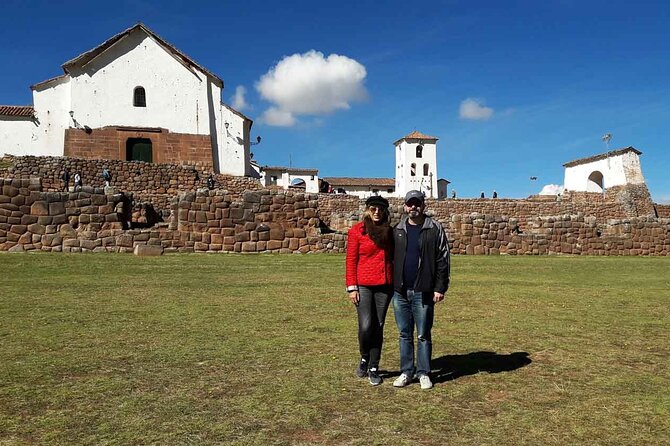
Chinchero is a strong opening because it connects daily craft to Inca-era technique. After pickup, you head about 45 minutes from Cusco to Chinchero, where you first visit a textile center.
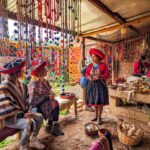
You’ll see a demonstration of dyeing alpaca wool using natural materials—plants and some minerals—rather than modern synthetic dyes. It’s not just a show. It gives you context for why colors and patterns mattered, and how textiles fit into local identity.
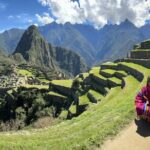
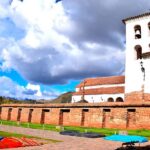
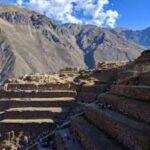
Then you move into the Inca citadel of Chinchero. Expect palaces, temples, and agricultural terraces. The terraces are a useful visual cue for how the Incas managed slopes and farming zones long before modern irrigation grids.
A practical note: textile centers usually aren’t free, and the time spent there can shape the whole day. In a private tour, it’s easier to make that stop exactly the right length for your interest level—so if textiles aren’t your thing, say so early.
Salinas de Maras: the salt pans where people still harvest the same way
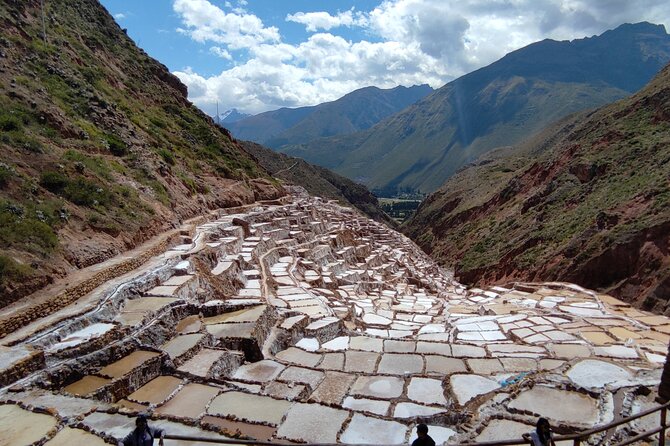
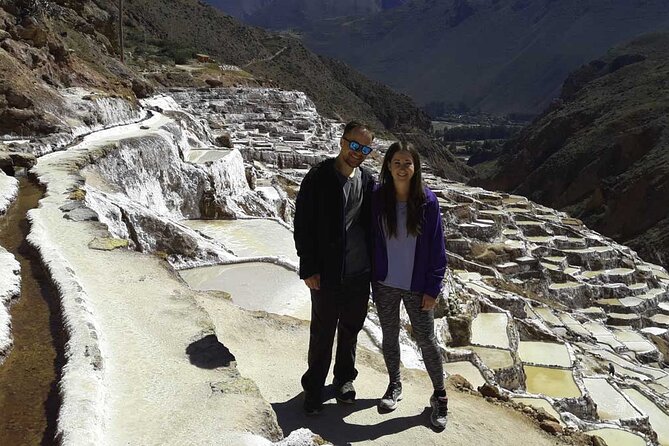
Next up is Salinas de Maras, about 25 minutes from Chinchero. This is the “wow” stop for most people, because the salt mines pools create a geometric pattern across the hillside.
You’ll be there for about 30 minutes, which is enough time to walk among the working pools and see how salt harvesting works. The key detail here is historical continuity: the site is described as continuing practices similar to those used in Inca times. Even if you’re not a history nerd, the sight makes that continuity feel real.
Know the costs ahead of time. Salt mines entry is listed as S/20.00 soles per person and isn’t included in the $125. If you show up without cash, you’ll have a scramble. One guide (Alfredo) has even helped a traveler who ran out of soles by arranging an ATM visit so entry fees could be paid. You can save yourself that stress by bringing enough cash in Peruvian soles before you leave Cusco.
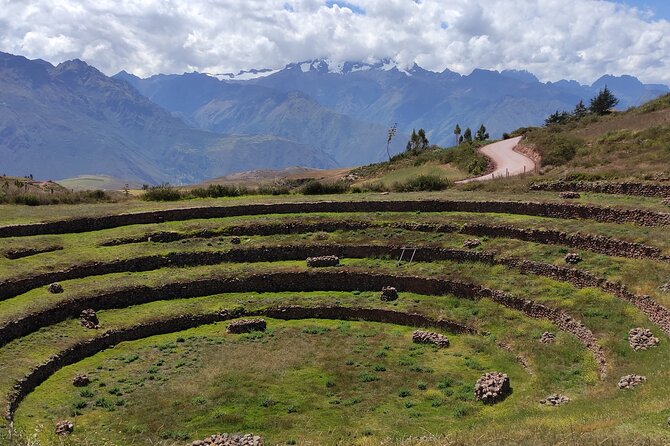
Moray’s microclimates: how the Incas tested crops on stacked terraces
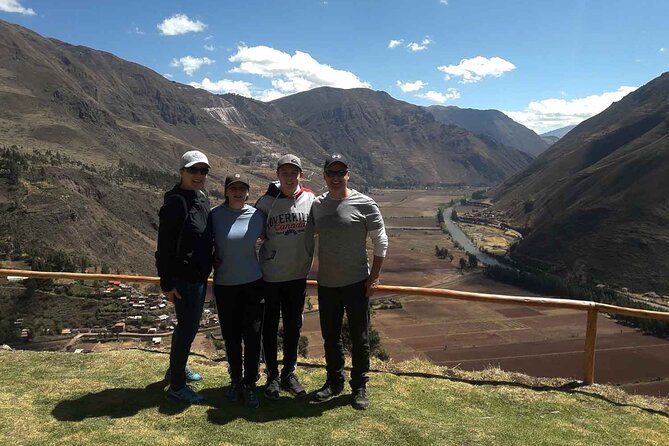
After the salt pans, you head to Moray, the Inca agricultural experimentation center. It’s about 30 minutes from the salt mines.
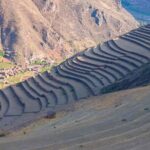
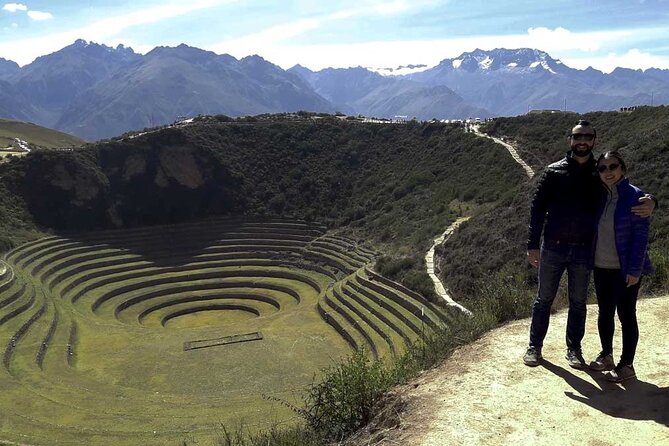
Moray’s main story is the way the platforms create changing conditions. The site is famous for many microclimates—different environments from the upper levels to the lower ones. The result is that the Incas could test how plants responded to temperature and exposure differences without needing to travel far.
This is one of those stops where a guide helps you see the pattern. Without explanation, it can feel like “interesting terraces.” With the right framing, you understand it as a practical science tool—built into architecture.
Time is tight here at about 30 minutes, so don’t expect a long leisurely wandering session. But in a private day, the guide can steer you to the viewpoints that matter most for understanding the site.

Ollantaytambo: giant Inca stonework and the Sun God’s temple
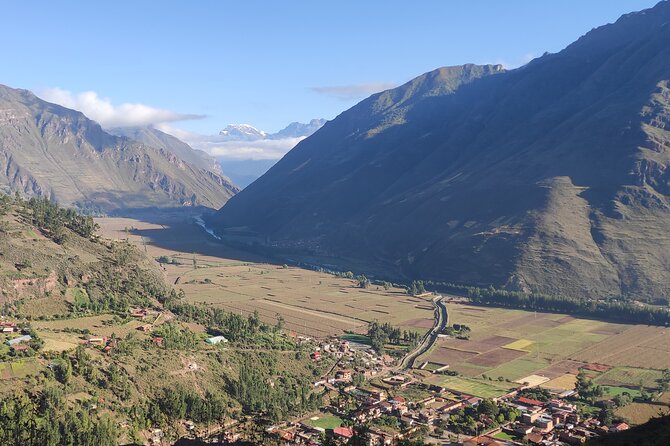
From Moray, you drive about 45 minutes to Ollantaytambo. This is where the day gets heavier in stone—and more impressive fast.
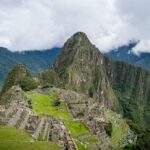
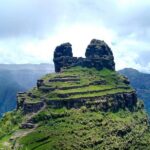
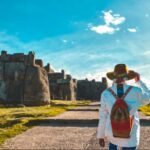
Ollantaytambo is described as an Inca citadel featuring megalithic blocks that weigh between 80 to 100 tons. That’s the kind of detail that makes you stop walking and stare, because it’s hard to picture that kind of weight moving and fitting into place.
You also get access to the astronomical temple dedicated to the Sun God. Even if you don’t follow the astronomy, the idea of tracking celestial cycles through architecture adds a deeper layer than “another set of ruins.”
It’s allocated about 1 hour here. That’s a good length for both the main structures and photo stops without feeling rushed. Still, wear shoes with grip. Ollantaytambo can be uneven underfoot.
Pisac and Urubamba lunch: terraces, temples, and a calmer finish
After Ollantaytambo, you move about 30 minutes to the Urubamba area. You’ll have about 45 minutes for lunch.
Lunch isn’t included, so you’ll need to make your own choice on-site. In practice, that’s helpful because it lets you grab whatever fits your food style—simple and local, or something familiar—without waiting for a group decision.
Then you visit Pisac (Archaeological Park Pisac). Expect temples, palaces, and agricultural terraces, again showing how Inca engineering used slopes and steps as active parts of city life.
Pisac is allocated about 1 hour, and that’s enough to get the big visuals: the terracing, the structure layouts, and the sense of an Inca settlement carved into its setting.
At the end, you return to Cusco. This is when private routing really helps—your guide can keep the final portion of the day smooth instead of leaving you stranded in a crowded bus shuffle.
Price and real value: what the $125 actually covers
At $125 per person for roughly 10 hours, this tour isn’t priced like a budget “hop on a bus” option. The value is in what you’re getting for that money: private transportation, hotel pickup and drop-off, plus a professional driver and guide.
The part that catches people is that major costs happen day-of:
- Salt mines ticket: S/20.00 soles per person
- Tourist tickets: S/70.00 soles per person
- Lunch: not included
- Tips: not included
So your day has two layers: the $125 base, plus entrance fees and food. If you’re traveling as a pair or a small family, private value often jumps because you split the transport and guide attention cost while keeping your own pacing.
Also, for a long day at altitude, comfort is not a “luxury.” In reviews, the car space and safe driving have been praised, and that can make a big difference when you’re tired by the afternoon.
Who this tour suits best (and who should rethink it)
This Sacred Valley private tour is a great match if you want:
- Flexibility to spend more time when something clicks, rather than watching a group clock
- More conversation and context from a guide with strong English—Alfredo is repeatedly singled out for clear explanations and good engagement
- A route that mixes culture (textiles) with working history (salt) and architecture (Ollantaytambo, Pisac)
It may be less ideal if:
- You hate long days. You’re out for about 10 hours, and you’ll walk at each site.
- You want everything fully included. The entry fees and lunch add cost you’ll manage yourself.
- You plan to travel without cash in soles. Entrance fees are not included, and having the right money makes the day smoother.
Should you book Sacred Valley Private Tour, Moray & Salt Mines?
If your goal is a high-quality Sacred Valley day with privacy, pacing control, and smart guiding, I’d book it. The combination of Chinchero textiles, Maras salt pools, Moray microclimates, and the big stone impact of Ollantaytambo hits a lot of the valley’s best stories in one sweep.
My practical advice before you hit confirm:
- Bring enough Peruvian soles for the salt mines and tourist tickets.
- Plan your footwear like you’ll walk more than you expect.
- If you have any mobility limits or want extra slow time for altitude, tell your guide early so they can shape the day around your pace.
FAQ
What time is pickup in Cusco?
Pickup starts at 7:00 am from your hotel.
How long is the tour?
It runs about 10 hours.
Is this a private tour or shared group?
It’s a private tour, meaning only your group participates.
What’s included in the $125 price?
Hotel pickup and drop-off, private transportation, and a professional driver guide are included.
What entrance fees are not included?
Salt mines entry is not included, and the tourist tickets for sites are also not included. Lunch and tips are not included either.
How much do the tickets cost?
The salt mines ticket is listed as S/20.00 soles per person, and tourist tickets are listed as S/70.00 soles per person.
Is lunch provided?
No. There’s a lunch stop (about 45 minutes), but you pay for your own meal.
What if the weather is bad?
This experience requires good weather. If it’s canceled due to poor weather, you’ll be offered a different date or a full refund.