REVIEW · CUSCO
Cusco: Moray, Maras Salt Mines, and Chinchero Weavers Tour
Book on GetYourGuide →Operated by Machupicchu Adventour · Bookable on GetYourGuide
Moray and Maras in one tight half-day route. You’ll leave Cusco and work your way through three very different Sacred Valley stops, all tied together by farming, materials, and everyday Andean life. The views alone help you understand why this region mattered so much—then you get hands-on explanations at Chinchero, Moray, and the Salineras.
I love how the Chinchero stop connects art to nature: you see how artisans use natural plants to extract colors for Andean work. And I love Moray for its logic—those Inca terraces weren’t built randomly; the irrigation and levels show a very practical way of experimenting with crops at altitude.
One thing to consider: the tour price is only the tour. You’ll likely add entrance fees once you arrive, and you’ll do some walking at high elevation, so wear real shoes and take it easy at first.
In This Review
- Key highlights to pay attention to
- Cusco pickup and the Sacred Valley rhythm
- Chinchero weavers: natural dye, Quechua tradition, and practical shopping time
- Moray Inca terraces and irrigation at 11,318 feet
- Maras village: colonial stonework before the salt pools
- Salineras salt mines: 3,000 pools and a working industry
- Price and logistics: what your $14 really means
- Group size, bilingual guiding, and guide energy (including Víctor)
- What to bring for comfort and photos
- Who this tour suits best
- Should you book this Moray, Maras, and Chinchero tour?
- FAQ
- How long is the Cusco Moray, Maras Salt Mines, and Chinchero Weavers tour?
- What’s included in the $14 per person price?
- Are entrance fees included for Moray, Maras, and the salt mines?
- Where does the tour pick up and where does it end?
- How big is the group?
- What should I bring with me?
- Can I cancel for a full refund?
Key highlights to pay attention to
- Small group (up to 12 participants) means less rushing and more chances to ask questions.
- Chinchero at 3,762 meters sets the tone early, before you head to the deeper terraced sites.
- Moray sits at 11,318 feet (11,318 ft listed for the terraces), where the irrigation-and-terraces layout is the star.
- Maras Salt Mines have about 3,000 pools—you’ll see the scale of the operation in a single view.
- Bilingual guide (English/Spanish) keeps the explanations consistent, though you may hear both languages depending on the day.
Cusco pickup and the Sacred Valley rhythm
This is a 6-hour, half-day route that starts with hotel pickup in Cusco and ends back in the city at Plaza Regocijo. The schedule is built around short, focused stops rather than long hangs. That’s good if you want three big sites without losing an entire day to transport.
You’ll spend a lot of the time traveling between districts, including a chunk of time on the bus—plan for the usual Sacred Valley pace: winding roads, quick photo stops, and then straight into the next explanation. The upside is momentum. The downside is you’ll want to go in ready to move and not expect long, slow museum-style browsing.
Also, the altitude starts early. Chinchero is listed at 3,762 meters, so even though the tour isn’t extremely long, the thin air is part of the experience. I suggest taking your first drinks of water early and keeping your first uphill walking slower than you normally would.
You can also read our reviews of more tours and experiences in Cusco.
Chinchero weavers: natural dye, Quechua tradition, and practical shopping time
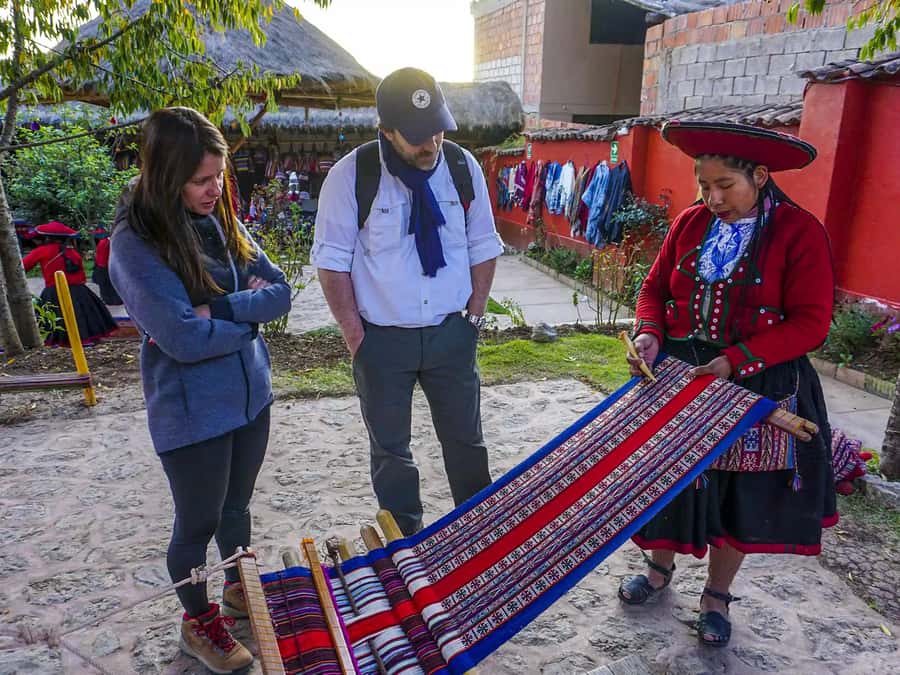
Chinchero is your first real taste of the region’s living culture. You’ll arrive and get a short break for a photo stop, a walk, and shopping. That time matters because it’s not just free wandering—Chinchero is where you’ll connect the idea of “art” to materials and process.
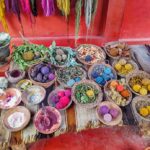
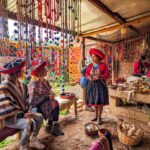
The main moment here is the weaving workshop. Artisans continue the Quechua tradition, and the tour explains how they use natural plants to extract colors for their work. This is one of the more memorable parts of the day because it turns a pretty finished product into a whole chain of steps: plant → dye → thread color → woven pattern. When you understand that, the patterns stop looking random and start making sense.
Chinchero is also where you’re most likely to buy textiles. You’ll have shopping time during the stop, so decide ahead of time what you’re looking for: a small souvenir, something for a wall, or a wearable item. If you’re sensitive to sales pressure, keep a calm pace and remember you don’t have to buy right away—your time here is short by design.
A quick caution I’d pass on: there are textile stops in the Andes where the exact workshop experience can vary. One past booking complained that the workshop shown in the tour pictures wasn’t the one actually visited and that the sales pitch felt focused on lower-quality substitutes. If you care about what you’re getting, ask simple questions while you’re there—what materials they’re using, what the dye source is, and what kind of fiber you’re buying—then decide with clear expectations.
Moray Inca terraces and irrigation at 11,318 feet
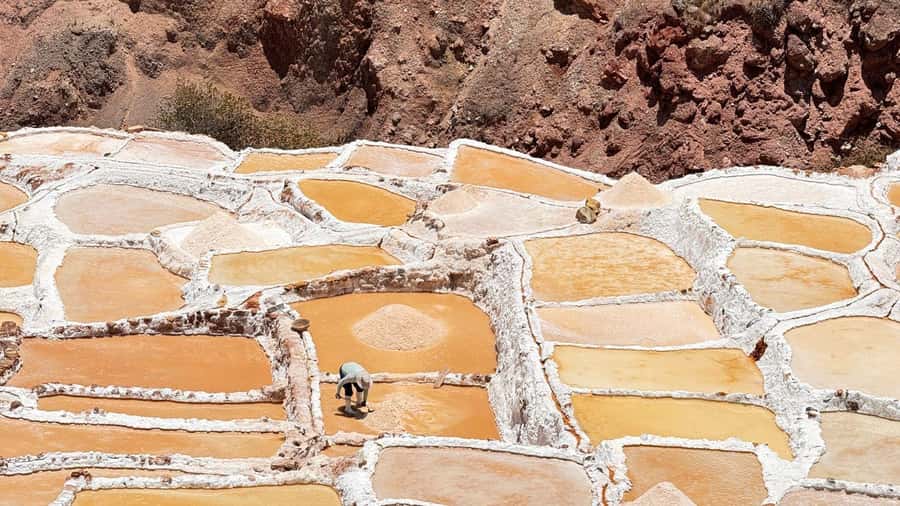
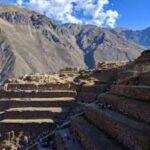
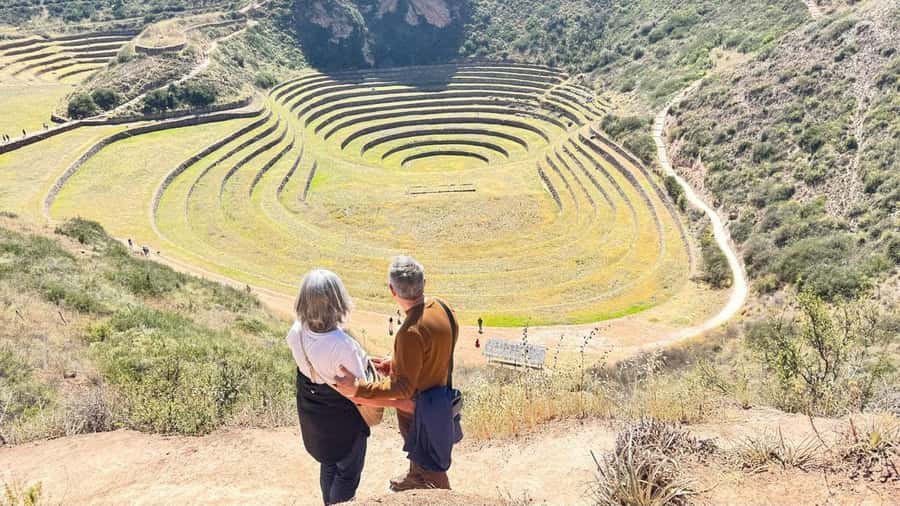
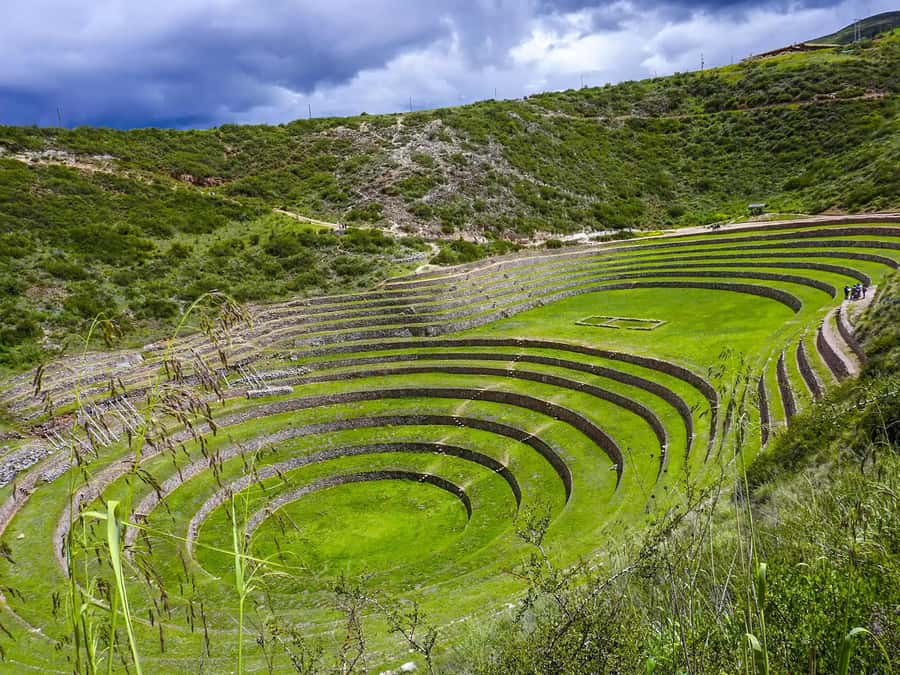
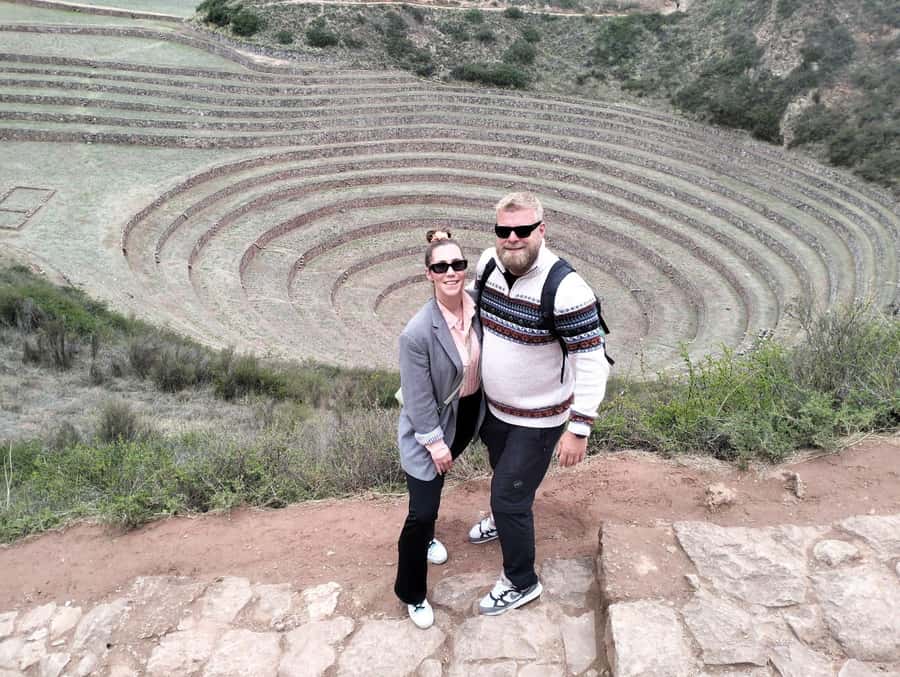
Moray is where the tour shifts from craft to engineering. The terraces look surreal at first glance—like someone carved a giant set of steps into the earth. Then the guide’s explanation makes it click: Moray was designed for experimentation and agriculture, using irrigation and the terraces to manage growing conditions.
The terraces are listed at an altitude of 11,318 feet, and the surrounding area is also high (the tour places Moray around 3,450 meters). That altitude affects how you experience the site. You’ll feel the air more, and walking the edges can be tiring. Give yourself a little extra time to adjust, especially if you’re prone to altitude headaches.
What I appreciate about Moray is that it’s not just “look at ruins.” It’s a site where you can understand the thinking behind the design. The irrigation system is the key detail here, because it shows that the Inca weren’t only building for ceremony—they were building for controlled farming outcomes.
Your visit includes a guided tour plus photo and sightseeing time. That balance matters: you get enough structure to understand the terraces, but you still have moments to stand back, scan the full pattern, and take in how the levels work across the slope.
Practical tip: bring your camera ready. Moray is the kind of place where the best photos come when you step back and line up the terrace curves, not when you’re stuck in the closest spots.
Maras village: colonial stonework before the salt pools
Next you’ll stop at Maras Village, where you’ll see preserved colonial architecture and the thin-stoned buildings. This is a small detour on paper, but it does something important: it gives you context for how Spanish-era structures sit inside a landscape that was shaped long before colonial times.
The buildings here aren’t trying to be dramatic. The interest is in the details—how they’re built, how stone is used, and how the village layout relates to the valley. It’s the kind of stop that makes the rest of the day feel more grounded. You’re not just hopping from “Inca thing” to “salt thing.” You’re seeing a living community layered over centuries.
From a visitor standpoint, this stop is also a breather before Salineras. You’re not climbing endlessly, and it gives you a mental reset so the last part of the day feels like a climax rather than a grind.
Salineras salt mines: 3,000 pools and a working industry
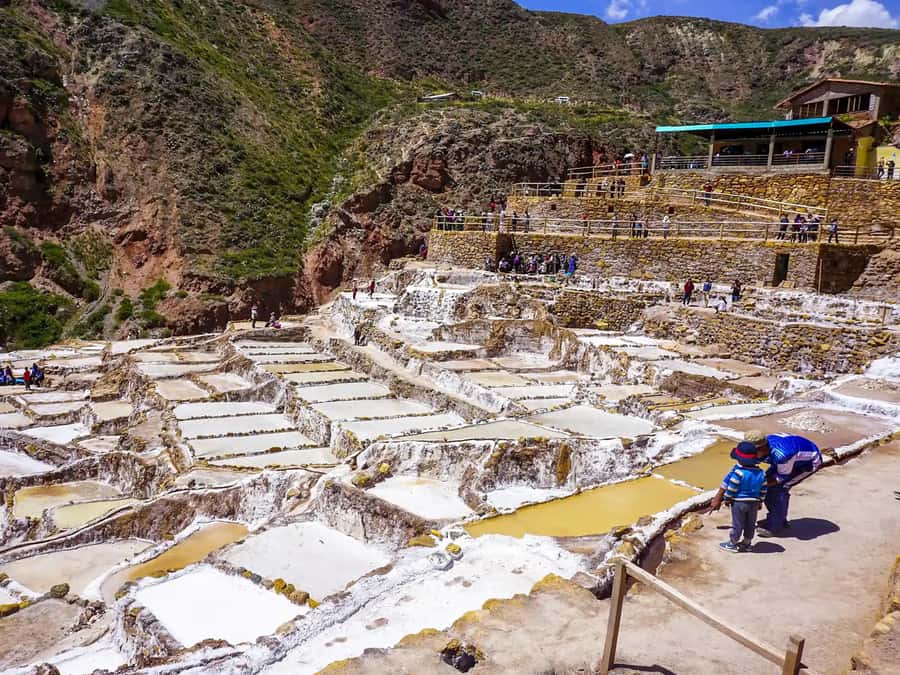
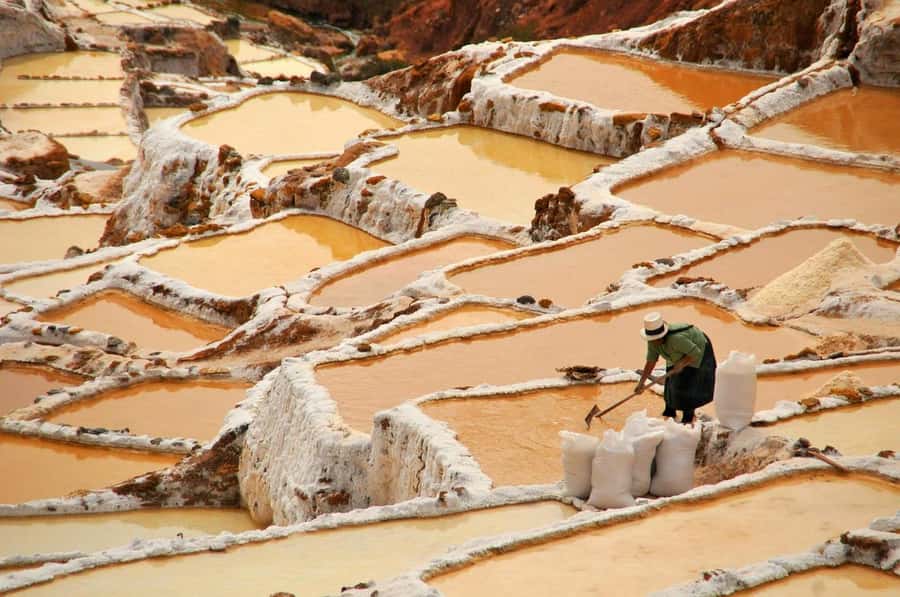
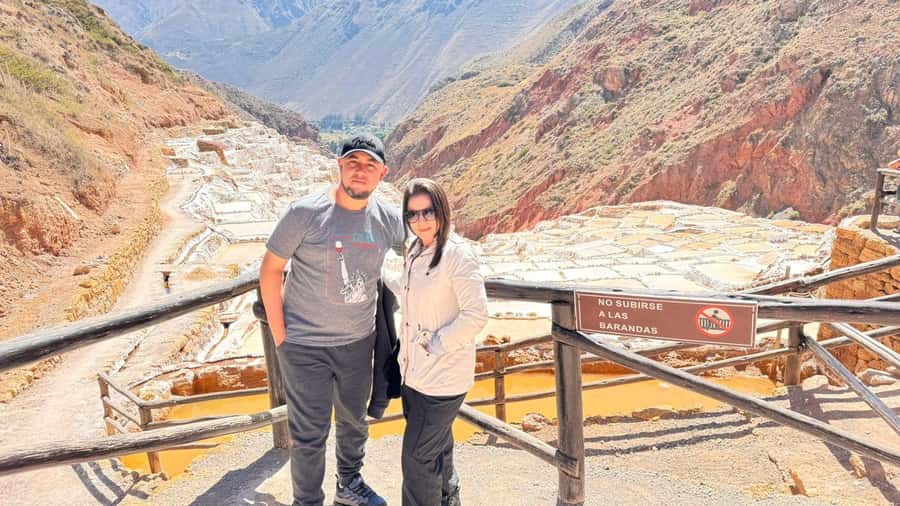
Then comes the main event. The Salineras salt mines are made up of 3,000 small pools, and you’ll explore the area with sightseeing and a guided explanation. This is one of those places where you can instantly grasp the scale even if you don’t speak a word of Spanish or Quechua.
What makes Salineras especially interesting is the time span. The site is described as dating back to pre-Inca times and still producing salt today. That continuity is rare. Many historic sites are preserved and frozen. Here, the salt extraction process is part of current life, and the harvested salt is processed and distributed across the region.
The pools themselves create a visual pattern that’s hard to photograph well from the wrong angle. You’ll want to take a few minutes to look around first, then start shooting. I’d also suggest watching where the guide points—because the “how” matters as much as the “what.”
Another practical note: the salt mines can get busy with tour groups, and the walks are short but real. With your comfortable shoes and steady pace, you’ll be fine. With sneakers that don’t grip, you might feel more ankle strain on uneven surfaces.
Price and logistics: what your $14 really means
On the face of it, the tour price is $14 per person, but the important detail is what’s included vs. what you pay separately. This price covers the hotel pickup, bilingual guide, and transportation (and private tour access if you choose that option). What’s not included is entrance to the archaeological sites and the salt mines.
Entrance fees are listed as:
- Archeological sites: $19 or 70 soles
- Salt mines: $6 or 20 soles
So your full on-the-ground cost is more like the tour price plus those entrance fees. If you’re doing this with a small group, paying separate entrances can still be a good value because the itinerary hits multiple sites in a single day with a guide explaining the connections.
Where the value really comes through is the structure. Three stops, guided explanations, and a small group capped at 12 participants. That’s a lot of learning for a half-day—especially at Moray and the salt mines, where having someone explain irrigation logic and extraction purpose saves time and guesswork.
Logistics are straightforward: you start with pickup in Cusco, hop between districts by coach, and finish back at Plaza Regocijo. The total 6 hours feels efficient rather than rushed, as long as you’re ready for the altitude and a few short walks.
Group size, bilingual guiding, and guide energy (including Víctor)
A lot of your experience depends on the guide. You’ll have a bilingual tour guide in English and Spanish. That can be great when you’re the kind of person who likes explanations but doesn’t want to choose only one language.
One highly praised guide name that came up is Víctor. His knowledge and empathy were specifically called out, and that combination matters on this route because you’re bouncing between topics: weaving materials, Inca terrace logic, colonial architecture, and active salt production.
There’s also a heads-up from another perspective: some people find frequent switching between Spanish and English can be mentally tiring, especially if the guide is chatting constantly. If you know you prefer one language, say so at the start of the day and ask for your preferred language to be used as consistently as possible.
Either way, the core is clear: you’ll be guided at each main site with time for photos and walking.
What to bring for comfort and photos
This tour is short, but high elevation and uneven walking make preparation worth it. Bring:
- Passport
- Comfortable shoes
- Sun hat
- Camera
- Sunscreen
- Cash
Cash is especially relevant because entrance fees are not included and you may prefer paying in soles if that’s easier on the day.
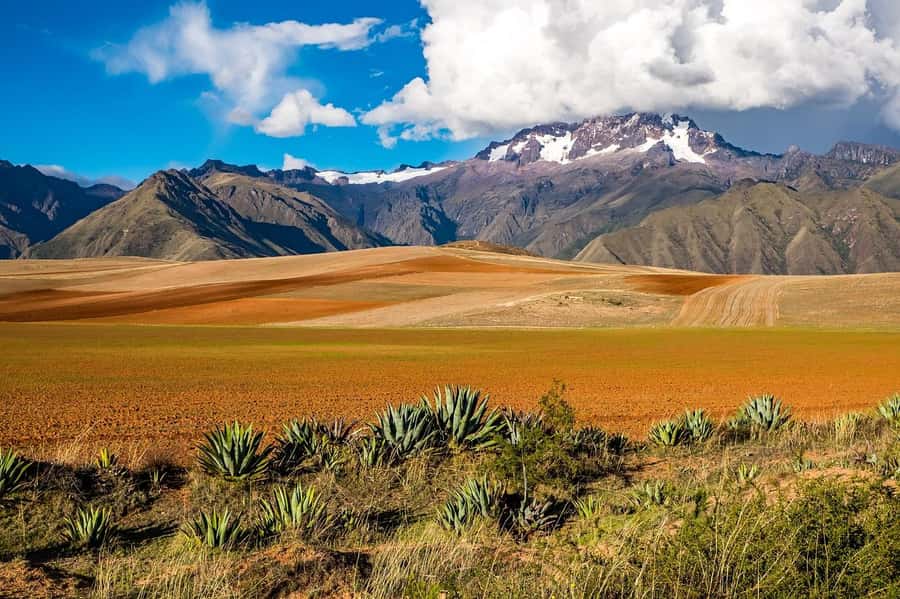
Also, I’d treat this as a sun-and-wind day. Cusco area weather can change quickly, and at altitude you often feel UV even when it’s not scorching. Sunscreen and a hat aren’t optional if you want photos without squinting.
Hydration matters too. You don’t have to chug, but take small sips regularly—especially before the Moray walk.
Who this tour suits best
This is a strong choice if you want:
- A compact Sacred Valley itinerary with major highlights
- Guided context for Moray and the Salineras salt pools
- A first look at living Quechua weaving and natural dyes
- A small group format (up to 12 people)
It’s less ideal if:
- You hate walking in uneven outdoor areas
- You need long, slow time inside each site
- You’re very sensitive to altitude and prefer minimal stepping
If textiles are your main priority, you’ll like Chinchero’s workshop and natural dye explanation. Just keep your expectations grounded and ask about materials before you buy anything expensive.
Should you book this Moray, Maras, and Chinchero tour?
Yes, with a few smart conditions.
Book it if you want an efficient half-day that connects farming (Moray) with materials (Chinchero dyes) and industry (Maras salt mines), all with bilingual guidance and a small group size. The itinerary is built for understanding: each stop adds a different piece of the Sacred Valley story.
Don’t book it blindly if you’re planning to shop textiles as a primary goal. Ask what workshop you’ll visit and what fibers you’re being offered. And if you’re budget-sensitive, remember that entrance fees are separate—so the real cost is tour price plus site admission.
If you go in with comfortable shoes, cash for entrances, and a mindset of short but meaningful stops, you’ll come away feeling like you learned something real—not just saw three places from the bus window.
FAQ
How long is the Cusco Moray, Maras Salt Mines, and Chinchero Weavers tour?
The tour duration is 6 hours.
What’s included in the $14 per person price?
It includes hotel pickup, a bilingual tour guide (English and Spanish), and transportation. If you select a private tour option, transportation is also included for that format.
Are entrance fees included for Moray, Maras, and the salt mines?
No. Entrance to the archaeological sites is listed at $19 (or 70 soles) and entrance to the salt mines is listed at $6 (or 20 soles).
Where does the tour pick up and where does it end?
Pickup is from your hotel in Cusco, and the tour finishes at Plaza Regocijo.
How big is the group?
This is a small group tour limited to 12 participants.
What should I bring with me?
Bring your passport, comfortable shoes, a sun hat, a camera, sunscreen, and cash.
Can I cancel for a full refund?
Yes. Free cancellation is available up to 24 hours in advance for a full refund.