REVIEW · AREQUIPA
Sillar Route and Culebrillas Petroglyphs
Book on Viator →Operated by Puriy Perú Expeditions · Bookable on Viator
Sillar Route to Culebrillas is a fast way to see how Arequipa gets its white stone. I like the Yanahuara viewpoint with ashlar arches plus the volcano lineup, and I really like the quarry-and-canyon combo that turns geology into real people’s work. One drawback: the Culebrillas walk is a bit rugged and the petroglyphs can be hard to spot in harsh midday sun.
This is the kind of half-day outing that makes you feel like you’re seeing the city from the inside out: the same volcanic material that built the colonial streets shows up again in the ravine carvings and stone mounds locals still respect. If you hate dust, this may not be for you—Arequipa’s dry air and quarry grit are part of the package.
In This Review
- Key Highlights You’ll Actually Care About
- Yanahuara Viewpoint: Ashlar Arches and the Volcano Lineup
- Canteras de Sillar: The Quarry That Built the City
- Culebrillas Petroglyphs: A Serpentine Ravine and Bumpy Footing
- Price and Value: How Much You Really Get for $19
- Group Size, Transport, and Timing: 4 Hours Can Feel Fast
- What to Bring: Dust, Shoes, and a Photo-Friendly Plan
- Guides, Languages, and Explanations: What You Can Expect
- Who Should Book Culebrillas and Sillar, and Who Should Skip
- Should You Book This Sillar Route and Culebrillas Tour?
- FAQ
- How long is the Sillar Route and Culebrillas tour?
- What’s included in the $19 price?
- How many people are in the group?
- Is the Culebrillas walk easy?
- Will I see petroglyphs on the tour?
- What should I bring for the outdoors?
Key Highlights You’ll Actually Care About
- Yanahuara viewpoints with three big volcanoes: Chachani, Pichu Picchu, and Misti.
- Sillar quarry access plus how the stone gets used: builders explain techniques on site.
- Culebrillas petroglyph ravine walk: about 20 minutes, bumpy footing, plus a short slope.
- Apachetas stone mounds: a local tradition you’ll see at the end of the ravine trail.
- Small group size (up to 18): calmer than big city-bus tours, usually.
Yanahuara Viewpoint: Ashlar Arches and the Volcano Lineup
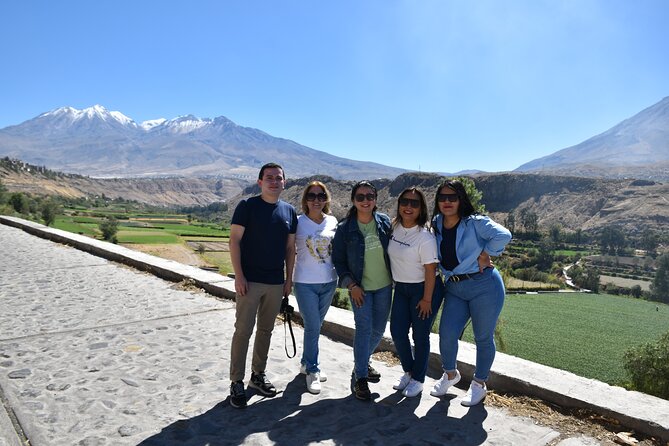
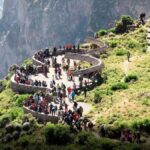
Most half-day tours in Arequipa start with a scenic shortcut. This one starts with something you can recognize fast: Yanahuara’s ashlar arches and that signature white volcanic stone look. It’s a great way to get oriented because you’re above the city, and the view helps you understand why Arequipa looks the way it does.
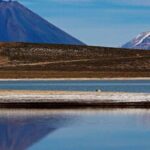
From the viewpoint, you can also spot three famous snow-capped mountains in the region: Chachani, Pichu Picchu, and Misti. Whether clouds cooperate or not, having the names and the geography in front of you makes the rest of the day click. You’re not just driving to random stops—you’re building a mental map.
Timing tip: if your goal is photos, try to arrive ready for bright light. The later petroglyph stop can be sun-baked, so your photo strategy matters more than you think.
You can also read our reviews of more tours and experiences in Arequipa.
Canteras de Sillar: The Quarry That Built the City
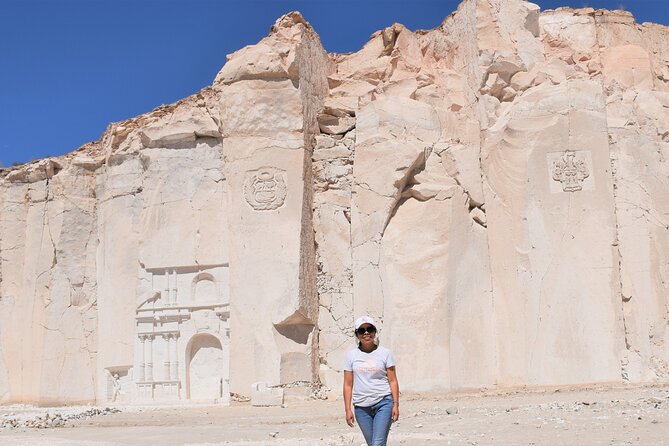
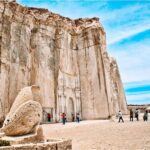
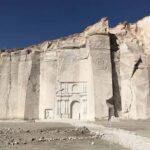
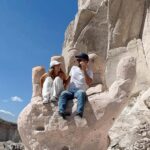
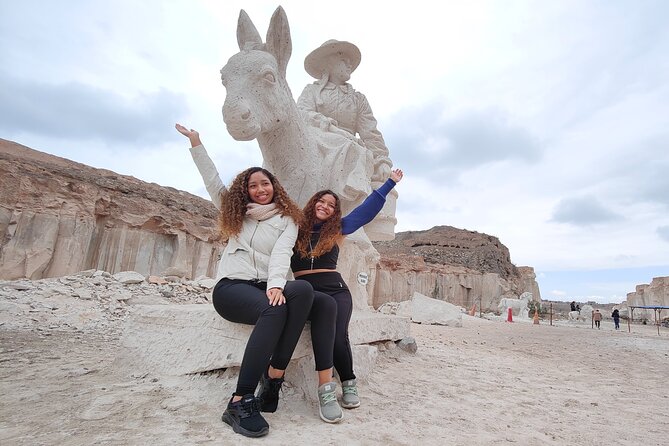
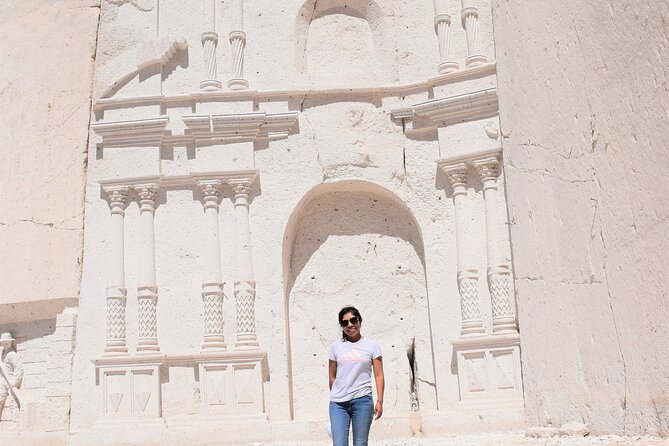
Then you head to the quarries near Arequipa to see where sillar comes from. Sillar is the white volcanic stone used in many colonial buildings across Arequipa, so this stop is the “why” behind a lot of what you see around town. Instead of admiring stonework from a distance, you get to see the material at its source.
Here’s what makes this stop worth your time: you’re not just looking at rocks behind a fence. You get an on-site explanation of how the builders work and how they use the stone. It’s the kind of practical detail that makes the city feel less mysterious. You start to notice why sillar is so common and why it shapes the look of streets, arches, and facades.
It’s also a heat-and-dust reality check. Even if the quarry walk isn’t long, you’re outside near stonework and open air. Bring the right expectations: this isn’t a museum with climate control. One review story called out people needing face masks because of dust, so I’d treat dust management as part of your plan, not as an optional extra.
Culebrillas Petroglyphs: A Serpentine Ravine and Bumpy Footing
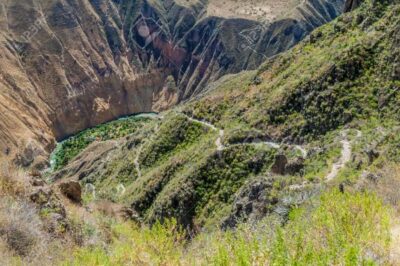
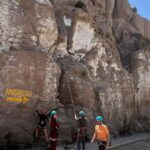
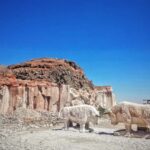
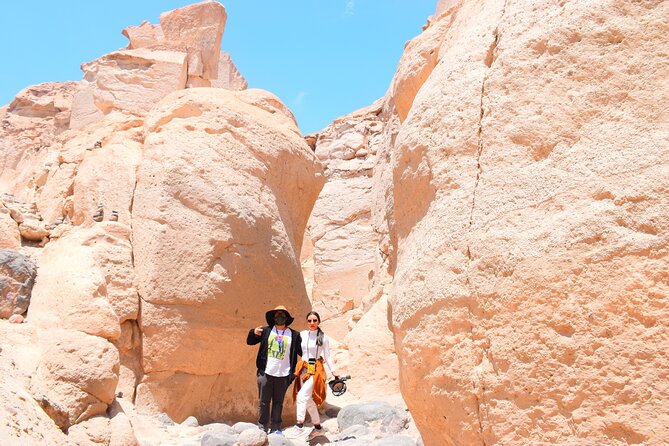
After the quarry, you continue to Quebrada de Culebrillas, reached from the Añashuayco area with a short transfer. Then it’s time for the main action: a walk of about 20 minutes through a curvy, serpentine ravine carved by old water flow.
This is where the tour turns from “interesting stops” into “memory-making.” The ravine has curving forms, and you’ll see petroglyphs—carvings fixed into the volcanic stone walls. They aren’t always easy to read, especially in strong midday sun. One helpful reality check from experience shared with me: the carvings can be difficult to make out because of bright light and the stone texture. If you care about seeing them clearly, pay attention to the angle and shade around the walls, and don’t assume every carving will jump out like it does on a postcard.
The walk itself is described as a bit bumpy. You’ll also climb a slope for about five minutes. That doesn’t sound like much on paper, but in real terrain it’s enough to matter. Use proper shoes with grip, and don’t plan to glide through this stop in sneakers designed for flat sidewalks.
And then there’s a cultural detail that’s easy to overlook if you’re rushing: you’ll end up seeing Apachetas, stone mounds associated with a tradition local residents follow. It’s a small moment, but it gives the area more meaning than geology and graffiti-like carvings. You see how people keep adding ritual to the land.
Price and Value: How Much You Really Get for $19
At $19 per person for a roughly four-hour outing, the headline value is the mix: quarry access plus the Culebrillas entry fees included in the tour. Your package includes entrance to Añashuayco (listed as S/5.00) and admission to Culebrillas (S/5.00), plus a certified guide.
That matters because entrance fees for “one-off” sites add up fast. Here, the money is aimed at keeping the experience simple: you show up, you pay once, you don’t have to stop for tickets at every turn.
That said, keep a flexible budget. Some people report extra charges for certain additional viewing areas or photo stops at the sillar-route area, with separate entrances and small per-person costs. It may not apply to everyone the same way, but it’s smart to assume that if you want the most photo-friendly sections, you might run into add-on fees not covered in the included admission list.
So I’d frame it like this: $19 is fair for the core route, and you’ll likely have a smooth day if you’re okay with optional extras.
Group Size, Transport, and Timing: 4 Hours Can Feel Fast
This tour runs about 4 hours, and it’s usually booked close to a week or two ahead on average. The group size is capped at 18 travelers, which is a big deal for a short visit. Fewer people means you’re less likely to feel constantly squeezed through photo spots.
You’re picked up from your hotel, then you return toward the city center. Here’s one nuance: some people report drop-off wasn’t exactly at their hotel address but at a more central spot. If your hotel is far or tricky to reach, don’t assume it’s a door-to-door finish.
Timing can also swing a little due to city traffic. In one example, a start delay came from an event in the city center, and it shortened time at two stops. That’s not unusual in Arequipa, but it’s a reminder: the tour is built like a tight loop. If you’re the type who hates being rushed, plan to go with patience, not perfection.
Finally, transport details matter for comfort and peace of mind. Some participants mentioned a comfortable vehicle and even seatbelts, while others described unsafe driving or missing seatbelts in their row. I can’t promise the same experience in every van, so here’s the practical move: when you get in, check that your seatbelt fits and use it. If it doesn’t, tell the guide right away.

What to Bring: Dust, Shoes, and a Photo-Friendly Plan
If you do only one prep move, make it this: plan for dust. This tour isn’t recommended for travelers with a dust allergy, and at least one group reported significant irritation without protection. Bring a face mask and water. Even if you don’t have allergies, quarry dust can still be annoying.
For footwear, treat Culebrillas as the main priority. You’ll be on a bumpy trail and climbing a short slope. You want shoes with grip and enough cushioning to keep your ankle happy on uneven stone. If your shoes are already worn out, this is not the day to test them.
For photos, you’ll face harsh midday light. Petroglyphs can be harder to see when the sun is overhead. If you’re shooting, take a few seconds before you frame: look for shadowed wall sections where carvings might show more contrast.
Also consider sun protection. You’re outside most of the day, and the ravine walk happens in open terrain.
One more optional item: bug protection. Mosquito repellent wasn’t always relevant in every visit, but one experience described sand flies in the ravine area and advised stronger protection. If you’re sensitive to bites, pack repellent and apply before you start the walk.
Guides, Languages, and Explanations: What You Can Expect
The quality of a guide can make or break a half-day tour, especially with carvings and small details. In the experiences I’ve seen referenced, guides like Mike, Tony, Alexandra, Sandra, and Christina showed up with strong communication and a friendly vibe, with some speaking both English and Spanish.
But explanations aren’t guaranteed to match your expectations. A few people described microphone issues, unclear directions, or fast speech that made it harder to follow the day. My practical advice is simple: if you want clearer pacing, ask for slower speech and repeat the meeting point before each transfer. With a short tour, clarity saves stress.
Also, keep your expectations realistic about time. When the day runs late, stop durations can shrink. If you care most about the petroglyphs, prioritize that stop internally and don’t spend your energy wishing you had more time at earlier viewpoints.
Who Should Book Culebrillas and Sillar, and Who Should Skip
This tour is a good fit if you want:
- A fast look at why Arequipa looks like it does, via the sillar quarry
- A mix of viewpoint, working stone, and a short canyon walk
- A manageable group size (max 18)
It may be a poor fit if you:
- Have a dust allergy (not recommended)
- Need gentle walking only or want to avoid uneven terrain (Culebrillas is bumpy and includes a slope)
- Are an older adult looking for low-effort routes (it’s specifically noted as not recommended for older adults)
If you’re traveling with mobility limits, you should treat the ravine walk as a likely show-stopper. The tour isn’t described as wheelchair-friendly, and the terrain details point the other way.
And if you’re extremely detail-driven about petroglyphs, you should know they may not be crystal-clear in midday sun. That’s not a reason to skip—just a reason to bring patience and good expectations.
Should You Book This Sillar Route and Culebrillas Tour?
Book it if you want solid value and you like experiences that connect the city’s look to its raw material. For $19, you get the Yanahuara viewpoint, a quarry visit with hands-on explanation style, and a petroglyph ravine walk with Apachetas—within a short, well-structured half day.
Skip or consider an alternative if any of these hit hard for you: dust sensitivity, fragile mobility, or a strong need for lots of interpretation time at each stop. Also, if your main goal is perfect petroglyph viewing and you’re easily frustrated by hard-to-see carvings, plan to rely on your own observation more than on the text-on-walls approach.
My final take: this tour is most rewarding when you show up ready for outdoors, bright light, and a bit of uneven ground. If that sounds like your kind of day, you’ll likely leave with photos, stories, and a much better grasp of what sillar really means in Arequipa.
FAQ
How long is the Sillar Route and Culebrillas tour?
It runs about 4 hours (approx.), including pickup, transfers, and return toward the city center.
What’s included in the $19 price?
The tour includes a certified guide, a group tour, entrance to Añashuayco (S/5.00), and admission to Culebrillas (S/5.00).
How many people are in the group?
The tour has a maximum of 18 travelers.
Is the Culebrillas walk easy?
It’s described as a walk of about 20 minutes with a bumpy path, plus a short slope climb of about 5 minutes. It’s not recommended for older adults.
Will I see petroglyphs on the tour?
Yes. You’ll walk through the Culebrillas ravine and observe petroglyphs on the ravine walls.
What should I bring for the outdoors?
Bring water and wear appropriate shoes with grip for the uneven canyon walk. It’s also not recommended for travelers with dust allergy, so dust protection like a face mask can be important.