REVIEW · PARACAS
PARACAS: BALLESTAS ISLANDS AND NATIONAL RESERVE
Book on GetYourGuide →Operated by Playa Roja Tours E.I.R.L · Bookable on GetYourGuide
Wildlife, cliffs, and a 2,500-year-old carving. This day trip pairs Ballestas Islands boat time with Paracas National Reserve beach stops, so you get two very different sides of the same coast. You’ll see seabirds and marine mammals up close, plus a legendary geoglyph called El Candelabro.
I especially like how the schedule is built for viewing, not waiting. The morning boat segment is long enough for the main sights, and the guides keep you moving through the best angles for photos and spotting sea lions and birds. The main drawback to plan around: you’re paying separate entrance fees on top of the $39 price, and you’ll also want to bring your own snacks or drinks since food isn’t included.
In This Review
- Key Things Worth Knowing Before You Go
- Paracas in One Day: Boat Wildlife + Reserve Beaches
- The Morning Ballestas Islands Boat Tour (8:00 to 10:00)
- El Candelabro: The 170-Meter Geoglyph Pass-By
- The Ballestas Islands You See Up Close: Arco del Deseo and Perfil de Cristo
- Wildlife on the Water: Penguins, Guano Birds, Sea Lions, Dolphins
- The 45-Minute Break on the Boulevard (10:00 to 10:45)
- Paracas National Reserve by Tourist Bus (11:00 to 3:00)
- Flamingo Viewpoint Stop: Where to Look for the Birds
- Yumaque Beach: The Small Crescent Cove
- Playa Roja: Pink Granodiorite and Big Photo Energy
- Itmos Peninsula Viewpoint: The Whole Bay in One View
- La Mina Beach: Turquoise Water Between Cliffs
- Returning to Paracas After the Reserve
- Price and Fees: What $39 Really Buys
- What’s Included, What to Bring, and Small Rules
- Language, Timing, and the Most Helpful Logistics
- Who Should Book This Tour (and Who Might Not)
- Should You Book Paracas: Ballestas Islands and National Reserve?
- FAQ
- What time does the Ballestas Islands boat tour run?
- How long is the Paracas National Reserve part of the tour?
- Does the price of $39 include entrance fees?
- What entrance fees should I expect to pay?
- Is food included in the tour?
- What is included in the tour besides transportation?
- Where is the meeting point?
- Are alcohol and drugs allowed?
Key Things Worth Knowing Before You Go
- El Candelabro: a famous geoglyph you’ll pass during the first boat stretch
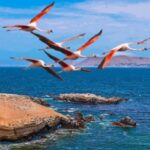
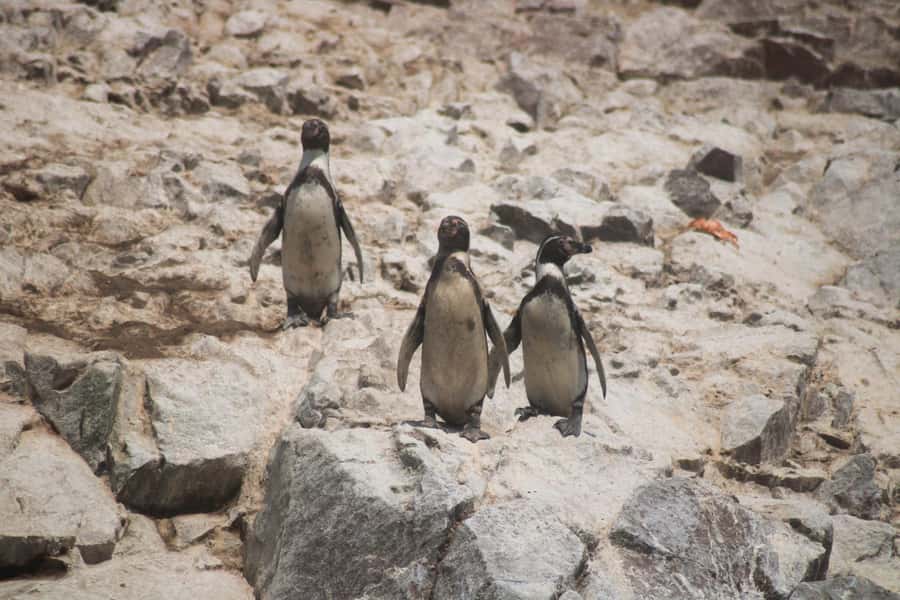
- Big wildlife variety: guano birds, terns, Humboldt penguins, pelicans, dolphins, and sea lions
- Rock monuments: you’ll also see carvings like Arco del Deseo and Perfil de Cristo
- Paracas Reserve stops: flamingo viewpoint plus four named beaches
- Color + geology at Playa Roja: pink color linked to granodiorite rock breaking off the nearby hill
- Effective 6 hours of activity: there’s an hour built in for rest during the day
Paracas in One Day: Boat Wildlife + Reserve Beaches
This is a classic Paracas combo, and that matters because it saves time. Instead of choosing just Ballestas or just the reserve, you get the full story: offshore wildlife and coastal scenery, then a guided day through Paracas National Reserve viewpoints and beaches.
The day runs about 7 hours, but the useful time on the move is around 6 hours. That hour of downtime helps. You’re not forced to sprint from one stop to the next, and you’ll actually be able to enjoy the scenery when you arrive.
Price-wise, $39 looks straightforward, but don’t forget the add-ons. The tour price is only part of the total day cost because entrance fees are not included. If you like being fully prepared, this is the tour to do that with.
You can also read our reviews of more tours and experiences in Paracas.



The Morning Ballestas Islands Boat Tour (8:00 to 10:00)
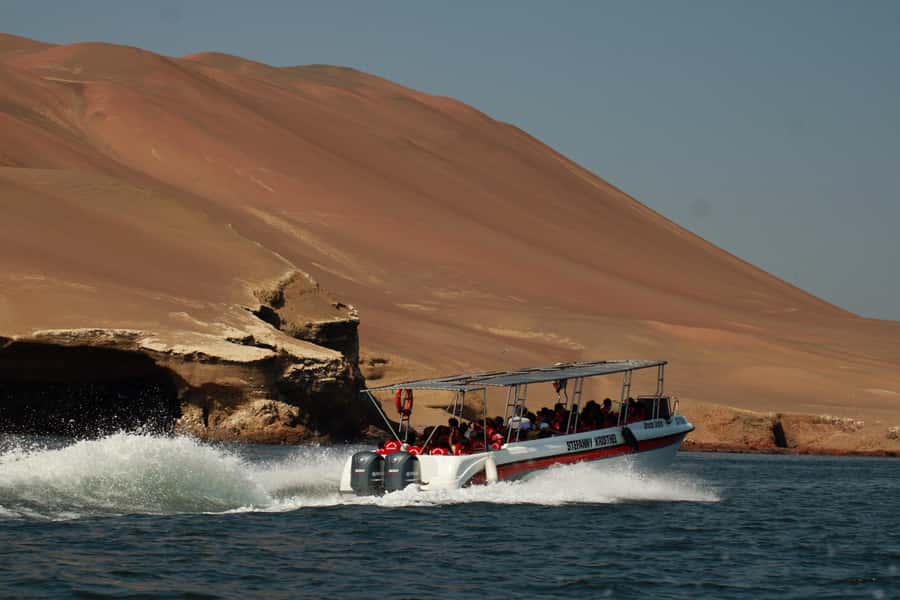
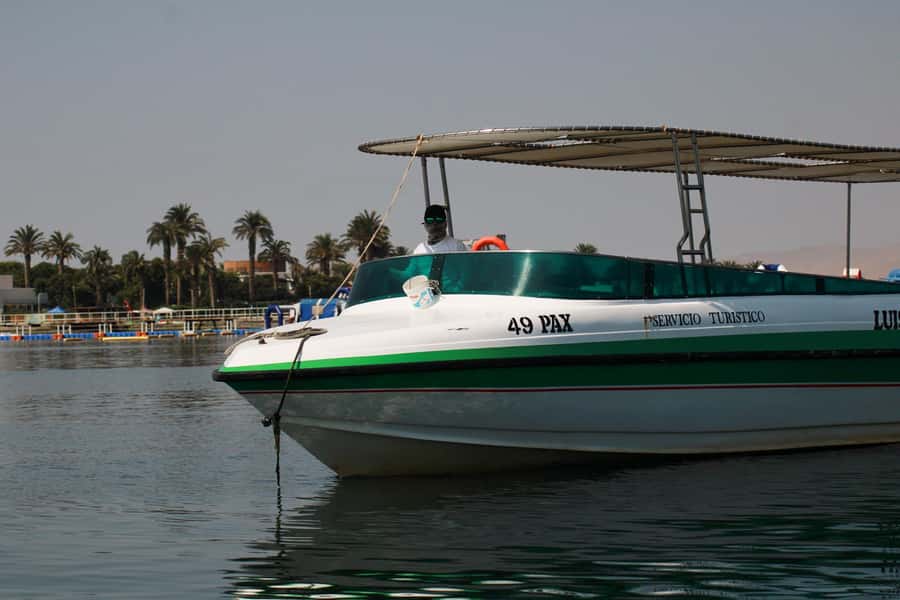
The day starts with a two-hour boat tour on a modern boat. You’re not just going to stare at water. The route is planned around specific sights, and the timing gives you a decent shot at spotting the wildlife that makes Ballestas worth the money.
You’ll typically cruise from about 8:00 AM to 10:00 AM, and the first part of your viewing is centered on El Candelabro and the surrounding area. Then you move on to the “Ballestas Islands” where you’ll look for rock monuments and wildlife on the island edges.
What I like here is the structure. It’s not random. You get a sequence: geoglyph, island sights, then wildlife viewing while the boat is still in the right zone.
El Candelabro: The 170-Meter Geoglyph Pass-By
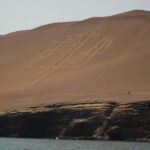
One of the most memorable moments comes before you even reach the main island group. You’ll see El Candelabro, a cultural heritage site with a long history tied to the coastline.
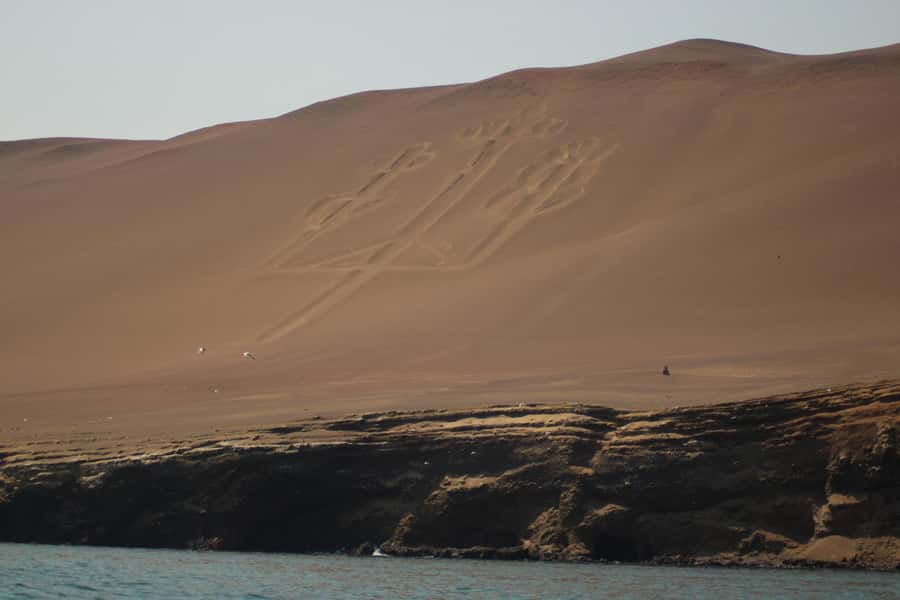
Here are the details that make this more than a quick photo stop: the geoglyph is over 2,500 years old, about 170 meters long, and roughly 1.2 meters deep. That size is hard to grasp until you see it from the water, and the boat angle helps you appreciate the scale.
This is also the kind of sight that works even if you’re not a hardcore history person. You don’t need a lecture to understand what you’re seeing. It’s visible, unusual, and tied directly to the coastal geography you’re traveling through.
The Ballestas Islands You See Up Close: Arco del Deseo and Perfil de Cristo
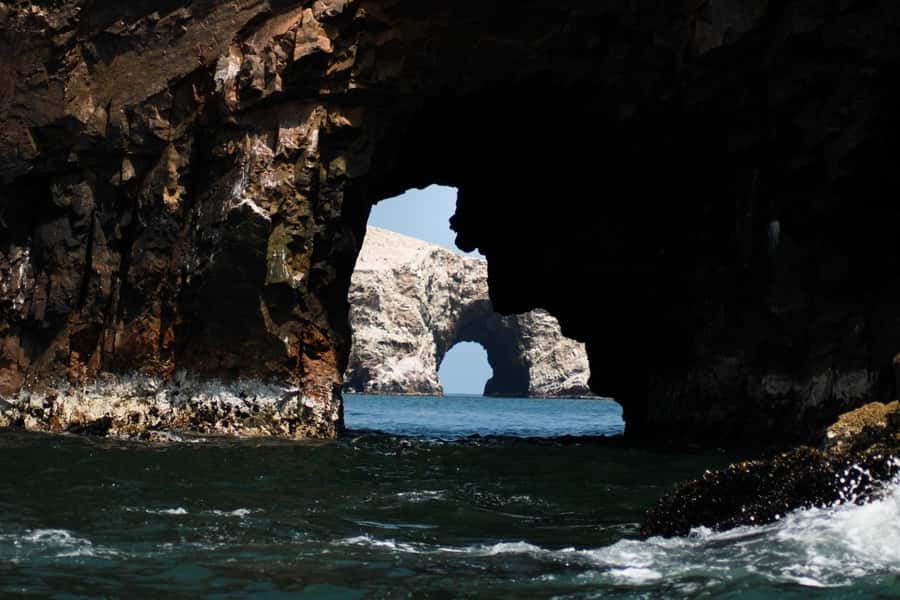
After the El Candelabro segment, the boat moves to the three islands locals refer to as the Ballestas Islands. This part is built around rock carvings and cliff-side monuments.
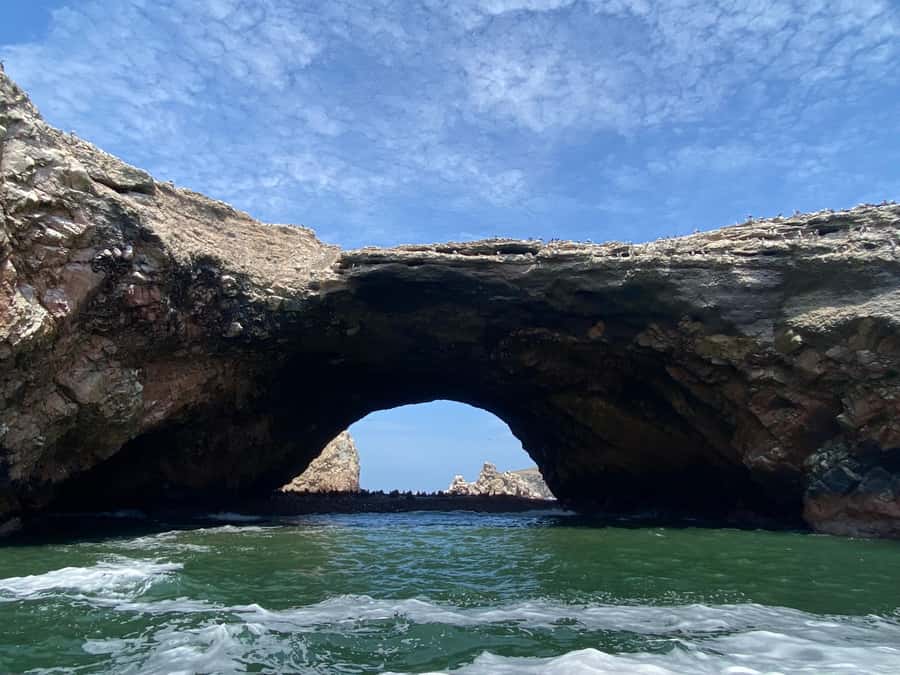
Two named rock features you should listen for are Arco del Deseo (Arch of Desire) and Perfil de Cristo (Profile of Christ). These are not subtle. They’re carved into rock and designed to be seen from a distance—so the coastline itself becomes the stage.
The practical benefit: you get repeated chances to find good viewing angles as the boat positions you. If you’re traveling with a phone camera, you’ll want to grab shots early and again after the boat shifts position.
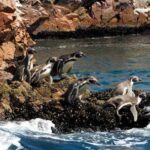
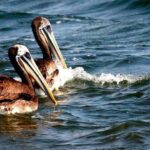
Wildlife on the Water: Penguins, Guano Birds, Sea Lions, Dolphins
This is the reason most people book Ballestas, and it’s also the reason you should keep your eyes up and your camera ready. The tour is designed to spotlight a range of species, not just one.
You’ll look for:
- Guano birds
- Terns
- Humboldt penguins
- Pelicans
- Dolphins
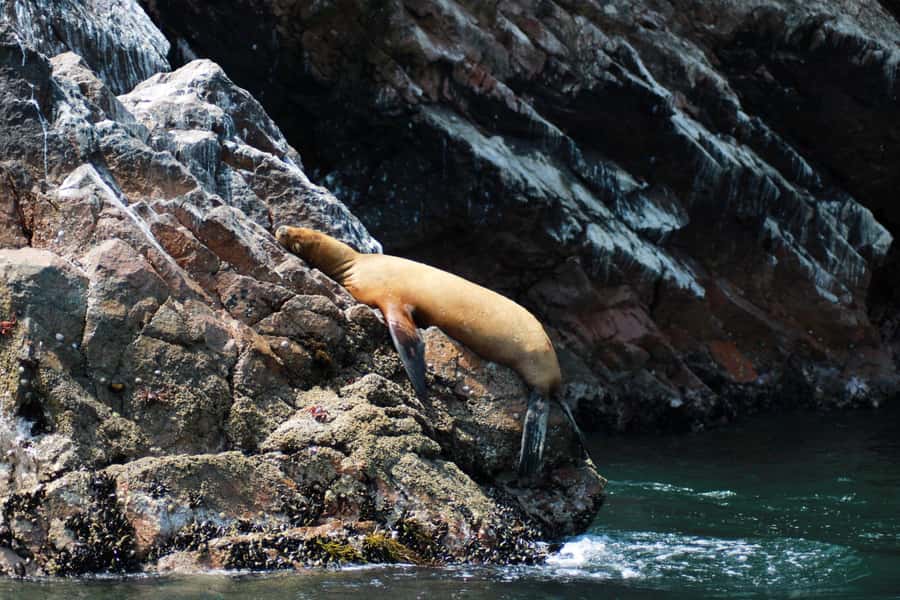
- Sea lions
The way these species overlap is part of what makes the area feel alive. You’re seeing birds tied to the coast, marine mammals on the surface, and penguins in the same overall zone. It’s a lot of biodiversity for a two-hour window.
Realistic note: wildlife sightings depend on conditions and animal behavior. But the itinerary is tailored for observation, so when the animals are active, you’re already in the right place at the right time.



The 45-Minute Break on the Boulevard (10:00 to 10:45)
When the boat tour finishes around 10:00 AM, you get about 45 minutes for a drink or a casual stroll on the boulevard. This break is more than a breather. It’s time to reset your eyes after open-water viewing and to grab water or something small before the reserve stops.
If you’re the type who gets hangry, plan ahead. Food isn’t included later in the day, so this is your chance to top up. Even a simple snack can make beach walking feel easier.
By 10:45 AM, you meet again at the office to board the bus for the second tour block.
Paracas National Reserve by Tourist Bus (11:00 to 3:00)
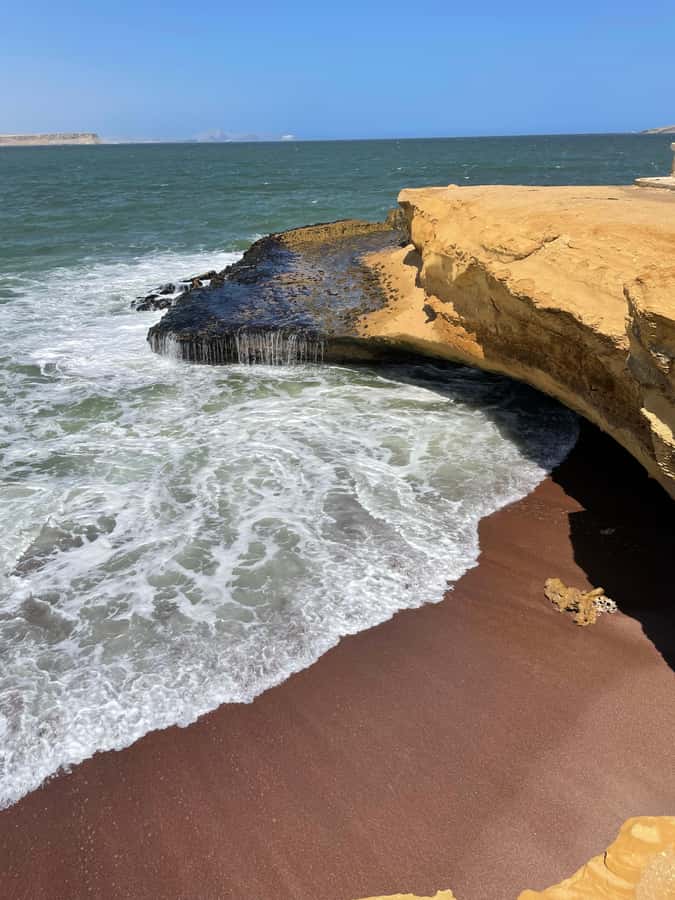
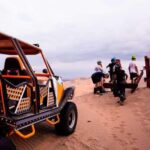
The reserve segment runs from 11:00 AM to about 3:00 PM, with guided stops built for viewpoints and beach scenery. The bus format matters because the reserve is spread out, and you’re more likely to hit the best angles than if you’re trying to stitch it together alone.
The flow is: a viewpoint stop, then several beaches where the scenery changes quickly, and then you head back to Paracas.
This portion is where Paracas shows its personality: cliffs, coves, and color you can spot even from a distance.
Flamingo Viewpoint Stop: Where to Look for the Birds
Early in the reserve tour, you stop at the flamingo viewpoint. This is one of those classic coastal ecology stops. Even if you don’t see flocks instantly, you’re in the right place to watch for them and to understand how the coastal habitat works.
This viewpoint also functions as a mental warm-up for the beach stops. Once you’ve taken in the bird setting, the coastline looks more connected and less like separate scenic postcards.
Yumaque Beach: The Small Crescent Cove
Next up is Yumaque Beach, described as a small, protected crescent-shaped cove about 2 km long. The name comes from the Quechua word for place where you take your hand out, which gives the beach a local meaning beyond just the scenery.
Why I like this stop: protected coves tend to feel calmer. Even if you’re only there briefly, the cove shape helps you see the water and cliffs as a single frame.
If you’re chasing the best photos, come prepared to move quickly when the group stops, because time on each beach is limited.
Playa Roja: Pink Granodiorite and Big Photo Energy
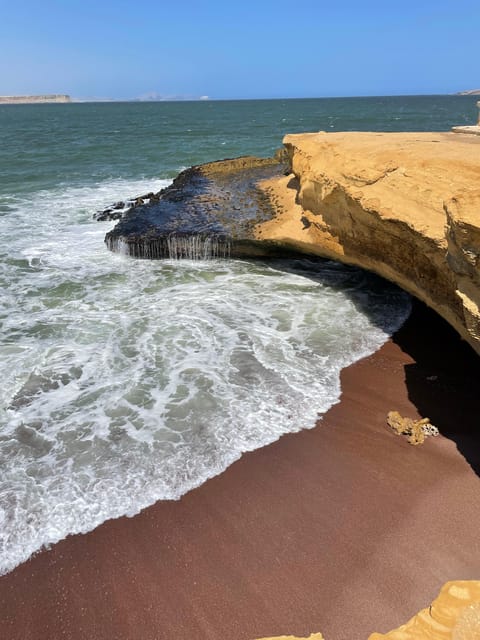
Then you reach Playa Roja, and this is the beach people talk about because of the color. The pink shade comes from igneous pink granodiorite rock that breaks off from the Santa María hill.
This is one of the clearest examples in the day of how geology drives the look of the coast. The color isn’t random. It’s tied to the rock itself, and that gives the photos a reason behind them.
Practical tip: Playa Roja is likely your best chance to get shots that look different from typical beaches. If you only have your phone camera and you want one standout image, start here.
Itmos Peninsula Viewpoint: The Whole Bay in One View
After the beach time, you switch to the Itmos Peninsula viewpoint. The key promise here is the wide shot: you can observe the entire bay of Paracas from this perspective.
This is where you step back and appreciate scale. Boats, beaches, cliffs, and water all start to make sense as part of one coastline. If you’ve been focusing on close-up wildlife and shoreline details, this viewpoint helps you reset.
Bring your attention, not just your camera. The best part is seeing how the reserve’s shape changes the way waves and light hit the coast.
La Mina Beach: Turquoise Water Between Cliffs
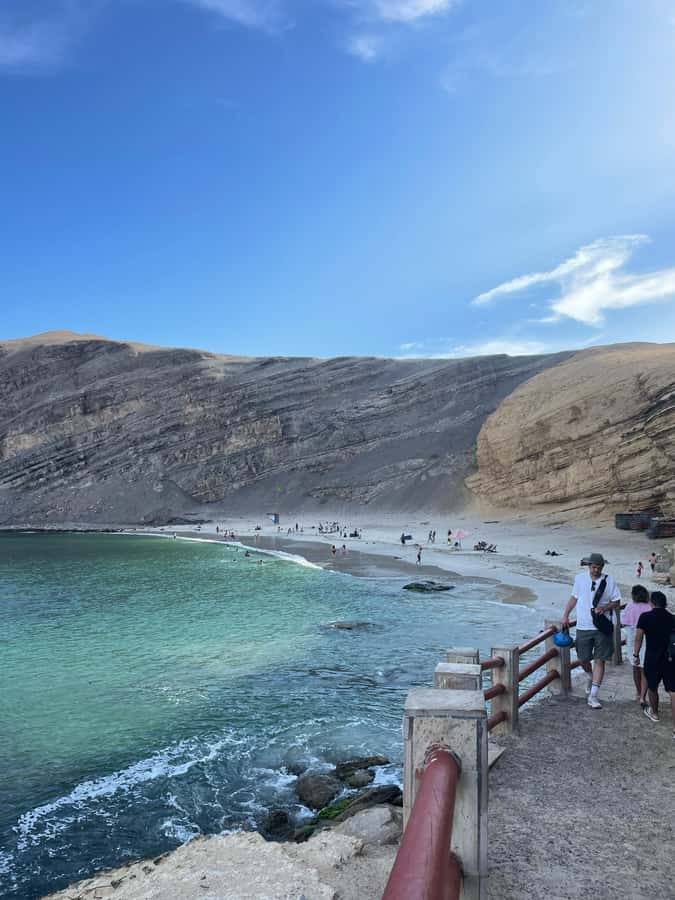
The final beach stop is La Mina Beach, known for its turquoise waters and cliff scenery, protected by the open sea.
This is the stop that often feels the most like a classic postcard. The cliffs frame the water, and the sea protection means the setting looks consistent and photogenic.
It’s also a good place to slow down for a minute. Even if your legs are tired, La Mina’s setting makes it worth standing still and letting your eyes adjust.
Returning to Paracas After the Reserve
Once you finish the beach sequence, the tour returns you to Paracas. By then, you’ve already covered the two major “reasons” to come to this part of Peru: wildlife offshore and dramatic scenery along the reserve coast.
If you still have energy after, it can be a good day to end with something simple—no big plans needed. You’ll likely be mentally full after the boat segment and the multiple beach stops.
Price and Fees: What $39 Really Buys
The tour is listed at $39 per person, and for a full day with a bilingual guide, a modern boat, and transport between areas, that’s a fair baseline.
But here’s the part you should budget for: entrance fees are not included. You may pay:
- SERNANP tourist entrance fee: 11.00 soles
- Pier tourist entrance fee: 5.00 soles
- Paracas National Reserve tourist entrance fee: 11.00 soles
That’s 27.00 soles total in listed fees, per person. Add that to the $39 and you’ll have a clearer picture of your real cost.
Value check: if you want both Ballestas and Paracas National Reserve in one guided day, this is easier than doing two separate arrangements. You get the boat experience plus reserve beach access without stitching everything together yourself.
What’s Included, What to Bring, and Small Rules
This tour includes:
- Life jackets
- An official bilingual tour guide (English and Spanish)
- A modern boat
- Pickup from your hotel in downtown Paracas or from the bus station
What’s not included:
- Entrance fees listed above
- Food and drinks
So pack smart. Since food and drinks aren’t covered, plan to grab something during the 45-minute break or bring your own snacks. Also, the day includes open-water and beach time, so water matters.
One more rule to keep in mind: alcohol and drugs are not allowed. It’s a straightforward wildlife-and-scenery day, so the vibe stays practical.
Language, Timing, and the Most Helpful Logistics
The tour guide works in English and Spanish, which helps if your group has mixed comfort levels.
Timing is also key. The boat runs from 8:00 to 10:00, you get a short boulevard break, then the reserve tour starts at 11:00. That means you’ll want to arrive on time at the start so you don’t miss the early viewing windows.
Meeting point details are clear. You meet next to the Aquamarine hostel, on the corner of Plazuela del Chaco. You should be able to identify the guide by the clothing with the company name and logo.
Also, you’ll be asked for a WhatsApp number with your country code so the operator can stay in touch. That’s useful in a day where timing matters.
Who Should Book This Tour (and Who Might Not)
This is a great fit if you want:
- A guided, time-efficient first taste of Paracas
- Strong wildlife odds at Ballestas plus scenic beaches in the reserve
- A day that moves, but not so fast that you can’t enjoy the views
It’s less ideal if you:
- Need long stretches of free time with no schedule pressure (this day is structured)
- Don’t want to handle extra entrance fees
- Are traveling with very young children. It’s noted as not suitable for babies under 1 year
If you like the idea of a modern boat day followed by multiple reserve viewpoints, you’re in the right place.
Should You Book Paracas: Ballestas Islands and National Reserve?
Yes, if you want the best value combo day in the Paracas area. You’re paying for two big experiences: the wildlife-and-cliffs boat tour and a guided reserve day with named beaches and viewpoints. For many first-timers, that’s the sweet spot.
Book it if:
- You want both Ballestas Islands and Paracas National Reserve without juggling transport
- You care about seeing multiple wildlife types like sea lions and Humboldt penguins
- You want standout scenery stops like Playa Roja and La Mina Beach
Hold off or choose something else if:
- You prefer a single, slower experience instead of a full-day schedule
- You’re trying to avoid entrance fees entirely
- You don’t want to plan for bringing your own snacks since food isn’t included
If your goal is to get maximum Paracas in one day with a guide who keeps you on track, this tour is a solid bet.
FAQ
What time does the Ballestas Islands boat tour run?
The Ballestas Islands tour runs from 8:00 AM to 10:00 AM.
How long is the Paracas National Reserve part of the tour?
The Paracas National Reserve tour runs from about 11:00 AM to 3:00 PM.
Does the price of $39 include entrance fees?
No. The SERNANP entrance fee, pier tourist entrance fee, and Paracas National Reserve tourist entrance fee are not included.
What entrance fees should I expect to pay?
You may need to pay 11.00 soles for the SERNANP tourist entrance fee, 5.00 soles for the pier tourist entrance fee, and 11.00 soles for the Paracas National Reserve tourist entrance fee.
Is food included in the tour?
No. Food and drinks are not included.
What is included in the tour besides transportation?
The tour includes life jackets, an official bilingual tour guide, and a modern boat, plus pickup from downtown Paracas hotels or the bus station.
Where is the meeting point?
The meeting point is next to the Aquamarine hostel on the corner of Plazuela del Chaco.
Are alcohol and drugs allowed?
No. Alcohol and drugs are not allowed.