REVIEW · TRUJILLO
Guided Walking Tour in Trujillo Through the Centuries
Book on Viator →Operated by Guadalupe Parrón Bravo · Bookable on Viator
A walk through centuries sounds simple—but Trujillo makes it work. This guided loop in Trujillo stitches together Francisco Pizarro, Francisco Orellana, the walled medieval core, and the 10th-century Arab Alcazaba, with smart stops built for history and photos.
I like how the tour gives you both the big names and the street-level details, including the mysterious shield tied to the Torre Julia. I also love that you get to climb for real payoff—Torre Julia for views and the castle battlements for a higher look at the walled city.
One possible drawback: several of the best viewpoints are climb-and-enter moments, and entrance tickets to monuments are not included, so you’ll want to budget a little extra.
In This Review
- Key highlights before you go
- A 2-hour tour that turns Trujillo into a timeline
- Meeting at Plaza Mayor and getting oriented fast
- Iglesia de Santa María la Mayor and Torre Julia views
- Castillo de Trujillo: parade ground to battlements
- Plaza Mayor de Trujillo: palaces and medieval houses
- Pizarro House Museum: family story, not just name-dropping
- The medieval walk: strong houses, La Alberca, and Orellana’s home
- Ending at the Arab Alcazaba: the 10th-century finish
- Price and value: what $13.76 buys you
- Who this tour is best for (and who should think twice)
- The guide factor: Guadalupe Parrón Bravo’s storytelling style
- Should you book this Trujillo walking tour?
- FAQ
- How long is the Trujillo Through the Centuries walking tour?
- Where does the tour start and end?
- What time does the tour begin?
- What is the price per person?
- Are monument entrances included in the tour price?
- Which stops are free to enter?
- How big is the group?
- Can I cancel for a full refund?
Key highlights before you go
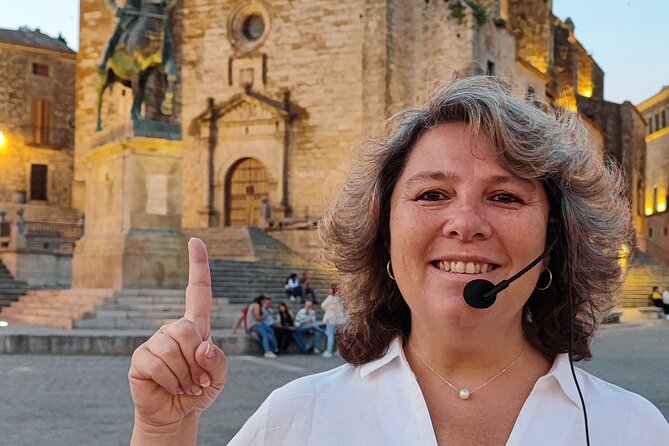
- Small group (max 15): easier questions and less crowd pressure at viewpoints.
- Photo-first planning: recommended camera angles show up naturally along the route.
- Climbable stops: Torre Julia and the castle battlements are built in.
- People-powered history: Francisco Pizarro and Francisco Orellana thread through multiple areas.
- A walk from power to daily life: strong houses, medieval lanes, and the “village” feel get time.
- Official guide, real stories: led by Guadalupe Parrón Bravo, with anecdotes and legends to connect it all.
A 2-hour tour that turns Trujillo into a timeline
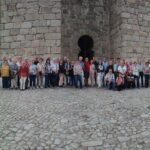
This is the kind of walking tour that keeps your brain in motion, but not in a stressful way. You’re on foot for roughly 2 to 2.5 hours, starting at the equestrian monument to Francisco Pizarro in the Plaza Mayor, then winding through Trujillo’s walled and intramural areas. The route is designed so you don’t just see landmarks—you understand why they mattered.
The value here is the structure. The guide sets the scene from the main square outside the walls, then moves you into the 16th-century world of palaces and conquistador connections, and finally pulls you up into the Middle Ages with strong houses and the Arab fortress ending point. That mix is why a “walking tour” turns into a coherent story.
You can also read our reviews of more tours and experiences in Trujillo.


Meeting at Plaza Mayor and getting oriented fast
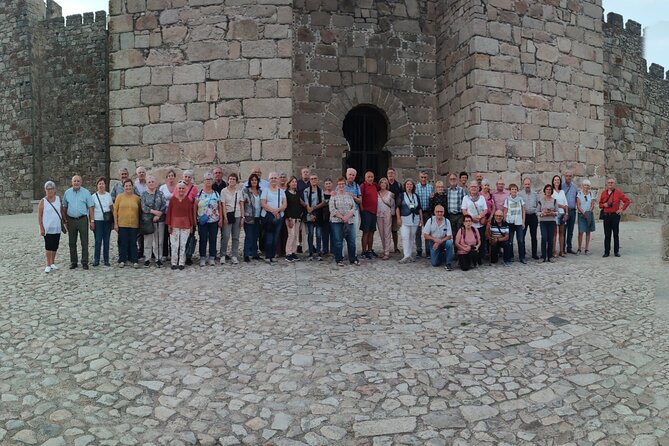
You begin at the Francisco Pizarro Equestrian Monument, at Plaza Mayor, 14 (start time: 12:00 pm). From there, you get a historical review to situate the city in time. That matters more than it sounds: Trujillo is compact, but it has layers—medieval walls, Renaissance-era influence, and that earlier Arab presence.
Expect the tour to follow the city’s geography up and inward. You’ll pass key reference points—like the 16th-century palaces and mentions such as the Church of San Martín—as you move from the open square into the tighter intramural feel.
Also, the tour includes a stop that’s a little unexpected: you’ll see the Trujillo cinema, tied to modern filming (the series La Casa del Dragón is specifically mentioned). Even if you’re not a screen buff, it’s a fun way to notice how old streets still attract new stories.
Iglesia de Santa María la Mayor and Torre Julia views
One of the biggest “yes, do the climb” moments is at Iglesia de Santa María la Mayor. You can enter the church, then climb the Torre Julia for sweeping views over the walled city and the surrounding area.
Why this stop works:
- You get a vertical perspective that makes the walls and street layout easier to picture.
- You’re learning while looking—so the city’s shape becomes part of the information, not just a backdrop.
- The tour also ties in an intriguing visual detail: the mysterious shield associated with the tower.
The stop is about 15 minutes, and the key thing to know is that entrance is not included. If you dislike paying extra during tours, this is the first place you’ll notice that policy.
Practical tip: wear shoes you trust. You’ll be climbing, and you don’t want to spend half the time thinking about your footing.
Castillo de Trujillo: parade ground to battlements
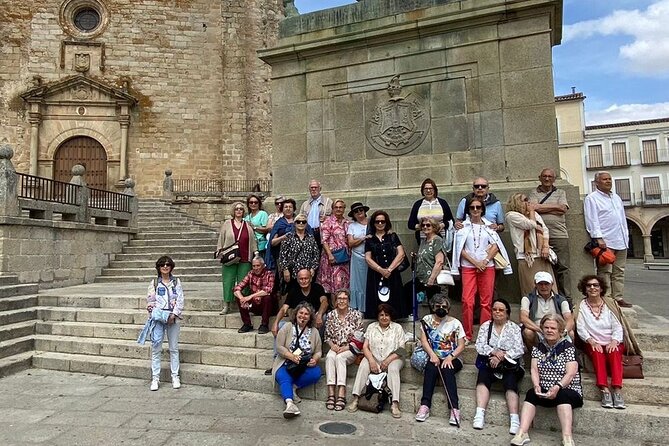
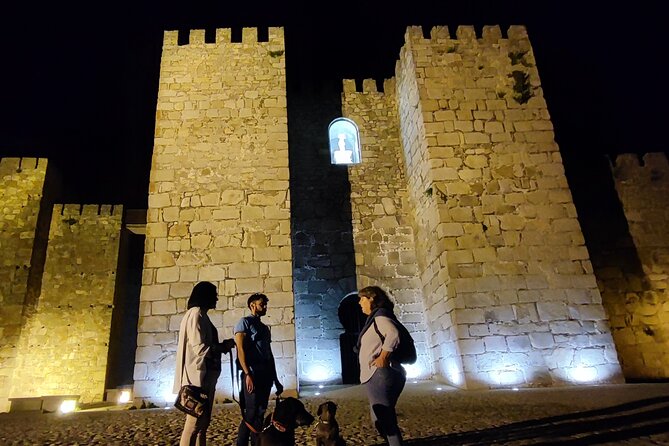
Next comes the Castillo de Trujillo. Here you’re not just looking from afar. You can enter the parade ground and climb up to the battlements so you can walk the upper perimeter of the castle.
This is one of the tour’s best “moment-to-moment” parts because you get movement and scale at the same time. Battlements aren’t abstract when you’re actually up there with the view opening around you. It also gives context for why Trujillo could hold its ground—literally from above.
Timing is around 20 minutes. Again, admission ticket is not included, so plan for the extra fee. If you have limited mobility or a low comfort level with stairs or uneven stone, this is the main segment to consider when you decide whether the tour fits you.
Plaza Mayor de Trujillo: palaces and medieval houses
Then you return to the urban center: Plaza Mayor de Trujillo is where you slow down and let the architecture talk. The tour spends about 30 minutes here, and it’s built around what you can actually see at street level—palaces and medieval houses grouped into one of the city’s most important public spaces.
This stop is valuable because it resets your bearings. After climbs and castle edges, the plaza brings you back to scale: the kind of place where people gathered, business happened, and the city’s power showed itself through buildings.
It’s also one of the easier segments from a logistics standpoint: the plaza itself is listed as free, so you’re not juggling ticket lines while enjoying the architecture.
You can also read our reviews of more guided tours in Trujillo

Pizarro House Museum: family story, not just name-dropping
A short but pointed stop is the Pizarro House Museum. You’ll hear the story of the Pizarro family, and this is where the tour turns from general history into a more personal connection to the individuals tied to the city.
The museum time is around 10 minutes, which tells you what kind of visit this is: not a full museum afternoon, but a guided narrative stop that plugs into everything else you’ve been hearing. That makes sense for a walking tour. You leave with the name in your head plus the reason it’s tied to Trujillo’s identity.
As with other monument entries, admission is not included. If you’re doing this tour during a trip budget month, this is where that extra cost adds up. But the time allocation also keeps it from feeling like you’re paying for a long indoor detour.
The medieval walk: strong houses, La Alberca, and Orellana’s home
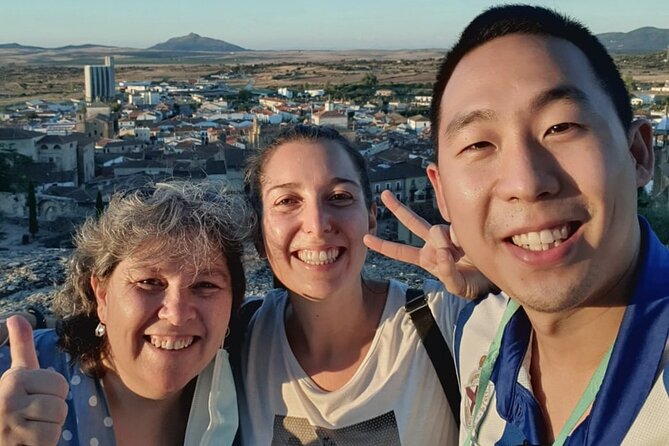
The final chunk is where the tour becomes most “Trujillo,” in the best way. You’ll walk through the medieval village, passing the remaining strong houses (Casas Fuertes) and areas tied to key figures like Francisco de Orellana.
This portion is about 1 hour, and it’s listed as free admission, which helps balance the paid stops earlier. You’ll also pass by La Alberca (a pool mentioned in the route description) and move through the maze-like feel of intramural streets.
A few things to watch for here:
- The guide’s anecdotes matter, because in this section you’re surrounded by buildings that could look similar unless someone helps you decode what you’re seeing.
- The tour mentions the house of Francisco Orellana and the presence of houses of the hidalgos. That’s the social layer—who lived where, and how the city was organized by status.
This is also where photo opportunities start feeling less like set pieces and more like everyday scenes—because the strongest views often happen at corners, not only at towers.
Ending at the Arab Alcazaba: the 10th-century finish
Your tour ends at Trujillo Alcazaba, at Pl. del Castillo, 1. The route description ties the Alcazaba to the 10th century, presenting it as the Arab Castle of Trujillo.
Ending here does a smart thing. After the climbs, the plaza, the Pizarro museum story, and the medieval lanes, you get a “step back” in time. It helps you understand the city’s layers rather than treating everything as one continuous style.
You’ll likely leave with the feeling that Trujillo didn’t just change rulers—it changed its architecture and defensive logic. And because the tour has been linking people and places the whole way, that final stop lands with more meaning than a generic finish line.
Price and value: what $13.76 buys you
At $13.76 per person, this tour is priced to be accessible, especially because it’s led by an official tourist guide and capped at 15 travelers. For this price, what you’re really paying for is interpretation: the ordering of centuries into one walking path, plus the guided anecdotes and legends that connect the sites.
What you should treat as “extra” is entrances. Several monument moments are not included—notably the Torre Julia experience at Santa María la Mayor and the Castillo access/battlements segment, plus the Pizarro House Museum. So the all-in cost depends on what you choose to pay to enter.
Still, the route is structured so you get plenty for the base ticket: the Plaza Mayor time and the longer final medieval stroll are free of monument admission.
Who this tour is best for (and who should think twice)
This is a great fit if:
- You like walking tours that explain the why behind the buildings.
- You want viewpoints you can physically earn through climbing.
- You’re interested in the city’s connections to Francisco Pizarro and Francisco Orellana.
- You prefer smaller groups and a guide who can keep the pace moving without cutting the story.
Think twice if:
- You strongly dislike paying separate entrance fees to monuments.
- Stairs and battlement climbing are a concern for you. The tour includes climbs at both the church tower area and the castle battlements.
The operator notes that service animals are allowed and that most travelers can participate, which is reassuring. But the climb-and-enter nature of the two viewpoint stops is the main practical factor.
The guide factor: Guadalupe Parrón Bravo’s storytelling style
The guide for this experience is Guadalupe Parrón Bravo. The tour’s reviews emphasize that her explanations bring out both the corners of Trujillo and the key constructions people come to see. That tracks with the design of the route: there are many moments where the building alone might not explain itself fast enough.
I especially appreciate when a walking tour doesn’t just list dates. Here, the guide layers anecdotes and legends over the “when” and “who,” so the city feels lived-in instead of like a worksheet. That style also helps during the longer medieval stretch, where the streets blur unless someone keeps pointing out what’s important.
Should you book this Trujillo walking tour?
I’d book it if you want a compact way to understand Trujillo’s main eras—Renaissance power, medieval defense, and the 10th-century Arab Alcazaba—without turning your day into a museum marathon. The small group size, the climbable viewpoints, and the fact that a lot of time is spent on street-level architecture make it good value for $13.76.
Skip or plan carefully if you don’t want extra monument fees or climbing. If you’re happy paying entrances and you’re comfortable with stairs, this is one of the most efficient ways to get your bearings in Trujillo and come away with a real timeline in your head.
FAQ
How long is the Trujillo Through the Centuries walking tour?
It lasts about 2 hours to 2 hours 30 minutes.
Where does the tour start and end?
It starts at the Francisco Pizarro Equestrian Monument, Pl. Mayor, 14 and ends at Trujillo Alcazaba, Pl. del Castillo, 1.
What time does the tour begin?
The listed start time is 12:00 pm.
What is the price per person?
The price is $13.76 per person.
Are monument entrances included in the tour price?
No. The tour includes an official guide, but entrance tickets to monuments are not included.
Which stops are free to enter?
The Plaza Mayor de Trujillo stop and the final Medieval Village/strong houses/Laberca/Orellana/hidalgos section are listed as admission free.
How big is the group?
The tour has a maximum of 15 travelers.
Can I cancel for a full refund?
Yes—free cancellation is offered if you cancel at least 24 hours in advance for a full refund.