REVIEW · TRUJILLO
Guided Tour of Historic and Monumental Trujillo
Book on Viator →Operated by TurismoTrujillo.es Actividades Turisticas · Bookable on Viator
Trujillo gives you history in full HD. This guided walk threads Plaza Mayor, palaces, churches, walls, and castle views into one easy loop, with your guide pulling the story lines together as you go. I especially liked how the route links big-name power (like the Pizarros) to the everyday medieval town feel.
Two things I really love: first, the pacing. You get quick stops where each place has a clear point, so you’re not stuck waiting around for one long exhibit. Second, the photography help. Our guide, Ana, nudged us toward the most interesting corners so you know where to stand before the street blocks your shot.
One drawback to consider: it’s a 2-hour circuit with lots of brief look-ins (some stops are just a few minutes). If you want lingering, sit-down museum time, you’ll feel the speed and you may want to return later on your own.
In This Review
- Key highlights worth planning around
- Plaza Mayor first: your bearings, then the power
- Plaza Mayor corners to Palacio de San Carlos’s Plateresque look
- Walking the historic center and wall world
- Strong houses, palaces, and the people behind the stones
- Trujillo’s Pizarro museum stop and Santa María la Mayor’s presence
- Gates, redoubts, and the Triumph Gate storyline
- The Escobar house stop: seeds, Peru, and why it works on this route
- Why the thematic routes matter (Isabel la Católica, Carlos V, Film Stages)
- Price and value: $13.90 for a 2-hour “town circuit”
- Should you book this guided tour of Historic and Monumental Trujillo?
- FAQ
- How long is the guided tour in Trujillo?
- Where does the tour start?
- What does the tour cost?
- Do I get a ticket on my phone?
- How big is the group?
- Is admission free at the stops?
- What’s the cancellation policy?
Key highlights worth planning around
- Ana’s narration keeps the medieval town coherent, from plazas to fortifications.
- Photo-minded stops make it easier to frame Trujillo’s best angles on a short schedule.
- Plaza Mayor to the wall circuit covers the city’s power centers without backtracking.
- Castle + water storage: you’ll see the Muslim alcazaba setting and an aljibe tied to the X to XII centuries.
- Local “routes of the Discoverers” themes bring in Isabel la Católica, Carlos V, and even Film Stages ideas while you walk.
Plaza Mayor first: your bearings, then the power
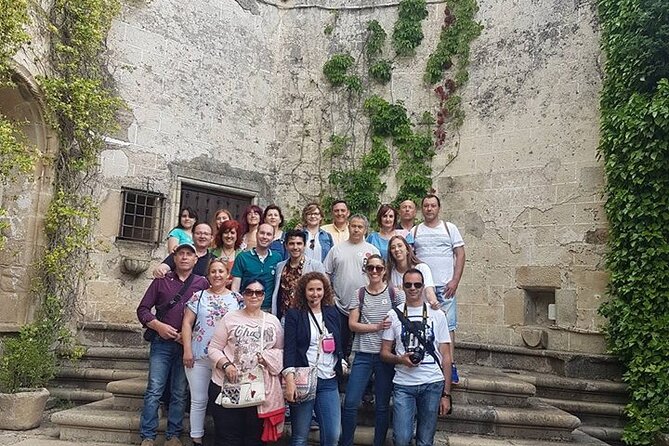
The tour starts at TurismoTrujillo.es Actividades Turísticas, right at Pl. Mayor, 20. That’s a smart move because Plaza Mayor is the kind of place where you immediately understand the town’s rhythm: square energy, grand facades, and then narrow lanes that peel away into medieval territory.
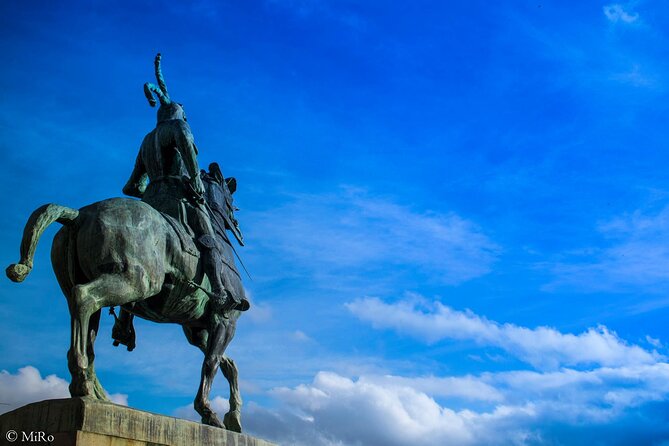
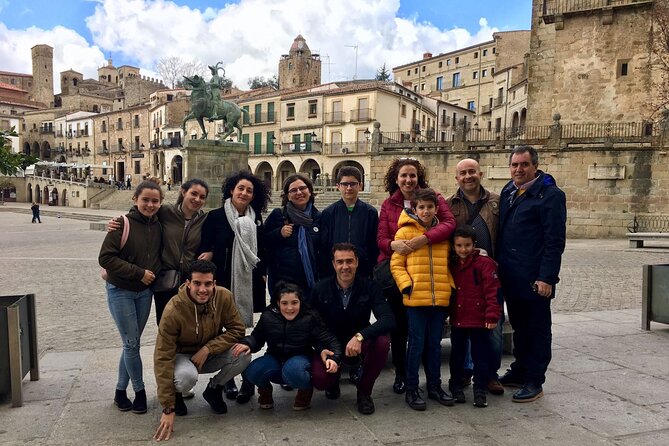
Your first stop is Plaza Mayor itself, with Renaissance palaces and the equestrian sculpture of Francisco Pizarro. It’s a strong opener. You’re not just ticking boxes—you’re seeing how a conquistador is literally built into the city’s public face.
Then you continue around the same square area, including how the square was built in the 16th century, starting in 1562 by order of Hernando Pizarro. It’s quick, but it gives you context fast—ideal if this is your first day in Trujillo and you don’t want to spend it guessing.
You can also read our reviews of more guided tours in Trujillo

Plaza Mayor corners to Palacio de San Carlos’s Plateresque look
From the square, the route moves you to the Palacio de San Carlos, also known as the Palacio de los Vargas-Carvajal. This is one of those buildings that’s worth seeing for the way it preserves an original Plateresque façade, while also offering another façade toward Domingo Street.
Even if you’re not an architecture person, you’ll feel the difference because the guide points out what to notice. It turns a street stop into a “look closer” moment, not just a photo pause.
The tour also keeps the Pizarro thread close to the surface. Right near here, you’ll hit the Francisco Pizarro equestrian monument again as a landmark moment before you transition into the historic center’s tighter maze.
Walking the historic center and wall world
Once you’re in the historic center, the tour becomes less about single buildings and more about the whole medieval system: Muslim alcazaba influences and walls, strong houses, manor houses, palaces, convents, and churches. That mix matters because Trujillo wasn’t built as one thing—it evolved as a fortified town with layers of power.
This is where the guide’s “route logic” really helps. You don’t just get names; you get an order to how the town developed and why these sites cluster where they do. It’s the difference between seeing a castle and understanding why the castle mattered.
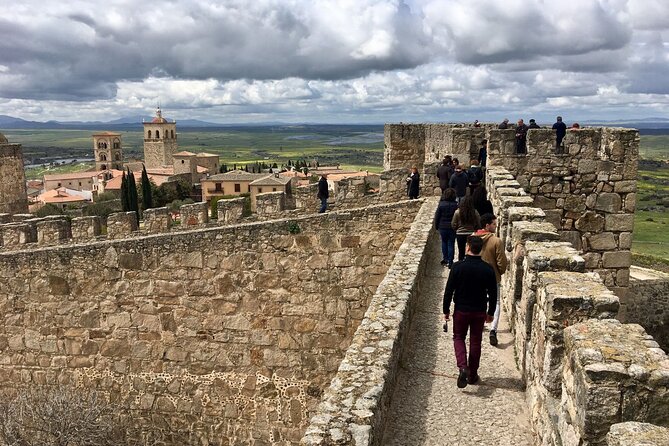
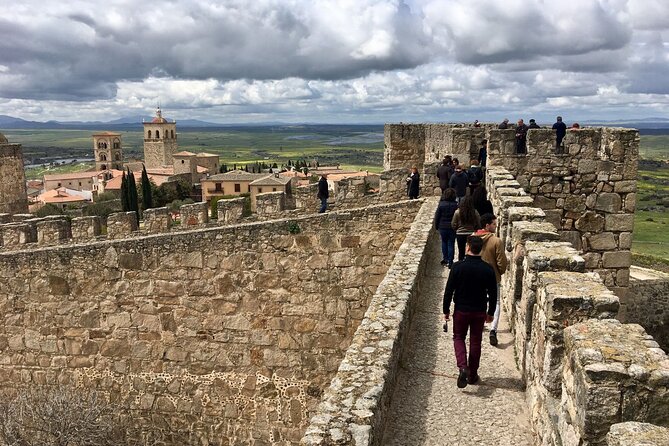
One of your biggest stops here is the Castillo de Trujillo. You’ll be looking at the Muslim alcazaba and an aljibe tied to the X to XII centuries. Even from an exterior viewpoint, this combo lands well: fortification plus water storage tells you the site was built to last, not just to pose.
As you move along, you also see how defense shaped movement. The tour includes gates and defensive structures, which turns the “where do I walk next?” problem into a guided story: Puerta de San Andrés, the Bejarano Redoubt, and the Triumph Gate all fit into a defensive logic.
Strong houses, palaces, and the people behind the stones
Trujillo’s medieval character shows up in its strong houses and manor-like residences, not just in the dramatic castle moments. The tour includes Casa-Fuerte de Luis de Chaves, El Viejo, a strong house from the 13th and 14th centuries. It’s tied to a major political detail: the Catholic Monarchs stayed here during the Wars of Succession.
It’s an easy stop to underestimate because it’s not the biggest structure in town—but it’s exactly the kind of place that makes a guided walk valuable. It connects “this building exists” to “someone important lived here,” without turning the visit into a lecture marathon.
Another quick but interesting moment is the Palacio Viejo o de la Cadena, described as a XIII-century church founded by the Military Order of Santiago. Even if you only get a short viewing window, the guide’s framing helps you understand why you’re seeing a religious structure linked to military history.
Trujillo’s Pizarro museum stop and Santa María la Mayor’s presence
You’ll also stop at the Pizarro House Museum, described as a XV-century manor house of Hidalgo. It’s a “place-based” stop, meaning it helps you connect the Pizarro legend to a specific local setting rather than keeping everything abstract.
Then comes Iglesia de Santa Maria la Mayor, declared a Gothic church National Monument, with previous Romanesque remains such as the Torre Julia. One standout detail here is the Spanish-Flemish altarpiece by Fernando Gallego. It’s the kind of church stop that changes your sense of scale: after all the squares and walls, this one feels like a civic anchor.
If you’re traveling with people who get tired of outdoors-only walks, this church moment is often the mental reset. You get a shift from defensive geometry and street turns to a more monumental religious focus.


Gates, redoubts, and the Triumph Gate storyline
Trujillo’s wall system is one of the best parts of this experience, especially if you like fortifications that explain themselves. You’ll see the Triumph Gate (Puerta del Triunfo) and then the Bejarano Redoubt, described as a strong house from the 13th century that defended the Puerta del Triunfo.
That “defended the gate” piece is key. It helps you visualize the town as an active defense system rather than a museum piece. You start to see how small distances on a map translate into real control points in real life.
The tour also includes Puerta de San Andrés, one of the seven gates of the wall next to the Church of San Andrés. It’s short, but it gives you a clean takeaway: these gates weren’t random openings. They were intentional funnels for people, trade, and protection.
The Escobar house stop: seeds, Peru, and why it works on this route
One of the most memorable human-history moments on the walk is Casa-Fuerte de los Escobar. It’s a 15th-century military construction where María de Escobar lived.
The guide ties her to a striking detail: she’s described as the first woman who brought wheat and barley seeds to Peru. Even if that detail is the headline, the real value is how it makes the tour feel connected to something bigger than Trujillo’s stones. The tour doesn’t treat the town as isolated; it treats the town as part of broader historical movement.
If you like stories that are both specific and surprising, this is one stop you’ll probably remember later when you’re back in your hotel, paging through photos.
Why the thematic routes matter (Isabel la Católica, Carlos V, Film Stages)
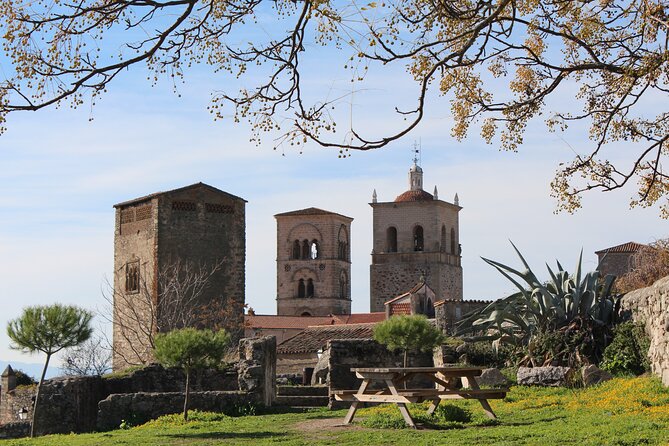
The walk isn’t only a list of monuments. It’s built around thematic routes tied to broader Spanish history and cultural themes. You’ll hear connections to the Route of Isabel la Católica, the Route of Carlos V, the Thematic Routes of the Discoverers, and even Film Stages as part of how the guide frames the places you see.
For you, that means the tour helps you make sense of what otherwise might look like separate stops. A gate becomes more than a gate. A plaza becomes more than a photo spot. The guide’s commentary helps you turn scattered names into a connected timeline you can actually carry with you after the walk ends.
Price and value: $13.90 for a 2-hour “town circuit”
At $13.90 per person for about 2 hours, this tour is a solid value if you like structured sightseeing. You’re also getting a mobile ticket, which saves time at meeting points and helps you travel lighter.
One practical advantage: the group size is capped at 30 travelers. That’s large enough to be organized, but small enough that a guide like Ana can still keep the story moving and help you spot what’s worth photographing.
Also, the itinerary notes “admission ticket free” for the stops. That doesn’t automatically mean every interior is open for long visits, but it does mean you’re not hit with surprise entry costs at multiple sites. For a walking tour, that’s a big deal.
If you’re making decisions based on timing, note that the tour is booked on average about 8 days in advance. If your schedule is tight, it’s smart to book sooner rather than treating it like a last-minute wander.
Should you book this guided tour of Historic and Monumental Trujillo?
Book it if you want the fastest path to understanding Trujillo’s layout: Plaza Mayor to the walls to the castle, with palaces and churches that explain the town’s medieval power. I also think it’s a great choice if you care about photos but don’t want to spend your visit guessing where the best angles are.
Skip it—or plan extra time—if your idea of a perfect visit is long, quiet museum-style stops. This is a short circuit with many quick looks, and the pace is part of the design.
If you’re deciding between doing this and wandering alone, I’d pick the guided walk first. Then, later, you can return on your own to the specific places that grabbed you most.
FAQ
How long is the guided tour in Trujillo?
The tour lasts about 2 hours.
Where does the tour start?
You meet at TurismoTrujillo.es Actividades Turísticas, Pl. Mayor, 20, 10200 Trujillo, Cáceres, Spain.
What does the tour cost?
The price is $13.90 per person.
Do I get a ticket on my phone?
Yes. It’s listed as a mobile ticket.
How big is the group?
The tour has a maximum of 30 travelers.
Is admission free at the stops?
The itinerary indicates admission ticket free for the stops included.
What’s the cancellation policy?
You can cancel for free up to 24 hours in advance for a full refund. Changes made less than 24 hours before the start time aren’t accepted.