REVIEW · OLLANTAYTAMBO
From Cusco: Ollantaytambo Fortress Half-Day Private Tour
Book on GetYourGuide →Operated by LimaTours · Bookable on GetYourGuide
Ollantaytambo feels like Inca time travel. You’ll have a private bilingual guide and spend about 5 hours exploring the fortress complex and then the living town—cobblestone streets, ruins everywhere, and agricultural terraces you can still read like a map. I especially love the crisp stonework and viewpoints, and I also like that you get to experience Ollantaytambo at a slow, human pace rather than racing through.
You’ll climb about 150 steps between the lower and upper parts of the fortress, and that’s the one thing to think about if you’re not into stairs. Comfortable shoes matter.
This half-day outing is built for people who want Sacred Valley culture without committing to a full day. You’ll also learn why this place mattered—religious, military, and agricultural—and how the town layout still mirrors Inca planning, right down to shared patios and narrow streets that run toward the Urubamba River.
In This Review
- Key Things You’ll Notice on This Ollantaytambo Tour
- From Cusco to the Sacred Valley: Why Ollantaytambo Matters
- The Fortress Walk: 150 Steps, Temple of the Sun, and Ten Niches
- Ollantaytambo’s Strategy Story: From Manco Inca to the Spanish
- Cobblestones, Ruins, and Terraces: What You’ll Appreciate at Leisure
- The Town After the Fortress: Inca Urban Planning You Can Still Walk Through
- Private Tour Value: What You Pay for and Why It’s Reasonable
- What to Bring, and What to Plan For on the Ground
- Should You Book This Cusco to Ollantaytambo Half-Day Private Tour?
- FAQ
- How long is the Ollantaytambo Fortress half-day private tour?
- What does the tour cost?
- Is hotel pickup and drop-off included from Cusco?
- Do I need the Cusco Tourist Ticket (BTC) to visit the fortress?
- How many steps do you climb during the fortress visit?
- Is this tour private?
- What languages are the guides?
- Is the tour wheelchair accessible?
- What should I bring?
- Is free cancellation available?
Key Things You’ll Notice on This Ollantaytambo Tour
- A private 5-hour format with hotel pickup in central Cusco, so you’re not stuck with a big herd.
- A 150-step climb that leads to the fortress highlights like the Temple of the Sun and the Terrace of the Ten Niches.
- Inca power in stone: Ollantaytambo acted as a religious, military, and agricultural hub.
- Temple of the Sun details: six pink granite monoliths, over 50 tons, that anchor the whole story here.
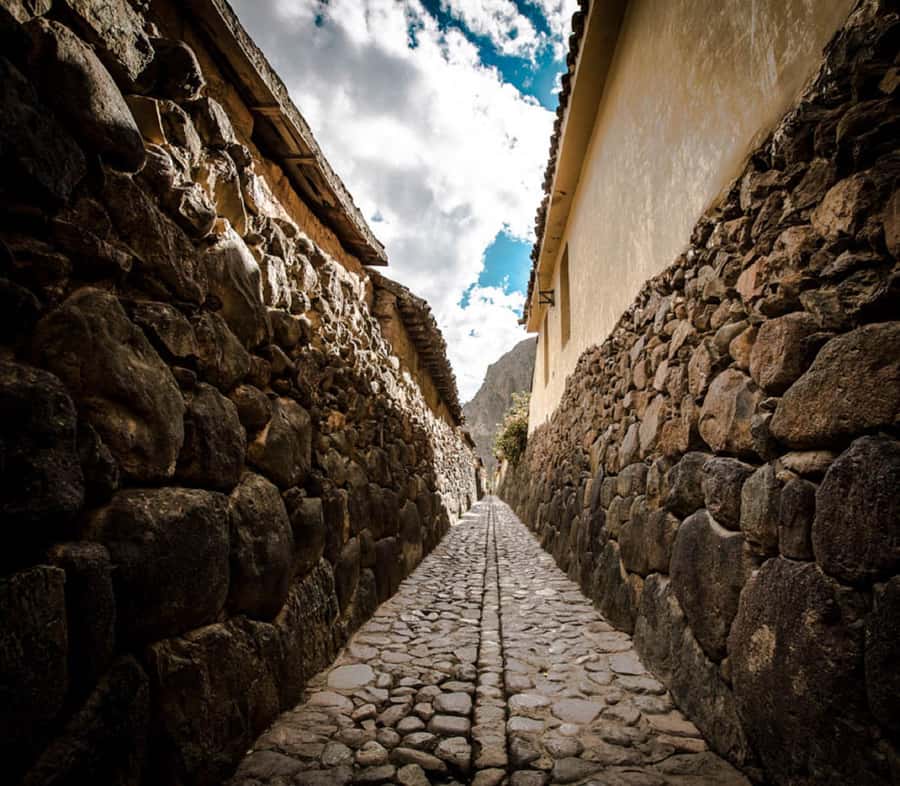
- Town planning you can still see in daily life, with narrow streets and houses organized around shared central patios.
- A name with meaning: Ollantaytambo comes from Quechua, Ulla-nta-wi, meaning place to see down.
From Cusco to the Sacred Valley: Why Ollantaytambo Matters
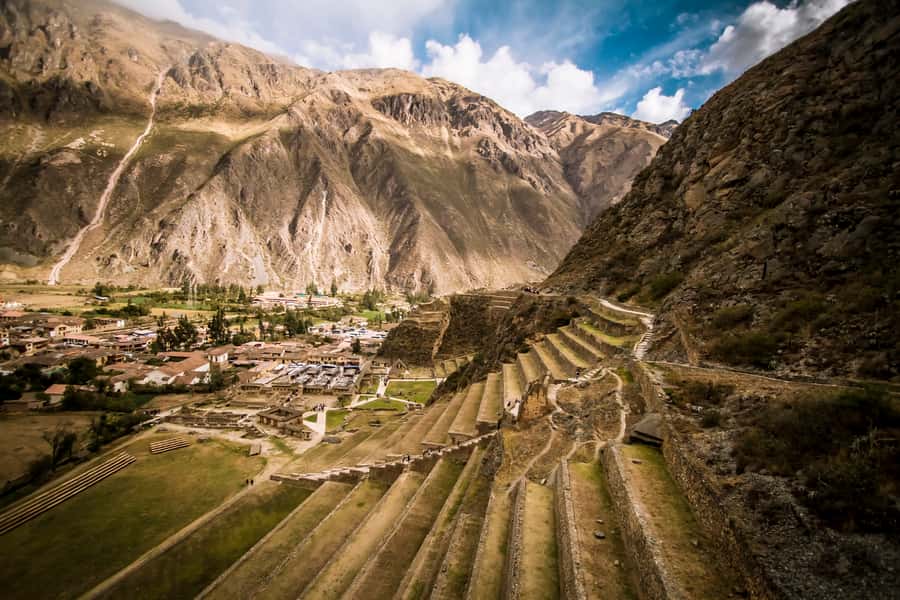
Ollantaytambo sits in the Sacred Valley region, about 80 km from Cusco in Urubamba province. Even if you don’t know much Inca archaeology, you can feel why it became such a strategic location: it’s the kind of place where controlling the terrain also means controlling movement.
The fortress complex is often described in three roles, and those roles show up as you walk. It was religious, with major ceremonial structures; military, with imposing walls and commanding platforms; and agricultural, because survival here depended on terraces, water management, and productive land. That mix is exactly why this site doesn’t feel like a single monument. It feels like a system.
And then there’s the human side. After the fortress, you visit Ollantaytambo town, where residents still maintain traditions inherited from their Inca ancestors. That continuity is rare in South America, and it makes your stops feel less like a museum and more like a community that happens to contain world-class ruins.
You can also read our reviews of more private tours in Ollantaytambo
The Fortress Walk: 150 Steps, Temple of the Sun, and Ten Niches
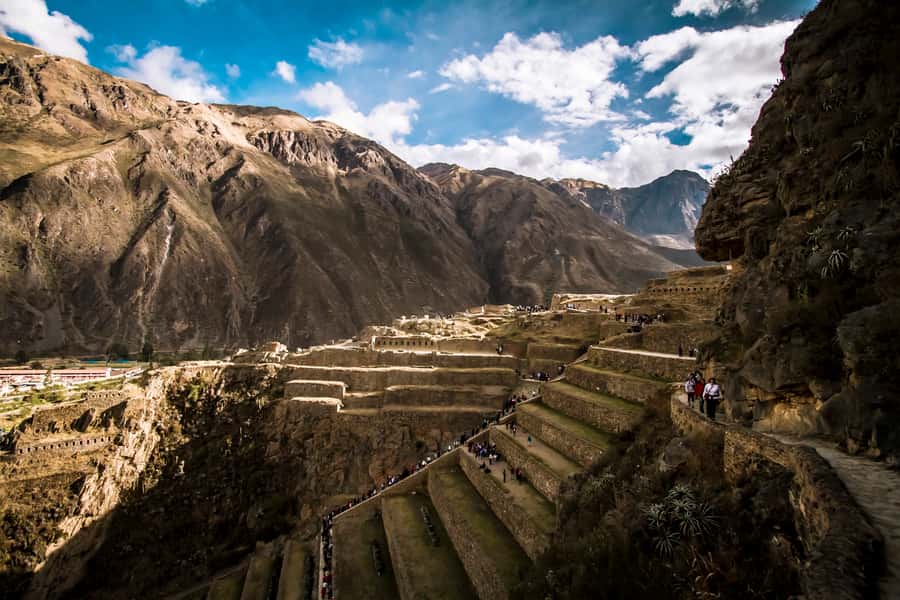
Your tour centers on the Ollantaytambo archaeological complex, and it’s structured around a key physical feature: the climb of roughly 150 steps separating the fortress summit from the lower part. Even on a half-day schedule, this is the moment where you’ll want to slow down. Not because it’s extreme—just because stairs change how you take in stonework and sightlines. Your legs will work, and your eyes will follow.
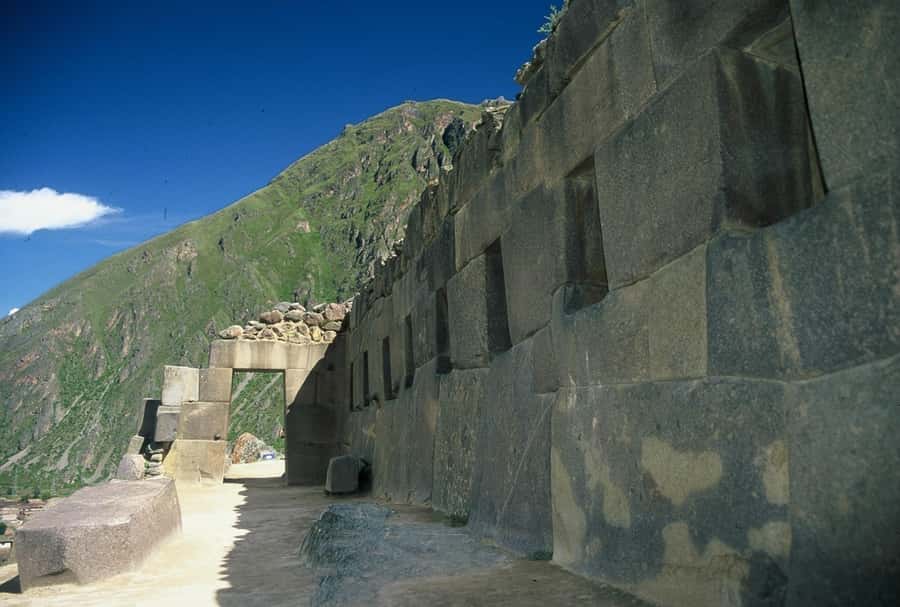
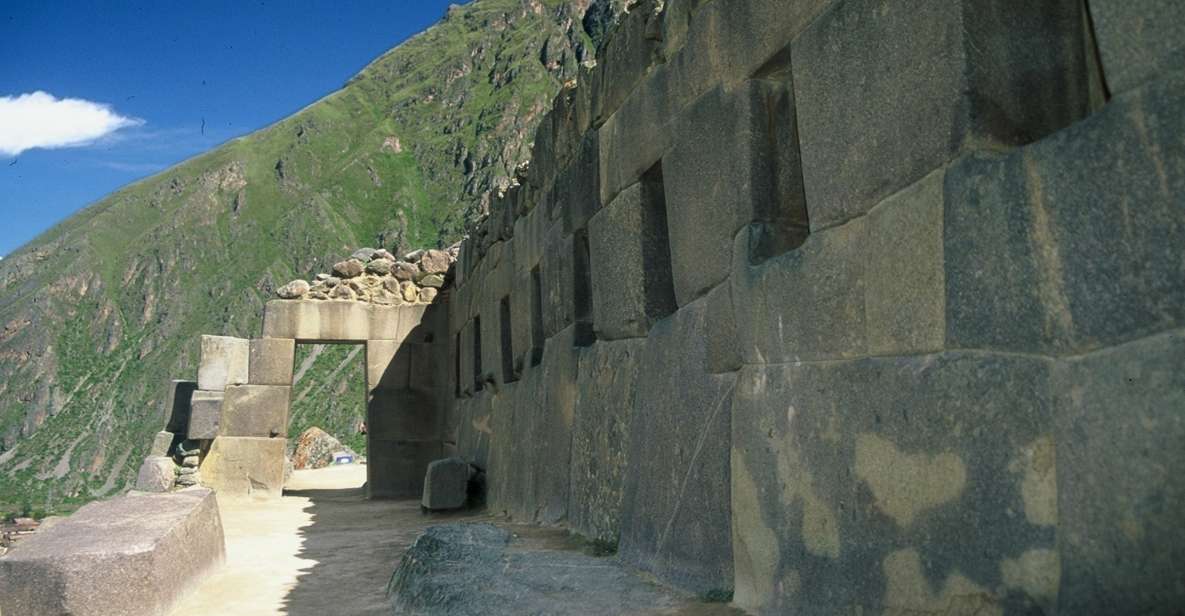
Once you’re up, the Temple of the Sun is one of the anchors. You’ll see the famed configuration of six huge monoliths of pink granite, each so massive that the total weight is said to be more than 50 tons. That detail matters because it explains why Inca engineering still grabs people today. This wasn’t decoration. It was a centerpiece meant to endure and to signify power.
You’ll also focus on the Terrace of the Ten Niches, another of the fortress’s signature elements. Niches are one of those features that sound simple until you’re standing in the space itself. Then you start to understand the logic: a rhythm of architectural forms, planned on purpose, placed to interact with light, movement, and the ceremonial layout.
The overall feel is imposing. The fortress includes stoneworked platforms and major buildings standing over four meters high. That scale is part of the “military” story, but it’s also part of why the place still feels dramatic centuries later.
Ollantaytambo’s Strategy Story: From Manco Inca to the Spanish
Inca history here isn’t just names in a caption. You’re given context that makes the stonework feel less abstract. Ollantaytambo is remembered for a major confrontation: Manco Inca faced Spanish troops led by Hernando Pizarro, and the Inca forces were victorious.
That matters for your understanding as you move around. When you stand in a defensive position, or near platforms that control approaches, you can start connecting the dots between geography and history. You’re not just touring ruins; you’re walking through a setting where decisions and tactics mattered.
This is also where the complex’s multiple-purpose design makes sense. A site that functions religiously often also functions socially and politically. The same place that gathers for ceremony can also serve as a center of governance and defense, while agricultural terraces keep people fed. Ollantaytambo preserved that interlocking structure—religious, military, agricultural—over time.
Cobblestones, Ruins, and Terraces: What You’ll Appreciate at Leisure
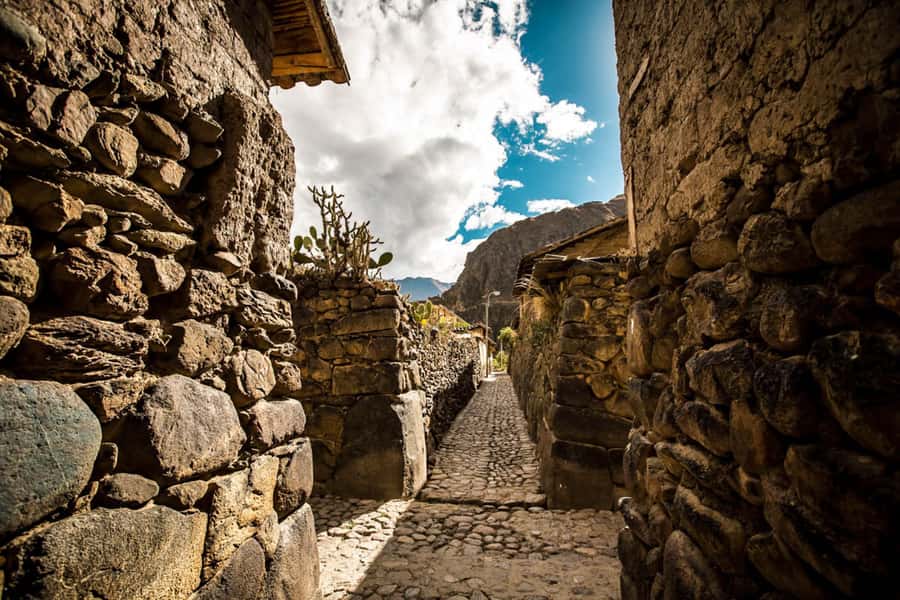
After the fortress focal points, the experience continues through the cobbled and winding streets, with ruins scattered everywhere and terraces that you can take your time noticing. This is where you benefit from the half-day length. You’re not forced into a sprint, and that helps you actually look at the details that make Inca urban design feel different from what you might expect.
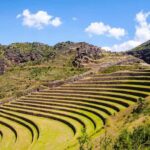
The agricultural side is especially worth your attention. Inca terraces weren’t just scenic. They were practical engineering to manage water and grow crops where nature didn’t cooperate easily. In Ollantaytambo, terraces and platforms are visible enough that you can read the logic as you walk—slopes, levels, and structured land use built into the landscape.
Also, you’ll likely notice daily life elements once you reach the town part later: small storefronts, local rhythm, and that sense that the ruins aren’t fenced off from culture. Even on a short tour, that contrast makes the whole outing more satisfying.
The Town After the Fortress: Inca Urban Planning You Can Still Walk Through
The half-day excursion ends with a short visit to Ollantaytambo town, and this is a smart move. The fortress explains power; the town explains how people lived with that power.
Ollantaytambo’s urban layout is described as a typical example of Inca city planning. Narrow streets open toward the Urubamba River, and the basic unit of the town is organized like a small neighborhood cluster: each block or court contains houses that share a central layout, including a shared door to a central patio.
You’ll also hear that the distribution of rectilinear and narrow streets has been inhabited continuously since Inca times. Again, this is rare. When you can walk the same kinds of routes over centuries, it helps you understand that Inca planning wasn’t a one-time blueprint. It was durable, flexible, and tied to family life.
As a traveler, I like this part because it turns the visit from stone-spotting into place-understanding. You see ruins, then you see how the town still functions as a community shaped by that older design.


Private Tour Value: What You Pay for and Why It’s Reasonable
At $126 per person for a private tour lasting about 5 hours, you’re paying for three practical advantages: transport, a guide, and time efficiency.
Here’s what’s included:
- Pickup and drop-off from Cusco Historic Center hotels
- A professional bilingual tour guide (English and Spanish)
That matters because Cusco-to-Sacred-Valley travel isn’t always smooth when you’re doing it solo, especially if you want a focused schedule rather than figuring out timing on your own. This tour also isn’t just a driver-and-drop situation. The guide helps you interpret what you’re seeing—like why the Temple of the Sun has that specific arrangement, and how the fortress’s three roles connect to daily survival.
Also, you’re getting a private group. Even if you’re not shy about joining others, privacy changes the pace. You can ask questions, pause for photos, and take the steps in a way that works for your body.
One practical note on value: the tour does not include the Cusco Tourist Ticket (BTC). To visit the fortress, you need your BTC. So when you budget, treat that as a separate line item.
What to Bring, and What to Plan For on the Ground
This is one of those tours where comfort decisions affect your enjoyment more than you might expect.
Bring:
- Comfortable shoes (you’ll be walking and climbing steps)
- Sunscreen
- Comfortable clothes
Plan for:
- The tour is not suitable for wheelchair users, since you’ll be dealing with stair steps and uneven historic terrain.
- Pets are not allowed, and unaccompanied minors are not allowed.
Meeting logistics are another detail worth knowing. Pickup and drop-off work for hotels in Cusco Historic Center. If you’re staying in a private residence like an Airbnb outside that area, you’ll need to coordinate a meeting point with the operator ahead of time.
If you’re used to flat city sightseeing, this is the one place where you’ll feel the difference. Pace yourself on the climb, and you’ll enjoy the views and stonework more instead of feeling rushed halfway up.
Should You Book This Cusco to Ollantaytambo Half-Day Private Tour?
I think this is a smart book if you want Sacred Valley Inca sites with interpretation, not just transportation. The private format and bilingual guidance are strong value for a half-day, especially with the fortress highlights like the Temple of the Sun and Terrace of the Ten Niches built into the walk.
Book it if:
- You like walking but also appreciate a guided explanation.
- You want to see both fortress and town in one tight schedule.
- You’d rather enjoy ruins at leisure instead of racing a group.
Skip or reconsider if:
- Stairs are a problem for you. The 150-step climb is central to the experience.
- You don’t want to buy the BTC ticket separately for fortress entry.
If your goal is an efficient, meaningful taste of Ollantaytambo’s military-religious-agricultural world—then this half-day private tour is a solid fit.
FAQ
How long is the Ollantaytambo Fortress half-day private tour?
The tour lasts about 5 hours.
What does the tour cost?
The price is listed as $126 per person.
Is hotel pickup and drop-off included from Cusco?
Yes. Pickup and drop-off are included from Cusco Historic Center hotels.
Do I need the Cusco Tourist Ticket (BTC) to visit the fortress?
Yes. To visit the Ollantaytambo fortress, you need to acquire the Cusco Tourist Ticket (BTC).
How many steps do you climb during the fortress visit?
The tour includes climbing about 150 steps that separate the summit from the lower part of the fortress.
Is this tour private?
Yes. It’s a private group experience.
What languages are the guides?
The guide is bilingual in English and Spanish.
Is the tour wheelchair accessible?
No. The tour is not suitable for wheelchair users.
What should I bring?
Bring comfortable shoes, sunscreen, and comfortable clothes.
Is free cancellation available?
Yes. You can cancel up to 24 hours in advance for a full refund.