REVIEW · LIMA
City Tour Panoramic Bus Departure from Larcomar
Book on Viator →Operated by TURIBUS · Bookable on Viator
Lima can feel big and a little chaotic at first. This Larcomar-departure tour gives you a smart route through the main sights, with a bus ride that also gets you into the heart of the city. You start above the Pacific at Larcomar, then work your way into the Plaza Mayor zone where the colonial core sits right alongside older layers of Peruvian story.
Two things I really like: you get a guided center walking component (not just a bus roll-past), and you also stop at Pucllana Site Museum in Miraflores. The city feels more understandable when someone points out what you’re seeing, and Pucllana adds an important pre-Inka stop that most short tours miss.
One heads-up: the day depends on traffic and sound. I’ve seen comments about a muffled bus mic and about delays getting back toward Miraflores, so if you’re sensitive to audio, sit where you can hear your guide clearly and keep your phone volume ready as backup.
In This Review
- Key highlights you’ll notice right away
- Starting at Larcomar: a cliff, a mall, and a clever view system
- The bus ride that does more than transport
- Pucllana Site Museum: the pre-Inka stop that adds real depth
- Plaza Mayor: where Lima’s big buildings actually talk to each other
- Municipal Palace (Jirón de la Unión): the administrative face of the square
- Lima Cathedral: the site behind the cathedral is the real twist
- Government Palace: power in one of the most continuous sites in Peru
- Santo Domingo entrance: a quieter add-on with extra texture
- Comfort and timing: the good, the annoying, and how to handle it
- Price and value: $35 for a focused circuit, not a buffet
- Guide quality and what to do with it
- Who this tour suits best (and who might prefer a different plan)
- Should you book the Larcomar departure Lima panoramic bus tour?
- FAQ
- How long is the Lima City Tour Panoramic Bus Departure from Larcomar?
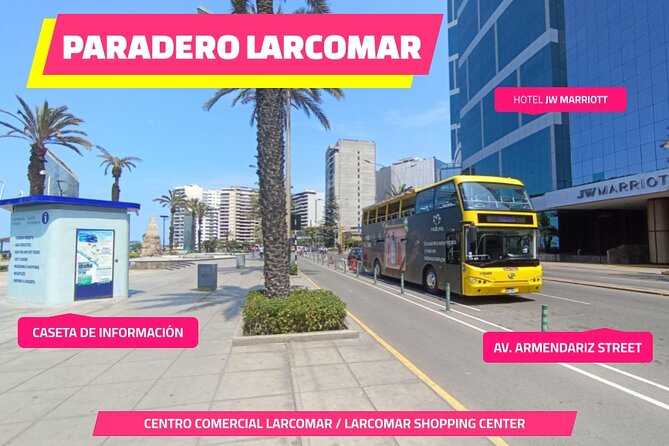
- Where do I meet for the tour?
- Is WiFi and phone charging included on the bus?
- What’s included in the price, and what’s not?
- Do I need good weather for this experience?
- Can I cancel for a full refund?
- Are service animals allowed?
Key highlights you’ll notice right away
- Larcomar’s cliffside design: you’re literally above a void, with ventilation “chimneys” that look like bluish glass sculptures.
- Pucllana Site Museum: a pre-Inka ceremonial center right in Miraflores.
- Plaza Mayor focus: you’ll connect the dots around the Cathedral and the Government Palace area instead of wandering blindly.
- Lima Cathedral with deep roots: the site traces back to Inca-era associations before the Spanish cathedral project.
- Government Palace context: from viceroys to major liberators and presidents.
- On-board comfort: A/C, WiFi, and USB chargers included, which matters when you’re moving through Lima.
Starting at Larcomar: a cliff, a mall, and a clever view system
Your tour kicks off at Turibus in Larcomar (Mal. de la Reserva 610, Miraflores). It’s a good meeting point because it’s easy to find and you’re already in one of Lima’s most visitor-friendly areas. Also, you’ll be starting in the right mood. Larcomar is built on an excavation at the top of the Lima cliff, so the whole place has that slightly floating feel. You look out and you also look down.
Here’s what’s interesting about Larcomar beyond the shopping and restaurants. It was built on a space that used to be Alfredo Salazar park, and the current park is basically covering the vehicle parking basements and multiplex cinemas. In other words, the site mixes “tourist attraction” with real infrastructure. If you’re into architecture and urban planning, it’s worth a minute of attention.
Then there’s the ventilation system. The exhaust is handled with large chimney structures that show up in the park as large bluish glass sculptures. It’s not just engineering trivia. It changes how the place feels. Instead of hiding the tech, it becomes part of the view.
Larcomar gets a lot of foot traffic, about 56,000 foreign tourists per month by its location and hotel access in Miraflores. That doesn’t automatically make it special, but it does mean your bus connection is smooth and the stop is practical. You’re not going to a “mystery” departure point that’s hard to reach.
You can also read our reviews of more city tours in Lima


The bus ride that does more than transport

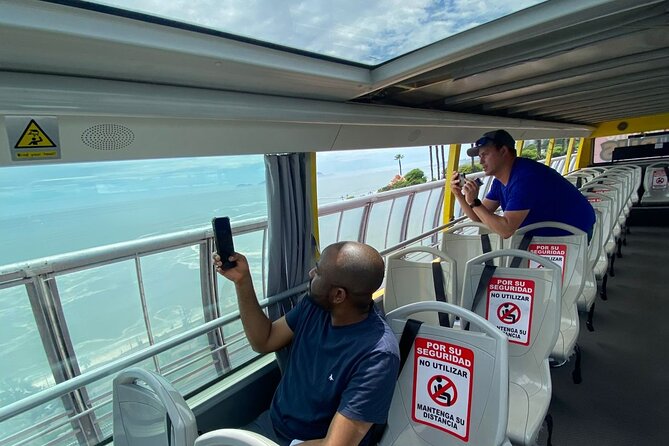
The vehicle is air-conditioned, and you’ve got WiFi on board plus USB phone chargers. That’s not a small detail in Lima. Even if the historic center is the star, you still spend real time on the road. And Lima traffic can turn any schedule into a suggestion.
This is one reason the tour price can feel fair. For $35, you’re not paying just for the sightseeing. You’re paying for organized routing, guided time in the center, and basic comfort so you’re not stuck overheating while everyone else pretends it’s fine.
Also, you don’t get snacks included. That’s normal on many tours, but it means you should bring a small plan: eat before you go. If you’re prone to low blood sugar, don’t gamble on “I’ll grab something later.” The tour focuses on stops, walking, and entrances, not food breaks.
One more practical point: there are no included pick-ups. You’ll be doing your own way to the meeting spot, so make sure you’ve chosen a base in Miraflores (or at least can reach Larcomar without stress).
Pucllana Site Museum: the pre-Inka stop that adds real depth
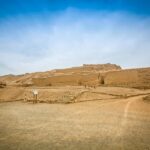
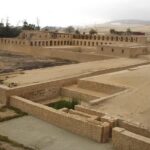
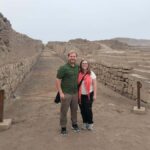
Next you head to Pucllana Site Museum, described as a magnificent pre-Inka ceremonial center in Miraflores. This is a key part of the value because so many Lima short tours focus only on the colonial center. Pucllana gives you a different timeline.
What you’re doing here is widening the lens. Lima’s main square zone is full of Spanish-era buildings and symbols of power. Pucllana reminds you that the Rímac Valley and Lima area have much older human roots than what you see in the colonial façades.
I like this stop in particular because it breaks the rhythm. After Larcomar’s cliffside modern vibe, you switch into a site that feels archaeological and grounded. It’s the kind of contrast that makes the rest of the tour make sense.
Plaza Mayor: where Lima’s big buildings actually talk to each other
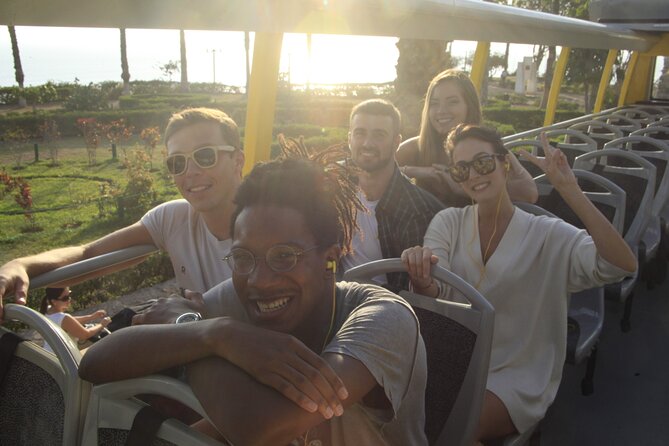
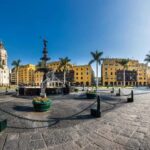
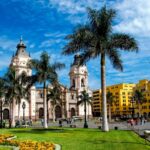
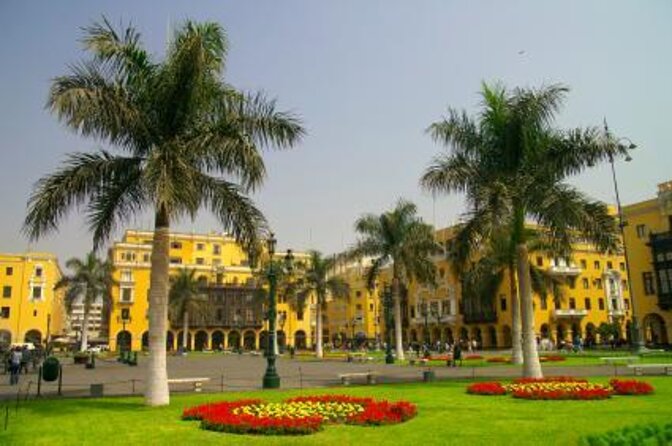
Then you move into the historic center and hit the heart: Lima’s Main Square, also known as Plaza de Armas. This isn’t just “a square.” It’s the foundational public space of the city.
Around the square, you’ll see the sober structures that frame Lima’s colonial story: the Government Palace, the Lima Cathedral, the Church of the Sagrario, the Archbishop’s Palace, the Municipal Palace, and the Club de la Unión. The important detail is the relationship between them. The Municipality and the Cathedral face each other, and that layout is part of how the Spanish urban plan expressed authority. You can practically feel the design intent as you stand there.
Plaza de Armas is intersected by several streets—Jirón Junín, Jirón de la Unión, Jirón Huallaga, and Jirón Carabaya—so it acts like a crossroads. You’re not just looking at buildings; you’re seeing how people move through the city.
This is where the guided part matters. With someone explaining what you’re looking at, the square stops feeling like “pretty buildings” and starts feeling like a place with systems: power, church influence, administration, and the street grid that connects it all.
Municipal Palace (Jirón de la Unión): the administrative face of the square
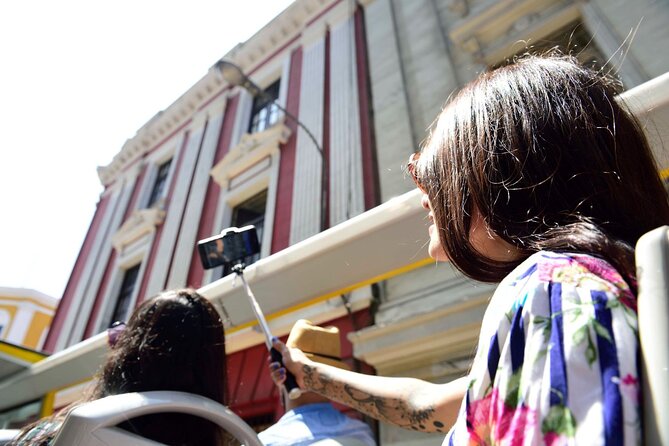
The tour also includes Jirón de la Unión 300, which is the Municipal Palace of Lima. In simple terms, this building is the main headquarters of the Metropolitan Municipality of Lima.
You’ll find it on Portal de Escribanos Street, block 3 of Jirón de la Unión, and it faces the Main Square area. That facing matters. It reinforces the idea that the square isn’t one monument. It’s a stage where political and religious institutions occupy visible positions.
If you’re the type who likes “how a city works,” this stop helps you connect Lima’s present-day administration to the historical layout you’re seeing. It turns architecture into information.





Lima Cathedral: the site behind the cathedral is the real twist
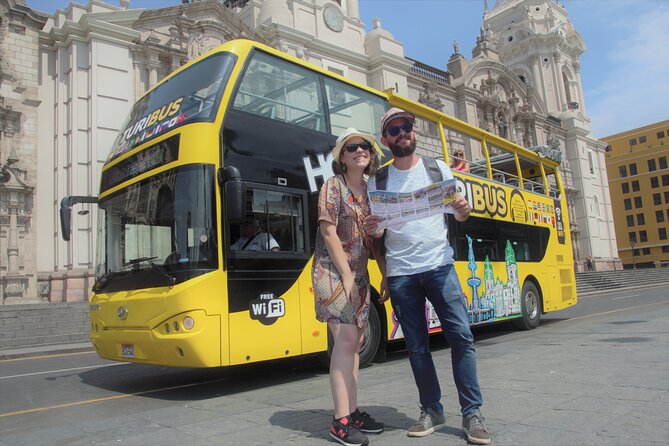
Next comes Lima Cathedral, and this is one of the most fascinating stops on the route. The cathedral wasn’t built on a blank plot. It was built where an Inca shrine to Puma Inti and the palace of the Cusco prince Sinchi Puma had existed.
When Francisco Pizarro founded Lima, he allocated a plot for the church. Here’s the detail that really changes how you look at the cathedral: Sinchi Puma renounced his assets through a notarized certificate, so the church site couldn’t be seen as a usurpation of ownership. It’s paperwork history, but it’s also human history. You’re looking at the result of negotiation, not just conquest.
Construction began after Pizarro laid the foundation stone in 1535 and publicly carried the first beam. The first cathedral was completed by 1538, and it was inaugurated on March 11, 1540 with the consecration of the Holy Eucharist.
That’s a lot of dates, but the point for you is simpler: Lima Cathedral sits on layers. When you visit it, you’re seeing Spanish colonial architecture built on top of a site with Inca-era associations. Even if you don’t care about every timeline, the story is a strong reminder that this city’s present was built over many pasts.
Government Palace: power in one of the most continuous sites in Peru
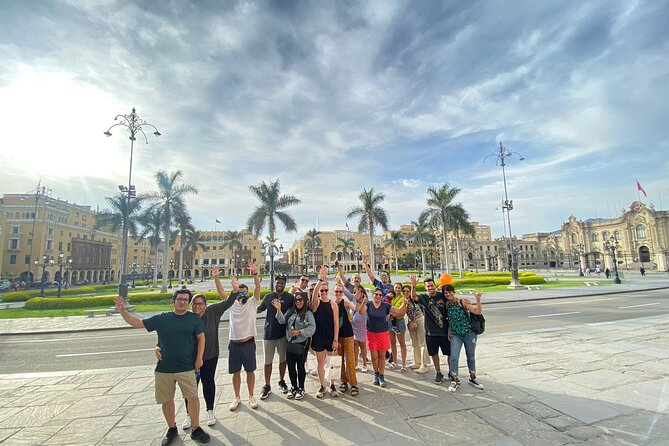
You’ll also see the Government Palace of Peru, sometimes called Casa de Gobierno or Casa de Pizarro. This is the main seat of Peru’s executive power and the official residence of the president.
The building’s built area is 19,208 m², and it sits in the Plaza Mayor of Lima’s historic center on the left bank of the Rímac River. It’s been used for similar functions on and off for nearly five centuries—because the site keeps coming back as “the place where power belongs.”
Before the Spanish period, the site may have been associated with curaca Taulichusco, a delegate of the Inca government in the Rímac Valley. During the Viceroyalty period, it was known as the Palace of the Viceroy, with residences for 40 viceroys.
Then the story continues through republican eras. It housed liberators José de San Martín and Simón Bolívar, and later it served as residence for most presidents. That’s why this stop isn’t just “look at a building.” It’s a visual timeline of who held authority and where they stood.
If you’re even a little into political history, this is one of those stops that makes the rest of the square click.
Santo Domingo entrance: a quieter add-on with extra texture

One included item you should plan for is the entrance to the convent of Santo Domingo. Even though the tour route centers heavily on the Plaza Mayor area, this is the type of stop that adds texture.
Convents and religious buildings tend to show you different sides of a city: quieter spaces, older walls, and a sense of routine and faith that doesn’t come through in quick exterior photos. It also helps break the “big landmark loop” so you’re not only seeing government-and-church frontage.
For practical planning, remember you’ll be doing some walking while in the historic center, so wear shoes you trust.
Comfort and timing: the good, the annoying, and how to handle it
The tour runs about 4 hours (approx.). That length is a good fit for a first visit because you get several major stops without feeling like your whole day is eaten up.
The trade-off is timing. Lima traffic can be slow, and getting back toward Miraflores can take longer than you expect. There’s also a sound factor. Some people have said the bus mic was hard to hear, so don’t assume you’ll catch every word from wherever you sit.
What you can do to make this smoother:
- Sit where you can clearly hear the guide during the bus segments and the walking parts.
- When you’re on a walking portion, stay close. Don’t let yourself drift. (One small slip can make you feel like you’re chasing the group.)
- Bring a little water and energy snacks even if the tour doesn’t include them. This isn’t about food breaks; it’s about preventing a grumpy moment.
Weather matters too. If conditions are poor, the tour may be canceled and you’ll be offered another date or a full refund.
Price and value: $35 for a focused circuit, not a buffet
At $35 per person, you’re paying for a set package: guided time in the center, a few major anchor stops, and at least one entrance fee (Santo Domingo). On top of that, you get an air-conditioned bus, WiFi, and USB chargers.
That makes the price feel more like “organized access” than “just transport.” If you tried to stitch this together alone—find a route, manage timing, figure out which entrances make sense—you’d spend time and energy. Time is your real currency while traveling.
The main thing you don’t get is snacks and pick-up service. If you’re okay covering those two items yourself, the value is solid for a first-time Lima visit.
Guide quality and what to do with it
Guides can make or break a city tour, and this one tends to shine when the guide is on their game. In the feedback I see names like Bryan and Yoanna, and the consistent theme is that they’re friendly and able to explain Lima in clear English. That’s exactly what you want in the Plaza Mayor zone, where details like building functions and street relationships can get lost fast if you’re left alone.
There’s also a cautionary note about group management and audio clarity. If you choose this tour, treat it like a guided class: listen, follow instructions, and make sure you’re present at the moments you’re supposed to be.
If you’re the kind of traveler who reads every plaque and asks questions, you’ll probably do well here because the structure of the route gives you context to ask the right things.
Who this tour suits best (and who might prefer a different plan)
This is a good match if:
- You want a first pass through Lima with a manageable time commitment.
- You like guided context, not just photo stops.
- You want both Miraflores-area sights and the big historic-center landmarks in one go.
- You’d rather pay for organization than wrestle with timing in traffic.
It might not be the best fit if:
- You hate walking in the historic center and would rather stay strictly inside a vehicle.
- You’re extremely audio-dependent. The mic issue is not universal, but it has come up.
- You want flexible, slow museum pacing. This is a circuit tour, not a linger-everywhere day.
Should you book the Larcomar departure Lima panoramic bus tour?
I’d book it if you’re doing Lima for the first time and you want the city’s main story in one half-day: cliffside Miraflores start, pre-Inka Pucllana contrast, and the Plaza Mayor zone with Lima Cathedral and the Government Palace. The included Santo Domingo entrance is a nice bonus that adds depth without blowing up your schedule.
Pass or consider another option if your priority is lots of time inside museums, or if you know you get stressed by delays and sound issues in group settings. In that case, you might prefer a more customizable plan where you control pacing.
Bottom line: for $35 and about four hours, this is a practical way to get your bearings fast and see the Lima that most people travel here to understand. Just plan your energy, arrive ready for some walking, and stay close during group moments.
FAQ
How long is the Lima City Tour Panoramic Bus Departure from Larcomar?
The tour lasts about 4 hours (approx.).
Where do I meet for the tour?
You’ll meet at the Turibus ticket redemption point in Larcomar: Mal. de la Reserva 610, Miraflores 15074, Peru.
Is WiFi and phone charging included on the bus?
Yes. WiFi on board is included, and there are USB chargers for phones (in all seats).
What’s included in the price, and what’s not?
Included: air-conditioned vehicle, WiFi on board, all fees and taxes, guided in the center of Lima, entrance to the convent of Santo Domingo, and USB chargers. Not included: snacks and no pick-ups.
Do I need good weather for this experience?
Yes. The experience requires good weather. If it’s canceled due to poor weather, you’ll be offered another date or a full refund.
Can I cancel for a full refund?
Yes. You can cancel up to 24 hours in advance for a full refund. If you cancel less than 24 hours before the start time, the amount paid isn’t refunded.
Are service animals allowed?
Yes. Service animals are allowed.