REVIEW · HUACACHINA
Professional Sandboard & Sandski Tour in Ica, Peru
Book on Viator →Operated by Dito Sand Xsports · Bookable on Viator
Sandboarding in Huacachina feels like flight. You start with real coaching on sand, then switch gears to adrenaline dune buggy runs across the Ica desert, with your guide filming GoPro clips the whole time.
What I love most is the teaching-first approach, not just handing you gear and pointing at a dune. You’ll also get hands-on help with wax and technique as you adapt from snow to sand, even if you’re a beginner.
One thing to consider: the desert day is a temperature rollercoaster and the sand gets everywhere, so plan for that with the right layers and face protection.
In This Review
- Key things to know before you go
- Why Huacachina’s sandboarding feels different
- The 3-hour-15-minute plan: training first, then buggy runs
- Sandboarding vs. sandski: what you can expect to ride
- Gear is included, and it’s the difference between fun and frustration
- The teaching approach: short runs, wax help, and patient coaching
- Dune buggy adrenaline: the thrill part (with real safety value)
- Sunset timing: getting the big moment and the GoPro payout
- What to pack for a 3:00 pm Huacachina tour
- Who this tour is best for—and who should think twice
- Price and value: what $55.39 buys you in Huacachina
- Should you book Dito Sand Xsports sandboarding and sandski?
- FAQ
- FAQ
- How long is the sandboarding and sandski tour in Huacachina?
- What time does the tour start?
- Is sandboarding or sandski instruction included for beginners?
- What equipment is included in the tour price?
- Will I receive GoPro photos and videos from the tour?
- What should I bring to get the GoPro files?
Key things to know before you go
- Small group size (up to 16) means you’re less likely to get lost in the shuffle.
- About 10 minutes of walking to the training area, then short runs to learn the feel of sand.
- 4 to 5 dune runs in the buggy phase, including bigger dunes if time allows.
- GoPro filming during the entire tour, then file sharing at the end of the activity.
- Wax instruction included, plus helmets and goggles so you can focus on technique.
Why Huacachina’s sandboarding feels different
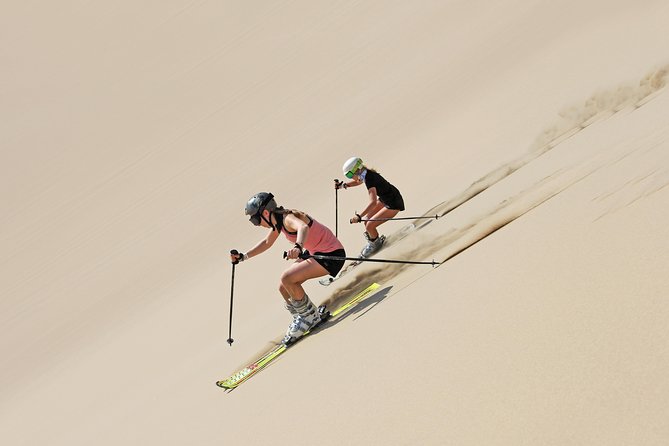
If you’ve only ridden on snow, Huacachina sand asks for a new kind of balance. Snow supports you; sand grabs you. That’s why this tour doesn’t jump straight to the biggest slope. You’ll practice first, with your instructor coaching you through the sand physics—how to stand, how to angle, and how to keep control when the board slows or wants to bury.
The other big reason this stands out is the format. You’re not just sliding. You’re also riding in a dune buggy through the desert around Huacachina, which means you see more of the dune system and get that big “I’m actually in the desert” feeling. Add in the fact that your guide takes GoPro videos and photos nonstop, and the day becomes about memories you can rewatch, not just a quick thrill that vanishes once you wash off the sand.
And yes, it’s built for people beyond hardcore shredders. It’s for skiers and snowboarders who normally ride on snow, including snowboard beginners, which makes the instruction part feel less intimidating.
You can also read our reviews of more tours and experiences in Huacachina.
The 3-hour-15-minute plan: training first, then buggy runs
You start at 3:00 pm at Dito Sand Xsports in Huacachina (Av. Ángela Perotti S/N). From there, the day splits into two main phases.
Phase one (about 1 hour): learn and adapt on sand. You’ll walk roughly 10 minutes to the training area. Then you’ll start with short runs meant to help you feel how sand behaves under your skis or board. If you’re new, you’ll get instruction tailored to your level. You’ll also get lessons on how to wax boards, which matters because sandboarding performance depends on getting the glide right.
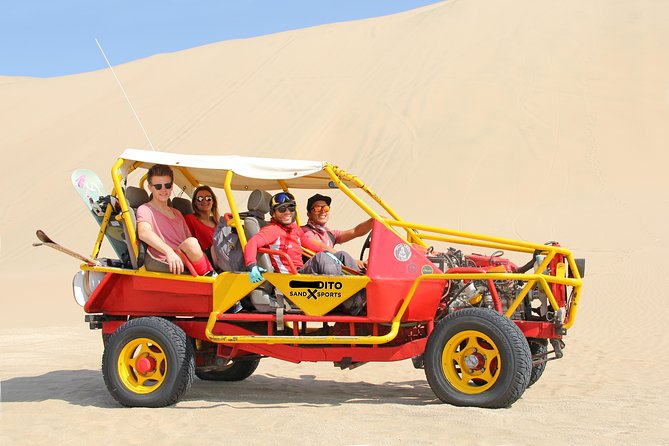
Phase two (about 2 hours): the buggy + the dunes. Once you’re warmed up, you switch to a dune buggy that takes you around the desert of Huacachina to ride higher sand dunes. On average you’ll do 4 runs, and if the schedule and conditions allow, you might get a 5th run.
Toward the end, there’s time for sunset before heading back to Huacachina. After that, you’ll share your GoPro photos and videos—this is when you’ll see exactly how your runs looked from up above.
Sandboarding vs. sandski: what you can expect to ride
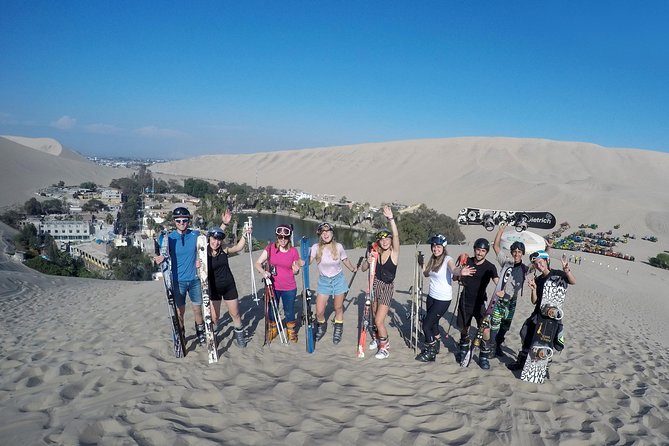
This experience is designed for people who ride snow—either as snowboarders or skiers—using sandski or sandboard equipment. The key practical point is that the tour doesn’t treat this like one-size-fits-all. Your guide will help you adapt your usual stance and movements to the new surface.
If you already know how to snowboard, you’ll likely spend time focusing on technique changes: how fast you move, how you turn, and how to keep your board from bogging down. If you’re brand new, the training runs help you build confidence step by step instead of throwing you straight into deep, steep sand.
Some people gravitate to sandboarding because it feels closest to snowboarding. Others like sandski because it can feel more stable as you learn how to distribute weight on sand. Either way, you’ll still get coaching on what your body needs to do differently to stay balanced as the slope changes.
Gear is included, and it’s the difference between fun and frustration
This tour includes sandski/sandboard equipment plus the parts that actually keep you comfortable and safe:
boots, poles (for sandski), helmet, and goggles, along with the wax you’ll need for better glide.
This matters more than it sounds. Good footwear and protection prevent small problems—like sand getting in the wrong places—from becoming big distractions. Helmet and goggles also make a huge difference in Huacachina, where the sand is constantly in the air and on the ground. You don’t want to spend your first run blinking and squinting while you’re trying to learn balance.
Bring your own clothing choices to match the environment. One of the most repeated practical tips from riders is simple: use a buff to protect your face from sand. If you want extra comfort, consider long socks to reduce rubbing and protect your legs as you move around in equipment and handle dunes.
The teaching approach: short runs, wax help, and patient coaching
The first hour is where you decide if this day will feel smooth—or scary. Here’s what makes it work: you’ll do short runs to adapt to sand, rather than going straight to the steepest line.
There’s also wax instruction, which is a big deal for anyone who thinks this is just like taking a board to a hill. Wax affects glide and control. When your guide shows you how it’s applied and why it matters, you stop guessing and start improving with each attempt.
The coaching style also shows up in how the instructors teach mixed experience levels. The team includes guides such as Dito and Juan, and names like Aldahir, Antonio, and Tony also come up—typically for patient, structured mentoring. People who are new get help with standing and sliding. People who are more experienced get technique adjustments so they can stop fighting the sand.
One more detail: your instructor rides alongside you and takes GoPro footage as you go. That means you’re not pulled off the slope repeatedly for photos, and it also helps keep your runs consistent—less waiting, more actual riding time.
Dune buggy adrenaline: the thrill part (with real safety value)
After the training phase, the dune buggy ride is where the desert stops being a backdrop and becomes a playground. You’ll drive around the desert of Huacachina, then head to the dune zones for multiple runs.
On average, you’ll get 4 runs, with a 5th possible if timing works out. That run count matters because it shapes the day’s rhythm. You’re not just touring; you’re actually stacking riding attempts.
One practical note: the buggy can feel fast. A simple safety habit comes up again and again—buckle in quickly and assume the ride will move with energy. When you’re seated properly, you can enjoy it more and focus on what comes next: your next dune run.
Even with the adrenaline, you still have an instructor in the loop. You’re with a guide during the entire tour, and that continuity helps when you’re tired, sandy, or unsure. Instead of figuring things out alone, you get nudges and corrections in real time.
Sunset timing: getting the big moment and the GoPro payout
The schedule is built for the late-afternoon light. You’ll have time for sunset before you head back to Huacachina. That’s not just for photos—it’s also a real comfort factor. Sand can be brutal earlier in the day. As the sun drops, the air cools and the whole experience feels more human.
Then comes the payoff: your guide shares your GoPro photos and videos at the end. There’s one small but essential thing you need to bring: a pendrive or SD card for file transfer. If you forget, you’ll still enjoy the memories, but you might lose the convenience of taking the footage with you right away.
If you like watching yourself ride, this part is genuinely satisfying. It turns a few adrenaline moments into a set of clips you can replay later, including angles you’d never get from your own helmet or phone.
What to pack for a 3:00 pm Huacachina tour
This is the desert, so pack like you want to be comfortable for the whole arc—heat first, cooler air later, and sand everywhere.
Here’s what I’d plan around:
- A buff (face protection is clutch in sandstorms of your own making).
- Layers. It can be hot during the day and cool at night, especially once sunset hits.
- Long socks if you prefer extra comfort and protection around equipment.
- A pendrive or SD card for your GoPro files.
- Water and something light to sip. Bottled water isn’t included, and you’ll thank yourself before you’re midway into dune runs.
If you have sensitive eyes, bring sunglasses you’re willing to keep in sand conditions, even though you’ll have goggles for the ride. Also, wear practical shoes or keep footwear easy for walking between the meeting area, the training zone, and the buggy staging areas.
Who this tour is best for—and who should think twice
This is a great fit for:
- Skiers and snowboarders who ride snow and want that skill translated to sand
- First-timers, including snowboard beginners, who want instruction rather than a simple slide
- People who like structured coaching and don’t want to waste time guessing
- Anyone who wants small-group attention (max 16) and lots of photo/video capture
You might think twice if:
- You get anxious about speed and rough motion. The dune buggy is part of the fun, but it can feel intense.
- You’re not comfortable with moderate physical effort. The tour includes walking and active movement around sand and gear, and it’s best with a moderate fitness level.
The good news is that instruction and guidance are part of the setup, so even if you’re nervous at first, you’re not left alone with your fear. You’re riding with a guide instructor who stays involved.
Price and value: what $55.39 buys you in Huacachina
At $55.39 per person for about 3 hours and 15 minutes, the value comes from what’s included. You’re not paying extra for the core equipment or the parts that make sandboarding work.
Included items:
- Sandboarding or sandski equipment (boards/ski equipment, boots, poles where needed, helmet, goggles)
- Wax and instruction on how to use it
- Dune buggy ride
- Guide instructor for the whole tour
- GoPro photos and videos
Not included:
- Bottled water and soda
- Private transportation (you’ll still need to get yourself to the meeting point)
For a desert activity where equipment rentals and guide time usually stack up, this package is easy to justify—especially if you’ll actually use the footage afterward. The GoPro part is one of the most meaningful value adds because it turns the day into something you can keep and share without chasing photos during the action.
One more detail on timing: this tour starts at 3:00 pm, so you get the training and the buggy runs lined up with better light. It’s a smart use of the day.
Should you book Dito Sand Xsports sandboarding and sandski?
I’d book if you want the full Huacachina experience: learn the sand with real instruction, then get multiple dune runs with an energetic buggy ride and a sunset finish—all with GoPro footage included.
Skip it or shop carefully if you’re looking for a low-effort, purely scenic activity. This is an active, hands-on sport day. You’ll be moving, learning, and riding—so go in prepared.
If you care about how your day is run, pay attention to the balance here: small group size, continuous guide attention, and coaching built around adaptation to sand. Also remember the practical essentials—bring layers, a buff, and a pendrive/SD card.
FAQ
FAQ
How long is the sandboarding and sandski tour in Huacachina?
It’s about 3 hours and 15 minutes.
What time does the tour start?
The start time is 3:00 pm.
Is sandboarding or sandski instruction included for beginners?
Yes. It’s designed for skiers and snowboarders, and it includes sandboarding lessons for snowboard beginners.
What equipment is included in the tour price?
You get sandski or sandboard equipment, boots, poles (for sandski), helmet, and goggles, plus wax.
Will I receive GoPro photos and videos from the tour?
Yes. Your guide takes GoPro pictures and videos during the tour, and you’ll share the files at the end.
What should I bring to get the GoPro files?
Bring a pendrive or SD card so you can transfer the videos and photos.