REVIEW · LIMA
8-Days Peru, The Rise of the Inca Empire
Book on Viator →Operated by VIPAC Travel · Bookable on Viator
Your Inca Empire trip moves fast.
This 8-day Peru tour strings together Inca and colonial highlights with the kind of pre-arranged transport that keeps you from wrestling details in transit. I also like the pacing: you get day after day of guided stops instead of a single big-ticket day and then silence, and it ends in Puno, which makes it easy to keep going toward Bolivia. One drawback to watch: like many tight, schedule-driven tours, it can feel rigid around meals and timing—especially on Machu Picchu, where circuits and entry rules can affect how long you feel you have inside.
I’d also flag one practical consideration for your planning brain. You’ll be at altitude in Cusco and the Sacred Valley, and the trip asks you to roll from place to place by bus and train. If you’re prone to altitude issues or you hate surprises (like not knowing your exact hotel details until close to departure), build in extra caution and confirm details early.
In This Review
- Key highlights worth planning for
- Lima’s UNESCO Old Town and Museo Larco: a strong start
- Flying to Cusco: altitude reality check without drama
- Qorikancha, Cusco Cathedral, and Sacsayhuaman: Inca engineering under colonial stone
- Sacred Valley essentials: Pisac terraces, markets, and culture beyond ruins
- Moray and Salinas de Maras: Inca experimentation and salt as a daily economy
- Machu Picchu by train from Ollantaytambo: timing, lunch, and the new circuits
- Cusco to Puno over La Raya: Andahuaylillas, Racchi, and the road to Bolivia
- Lake Titicaca day trip: Uros floating islands and Taquile in one sweep
- Price and value: what $1,280 includes (and why that matters)
- Potential snags to plan for: organization, hotels, and Machu Picchu timing
- Who should book this Inca Empire tour (and who should think twice)
- FAQ
- FAQ
- Where does the tour start and where does it end?
- Does the tour include airport transfers?
- Are Machu Picchu tickets refundable?
- What time should my flight arrive in Cusco?
- How many people are on this tour?
- What’s included for Lake Titicaca?
- Are breakfasts and lunches included?
- How does the Machu Picchu circuit work?
- What should I do about altitude sickness?
- Should you book this 8-day Peru tour?
Key highlights worth planning for
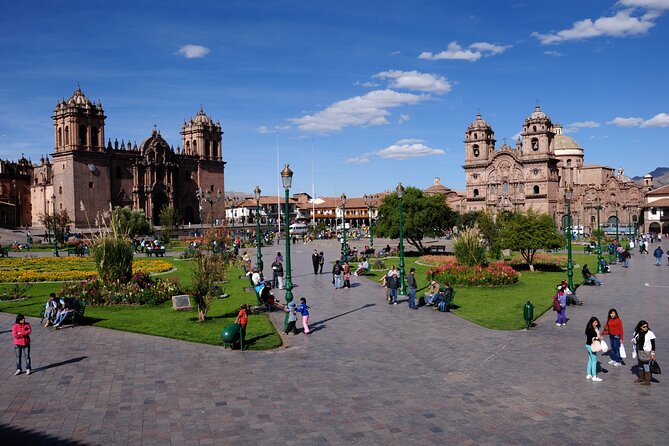
- UNESCO Lima start at the Centro Histórico with major church and convent stops
- Cusco’s Inca-meets-colonial mix at Qorikancha and the Cusco Cathedral
- Sacred Valley lineup with Pisac terraces plus culture stops beyond ruins
- Machu Picchu by train route from Ollantaytambo with a coordinated bus transfer up
- Cusco to Puno overland with scenic stops like La Raya
- Lake Titicaca day that includes Uros floating islands and Taquile
Lima’s UNESCO Old Town and Museo Larco: a strong start
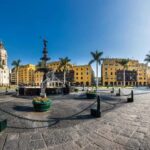
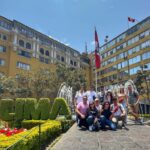
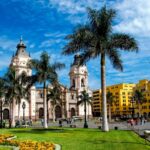
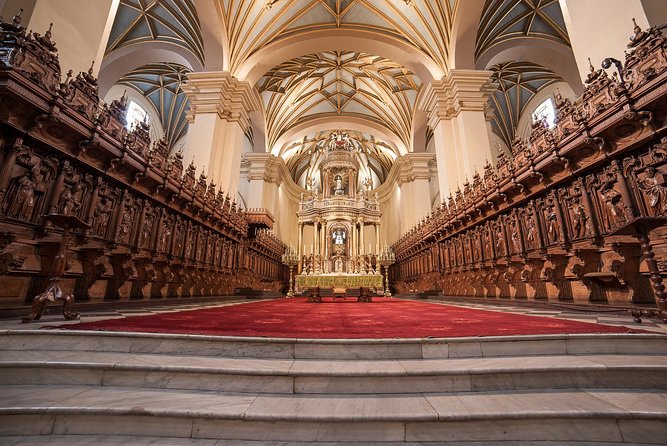
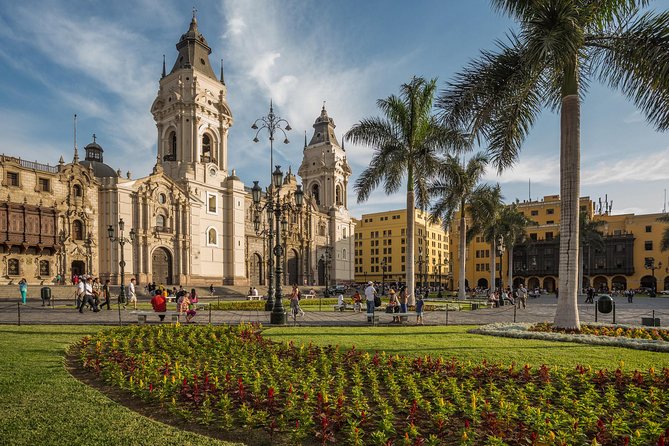
Your trip kicks off in Lima, and it’s a smart move because it gives you a sense of Peru beyond the headline sights. In the Centro Histórico, you focus on the old power centers—churches, plazas, and colonial-era architecture—and you spend a long enough block there to actually notice patterns: Spanish buildings rising over earlier realities, and artworks that tell you how the colonial era tried to frame Indigenous life.
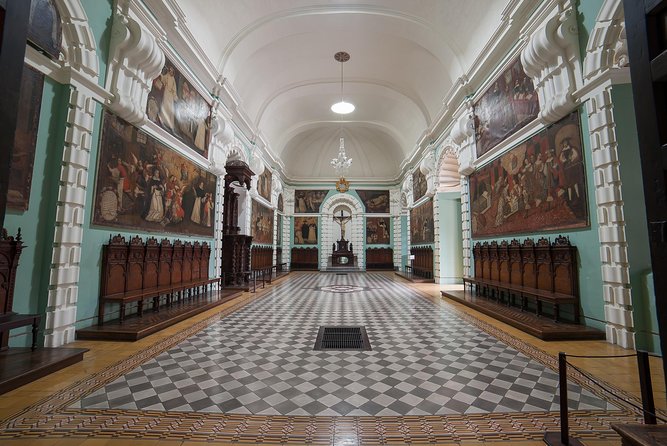
I like that the tour anchors you at landmarks with real staying power. The visit begins at the Convent of Santo Domingo, then you connect the dots to the Universidad Mayor de San Marcos, which is described as the oldest university in America and part of why Lima became a major colonial hub. You also get a stop at the Cathedral, where the collection of colonial paintings (including Cusco School of Art style works on the Cusco side of the trip) helps you understand how European techniques were adapted locally.
Then comes Museo Larco, which shifts you from “architecture tour” mode to “what did people believe and build?” mode. You’ll see gold, textiles, and ceramics, including examples described as erotic ceramics, plus a view into how ceramics reflected older cosmovision. You’ll walk out with a clearer sense of ancient Peruvian cultures before you ever reach the Inca heartland.
You can also read our reviews of more tours and experiences in Lima.



Flying to Cusco: altitude reality check without drama
Day 2 starts with the simplest part: flight from Lima to Cusco, then pickup and a meet-and-greet at the airport. That’s not flashy, but it’s a big deal. Cusco can throw logistics at you—queues, taxis, confusing meeting points—and this tour keeps you from spending your energy on navigation.
Altitude is the real plot twist in Cusco. The trip gives you a clear reminder in the pre-departure notes: if you tend toward altitude sickness, plan medicine or check with your doctor before you go. You’ll be at enough elevation that it affects how you feel, how hard you can walk, and how quickly you recover between stops.
What you can do to make this smoother: treat your first day as a “save oxygen” day. You’re visiting Qorikancha and the Cusco Cathedral plus Sacsayhuaman area later, so plan to pace yourself and drink water. If you’re the type who jumps into museum mode at full speed, dial it back. You don’t need to suffer to enjoy Cusco.
Qorikancha, Cusco Cathedral, and Sacsayhuaman: Inca engineering under colonial stone
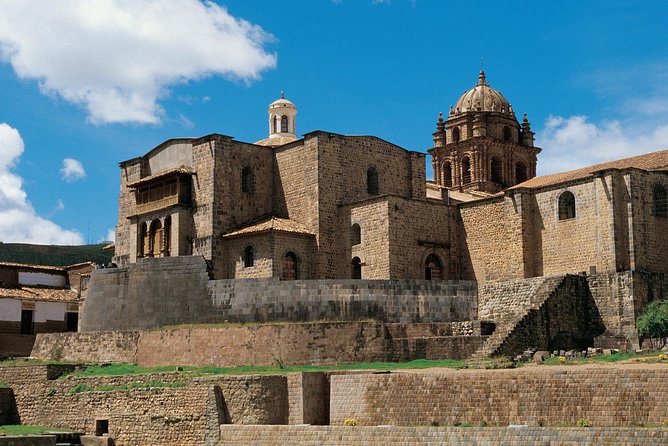
Cusco is where the tour leans hardest into the Inca-to-Spanish transformation. At Qorikancha, the story is physical: the Inca Temple of the Sun once stood there, with walls traditionally associated with gold coverings. Today, the Convent of Santo Domingo sits on its foundations, which is a vivid reminder of how conquest rearranged sacred space.
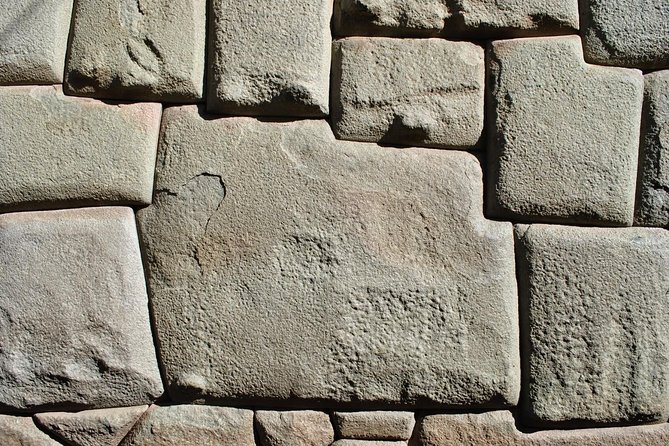
What I like here is that you still get to see the Inca side. Even if gold was looted, you’re guided toward the precision stonework that survives. This is one of those moments where you stop thinking of “ruins” and start thinking of construction skill.
Then you shift to the Cathedral of Cusco, which is presented as built on Inca palace foundations. The tour calls out colonial-era paintings, the Cusco School of Art, and details like the original cross brought by early Spanish conquistadors. It’s the kind of contrast that makes sense only when you see it in person: Inca stone below, European-style religion framed above.
Finally, Sacsayhuaman closes the day with the kind of spectacle that makes you forget you’re breathing thin air. Large stone blocks fit without mortar. Then you continue through Q’enqo (ceremonial rock carvings and an altar) and Tambomachay (the Inca Baths and sacred springs channeled through aqueducts). The route also includes Puca Pucará viewpoints on the way back. It’s not just sightseeing; it’s a guided tour of how place, ritual, and landscape were tied together.
Sacred Valley essentials: Pisac terraces, markets, and culture beyond ruins
Day 3 takes you to the Sacred Valley of the Incas, and this is where the trip becomes more than a “watch monuments” program. The Sacred Valley is described as valued by the Incas for climate and agriculture, and it shows—fertile settings and a river corridor that made the area both practical and strategically important.
At Pisac, you start with the Inca archaeological site perched above the valley. The terraces and structures aren’t only impressive; they’re a lesson in how engineering met farming and religious space at the same time. Then you descend to the colonial village built on Inca foundations, where narrow cobbled streets and adobe houses give you that mixed-era feel again.
A big plus is the market time. You’re given a chance to walk through an artisan market with handmade textiles, ceramics, silver jewelry, and crafts made using techniques handed down across generations. If you want souvenirs that feel like part of daily life (not mass-produced tourist ware), this is one of the better windows in the itinerary.
The tour then adds two culture-focused stops that many “rush trips” skip. First is Museo Inkariy, with exhibits covering pre-Hispanic cultures. After lunch, you visit the Yucay Live Culture Center, described as a place where locals demonstrate weaving and dyeing, adobe making, preparing chicha (corn drink), and you get a close encounter with llamas and alpacas. It’s interactive and helps you connect textures and materials to what you saw at museums earlier.
Moray and Salinas de Maras: Inca experimentation and salt as a daily economy
Day 4 is a two-stop day, and it works because each stop has a different “why” behind it.
At Moray, the tour presents the site as an agricultural laboratory: circular terraces built to mimic up to 20 microclimates. That idea helps you see the Incas as experimental farmers, not just builders of stone. Even if you don’t know the science terms, you’ll understand the concept—temperature and conditions vary by depth and location, so terraces can test what works.
Then you go to Salinas de Maras, the salt mines by the village of Maras. The tour describes thousands of small, shallow pools carved into the mountainside, filled with salty spring water that evaporates under the sun. The key point for value: it’s not only a preserved sight. The salt pans are still worked by local families. That turns your visit from “photos and goodbye” into “this is how people still earn a living.”
Photographically, it’s also unusual. The white salt pools set against red clay hills create a strong visual pattern. But beyond the shots, this is one of the clearest moments in the trip where you see how ancient knowledge and ongoing work overlap.



Machu Picchu by train from Ollantaytambo: timing, lunch, and the new circuits
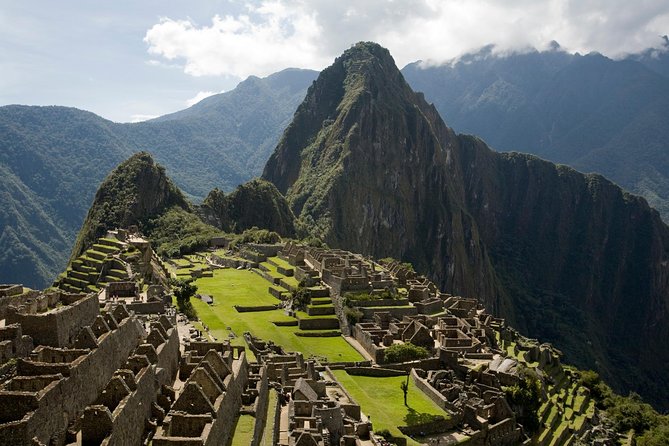
Machu Picchu is the headline, and this tour treats it as a coordinated operation instead of a vague day trip. You board at Ollantaytambo station, take the selected train to Machu Picchu station, then go by bus up a winding road with views of the Urubamba River canyon. That approach matters. You avoid a big chunk of uncertainty, and you arrive with the group at the right moment for your circuit.
Once inside, you’re met with terraces, staircases, ceremonial sites, and the “city” layout that makes the site feel alive even when it’s quiet. The tour schedules a lunch after the main circuit visit.
Here’s the practical detail you should care about: Machu Picchu uses new visitor circuits, with three main routes. This tour says it will give priority to route 2. If it’s not available, the options route 3B or route 1B will be offered for you to confirm before tickets are issued. That’s not just administrative detail—it can change where you walk and how you experience the different viewpoints.
Also, tickets are not refundable, and date changes aren’t accepted. So your advice: double-check your Machu Picchu date and plan a buffer for any train timing stress.
After lunch and the coordinated return, you travel back by train and then transfer to your Cusco hotel for lodging.
One note from experience-style caution: if you’re the type who wants maximum time at the site, don’t assume it’s “slow and linger.” Your time inside can be influenced by the circuit and by when lunch logistics are scheduled.
Cusco to Puno over La Raya: Andahuaylillas, Racchi, and the road to Bolivia
Day 6 changes pace. Instead of ruins and museums, you move across Peru by bus from Cusco to Puno, with planned stops that turn the journey into a tour day.
You begin with Andahuaylillas to visit a chapel, then you continue to Racchi, described as the Temple of Wiracocha, where you can see how the sacred plan repeats through rock and narrow streets. After lunch, the route includes a viewpoint at La Raya, described as a natural border between Cusco and Puno. Even if you don’t love long drives, a stop like this keeps the day from feeling like “just transit.”
Before arrival, you stop at the Pucara Museum and there’s also a chance to get one of the local classic bull-shaped ceramics. That’s a small souvenir opportunity with a specific craft identity.
Then you arrive in Puno at the end of the afternoon. Ending your day this way is convenient for Lake Titicaca the next day, since you don’t need another night of travel.
Lake Titicaca day trip: Uros floating islands and Taquile in one sweep
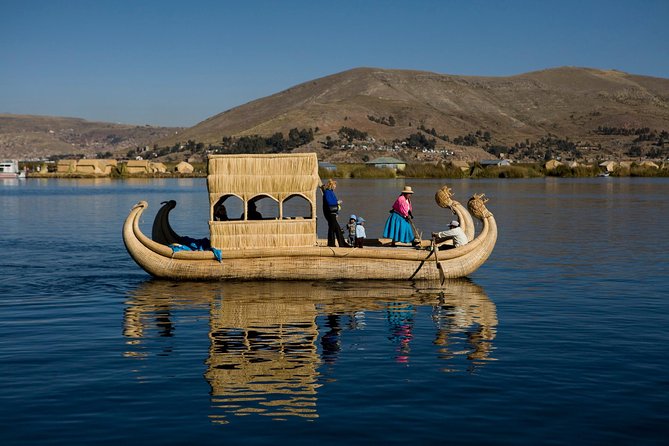
On Day 7 you go to Lake Titicaca, starting with the Uros Floating Islands. The tour emphasizes the handmade nature of the islands made from totora reeds, and you meet the friendly inhabitants of these communities. This is the kind of stop where your guide helps you understand what you’re seeing beyond the postcard story.
Then you head to Taquile Island, where the settlers are said to maintain ancestral traditions and wear colorful typical clothes. You’ll explore the island and get some of the best views of the lake in this itinerary. A typical lunch is provided on the island, and you return to Puno in the afternoon.
My practical take: you’ll be on the water and moving during the day, so pack for changing conditions. Lake weather can shift, and you’ll want layers for the boat ride and for the time outdoors on Taquile.
Price and value: what $1,280 includes (and why that matters)
At $1,280 per person for about 8 days, this tour isn’t cheap. But it also isn’t trying to sell you a “bare bones” experience.
You’re getting round-trip airport transfers between Lima and the rest of the route, plus guided city touring in Lima and Cusco-area archaeological visits like Sacsayhuaman. You also get Machu Picchu with train tickets (not just a bus substitute), a coordinated bus transfer from the station to the site, and buffet lunch at the Sanctuary’s Lodge restaurant.
You’re also covered for the big travel block between Cusco and Puno with visits and lunch on the way, plus Uros and Taquile with typical lunch included. Add in 7 nights of accommodation at selected hotels, and this price starts to look more like a package of logistics rather than a pile of entry tickets.
Two value cues to remember:
- You’re capped at maximum 15 travelers, which usually keeps the experience from turning into a factory line.
- The itinerary has daily structure, so you’re not spending each day figuring out timing, tickets, and transport.
Potential snags to plan for: organization, hotels, and Machu Picchu timing
No tour runs perfectly. The key is knowing where friction can happen and how to reduce it.
The trip is designed for pre-arranged transport and scheduled visits, but schedule communications can make or break how you feel day to day. If you want to avoid stress, ask for the daily schedule details sooner rather than later, and confirm your hotel name and location as early as you can.
The biggest “pay attention” moment is Machu Picchu. Because circuits and meal schedules are coordinated, you may not get a long, free-form wander. If you’re the type who wants 4 hours of slow drifting, set expectations that your time is managed and structured.
Finally, pay attention to the flight rule for Lima to Cusco. The tour notes that when booking, your flight must arrive in the morning, and arrival by noon is too late. That’s the kind of detail that can cause a cascade of problems if you ignore it.
Who should book this Inca Empire tour (and who should think twice)
This is a great fit if you:
- want guided days that connect Lima, Cusco, Sacred Valley, Machu Picchu, and Lake Titicaca
- prefer pre-arranged transport over DIY logistics
- like cultural context (Museo Larco, Museo Inkariy, Yucay weaving/dyeing/chicha, Racchi, Pucara craft stop)
- want the trip to end in Puno so you can continue toward Bolivia or loop back through Peru
You should think twice if you:
- hate tight timing around major sites, especially Machu Picchu
- need a lot of downtime in the middle of the day
- get anxious if you don’t have your exact schedule and hotel details well in advance
FAQ
FAQ
Where does the tour start and where does it end?
It begins with pickup at J Chavez Intl Airport in Lima, and the services end in Puno.
Does the tour include airport transfers?
Yes. It includes round-trip arrival and departure airport transfers, plus station-to-hotel and hotel-to-airport transfers.
Are Machu Picchu tickets refundable?
No. The Machu Picchu admission ticket is not refundable, and date changes or amendments are not accepted.
What time should my flight arrive in Cusco?
When booking your flight from Lima to Cusco, it must be in the morning. Arrival by noon is too late.
How many people are on this tour?
This tour/activity has a maximum of 15 travelers.
What’s included for Lake Titicaca?
You get a Lake Titicaca day tour including the Uros Floating Islands and Taquile Island, plus a typical lunch.
Are breakfasts and lunches included?
Yes for the meals it lists: breakfast is included for 7 days, and lunch is included for 3 days. Other food and drinks aren’t included unless specified.
How does the Machu Picchu circuit work?
The tour prioritizes circuit route 2. If it isn’t available, you’ll be informed of options route 3B or route 1B so you can confirm before tickets are issued.
What should I do about altitude sickness?
If you suffer from altitude sickness, the tour advises bringing medicine or asking your doctor for advice before you depart.
Should you book this 8-day Peru tour?
I’d book it if you want a well-paced, guided route that hits Lima, Cusco, Sacred Valley, Machu Picchu, and ends in Puno with logistics handled. The value is strongest if you like structure and you don’t want to figure out train tickets, bus transfers, and the day-by-day flow yourself.
Before you pay, do two things: confirm your Lima-to-Cusco flight timing, and make sure you get your daily schedule and hotel details in advance. If you do that, this tour becomes a smooth way to see a lot of Peru without losing your mind to logistics.