REVIEW · LIMA
8-Days Best of The Inca Empire from Lima
Book on Viator →Operated by VIPAC Travel · Bookable on Viator
Lima-to-Machu Picchu in one trip has real momentum. I like how the route mixes big-name sites with smart cultural stops—like the Lima neighborhoods and plazas plus a museum day that teaches you what you’re actually seeing. I also love that the tour gives a guided structure to the whole trip, so you’re not just taking photos; you’re learning why these places mattered, from Pachacamac to the gold-walled Korikancha in Cusco.
The main thing to think about is timing and your body. You’ll handle altitude in Cusco, and the itinerary moves across multiple long, active days—so plan for rest, and if you’re prone to altitude sickness, talk to a doctor before you go.
In This Review
- Key highlights at a glance
- Why this Lima-to-Cusco route feels efficient (and still human)
- Day 1 in Lima: Miraflores views, Huaca Pucllana, and the Plaza Mayor power walk
- Day 2: Pachacamac for real context, plus Larco Museum and night fountains
- Pachacamac Ruins (the “pilgrimage center” lesson)
- Museo Larco (a museum that helps your eyes)
- Circuito Magico Del Agua (Guinness-worthy night energy)
- Pueblo Libre quick bite
- Day 3: Flying to Cusco, then Cusco’s highlights on foot
- Korikancha and Santo Domingo Church
- Artisans, inca stones, and Plaza de Armas
- Day 4: Sacsayhuaman and the stone-meets-view morning
- Day 5: Sacred Valley begins with animals, Pisac views, and Inkariy Museum
- Pisac: Inca + colonial town vibes from the mountain
- Inkariy Museum and lunch
- Day 6: Moray and Maras then Ollantaytambo and the route to Machu Picchu
- Moray: terraces that act like climate experiments
- Maras: the salt mines with iconic white-and-green patterns
- Buffet lunch, then Ollantaytambo
- Day 7: Machu Picchu with a guided visit, lunch plan, and return to Cusco
- Price and pace: what you’re paying for (and what to plan for yourself)
- Who should book this tour (and who should reconsider)
- Should you book 8-Days Best of The Inca Empire from Lima?
- FAQ
- What’s included in the tour price?
- Do I need to arrange my own flights?
- How many meals are included?
- Is Machu Picchu admission refundable?
- What’s the group size limit?
- Where does the tour start and end?
- Is altitude sickness a concern on this trip?
Key highlights at a glance
- Small group size (max 12) makes the day feel more personal and easier to manage at viewpoints and markets
- Guided visits + included entrance fees help you spend less time queuing and more time understanding what you’re looking at
- Lima nights included with the Magic Water Circuit lights and fountains spectacle
- Sacred Valley teaching stops like Moray terraces and Maras salt mines add meaning, not just scenery
- Machu Picchu with a guided tour plus planned lunch and same-day return to Cusco
Why this Lima-to-Cusco route feels efficient (and still human)
This itinerary is built around a clean flow: Lima first, then Cusco, then the Sacred Valley, and finally Machu Picchu. That matters because Peru is not a “hop in and out” destination—travel time is part of the deal, so you want it to count.
You also get a guided spine. Even when you’re standing in front of stone ruins, having an explanation on hand helps you notice the details you’d otherwise miss—layout, materials, and how the Inca empire adapted earlier places.
One more practical plus: most transport is included, and you’re not left piecing together trains, buses, and local transfers day by day. Airfare is the one big exception (Lima–Cusco–Lima), so you’ll just plan that separately.
You can also read our reviews of more tours and experiences in Lima.


Day 1 in Lima: Miraflores views, Huaca Pucllana, and the Plaza Mayor power walk
Your first day is a gentle landing that still hits the core Lima scenes. You meet your group after arriving at J Chavez Intl Airport and transfer to your hotel, then you’re off for a street-and-plaza walk.
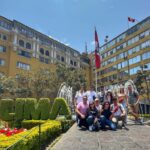
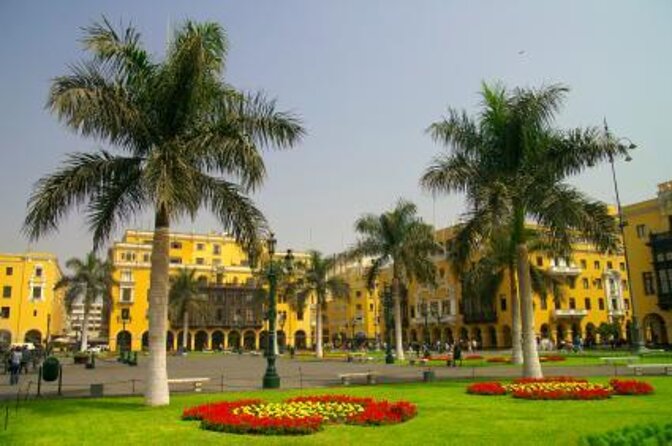
The route starts in Miraflores at the Love Park area with Pacific Ocean views. Then you head to Huaca Pucllana, a ceremonial center tied to the Lima culture—this gives you an early sense that Lima isn’t just colonial architecture; it has deep pre-Inca roots too.
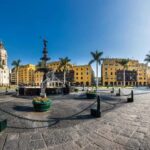
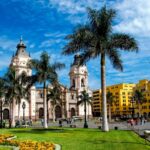
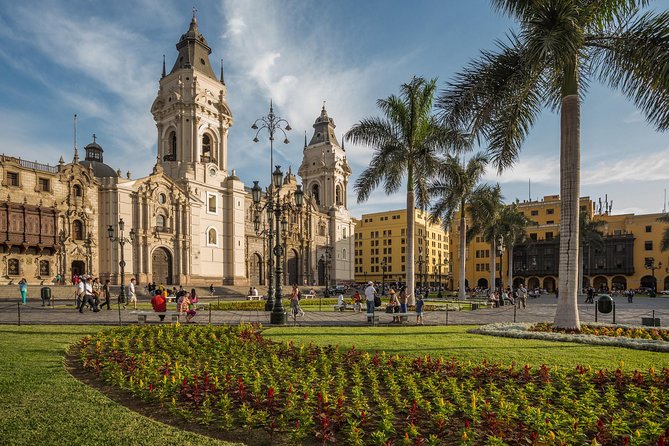
After that, you land at Plaza de Armas (Plaza Mayor), where the Government Palace and Town Hall sit. You’ll visit the Cathedral and explore the Santo Domingo Convent, including corridors connected to 17th-century religious figures—San Martin de Porras and San Rosa de Lima. If you’re a first-timer, this is a good way to learn the city’s layers fast.
Day 2: Pachacamac for real context, plus Larco Museum and night fountains
Day 2 is a smart combo: one archaeological site that explains cultural shifts, one museum that fills in what you’re seeing, and one night activity that’s pure fun.
Pachacamac Ruins (the “pilgrimage center” lesson)
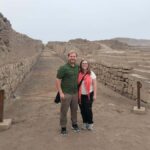
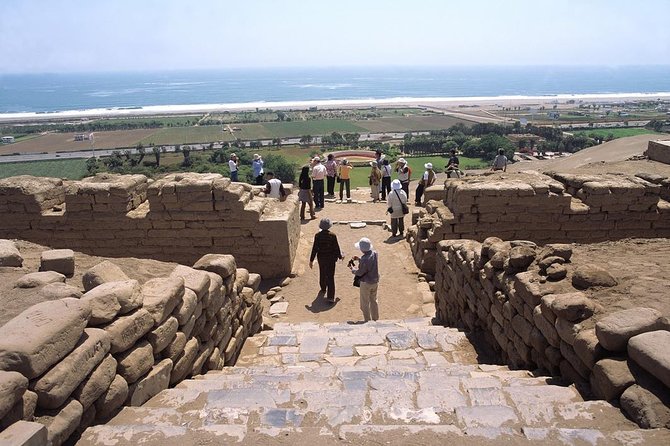
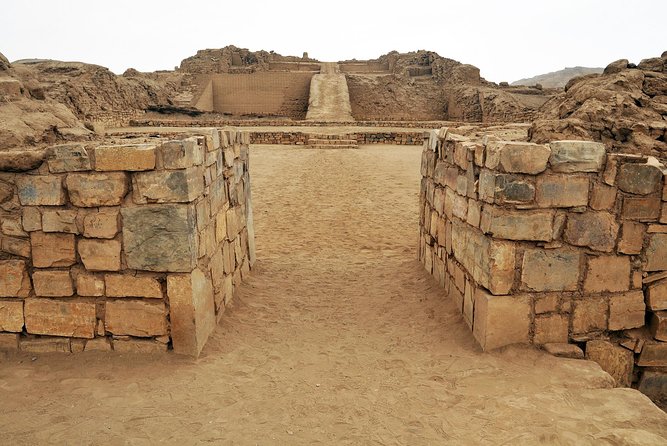
Pachacamac is about 30 km south of Lima, perched above the ocean and the Lurin River Valley. It was a major pilgrimage center for different cultures before the Incas arrived, and then the Incas adapted parts of the complex for administration while respecting local structures.
You’ll see key areas such as the Temple of the Sun, the Acllahuasi, the Taurichumbi Palace, and the Pilgrims Plaza. The included In-site Museum helps you connect artifacts and remains to the story, instead of treating the site like random ruins.
A practical note: archaeological visits can involve uneven ground and walking. Comfortable shoes matter here.
Museo Larco (a museum that helps your eyes)
Next you go to Museo Larco, about 30 minutes from central Lima. What I like about this stop is the variety: displays that guide you through ancient Peruvian cultures, plus the museum’s ceramic collection in its warehouse—faces, objects, fruits, birds, and everyday-life scenes.
If you want your trip to feel “connected,” Larco is a big reason it does. It gives you visual context before you hit Cusco and the Sacred Valley.



Circuito Magico Del Agua (Guinness-worthy night energy)
Late in the day, you head to the Magic Water Circuit, a well-known fountain-and-light show in a public park. The complex has international recognition including a Guinness World Record for largest fountains and highest source in a public setting.
This is the kind of activity you can enjoy even if you’re tired. It’s scheduled near dusk, so you’re not forcing a full day of heavy walking into the darkest hours.
Pueblo Libre quick bite
You also stop in Pueblo Libre for a short, included experience at an old tavern. It includes a tasting of sandwiches paired with a drink made with pisco. It’s brief (about 30 minutes), but it’s a useful taste of local flavors without turning your day into a food tour.
Day 3: Flying to Cusco, then Cusco’s highlights on foot
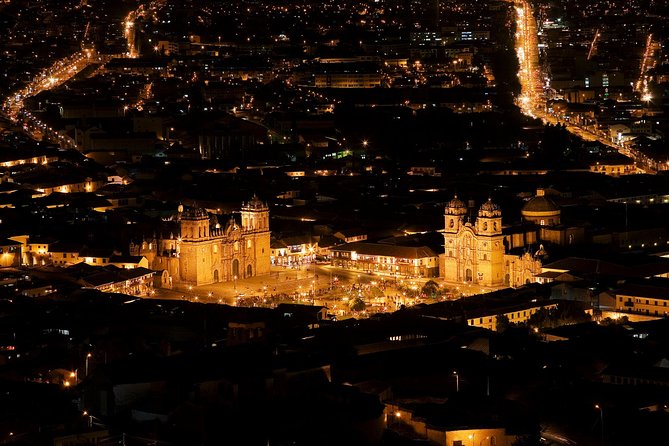
After your transfer and flight to Cusco, the afternoon is set up for a classic first Cusco orientation. The tour starts with a panoramic stop at San Cristobal Plaza, which helps you understand the city’s shape on the hillside.
Then you visit San Pedro Market. This isn’t just a “look around” stop; it’s designed to get you reading the local food and products that supply the city.
Korikancha and Santo Domingo Church
From the market you head to Korikancha, also known as the Golden Enclosure. The name comes from Quechua, and the idea is simple: you’re seeing how the Inca world used gold and sacred architecture to signal power and belief. Even if you know little, the scale and symbolism usually hit fast.
You then visit the Santo Domingo Church, which connects the Inca sacred space to later colonial layers.
Artisans, inca stones, and Plaza de Armas
The tour includes a walk from San Blas, the artisans’ neighborhood, toward Hatun Rumiyoc street. Along the way you’ll stop at the Inca Roca Palace area—now associated with the Archbishop’s Palace—and see the famous Twelve Angle Stone.
You finish back at the main square area to visit the Cathedral and colonial masterpieces. It’s a good loop: viewpoints, market life, sacred architecture, then a “center of town” wrap.
Altitude heads-up: Cusco can feel intense on arrival. Take it slow the first afternoon, sip water, and let your guide handle pacing—this kind of structure helps.
Day 4: Sacsayhuaman and the stone-meets-view morning
Day 4 is where Cusco history shifts from city streets to big, dramatic ruins. You go early to Sacsayhuaman, a fortress-like complex built from massive stonework, surrounded by strong views.
This stop is designed to help you see Inca engineering as more than a photo-op. The scale is the point, and your guide can usually point out how the stones were shaped and placed.
After that, you head to Qenqo, including an altar area embedded in a rock cave. Then you continue to Puca Pucara viewpoint and Tambomachay, a monument tied to Andean cosmology and architecture.
The afternoon is free. That’s key. You need recovery time in Cusco, and this gives you room for an easy stroll, café time, or just resting if altitude makes you feel slow.
Day 5: Sacred Valley begins with animals, Pisac views, and Inkariy Museum
Sacred Valley day starts with breakfast, then the itinerary gently ramps up. You’ll visit Awanacancha, where you can see and feed camelids like llamas and alpacas. You also get weaving and dyeing techniques from locals, which helps connect the textiles you’ll see later in markets to the skills behind them.
Pisac: Inca + colonial town vibes from the mountain
Next you go to Pisac, including both Inca and colonial areas. The visit includes a walking tour of the colonial town and time at the handicraft market. It’s one of the better setups if you want shopping without feeling rushed.
A highlight here is the top-of-the-mountain archaeological area and the view of the colonial town below. Even if you’re not a “ruins person,” the sightlines help you understand how people chose settlements.
Inkariy Museum and lunch
You then visit the Inkariy Museum and enjoy lunch there. The guided tour focuses on pre-Hispanic cultural representations shown across different rooms.
This is a smart break in the day. After walking ruins and markets, the museum structure gives you a slower, more narrative experience.
You end overnight in the Sacred Valley area, which is a practical win. It reduces back-and-forth travel stress and helps set you up for the next day’s train timing.
Day 6: Moray and Maras then Ollantaytambo and the route to Machu Picchu
This day is packed with learning, and it’s also built around visual contrast.
Moray: terraces that act like climate experiments
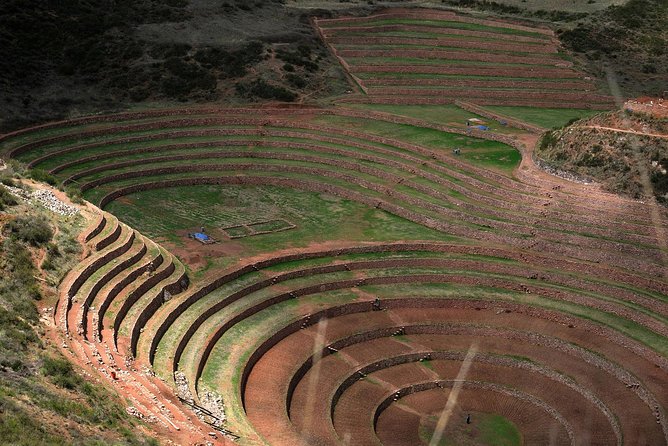
You start at Moray, known for its concentric terraces. The explanation centers on microclimates—terraces built to recreate conditions for different agricultural production. The point is to see the Incas as experimenters and planners, not just stone builders.
Maras: the salt mines with iconic white-and-green patterns
Next comes Maras, the millenary salt mines. The iconic look is that white salt wells contrast with the green valley. Even if you don’t buy anything (and you don’t have to), the site is worth it for photos and for understanding how resources mattered.
Buffet lunch, then Ollantaytambo
After lunch, you visit the archaeological site of Ollantaytambo. You focus on Inca stoneworking techniques, which helps make what you see feel technical, not mystical.
Then comes the big transition: you take the train to Machu Picchu, and you’re assisted with lodging in your hotel after arrival. This “arrive and get settled” support is underrated. When you’re tired from a long day, you want someone else handling the first steps.
Day 7: Machu Picchu with a guided visit, lunch plan, and return to Cusco
Day 7 is the star, but it’s not just a drop-off and wander.
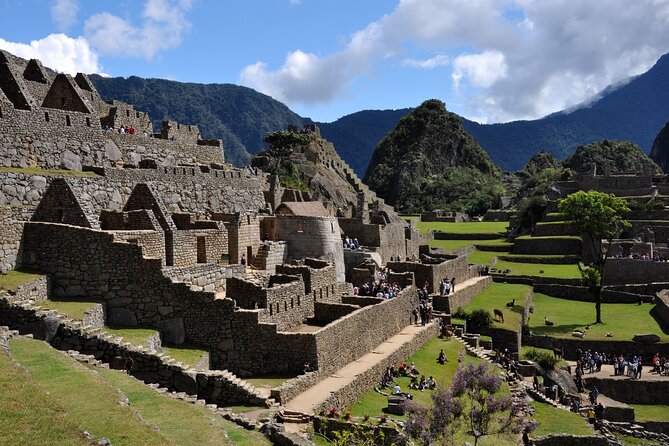
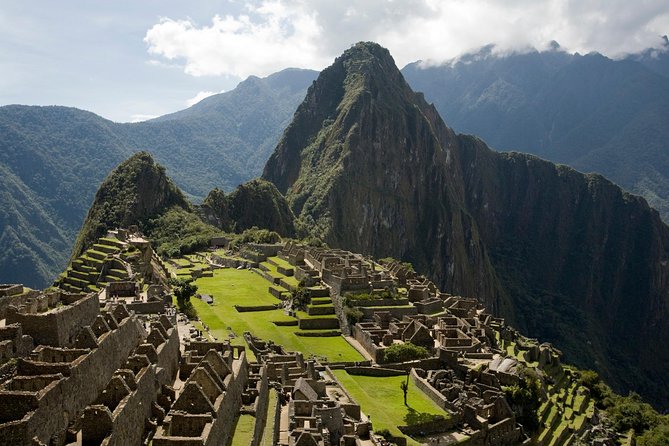
You have breakfast, then you board a bus up winding roads to Machu Picchu. The views over the Urubamba River and canyon usually hit hard on the way up, because the geography frames why the site is so dramatic.
At Machu Picchu, you get a guided visit. The tour focuses on terraces, ceremonial shrines, steps, and urban areas—so you’re not just looking for the postcard angle. After the guided portion, you have lunch at a restaurant in the area.
Then you return to Cusco by transfer, with overnight in Cusco. That timing matters because it helps you avoid trying to do everything in one chaotic day.
Machu Picchu ticket note: entrance is not refundable, and date changes or amendments aren’t accepted. So once your date is set, treat it as fixed.
Price and pace: what you’re paying for (and what to plan for yourself)
At $1,454 per person for about 8 days, this isn’t a cheap trip. But you are paying for a lot that would be annoying to assemble on your own: guided tours of the key sites, most transport, entrance fees, and 7 nights of accommodations with breakfast.
If airfare is your main extra cost (Lima–Cusco–Lima is not included), you still save money and time versus building a patchwork of tours and tickets. Plus, the small group size (max 12) keeps the experience from feeling like a cattle call.
The pace is generally reasonable. The schedule builds in rest time, like your free Cusco afternoon on Day 4 and the fact you overnight in the Sacred Valley area before the Machu Picchu train day. Still, expect long walking days and at least one or two moments where you’ll want to sit down and recover.
About service and comfort: rooms are described as clean. The pacing can feel brisk at times, but it’s mostly about keeping connections on time and keeping you moving between sites.
Also, plan your health. Altitude can be real in Cusco, and the trip specifically advises bringing medicine or asking your doctor before you depart.
Who should book this tour (and who should reconsider)
This tour fits best if you want major Peru highlights with guidance and fewer logistical headaches. It’s especially practical for first-time visitors to Peru, and it works well for families who want structure and included transport.
You might reconsider if you’re extremely sensitive to altitude and prefer a slower, more flexible schedule with extra buffer days. Also reconsider if you hate early starts or want total freedom over sightseeing dates—Machu Picchu entry is date-locked.
If you like guided history, markets, and a mix of ruins plus museum context, you’ll probably feel like each day connects to the next.
Should you book 8-Days Best of The Inca Empire from Lima?
I’d book it if you want a well-run, guided route that covers Lima, Cusco, the Sacred Valley, and Machu Picchu without making you play logistics Tetris. The value is strongest when you factor in guided visits, entrance fees, transport, and the fact the group stays small.
I’d hesitate if altitude worries you a lot or if you need maximum flexibility for Machu Picchu timing. In that case, you’ll want to plan more carefully with dates and consider travel medicine early.
If you do book, do two things: pick morning flights for Lima to Cusco (arrival by noon is too late), and prepare for altitude from day one. With that, this trip can feel like the smoothest way to see the Inca story unfold from city streets to stone cities.
FAQ
What’s included in the tour price?
The tour includes 7 nights of accommodations (with breakfast), guided tours and listed entrance fees, plus transfers between airports, hotels, and train/bus stations. It also includes 2 lunches. Airfare for Lima–Cusco–Lima is not included.
Do I need to arrange my own flights?
Yes. Airfare is not included, and you fly Lima to Cusco and back to Lima from Cusco. When booking the Lima to Cusco flight, it must be in the morning, and arrival by noon is too late.
How many meals are included?
Breakfast is included for 7 days. Lunch is included for 2 days, including a lunch on the Inkariy Museum day and another buffet lunch on the Moray/Maras/Ollantaytambo day.
Is Machu Picchu admission refundable?
No. The Machu Picchu ticket is not refundable, and date changes or amendments are not accepted. If you need to change your visit date, you would need a new entrance ticket.
What’s the group size limit?
This tour has a maximum of 12 travelers.
Where does the tour start and end?
It starts with meeting at J Chavez Intl Airport in Lima. It ends with a departure transfer to the Cusco airport, with assistance for your connection flight in the Lima airport.
Is altitude sickness a concern on this trip?
Yes. The tour advises that if you suffer from altitude sickness, bring medicine or ask your doctor for advice before you depart. The itinerary also builds in time that can help you deal with Cusco altitude, but you should still plan ahead.