REVIEW · LIMA
10-Day Taste Peru Experience: Lima, Nasca, Cusco & Machu Picchu
Book on Viator →Operated by VIPAC Travel · Bookable on Viator
Peru goes from ocean haze to Inca stone fast. This 10-day Taste Peru route packs Lima, Nazca, Cusco, and Machu Picchu into one smooth circuit with included hotels, transfers, and a Nazca flight.
What I like most is the built-in peace of mind. You get 9 nights of selected hotels plus private transfers between key points, so you’re not stitching together buses, taxis, and timing puzzles.
The main consideration is effort and altitude. This is a busy schedule and once you’re in Cusco and up to Machu Picchu territory, you’ll want to plan for altitude effects on your breathing and stomach.
In This Review
- Key things worth marking on your calendar
- Price and logistics: what $2,005 really covers
- Lima’s cathedral-and-market introduction: Miraflores to the Santo Domingo convent
- Magic Water Circuit plus Museo Larco: pisco culture and Peru’s layers in one city
- Nazca Lines from the air: the view that changes everything
- Paracas and Ica: Tacama’s long pisco roots and the Huacachina oasis
- Cusco city tour: San Pedro Market, Korikancha, and the Cathedral square
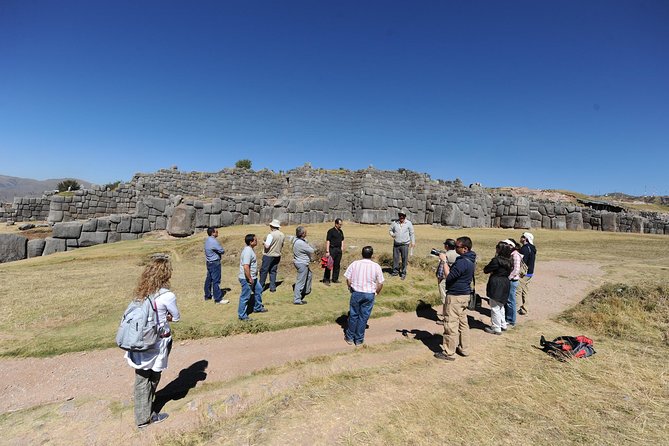
- Sacsayhuamán, Q’enqo, Tambomachay: Inca stone with fewer crowds
- Sacred Valley days: camelids, Pisac markets, Moray microclimates, and Maras salt mines
- Machu Picchu: timed circuits, guided walking, and the Urubamba River drive
- How intense is this for your body: altitude and pacing in plain terms
- Who this trip suits best—and who should think twice
- Should you book this 10-day Taste Peru experience?
- FAQ
- Are the flights within Peru included?
- Is the Nazca Lines overflight included?
- What’s included for accommodations and transfers?
- What museums and special tours are included in Lima?
- Are meals included?
- Is Machu Picchu admission refundable?
- Which Machu Picchu circuit will you get?
- How big is the group?
- Can I cancel for a full refund?
Key things worth marking on your calendar
- Nazca Lines overflight with animals and symbols you can’t fully appreciate from the ground
- Lima’s mix of ancient and colonial Peru plus museums, pisco stops, and the Magic Water Circuit
- Sacred Valley craft and agriculture stops like Awanacancha camelid feeding and Moray microclimates
- Inca engineering days at Sacsayhuamán, Q’enqo, Tambomachay, and Ollantaytambo
- Machu Picchu via timed circuits, with Route 2 prioritized when possible
- Small group size (max 20) plus hands-on guiding at major sites
Price and logistics: what $2,005 really covers
At $2,005 per person, this tour isn’t trying to be a budget-only adventure. The value comes from what’s bundled: hotels, private transfers, most major guided visits, several meals, and the big-ticket surprise add-ons like the Nazca Lines overflight and the Machu Picchu excursion.
You’ll also get a lot of structure for a trip that otherwise could turn into chaos. Private transfers move you between airports, hotels, and stations, and guides handle the on-the-ground pacing at each stop.
Two costs to know up front: flights Lima–Cusco–Lima are not included, and there’s a stated Nazca airport tax of USD 10 per person. Also, Machu Picchu tickets are not refundable, and date changes aren’t accepted—so once you lock your visit day, treat it as fixed.
Finally, group size stays under 20. That tends to feel more personal on crowded days, and it fits a trip where you’re changing regions almost every day.
You can also read our reviews of more tours and experiences in Lima.


Lima’s cathedral-and-market introduction: Miraflores to the Santo Domingo convent
Lima is the warm-up act that’s worth paying attention to. The tour starts you in Miraflores at Love Park, where the Pacific is right there and you can get your bearings fast. Then it heads to Huaca Pucllana, a ceremonial center tied to Lima culture—an early clue that this city isn’t only about colonial buildings.
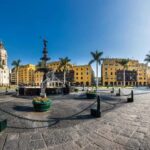
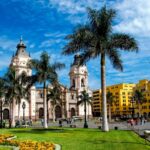
From there, you work your way through Plaza Mayor: the Government Palace and Town Hall are part of the context, but the real draw is the Cathedral and the Santo Domingo Convent complex. You’ll also hear about the corridors and the world of 17th-century figures connected with San Martin de Porres and San Rosa de Lima.
This first day-and-a-half style matters. Lima is huge and spread out, so having a guided route helps you hit the “why it matters” landmarks without guessing. If you like understanding a place instead of just taking photos, this part delivers.
A small drawback: you’ll do a lot of walking and stepping in and out of different areas over two concentrated days. If you prefer a slow pace, save your long naps for after you reach Cusco.
Magic Water Circuit plus Museo Larco: pisco culture and Peru’s layers in one city
Lima also gets a fun side that’s different from the usual museum sprint. One evening slot includes a stop at the Magic Water Circuit in Parque de la Reserva: 13 water fountains mixing color, illusion, and fantasy. It’s the kind of activity that resets your energy after daytime sightseeing.
You’ll pair that with a pisco experience in Pueblo Libre. There’s a visit to an old pisco bar district where you can taste a Chilcano (pisco with ginger ale-style mix) and try a classic butifarra sandwich. You’re not just drinking for fun—you’re learning how pisco culture fits into everyday life here.
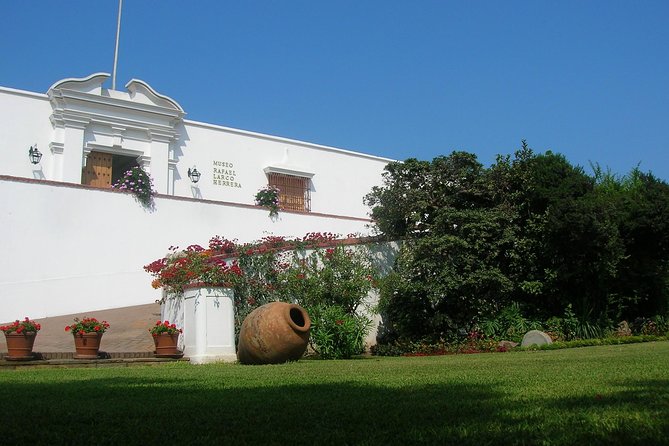
Then there’s the heavyweight: Museo Larco. Expect a strong view of ancient Peruvian cultures through gold objects, textiles, and erotic pottery. The museum also has an open warehouse during your visit, so you can see pieces and craftsmanship in a way that feels more connected than a sealed gallery.
This combination is smart for first-time Peru. Lima gives you ancient-to-colonial context in the day, then adds a taste of modern culture at night. That balance makes the whole itinerary feel like more than a check-the-box trip.
Nazca Lines from the air: the view that changes everything
One of the loudest highlights in this trip is the Nazca Lines overflight. You fly from the Pisco airport after heading to Paracas by Paracas Premium Service.
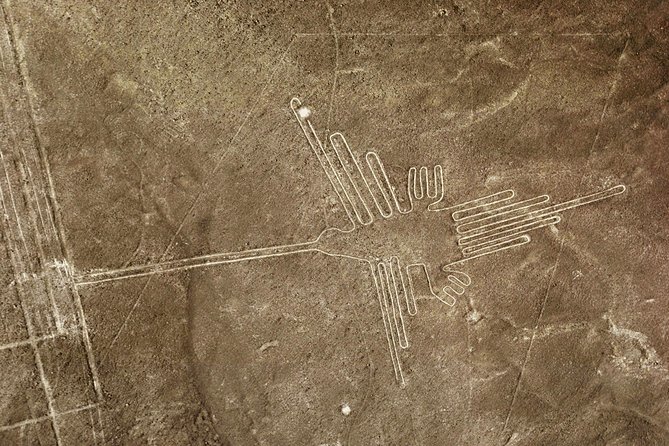
From the plane, you’re looking at huge drawings only fully revealed from the sky—think insects and animals like a monkey, hummingbird, condor, and spider. Their origins are still unknown, and many theories talk about an astronomical calendar, but the important part for you is the visual scale.
Practical detail: the plane in Nazca holds up to 12 passengers. That matters. Smaller cabin size often means less noise and more shared viewing without elbow-to-elbow chaos.
Two considerations from the tour notes: the overflight is not recommended for children under 8, and you’ll want to confirm how you feel about flying on a tight schedule. If you’re prone to motion sensitivity, plan to keep your breathing steady and avoid heavy meals right before the flight.
Paracas and Ica: Tacama’s long pisco roots and the Huacachina oasis
After Nazca, the itinerary pivots toward desert and pisco. You’ll spend time in the Paracas area, then head to Ica for a day that’s built around Tacama winery, a property with roots going back to 1540.
Tacama isn’t treated like a quick tasting stop. You get a tour of the estate, including the bell tower, vineyard areas, and the wine cellar. Then there’s a look at a handcrafted pisco space called El Catador, where you can observe ancient clay vessels used for pisco and the unique oak press.
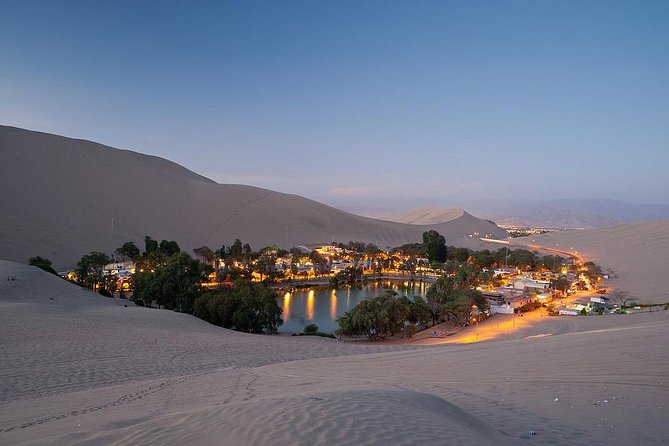
You’ll also get the scenery shift you want in this kind of route. The day includes an incursion into the Ica desert to reach Huacachina Oasis, surrounded by sand dunes and palm trees—a visual contrast that feels almost staged, but it’s real.
If you care about food and spirits, this is one of the most on-theme days in the whole trip. It connects the word taste to something concrete: how pisco is made, where the vines come from, and how the desert changes the mood.
A drawback: it’s a long, structured day. The tour lists it as about 7 hours, so expect limited downtime and bring a mindset of sustained attention.



Cusco city tour: San Pedro Market, Korikancha, and the Cathedral square
Cusco is where the trip turns from coastal Peru to Andean Peru. After your flight, you’ll do a meet-and-greet and transfer to your hotel, then a guided city tour in the afternoon.
The route starts with a panoramic view from San Cristóbal Plaza—useful because it helps you orient yourself before you start climbing. Then you hit San Pedro Market, which is one of the best ways to understand local tastes and ingredients without needing a translator.
Next comes a true “wow, that’s Inca” stop: Korikancha, also known as the Gold Enclosure. Even if you’ve seen photos, it’s the setting and the contrast with later colonial layers that land. After that, you’ll visit Santo Domingo Church, which is part of the area’s overlay of histories.
You also walk through the city: from San Blas (artisans’ neighborhood) to Hatun Rumiyoc Street, stopping at the Inca Roca Palace area and the Twelve Angle Stone, then continuing to the Main Square for the Cathedral and colonial masterpieces.
One logistics note you should take seriously: when you book your flight from Lima to Cusco, it must be in the morning so arrival by noon doesn’t mess with the tour flow. Altitude is real, and arriving late can mean extra waiting right when your body is already adjusting.
Sacsayhuamán, Q’enqo, Tambomachay: Inca stone with fewer crowds
This day is built around major sites and smart timing. In the morning, you distance yourself from crowds with visits to key fortress and ceremonial areas.
First up: Sacsayhuamán, described as a huge fortress with colossal constructions and viewpoints blending into the landscape around it. Then comes Q’enqo, where you’ll see an Inca shrine area with a sacrificial altar embedded in a rock cave.
You’ll continue with a viewpoint at Puca Pucara, then visit Tambomachay, known for impressive architectural knowledge and tied to Andean cosmology.
Why this works for you: if Machu Picchu is the headline, this is the supporting cast that explains how the Inca built power, water knowledge, and ceremonial space. It’s also a relief to have some less-crowded moments early in the day.
The trade-off is that Cusco is already at altitude, so expect your energy to rise and fall faster than you’re used to. Move slowly, drink water, and give yourself time to catch your breath before you start photographing every angle.
Sacred Valley days: camelids, Pisac markets, Moray microclimates, and Maras salt mines
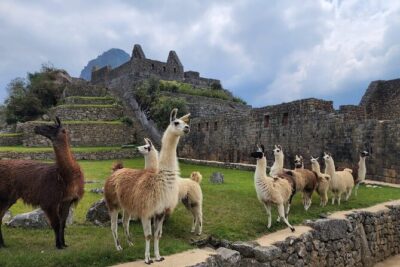
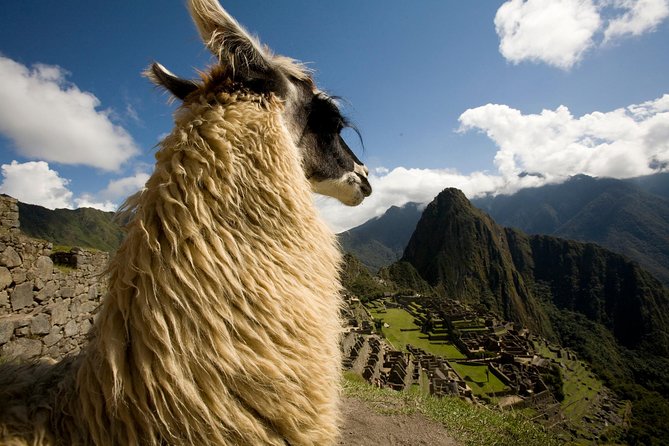
The Sacred Valley chapters are where the trip becomes about daily life, not just monuments. You’ll start with Awanacancha, a complex where you can see and even feed Andean camelids like llamas and alpacas. You’ll also learn about traditional textiles through local demonstrations of weaving and dyeing techniques.
Then it’s on to Pisac—both Inca and colonial elements. The route includes a walk in the colonial town and time at the handicraft market, which is one of the easiest places on this itinerary to pick up a souvenir that feels tied to the landscape and craft.
You’ll also visit the Inkariy Museum for lunch and a guided tour. It focuses on rooms that show cultural representations of pre-Hispanic civilizations of ancient Peru.
On the second Sacred Valley day, the tour keeps the focus on agriculture and techniques. You’ll visit the Living Culture Yucay Museum and interpretation centers covering adobe manufacturing and local folklore, plus a stop involving chicheria culture. From there, you shift into iconic “why it was brilliant” terrain.
Moray is next: these are concentric terraces that simulate different microclimates—basically a way to test and plan growing conditions for the empire. Then you’ll go to Maras, the famous and millenary salt mines. The visual contrast between the white wells and the green valley is exactly the kind of photo that looks better in person than in a feed.
Then you’ll wrap with Ollantaytambo, including the fortress stonework and the learning around how the Incas worked the stones. There’s also a buffet lunch built into this day.
This part is especially valuable if you want more than a “big sites only” trip. It gives you craft, farming logic, and community context—so Machu Picchu later feels less like a random wonder and more like a logical peak of a system.
The only caution is physical. You’ll do driving and walking in an altitude zone where you should pace yourself, especially if you’re sensitive to stomach issues.
Machu Picchu: timed circuits, guided walking, and the Urubamba River drive
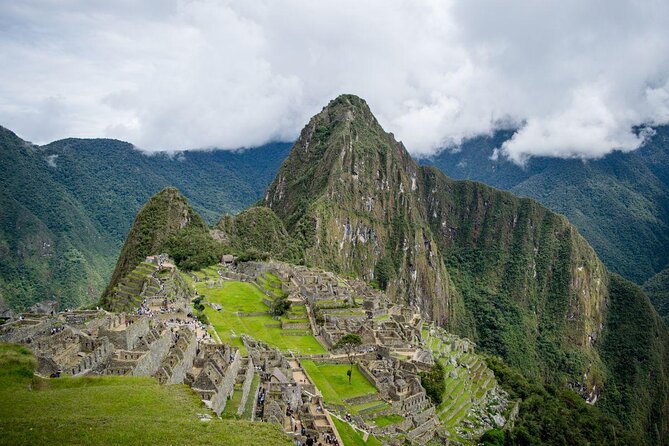
Machu Picchu is the final test of awe. You’ll ride by bus up the winding road, with views over the Urubamba River and canyon. That drive matters because it sets your expectations: you’re not just arriving at ruins, you’re entering a landscape designed for ceremony and control.
Once there, your guided visit covers terraces, ceremonial shrines, steps, and urban areas. Even if you’ve seen images for years, the sheer layout and the way the site sits in the mountain still hits.
Lunch is included at one of the restaurants in the area, and then you return to Cusco for an overnight stay.
Here’s the key practical detail: Machu Picchu now uses three main visitor circuits. The tour prioritizes Route 2 when possible. If Route 2 isn’t available, you’ll be offered Circuit 3B or Circuit 1B, with you confirming before tickets are issued. Also, Machu Picchu admission is not refundable, and date changes aren’t accepted—so don’t plan this day as a flexible backup.
If you’re going to spend effort anywhere, spend it here. Wear comfortable shoes, plan for changing weather, and expect that your body will feel altitude even if you’re not climbing at every second.
How intense is this for your body: altitude and pacing in plain terms
This itinerary is physically doable for many people, but it’s not a sit-everywhere vacation. You’ll go from sea level in Lima into Cusco altitude territory and then keep moving through the Sacred Valley. A real caution from the experience: some people struggle with breath and stomach issues during the first couple days in Cusco, even with medication and patches.
So here’s my straight advice. Start slowing down the moment you land. Drink water regularly, eat lightly the first day or two, and avoid treating Cusco like it’s the same pace as home. If you know you’re altitude-prone, talk to your doctor before you go and bring what you need.
Also, notice the schedule design: early starts, multiple transfers, and sightseeing clusters. The tour tries to manage this with included logistics and private transport, but the demand is still there.
The good news is guiding is hands-on. Your major stops are guided, and the tour notes keep the group size under 20, which usually makes it easier to ask questions without shouting.
Finally, communication runs through WhatsApp on a daily basis. That’s useful when you’re trying to plan your day around your own energy levels.
Who this trip suits best—and who should think twice
This is a strong fit for you if you want the “greatest hits” of Peru without doing heavy planning yourself. You get the Lima setup, a Nazca flight, then the Inca story through Cusco and the Sacred Valley, ending at Machu Picchu.
It also suits you if you like food experiences tied to place: pisco culture in Pueblo Libre, seafood in Lima, and pisco production at Tacama with a tasting and a lunch stop.
You should think twice if you need a very relaxed pace. This route is packed, and altitude adds friction to daily life. Also, the Nazca overflight isn’t recommended for children under 8, so family planning needs care.
Should you book this 10-day Taste Peru experience?
I’d book it if you want a structured, value-heavy Peru route that covers Lima, Nazca, Cusco, and Machu Picchu without the logistical headaches. The combination of included hotels, private transfers, and major guided stops is exactly what makes this feel like a “we handled the hard parts” vacation.
I’d pause before booking if you’re highly sensitive to altitude or you want lots of unscheduled free time. This itinerary keeps you moving, and Machu Picchu is a fixed-date, non-refundable experience once your tickets are issued.
If you’re willing to pace yourself in Cusco and handle the altitude prep, this tour has the right ingredients: big sights, smart regional variety, and food-and-drink experiences that actually connect to the places you’re visiting.
FAQ
Are the flights within Peru included?
No. Flight tickets for Lima–Cusco–Lima are not included in the price.
Is the Nazca Lines overflight included?
Yes. The tour includes the Aerodiana Nazca Lines overflight as part of the Paracas/Nazca day.
What’s included for accommodations and transfers?
You get 9 nights of accommodation at selected hotels and private transfers between airports, hotels, and key stations.
What museums and special tours are included in Lima?
The tour includes the Larco Museum and the Magic Water Circuit in Lima.
Are meals included?
Yes. You’ll have breakfast (9) and lunch (5) included, plus specified meals like dinner at Pescados Capitales and buffet lunches on Sacred Valley and Machu Picchu days.
Is Machu Picchu admission refundable?
No. The Machu Picchu admission ticket is not refundable, and date changes are not accepted.
Which Machu Picchu circuit will you get?
The tour prioritizes Circuit Route 2. If it isn’t available, you’ll be informed about Circuit 3B or Circuit 1B options so you can confirm before tickets are issued.
How big is the group?
This tour has a maximum of 20 travelers.
Can I cancel for a full refund?
You can cancel up to 24 hours in advance for a full refund. If you cancel less than 24 hours before the start time, the amount paid is not refunded.