REVIEW · CHINCHERO
From Cusco: Moray, Maras, and Salt Mines Half-Day Tour
Book on GetYourGuide →Operated by Sierra Travel · Bookable on GetYourGuide
Three Andean wonders, tightly packed.
This half-day route covers Chinchero’s weaving workshop and Moray’s terraced irrigation system, plus the surreal Salineras salt pools. I like how the tour turns big sights into hands-on moments, but note the stops are brisk and entrance tickets for Moray and the salt mines are extra.
You’ll start in Cusco at Plaza Regocijo, then ride by van through the Sacred Valley. Chinchero is at 3,762 meters and Moray at 3,450 meters, so bring water, take it easy on climbs, and wear comfortable shoes—this is not a sit-everywhere kind of day.
In This Review
- Key highlights worth your time
- Entering the Sacred Valley: Chinchero to Salineras in 6 hours
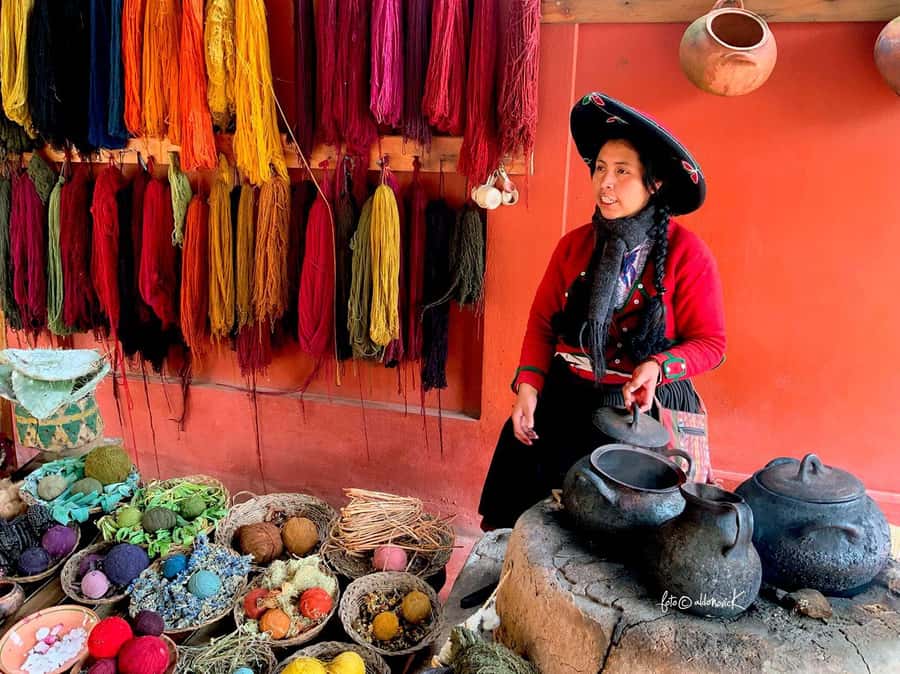
- Chinchero: 3,762 meters, Quechua textiles, and a real workshop stop
- Moray’s terraced bowl: how the irrigation system still makes sense
- Moray entrance tickets
- Maras: preserved colonial stonework with local rhythm
- Salineras salt mines: 3,000 pools that keep producing
- Salt mine entrance tickets
- How much it costs (and why it still feels like good value)
- Timing and transport: van rides that keep the day efficient
- What to bring so the day feels easy, not annoying
- Best fit: who should choose this tour
- Should you book this half-day Sacred Valley tour?
- FAQ
- Where does the tour start in Cusco?
- How long is the tour?
- What’s included in the tour price?
- Do I need to pay entrance tickets?
- What languages is the live guide available in?
- What should I bring for the tour?
- Is the tour suitable for wheelchair users or mobility impairments?
- Is there free cancellation?
Key highlights worth your time
- Chinchero weaving workshop: watch artisans use natural plants to make colors for Quechua textiles
- Moray at 3,450 meters: guided tour of the terraced landscape and irrigation system
- Maras stone buildings: preserved colonial architecture plus a look at local life
- Salineras salt mines: thousands of small pools (about 3,000) still producing salt
- Live English/Spanish guide: clear explanations for each stop
Entering the Sacred Valley: Chinchero to Salineras in 6 hours
If you want a taste of the Sacred Valley without committing to a full day, this tour does the job. In one afternoon, you’ll move from a Quechua weaving tradition to impressive engineering at Moray, then to the historic salt production at Salineras.
The pacing is the main thing to understand before you book. You’re not hanging out for hours in any one place. Instead, the value comes from variety: you see how people work the land (and make things), then you see how they’ve been extracting resources here for ages. It’s a smart “big picture” day.
Altitude is another practical reality. You’ll be high almost immediately—Chinchero sits at 3,762 meters. You don’t need to panic, but you should plan for a slower start and keep sipping water.
Chinchero: 3,762 meters, Quechua textiles, and a real workshop stop
Chinchero is where the tour gets personal. You’ll make a photo stop and have time for shopping, but the real reason to go is the weaving workshop visit.
In the workshop, artisans keep the Quechua tradition alive by working with materials in a way you can actually see. The guide points out how natural plants are used to extract colors for Andean textiles. That detail matters. It turns the finished product—colorful cloth you might buy later—into something with a process behind it. You’re not just looking at souvenirs. You’re watching craft knowledge at work.
At this elevation, even simple walking can feel like a workout. Wear shoes you trust. If you’re tempted to wear something cute and flexible, resist. The day is short, and you’ll want to spend time looking, not adjusting your footing.
One more tip: Chinchero is also a good place to take your time deciding if you want to buy. With only limited time, I prefer to browse with a purpose: pick what you truly like, check quality with your eyes, and don’t let a quick stop rush you into a decision.
Moray’s terraced bowl: how the irrigation system still makes sense
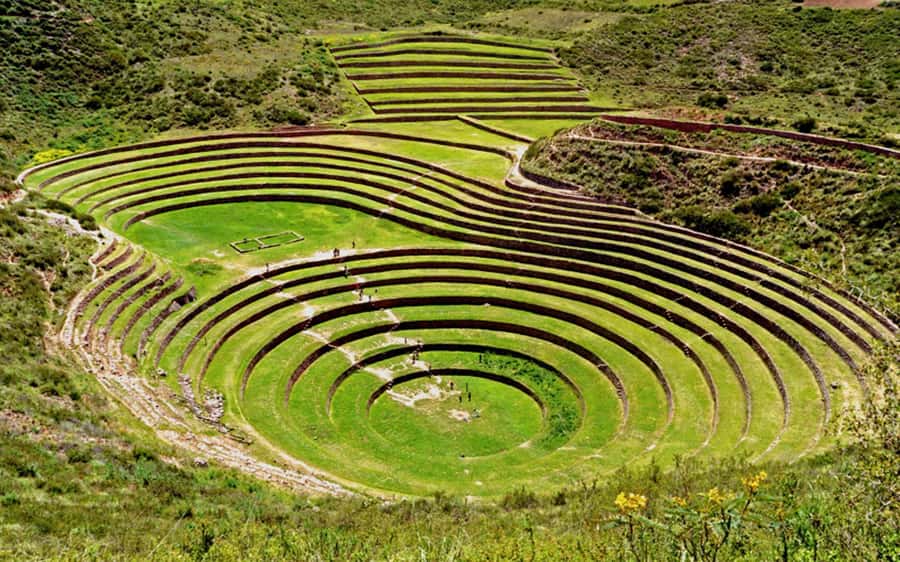
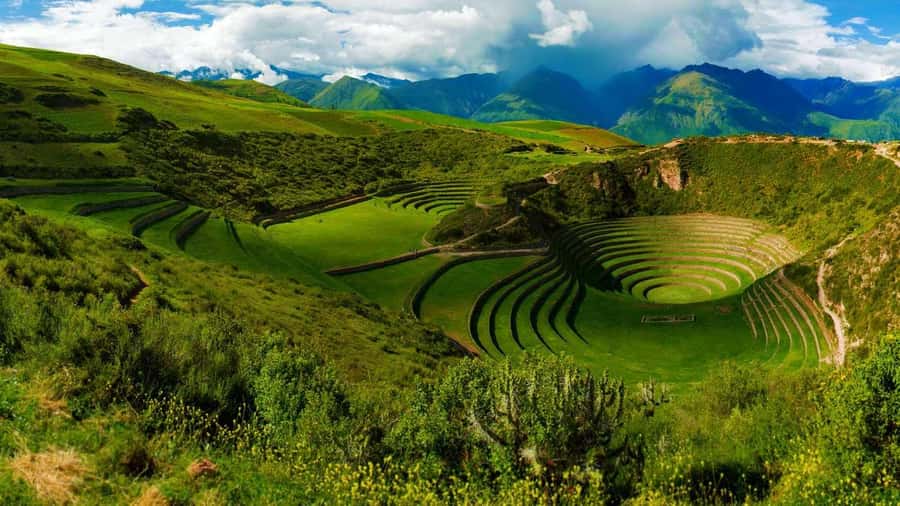
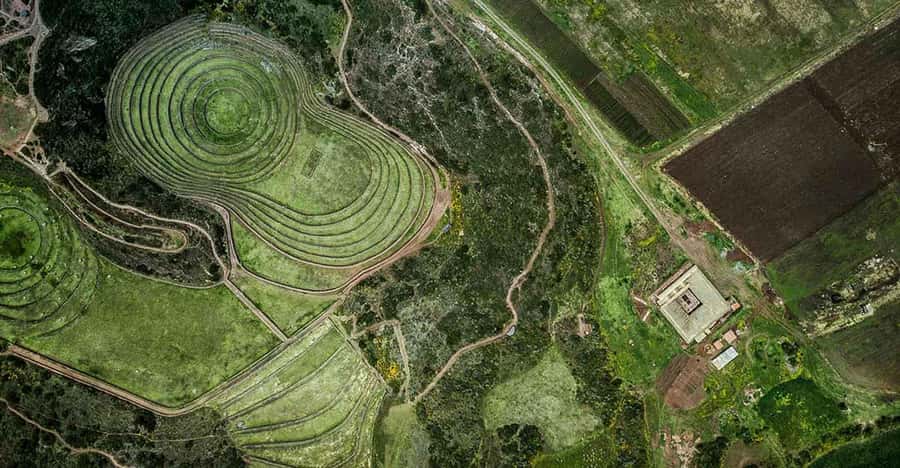
Moray is the stop most people remember, mainly because it looks unreal. The terraces drop in layers, like a giant set of stone steps built into the valley. This is where you’ll get a guided tour focused on the terraced landscape and the irrigation system.
What I like about Moray is that it feels both artistic and practical. Those circular terraces aren’t just for looks; the whole setup connects to water management. Even if you don’t know the site’s deeper theories ahead of time, the guide helps you understand why the design is the point. The irrigation system is the story.
You’ll be at 3,450 meters here. It’s not much lower than Chinchero, so treat it as high-altitude sightseeing: slow down, breathe, and drink water. The guided time is about 40 minutes, which is enough to get oriented without letting the experience drag.
Moray entrance tickets
Moray has an entrance fee (70 soles), and it’s not included in the tour price. It’s purchased on site. Build this into your budget so you’re not surprised when you reach the gate.
Maras: preserved colonial stonework with local rhythm
After Moray, you’ll move on to the village of Maras. This stop works well if you like places where the scenery and the people live side by side.
Here, the emphasis is on preserved colonial architecture and fine stone buildings. It’s not just a quick view. The tour gives you a chance to actually look at how stonework and layout hold up over time, and you can feel how the village functions beyond the postcard angle.
Because this is a stop inside a longer day, you won’t see everything. But the trade-off is good: you get a meaningful slice of Maras without needing extra transport or a separate day.
If you enjoy photography, Maras is a good place to slow down for a few shots. Stone textures photograph well in shifting light, and the village character makes your photos look less like a checklist and more like a place.
Salineras salt mines: 3,000 pools that keep producing
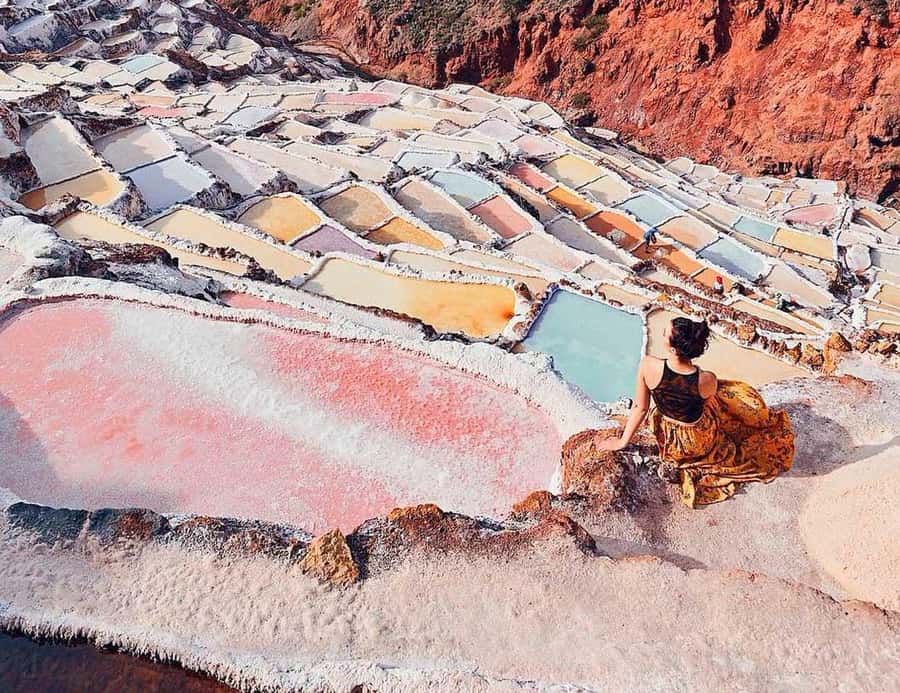
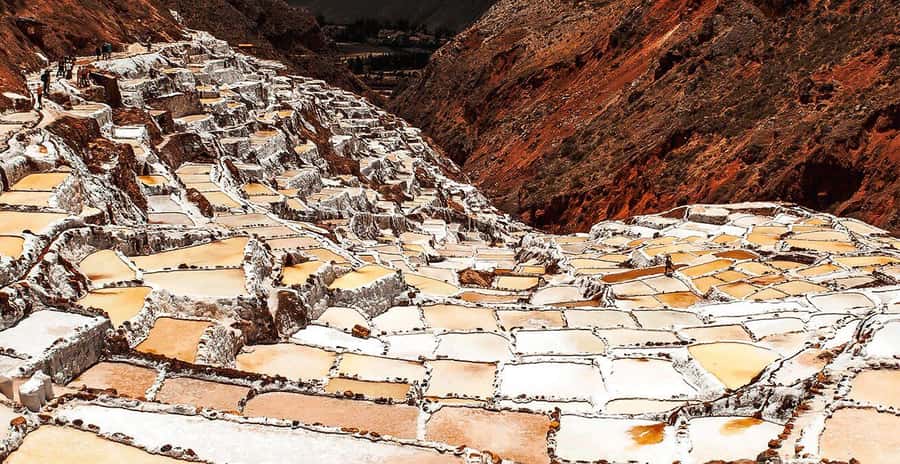
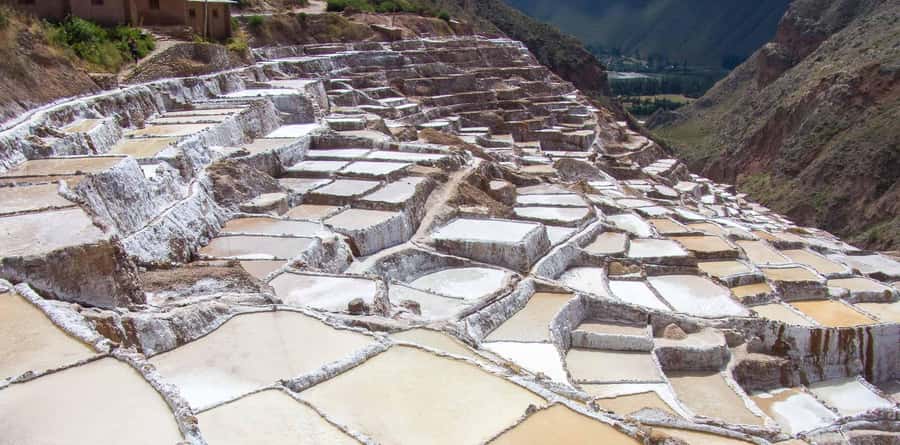
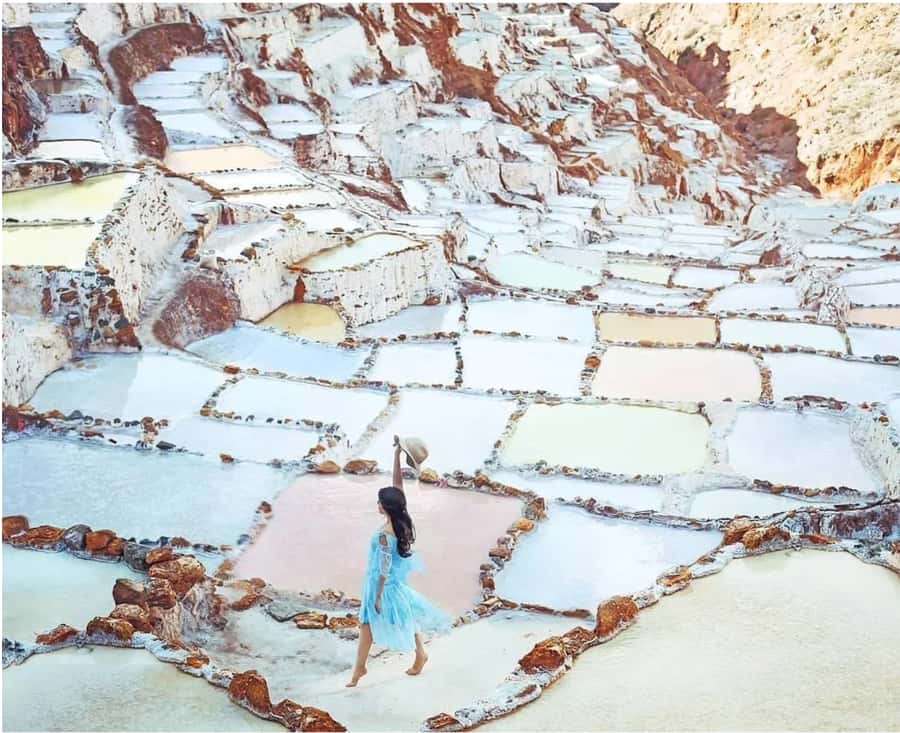
Then comes the showstopper for many people: Salineras salt mines. This is a historic production site dating back to pre-Incan times, and it still produces salt today. You’ll see roughly 3,000 small pools laid out like a patchwork across the hillside.
What I find striking is how structured it feels even though it’s scattered across hundreds of basins. The pools make the process readable. Instead of one big factory, you’re looking at lots of small steps happening in parallel.
The tour includes time to explore the salt mines on site, and your guide explains the idea behind the site’s long-running salt production and how the salt is processed and distributed in the region. That context helps the place feel alive rather than frozen in time.
Salt mine entrance tickets
The salt mines have an entrance fee (20 soles), also not included in the tour price. You can buy it in Maras. If you want smoother timing, consider having some cash ready before you arrive.
How much it costs (and why it still feels like good value)
The tour price is listed at $15 per person for a half-day, 6-hour experience. For that price, you get pickup from your hotel area in Cusco, a live guide (English and Spanish are offered), plus guided visits to Chinchero’s weaving workshop, Moray’s terraced landscapes, and the Salineras salt mines.
The only real budget twist is the entrances. Moray costs 70 soles, and the salt mines cost 20 soles. Those fees can add up, but they’re also tied to the sites you’re actually going to. If you’re calculating your trip cost, think of the tour fee as paying for transportation, guide time, and organized access to multiple stops in one day.
Is it cheap? Compared to booking separate transport and guides for each place, yes. Is it totally “all-in”? Not unless you budget for those entrances.
Timing and transport: van rides that keep the day efficient
This is a van tour, and you’ll spend a fair amount of time riding between stops. That’s not a downside for everyone. It’s the reason you can see Chinchero, Moray, Maras, and Salineras in about six hours.
From Cusco, you’ll start at Plaza Regocijo. Then the drive takes you to Chinchero for a photo stop and workshop visit. After that, you head onward to Moray, then onward to Maras, and finally to the salt mines before returning to Plaza Regocijo.
In practical terms: plan to feel a little tired at the end. You’ll be walking on uneven ground at the salt mines and taking in views at higher elevations. The day is active, even if it’s not long.
What to bring so the day feels easy, not annoying
Bring the basics and you’ll thank yourself later:
- Comfortable shoes (you’ll stand and walk on real terrain)
- Water (high elevation makes it matter)
- Sunscreen (you’ll be exposed)
- A camera (you’ll want it for terraces, stonework, and those salt pools)
Also note the simple rules: smoking is not allowed. If you’re traveling with a smoker, you’ll want to plan for breaks that don’t slow the group.
And because this isn’t wheelchair-friendly, it’s best suited for people who can handle uneven surfaces and some walking. If mobility is limited, you may feel rushed by the pace and terrain.
Best fit: who should choose this tour
This tour fits well if you want:
- A guided introduction to the Sacred Valley’s top sites
- Hands-on cultural content at Chinchero (the weaving workshop)
- Big visual payoffs without needing a full day commitment
It’s also a good match if you enjoy sites where the story isn’t just scenery. Moray’s irrigation system and Salineras’s ongoing salt production are the kinds of places where the “why” matters, and a live guide helps connect the dots.
If you’re the type who hates tight timing or wants hours in one spot, you might prefer something longer and slower. Here, the value is variety and efficiency, not extended lounging.
Should you book this half-day Sacred Valley tour?
I’d book it if your priority is seeing Chinchero + Moray + Maras + Salineras in one organized day and you’re happy to pay the extra entrance fees for Moray and the salt mines. It’s a strong deal for a short window, and the weaving workshop adds more substance than just photo stops.
Skip it (or look for a different format) if you need lots of time at each site, or if walking on uneven terrain is difficult for you. The tour is designed for people who can keep moving and stay comfortable at high elevation.
If you’re planning a Cusco trip and want one day that feels like a crash course in how the Sacred Valley works—craft, irrigation, stone villages, and salt—this is a solid choice.
FAQ
Where does the tour start in Cusco?
The tour starts at Plaza Regocijo.
How long is the tour?
It runs for about 6 hours.
What’s included in the tour price?
Pickup from your hotel in Cusco, a visit to the Chinchero weaving workshop, a guided tour of Moray’s terraced landscapes, and exploration of the Salineras salt mines.
Do I need to pay entrance tickets?
Yes. Moray has an entrance ticket of 70 soles, and the salt mines have an entrance ticket of 20 soles. Both can be purchased on site (Moray on site, salt mines in Maras).
What languages is the live guide available in?
The guide is available in Spanish and English.
What should I bring for the tour?
Bring comfortable shoes, a camera, sunscreen, and water.
Is the tour suitable for wheelchair users or mobility impairments?
No. It is not suitable for people with mobility impairments or wheelchair users.
Is there free cancellation?
Yes. You can cancel up to 24 hours in advance for a full refund.